Author: Calder Rivenhall - Page 2

How Training Duration and Token Counts Affect LLM Generalization
Training duration and token counts don't guarantee better LLM generalization. What matters is how sequence lengths are structured during training. Learn why variable-length training beats raw scale and how to avoid common pitfalls.
Read More
Multi-Agent Systems with LLMs: How Specialized AI Agents Collaborate to Solve Complex Problems
Multi-agent systems with LLMs use specialized AI agents working together to solve complex tasks better than any single model. Learn how frameworks like Chain-of-Agents, MacNet, and LatentMAS enable collaboration, role specialization, and efficiency gains.
Read More
How to Detect Fabricated References in Large Language Model Outputs
Fabricated references from AI models are slipping into real research papers. Learn how to detect them, why they happen, and what institutions must do to stop them before science loses its foundation.
Read More
Multi-Task Fine-Tuning for Large Language Models: One Model, Many Skills
Multi-task fine-tuning lets one large language model master multiple skills at once, outperforming single-task models with less compute. Learn how it works, why it’s beating GPT-4 on benchmarks, and how companies are using it in 2026.
Read More
Manufacturing with Generative AI: Design, Maintenance, and Quality Control in 2026
Generative AI is transforming manufacturing by automating design, predicting equipment failures, and catching defects before they happen. By 2026, it’s no longer optional-it’s essential for efficiency, quality, and sustainability.
Read More
Accessibility Regulations for Generative AI: WCAG Compliance and Assistive Features
Generative AI must follow WCAG accessibility standards just like human-created content. Learn how to comply with legal requirements, avoid lawsuits, and build inclusive AI systems that work for everyone.
Read More
Open-Source Generative AI Compliance: Licenses, Attribution, and Derivative Works
Open-source generative AI offers control and privacy-but only if you follow license rules. Learn what attribution, derivative works, and commercial use really mean for your business.
Read More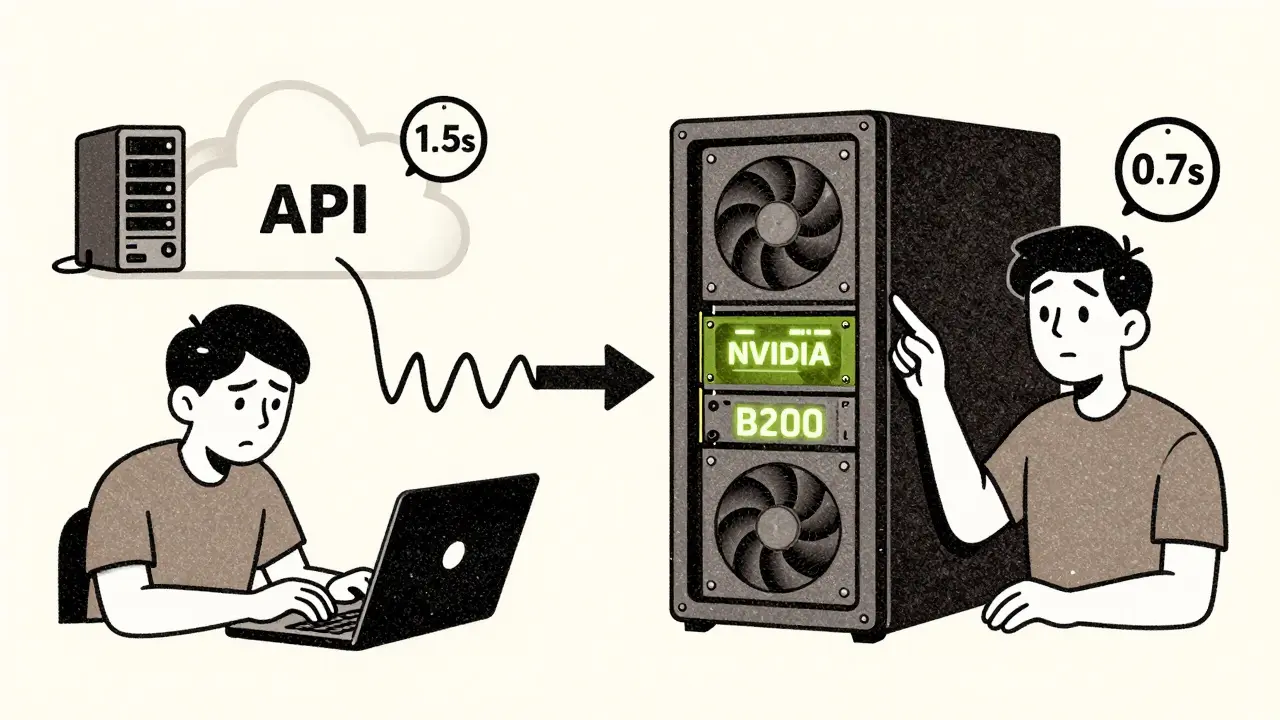
Latency and Control Tradeoffs: API LLMs vs On-Prem Deployment
Choosing between API-based LLMs and on-prem deployment affects latency, data control, cost, and scalability. Learn when to use each-and how top companies combine both for optimal results.
Read More
Consent Management in Generative AI: How Users Control Their Data
Generative AI learns from your data-but do you really control how it’s used? Learn how consent management works, what rights you have, and how to take back control over your personal information.
Read More
How Combining RAG with Decoding Strategies Improves LLM Accuracy
Combining RAG with advanced decoding strategies like Layer Fused Decoding and entropy-based weighting drastically reduces LLM hallucinations. This approach grounds responses in live data while guiding word-by-word generation for higher accuracy.
Read More
SAST, DAST, and SCA for AI-Generated Code: Tools That Actually Catch Real Security Issues
SAST, DAST, and SCA tools must adapt to catch security flaws in AI-generated code. Learn how modern tools like Mend and Cycode now detect vulnerabilities in AI-written code, why traditional DAST is obsolete, and how to build a layered defense that actually works.
Read More
Life Sciences Research with Generative AI: Protein Design and Literature Reviews
Generative AI is revolutionizing life sciences by designing entirely new proteins for medicine and industry-beyond what nature evolved. From cancer therapies to plastic-eating enzymes, this is how AI is reshaping biology.
Read More