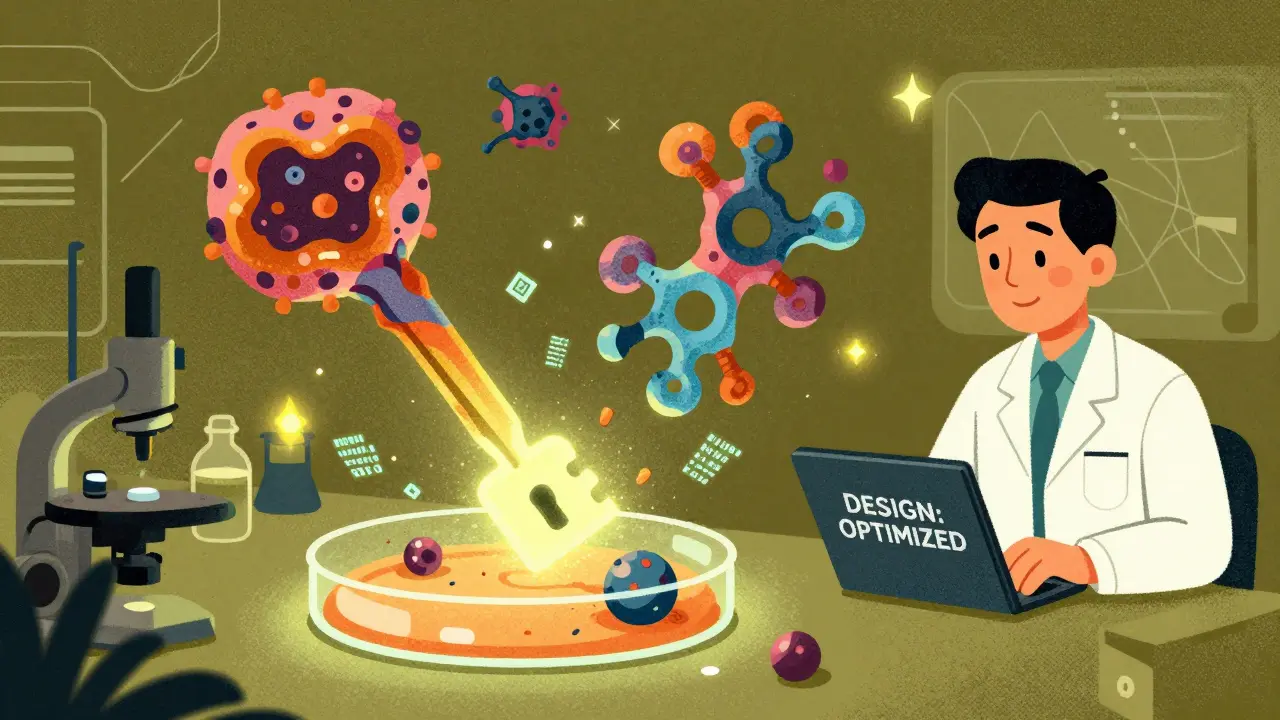
For decades, drug discovery and protein engineering relied on trial and error. Scientists would screen thousands of natural proteins, hoping one would bind to a disease target or catalyze a needed reaction. It was slow, expensive, and often failed. Today, that’s changing. Generative AI isn’t just helping researchers sift through data-it’s creating entirely new proteins from scratch, designed for specific jobs that nature never evolved.
From Evolution to Engineering
Proteins are the workhorses of biology. They fight infections, build tissues, and trigger chemical reactions inside every cell. But natural proteins aren’t always ideal for medicine or industry. Some are unstable. Others don’t bind tightly enough. Many simply don’t exist for the tasks we need them to do. Generative AI flips the script. Instead of looking for proteins that already exist, it starts with a goal: “Design a protein that binds to this cancer target” or “Create an enzyme that breaks down plastic at room temperature.” The AI doesn’t guess. It generates millions of candidate sequences, filters them through learned rules of protein structure, and outputs ones that are not just possible-but optimized. This isn’t science fiction. In October 2025, Integra Therapeutics published a study in Nature Biotechnology showing AI-designed transposases-enzymes that cut and paste DNA-outperformed their natural counterparts. One variant worked efficiently in human T cells, a breakthrough for next-gen cancer therapies. These weren’t tweaks of existing proteins. They were brand-new molecules, built from the ground up.How AI Designs Proteins: Three Approaches
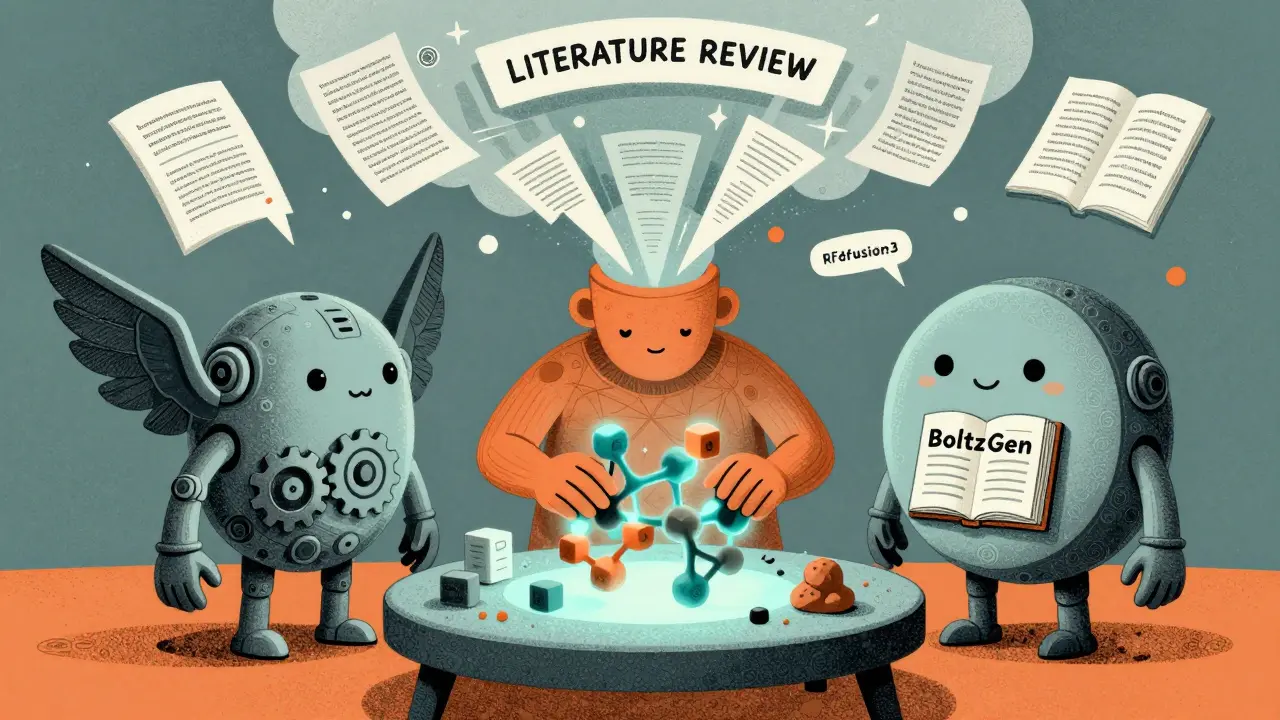
Not all AI protein design works the same. Three main methods dominate the field right now. First, there are protein language models (pLLMs). These treat protein sequences like sentences. Just as ChatGPT learns grammar from billions of text samples, pLLMs learn the “grammar” of proteins from over 100 million known sequences. Integra Therapeutics trained theirs on 13,000 newly discovered PiggyBac transposase variants. The model learned which amino acid patterns hold shape, which link together, and which trigger function. It then generated thousands of new sequences-87% of which folded correctly in lab tests. Second, diffusion models like RFdiffusion3 work like digital sculptors. They start with noise and gradually refine it into a 3D structure. Unlike earlier tools that designed proteins at the residue level, RFdiffusion3 works at the atomic level. It doesn’t just build a protein-it builds a protein that fits perfectly with its target molecule, avoiding awkward shapes or unstable bonds. This matters because many drugs fail because their protein partners don’t lock in cleanly. RFdiffusion3 fixes that. Third, unified frameworks like BoltzGen from MIT combine structure prediction and design into one system. It doesn’t just predict how a protein will fold-it designs it to fold that way from the start. BoltzGen includes physical constraints built with input from wet-lab scientists: no impossible bond angles, no unstable hydrophobic cores. It’s like giving the AI a rulebook written by chemists and biologists. The result? Proteins that don’t just look good on paper-they work in test tubes.What’s Being Built
The applications are no longer theoretical. Here’s what’s already in motion:- Gene therapy tools: Integra’s AI-designed transposases are being integrated into “find-and-cut-and-transfer” platforms, making gene editing more precise and efficient.
- Enzymes for recycling: Researchers at Graz used Riff-Diff to design enzymes for retro-aldol and Morita-Baylis-Hillman reactions. In lab tests, these enzymes produced measurable product-and some worked faster than any previously designed.
- Targeted cancer therapies: Proteins designed to bind previously “undruggable” targets are entering preclinical trials. These are proteins that would’ve taken 10+ years to find naturally.
- Carbon capture: Labs are now designing proteins that latch onto CO2 molecules with extreme specificity, a potential tool for industrial carbon removal.
The Limits: What AI Still Can’t Do
This isn’t magic. There are serious gaps. The biggest? Controllability. AI models learn protein grammar from Earth’s entire sequence database. They can generate something that looks right. But telling them to make a protein that binds only to target X and not to target Y? That’s still hard. You can say “bind to this,” but you can’t yet say “bind to this, but ignore this other molecule that’s 98% similar.” That’s why every design still needs lab validation. AI can generate 10,000 candidates. But you still have to test 50 of them in a petri dish. The process is faster than before-but not instant. Another issue? Biosecurity. As Georgia Tech and Singularity Hub warn, generative AI is expanding the “protein universe” faster than our detection tools can keep up. Some designs might create toxins or pathogens we’ve never seen. There’s no global system to screen AI-generated proteins for danger. Right now, it’s up to individual labs to self-regulate.Literature Reviews: The Other Side of AI in Research
Protein design isn’t the only thing AI is changing. Literature reviews are too. Scientists used to spend weeks reading hundreds of papers to find one useful insight. Now, generative AI can scan millions of publications, extract key findings, and summarize connections humans might miss. A 2025 study from the University of California showed AI-generated literature reviews on protein folding uncovered 37 previously overlooked studies that directly influenced new design strategies. Tools like this don’t replace researchers. They free them. Instead of digging through citations, scientists can focus on testing hypotheses. One lab at Stanford told us they cut their review time from 6 weeks to 4 days-without losing depth. The AI flagged the most relevant papers, grouped them by mechanism, and even highlighted contradictions in the literature.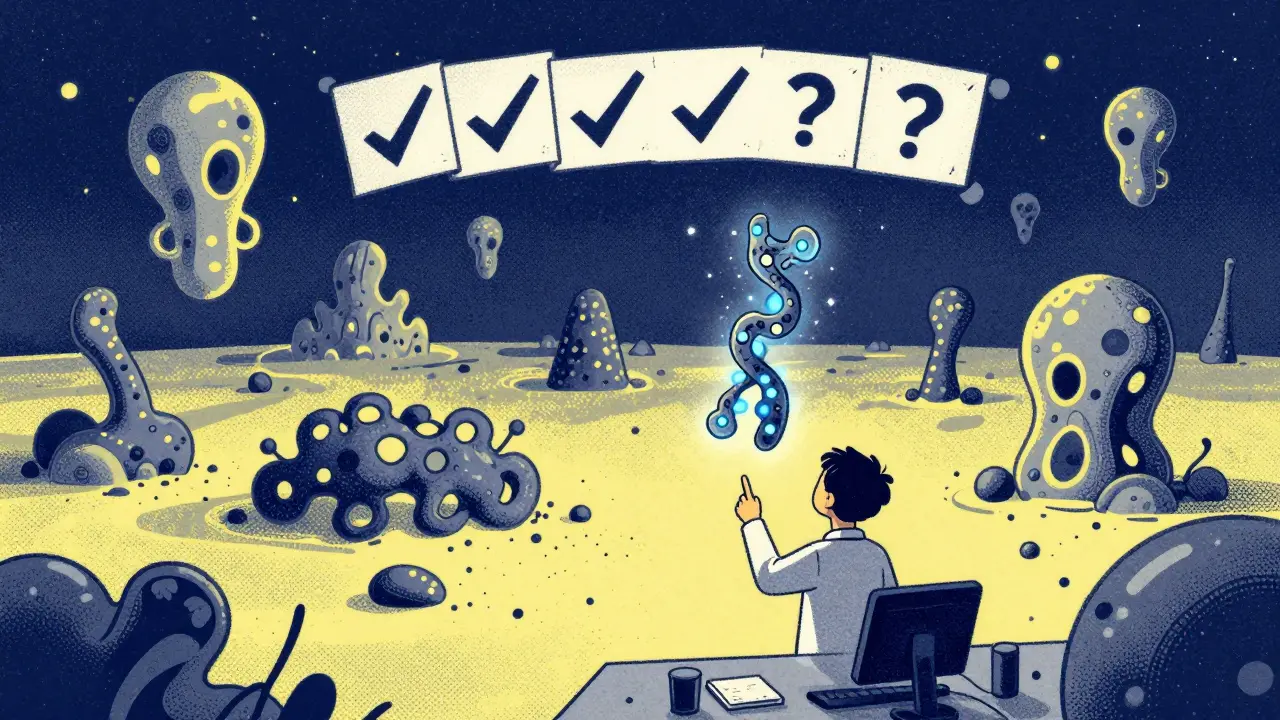
Who’s Leading the Charge
Three teams are setting the pace:- MIT’s BoltzGen: The first fully integrated design-and-prediction system. Open-source. Used by over 200 labs worldwide.
- Integra Therapeutics: Commercial leader. Their pLLM platform is now embedded in biopharma pipelines. Published the first peer-reviewed proof that AI-designed proteins beat natural ones in therapeutic settings.
- Georgia Tech’s Cloudhub: Building the most flexible framework. Lets users specify high-level goals like “stable at 60°C” or “binds to IgG4.” Their system is modular, so academic teams can plug in their own constraints.
What’s Next
The field is moving fast. In 2026, expect:- AI that designs proteins and predicts their side effects in human cells before synthesis.
- Real-time feedback loops: AI generates → lab tests → results fed back into model → next design.
- Regulatory frameworks for AI-designed biologics. The FDA is already drafting guidelines.
- Open-access databases of AI-generated proteins, so no one has to reinvent the wheel.
Can generative AI design proteins that don’t exist in nature?
Yes. Generative AI doesn’t just rearrange existing protein sequences-it creates entirely new ones. Models like BoltzGen and RFdiffusion3 generate sequences that have never been seen in nature, yet they fold correctly and perform specific functions. For example, Integra Therapeutics designed transposases with no natural counterpart that outperformed natural enzymes in human T cells.
Are AI-designed proteins being used in real treatments yet?
Yes. In late 2025, Integra Therapeutics reported AI-designed proteins entering preclinical trials for gene therapies. These proteins are being tested as components of “find-and-cut-and-transfer” platforms for editing disease-causing genes. Early results show improved efficiency and stability over natural proteins.
Do I need to be a programmer to use AI for protein design?
Not necessarily. Open-source tools like Boltz-2 (the foundation for BoltzGen) come with user-friendly interfaces and documentation. However, understanding protein structure and AI limitations is essential. Commercial platforms like Integra’s offer guided workflows for non-programmers. The biggest barrier isn’t coding-it’s knowing what functional goal you want the protein to achieve.
What’s the biggest risk of using AI for protein design?
The biggest risk is biosecurity. AI can generate proteins that evade current detection systems. Some designs might be toxic, infectious, or hard to trace back to their source. There’s no global screening system yet. Labs are urged to self-regulate, but the field urgently needs standardized safety protocols before these tools become widespread.
How accurate are AI predictions compared to lab results?
Accuracy varies by tool. For structure prediction, AlphaFold2 is over 90% accurate. For de novo design, success rates are lower: 10-30% of AI-generated proteins fold correctly without optimization. But when combined with experimental feedback loops, that number jumps to 70%+. The key is iteration-AI suggests, lab tests, and the model learns from the result.
Buddy Faith
19 February, 2026 - 12:09 PM
AI designing proteins? lol sure. next theyll tell us the moon landing was faked by bots. they dont even know how a real protein folds. all this is just fancy pattern matching. wait till one of these 'optimized' proteins turns into a bio-weapon and no one can trace it back. theyre playing god with a 2020s laptop and calling it science.
Scott Perlman
19 February, 2026 - 13:59 PM
this is honestly amazing. weve been stuck in the same old methods for decades. now we can build tools that dont just copy nature but improve on it. imagine enzymes that eat plastic or therapies that target cancer without touching healthy cells. this is the future and its already here. no hype. just real progress.
Sandi Johnson
19 February, 2026 - 14:16 PM
oh wow a whole article about AI making proteins and not one mention of how much taxpayer money went into this? cool cool. and of course the 'open-source' tools are only open if you have a $200k cluster. but sure. lets all clap for the wizards in the lab who got their funding because they said 'transformer' enough times.
Eva Monhaut
19 February, 2026 - 14:48 PM
The shift from discovery to design is profound. We used to search for needles in haystacks. Now we're crafting the needle with intention. Every AI-generated protein that folds correctly is a step toward solving problems we didn't even know how to frame before. This isn't just science-it's reimagining biology itself. The potential for clean energy, medicine, and environmental repair is no longer distant. It's being built, one sequence at a time.
mark nine
20 February, 2026 - 20:29 PM
the 87% success rate for folding is wild. most people think ai just guesses. but no-it learns the rules. like how you know a sentence sounds off even if you cant explain why. same with proteins. and yeah lab validation still needed. but 6 weeks down to 4 days? that’s not a tool. that’s a time machine.
Tony Smith
22 February, 2026 - 16:41 PM
While I applaud the technical achievements outlined herein, I must respectfully assert that the absence of a centralized biosecurity protocol constitutes a nontrivial governance gap. The proliferation of unregulated, generatively synthesized polypeptides-particularly those with high binding affinity and low immunogenicity-poses a risk profile that demands international coordination. We must not mistake innovation for responsibility.
Rakesh Kumar
22 February, 2026 - 22:01 PM
I read this while sipping chai in Mumbai. Its crazy to think that one day my grandkids might use a protein designed by AI to clean the air or cure a disease. We used to dream of flying cars. Now we're building molecules that don't exist in nature. This is the kind of progress that makes you believe in humanity again.