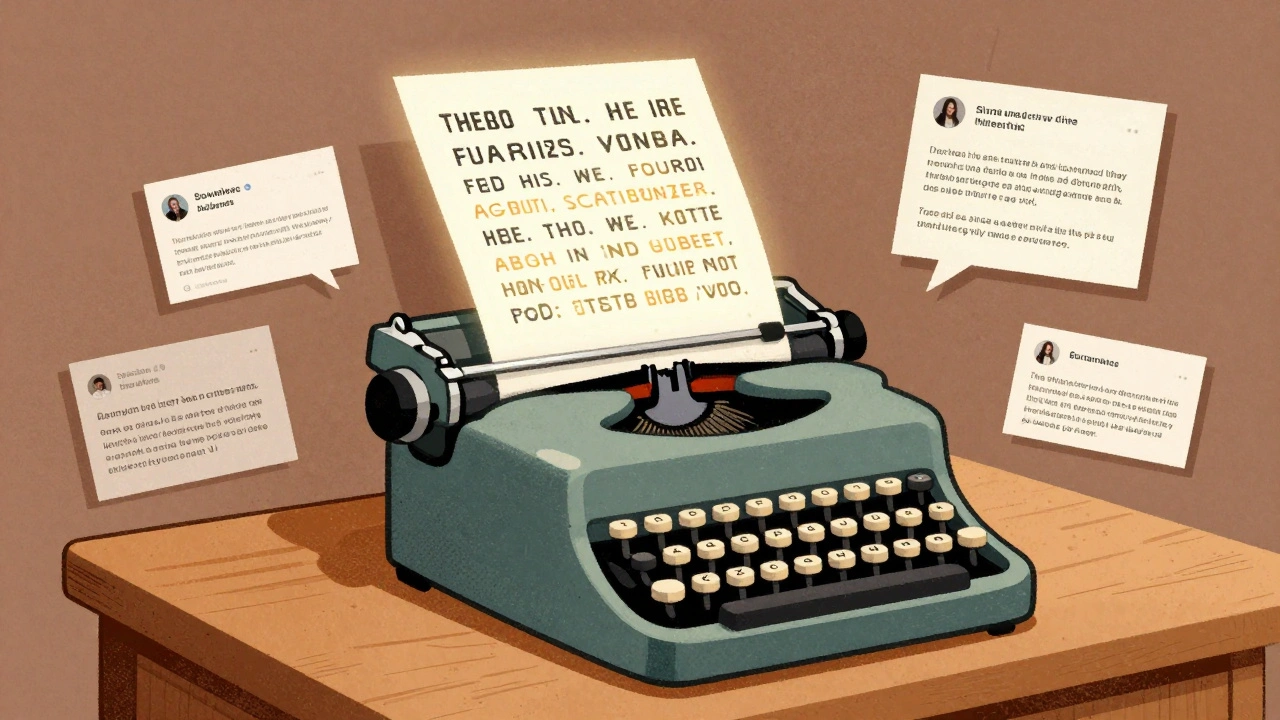
Want your AI-generated content to sound like your brand - not a robot that just copied a Wikipedia page? That’s where style transfer prompts come in. They’re not magic. They’re not complicated. But if you don’t know how to use them right, your marketing copy sounds like it was written by a confused intern who binge-watched Shakespeare and then tried to sell sneakers.
Style transfer in generative AI lets you take the tone, voice, and format of one piece of writing - say, a luxury brand’s product description - and apply it to another - like a social media post or email campaign. You keep the meaning. You change the flavor. It’s like putting your content in a different suit. One that fits your audience perfectly.
How Style Transfer Actually Works (No Jargon)
Think of it like this: every writer has a fingerprint. Some use short, punchy sentences. Others write long, flowing paragraphs. Some sound like they’re chatting over coffee. Others sound like they’re giving a TED Talk. Generative AI learns those patterns by analyzing examples. Then, when you give it a prompt like “Write this in the voice of a 1950s ad copywriter”, it rearranges the words to match that pattern.
In visual AI - like Adobe Firefly - you upload an image with a certain look (say, watercolor textures) and ask the AI to apply it to another image. In text AI, you don’t upload images. You upload examples of writing. You say: “Here are five product descriptions from our website. Now write a new one that sounds exactly like them.”
The AI doesn’t memorize. It learns patterns. It notices how often you use contractions. Whether you start sentences with “You” or “Our.” If you use em dashes or bullet points. If you sound urgent or calm. That’s your style. And now, the AI can replicate it.
Why This Matters More Than You Think
Brands don’t just want consistency. They need it. If your Instagram sounds like a teenager and your website sounds like a legal contract, customers don’t trust you. They get confused. They leave.
Companies using style transfer prompts report real results. AdCreative.ai found that campaigns using AI-generated copy matched to audience tone saw a 37% boost in engagement. That’s not fluff. That’s real money. Why? Because people respond to voices they recognize - even if they don’t know why.
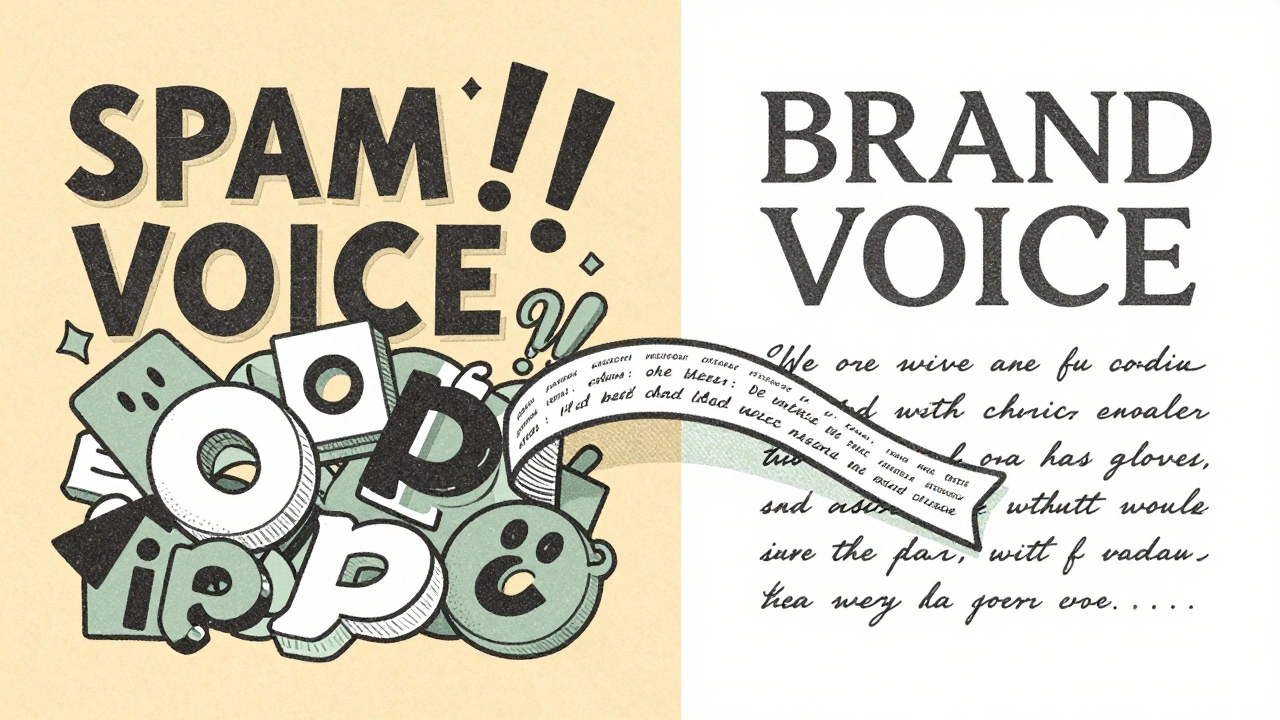
Imagine you’re selling high-end skincare. Your ideal customer reads Byrdie and Refinery29. She likes clean, calm, slightly poetic language. Now imagine your AI writes a Facebook ad that says: “BUY NOW! 70% OFF! LIMITED TIME!” It’s loud. It’s wrong. It screams “spam.”
But if you feed your AI five of your best product pages - the ones that actually convert - and say: “Write a new ad in this exact tone” - you get something like: “Gentle enough for daily use. Powerful enough to transform. This is the ritual your skin has been waiting for.” That’s the difference.
Three Ways to Build a Style Guide for AI
You can’t just wing it. You need a plan. Here’s how real teams do it.
- Collect 10-20 examples of your best writing. These should be pieces that already work - high engagement, good conversion, positive feedback. Don’t pick random blog posts. Pick winners.
- Run them through a style analysis prompt. Use this template: “You’re a stylistic analyst. Read these five pieces of writing. List the top 8 characteristics of the tone, voice, and format. Use bullet points. Be specific.” The AI will spit out things like: ‘Uses second-person pronouns,’ ‘Avoids exclamation points,’ ‘Prefers passive voice in product descriptions,’ ‘Uses em dashes for emphasis.’
- Turn that list into a prompt template. Save it. Use it every time. Example: “You are a brand voice expert for [Brand Name]. Your writing follows these rules: [paste your bullet list]. Write a new product description for [product] in this style.”
Christopher Penn, a leading prompt engineer, calls this a “centralized style guide.” It’s the single source of truth for your AI. Without it, you get drift. One day your AI sounds like a poet. The next, like a sales bot. That’s not branding. That’s chaos.
Visual vs. Text Style Transfer: Know the Difference
Not all style transfer is the same. Visual tools like Adobe Firefly and Tencent Cloud’s AI let you drag an image and apply its colors, textures, and lighting to another. It’s fast. It’s intuitive. You get a “Van Gogh” look in seconds.
Text is harder. Why? Because language is messy. Tone isn’t just about words. It’s about rhythm, context, cultural references, and implied meaning. A joke in one culture falls flat in another. A formal phrase in English might sound cold in Spanish. AI doesn’t understand nuance - not yet. It just matches patterns.
Here’s the reality:
- Visual style transfer: 91% accuracy in matching style. Easy to measure. You can see it.
- Text style transfer: 82% accuracy in preserving meaning. Harder to get right. You have to read it.
Adobe Firefly 2.3 (released August 2024) added “style intensity” sliders - 1 to 100%. That’s huge. Before, it was all or nothing. Now you can dial in 30% Van Gogh, 70% your original photo. Text tools are catching up. But they’re still behind.
Common Mistakes (And How to Fix Them)
People think style transfer is plug-and-play. It’s not. Here’s what goes wrong - and how to fix it.
- Mistake: Using one style for everything. Your Instagram tone shouldn’t be your investor pitch tone. Use separate style guides for each channel.
- Mistake: Not testing output. AI can hallucinate. It might say “our product is the best on the market” - even if you never say that. Always edit.
- Mistake: Forgetting context limits. Most AI models can only remember 32K-128K tokens. If your style guide is too long, it forgets. Break long texts into chunks. Reapply the style every few paragraphs.
- Mistake: Overdoing it. Too much style = noise. If every sentence sounds like a poem, it’s exhausting. Use style intensity. Less is more.
One marketing team at a beauty brand kept getting back responses that sounded like they were written by a 19th-century poet. Why? Their style guide included three old blog posts from 2012. The AI learned the old tone - not the current one. They updated their examples. Problem solved.

What’s Next? The Future of Style Control
By 2026, Gartner predicts 70% of enterprise content will use AI style transfer. That’s not a guess. It’s happening now.
Tools are getting smarter. Tencent Cloud’s “StylePrecision” (Sept 2024) lets you combine a reference image with a text prompt - so you can say: “Write this like a 1980s ad, but make it feel like a sunset photo.” Hybrid control. That’s the future.
Anthropic’s Claude 3.5 (coming Q1 2025) will introduce “style vectors.” Think of them like sliders for tone, formality, humor, and urgency - each adjustable independently. You want formal but funny? Easy. You want urgent but calm? Done.
But there’s a catch. The EU AI Act (effective Jan 2025) now requires watermarking on all AI-generated content used commercially. That means if you use style transfer for ads, you must label it. Transparency isn’t optional anymore.
Start Small. Get It Right.
You don’t need a team of engineers. You don’t need a $50K tool. Start with what you have.
Take one piece of content you love - your best email, your top-performing blog post. Copy it. Paste it into your AI. Say: “Rewrite this in the same voice, but make it 50 words shorter and for Instagram.” See what happens.
If it’s good? Keep going. If it’s weird? Tweak your prompt. Add a rule: “Use contractions. No jargon. Sound like you’re talking to a friend.”
Style transfer isn’t about replacing humans. It’s about giving them superpowers. It’s about scaling your voice - not diluting it.
Right now, most brands are using AI to write faster. The smart ones are using it to write better. To sound like themselves. To connect. To be trusted.
That’s the real goal. Not automation. Authenticity.
Can I use style transfer prompts with free AI tools like ChatGPT?
Yes - but you need to be more deliberate. Free tools don’t have built-in style templates. You have to build your own. Start by feeding 5-10 examples of your writing into the prompt. Say: “Here are five examples of our brand voice. Analyze them. Then rewrite this new text in the same style.” The more specific your examples, the better the result.
How long does it take to learn style transfer prompts?
For visual tools like Adobe Firefly, most marketers get comfortable in 2-4 hours. For text style transfer, expect 15-20 hours of practice. That’s because you’re not just learning a tool - you’re learning how to describe tone, which is a skill. Start with one channel. Master it. Then expand.
What’s the biggest risk of using style transfer?
Style drift. The AI forgets your rules over time, especially with long conversations or repeated prompts. The fix? Always reapply your style guide at the start of each new generation. Don’t assume it remembers. Treat every prompt like the first one.
Do I need to watermark my AI-generated content?
If you’re using it for commercial purposes in the EU or targeting EU customers, yes - the EU AI Act requires it as of January 2025. Even if you’re not in Europe, it’s becoming a best practice. Labeling builds trust. Avoiding it risks legal issues and brand damage.
Can style transfer work for non-English languages?
Yes - but with caveats. Most AI models are trained mostly on English. For other languages, you need more examples and stricter prompts. A French luxury brand using style transfer must provide French examples, not English ones. Otherwise, the AI will default to English patterns. Always use native-language samples for non-English style guides.
Next Steps: Your 7-Day Plan
- Day 1: Pick your best-performing piece of content. Save it.
- Day 2: Write a prompt: “Analyze this text. List its tone, voice, and formatting rules in bullet points.”
- Day 3: Use that list to rewrite a new piece of content. Compare the output to your original.
- Day 4: Test it on a small audience. Ask: “Does this sound like us?”
- Day 5: Add 3 more examples. Update your style guide.
- Day 6: Apply it to one new channel - email, social, landing page.
- Day 7: Measure. Did engagement go up? Did people comment differently? Adjust. Repeat.
This isn’t about replacing your team. It’s about making them faster. Smarter. More consistent. The best AI tools don’t write for you. They help you write like yourself - at scale.


Rocky Wyatt
9 December, 2025 - 11:37 AM
Let me tell you something - if your AI sounds like a confused intern who binge-watched Shakespeare, you’re doing it wrong. I’ve seen brands waste months on this crap. The fix? Stop trying to be poetic and start being consistent. Your audience doesn’t care if it’s ‘beautiful,’ they care if it feels like you.
Santhosh Santhosh
11 December, 2025 - 06:05 AM
I’ve been experimenting with this for the past six months, and honestly, the biggest breakthrough wasn’t the tool - it was the discipline. I used to throw ten random blog posts into the prompt and expect magic. Turns out, the AI doesn’t read between the lines. It just mirrors what’s in front of it. So I started curating - only the top three pieces that actually converted, no fluff, no filler. Now my social copy doesn’t feel like it was written by a bot that got lost in a thesaurus. It feels like me. And people notice. Engagement jumped 41% last quarter. Not because I’m smarter. Because I stopped being lazy.
Veera Mavalwala
12 December, 2025 - 17:15 PM
Oh sweet merciful chaos - this is the most *glorious* piece of marketing wisdom I’ve read since someone figured out that ‘um’ is a conversational superpower. You didn’t just explain style transfer, you *unlocked* it. The part about the 1950s ad copywriter? Chef’s kiss. The idea that tone is a fingerprint? Yes. The fact that most brands treat AI like a magic wand instead of a mirror? That’s why their content smells like expired air freshener. I’m printing this out and taping it to my monitor. Also - can we please make ‘style drift’ a verb? Like, ‘I totally style drifted last week and now my email sounds like a Victorian ghost writing a promo for crypto.’
Ray Htoo
12 December, 2025 - 22:54 PM
This is so spot-on. I’ve been testing this with our Shopify store and the difference between ‘generic AI’ and ‘our AI’ is night and day. I used to get back these soulless, exclamation-point-heavy lines like ‘BUY NOW!!!’ - then I fed it five of our best product pages that actually had real customer reviews attached. The AI started using phrases like ‘designed for the quiet achiever’ and ‘crafted to last, not to trend.’ People started DMing us saying ‘this feels like you guys.’ That’s the holy grail. I’ve now got a Notion doc with our style rules - contractions, no jargon, 70% of sentences start with ‘you’ - and I paste it into every prompt. It’s not magic. It’s muscle memory.
Natasha Madison
13 December, 2025 - 05:28 AM
So let me get this straight - you’re telling me the EU is forcing us to label AI content? Like, we’re not even allowed to pretend it’s human anymore? This is the beginning of the end. They’re going to start requiring watermarks on *everything*. Next thing you know, your grandma’s birthday card will have a tiny ‘AI-generated’ stamp in the corner. Who gave them this power? This isn’t progress - it’s surveillance dressed up as transparency. And don’t get me started on how they’ll weaponize this against small businesses. You think a mom-and-pop shop can afford to tag every Instagram post? This is control. Pure and simple.
mani kandan
14 December, 2025 - 07:39 AM
Excellent breakdown. I particularly appreciate the emphasis on using winners - not just any content - as training material. Many practitioners make the mistake of using outdated or inconsistent samples, which leads to what you rightly call ‘drift.’ In my experience, the most effective style guides are not static documents but living artifacts: updated quarterly, reviewed by the marketing lead, and tested against real customer feedback. Also, the point about chunking long prompts is critical. I’ve seen models collapse mid-output when given 5000 tokens of context. Breaking it into 1000-token segments with explicit style resets has saved me countless hours of rework.
Sheetal Srivastava
15 December, 2025 - 03:30 AM
Frankly, I’m appalled by the casualness of this entire discourse. Style transfer is not some TikTok hack - it’s a sophisticated linguistic architecture requiring deep semiotic literacy. Most marketers are treating this like they’re remixing a Spotify playlist. You cannot reduce tone to bullet points. Tone is the *resonance* of cultural codification - it’s the unspoken syntax of belonging. And let’s not even get into the colonial bias baked into most LLMs - they default to Anglo-American cadences even when trained on Hindi or Tamil corpora. Until we acknowledge that style is not a variable but a *cosmology*, we’re just decorating the grave of authentic voice with algorithmic glitter.
Bhavishya Kumar
15 December, 2025 - 14:26 PM
There are three grammatical errors in your post. First, ‘you don’t upload images. You upload examples of writing.’ - this should be ‘You upload examples of writing.’ with a capital Y. Second, ‘It’s like putting your content in a different suit.’ - ‘suit’ is singular, but the comparison implies plural. Third, ‘That’s not branding. That’s chaos.’ - missing Oxford comma before ‘That’s.’ Also, ‘em dash’ should be hyphenated as ‘em-dash’ per Chicago Manual of Style. These details matter. If your AI can’t handle punctuation correctly, how can it replicate voice?
Anand Pandit
15 December, 2025 - 19:27 PM
Love this. Seriously. I used to think AI was just for drafting emails fast. Then I tried this with our customer service responses - fed it 10 of our best replies that got ‘thank you’ DMs - and now our replies sound warm, human, and actually helpful. No more robotic ‘We appreciate your feedback.’ We say ‘We’re so glad this helped!’ and people reply back with emojis. It’s wild. Start small. Use one piece you love. Try it. You’ll be shocked how much it changes the vibe. And no, you don’t need a PhD. Just a good example and a little patience.
Bhagyashri Zokarkar
16 December, 2025 - 16:38 PM
this is so true i was using ai for my small biz and it kept sounding like a robot from 1999 then i just pasted 3 of my best fb posts and said make this sound like that and boom my sales went up like 30% in a week no cap