Transformer Architecture: How AI Models Understand Language and Power Modern LLMs
When you ask an AI a question, it doesn’t guess the answer—it Transformer architecture, a neural network design that processes language by focusing on relationships between words, not their order. Also known as attention-based networks, it’s the reason models like GPT and Llama can write essays, answer questions, and even debug code without being explicitly programmed for each task. Before Transformers, AI models struggled with long texts because they processed words one at a time, like reading a book from left to right without remembering what came earlier. Transformers changed that by looking at all the words at once and deciding which ones matter most—using something called the attention mechanism, a system that scores how much each word in a sentence relates to every other word. This lets the model know that in the sentence "The cat sat on the mat because it was tired," the word "it" refers to "cat," not "mat." That’s the core of how modern AI understands context.
Transformer architecture doesn’t just handle text. It’s the engine behind large language models, AI systems trained on massive amounts of text to predict the next word with high accuracy like the ones you interact with daily. These models rely on Transformers because they can scale—adding more layers and more data makes them smarter, not just slower. That’s why companies can train models with hundreds of billions of parameters and still get usable results. But Transformers aren’t magic. They need clean data, careful tuning, and smart deployment. That’s why retrieval-augmented generation, a method that lets LLMs pull answers from your own data instead of guessing from training works so well—it fixes the biggest weakness of raw Transformers: hallucinations. And it’s why tools like LiteLLM and LangChain exist: to make Transformers work reliably across different providers without locking you in.
What you’ll find here isn’t theory. It’s what developers are actually using. From how to reduce LLM costs with autoscaling, to how to keep AI outputs safe with content moderation, every post connects back to the real-world use of Transformer-based systems. You’ll see how companies handle data governance, how they cut cloud bills, and how they avoid legal traps when deploying AI at scale. This isn’t about hype. It’s about building systems that work—today, in production, with real users.
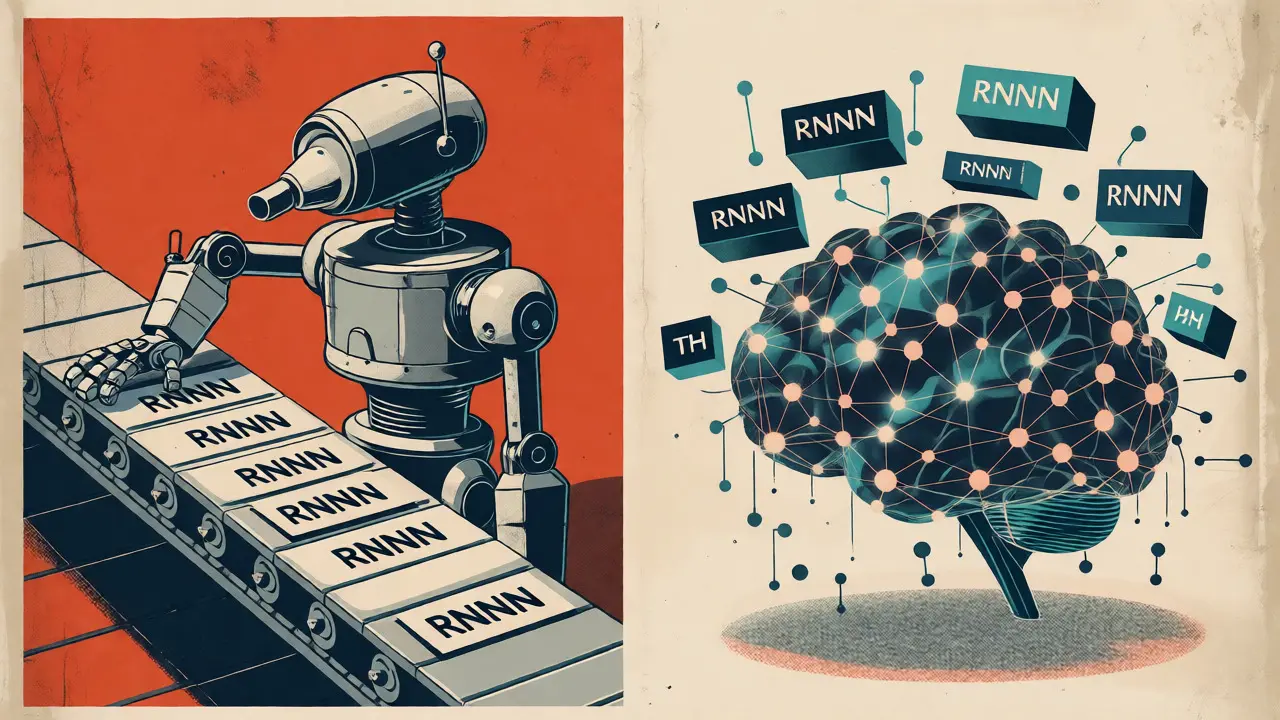
How Positional Information Enables Word Order Understanding in Large Language Models
Discover how Transformers use positional encoding to understand word order. Learn why Absolute Embeddings failed, why RoPE dominates, and how new research balances position with semantics.
Read More
From Rule-Based NLP to Large Language Models: A 30-Year Evolution
Trace the 30-year evolution of Natural Language Processing from rigid rule-based systems to modern Large Language Models. Discover how statistical methods, neural networks, and Transformers revolutionized AI's ability to understand and generate human language.
Read More
LLM Latency Explained: TTFT, ITL, and How to Speed Up Inference
Explore the mechanics behind LLM latency. Learn how TTFT and ITL work, why sequential generation slows things down, and practical tips to optimize inference speed.
Read More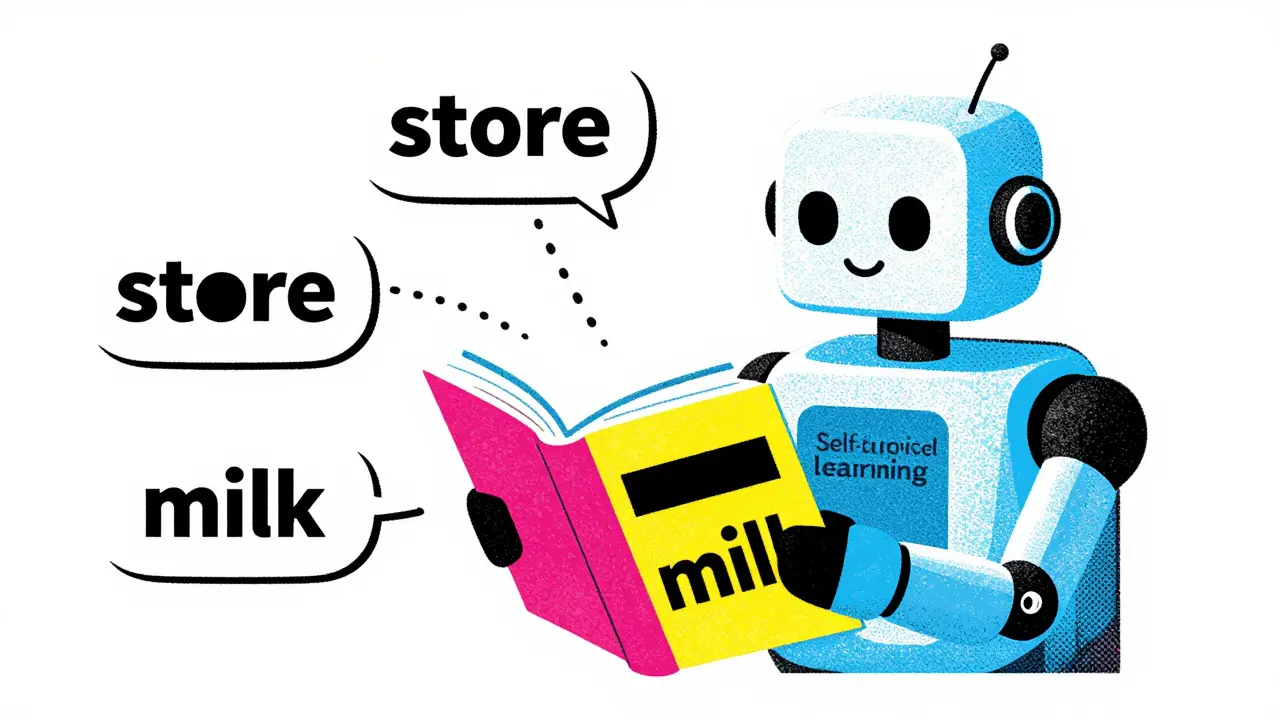
How Large Language Models Capture Semantics and Syntax through Self-Supervision
Discover how Large Language Models master language rules. Learn how self-supervised learning and attention mechanisms enable AI to capture complex syntax and semantics without explicit instruction.
Read More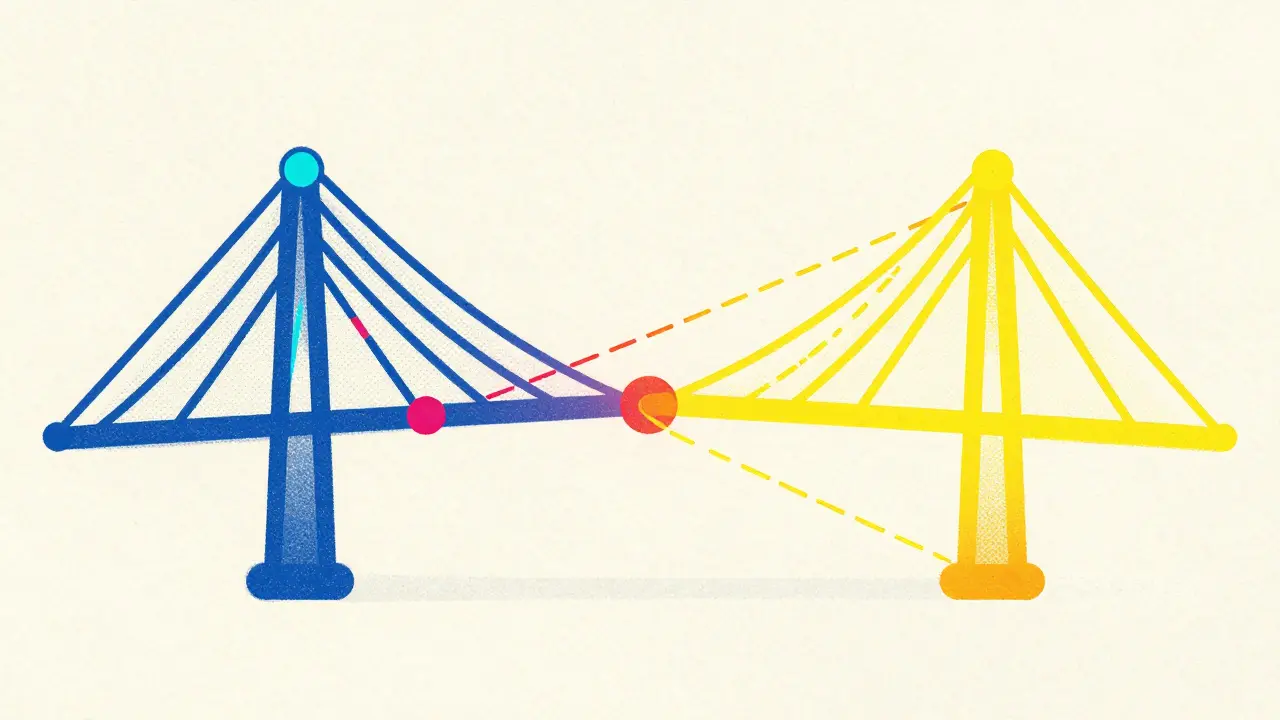
Cross-Attention in Encoder-Decoder Transformers: When LLMs Need Conditioning
Explore how cross-attention bridges encoder and decoder in transformers, enabling precise conditioning for translation and multimodal AI.
Read More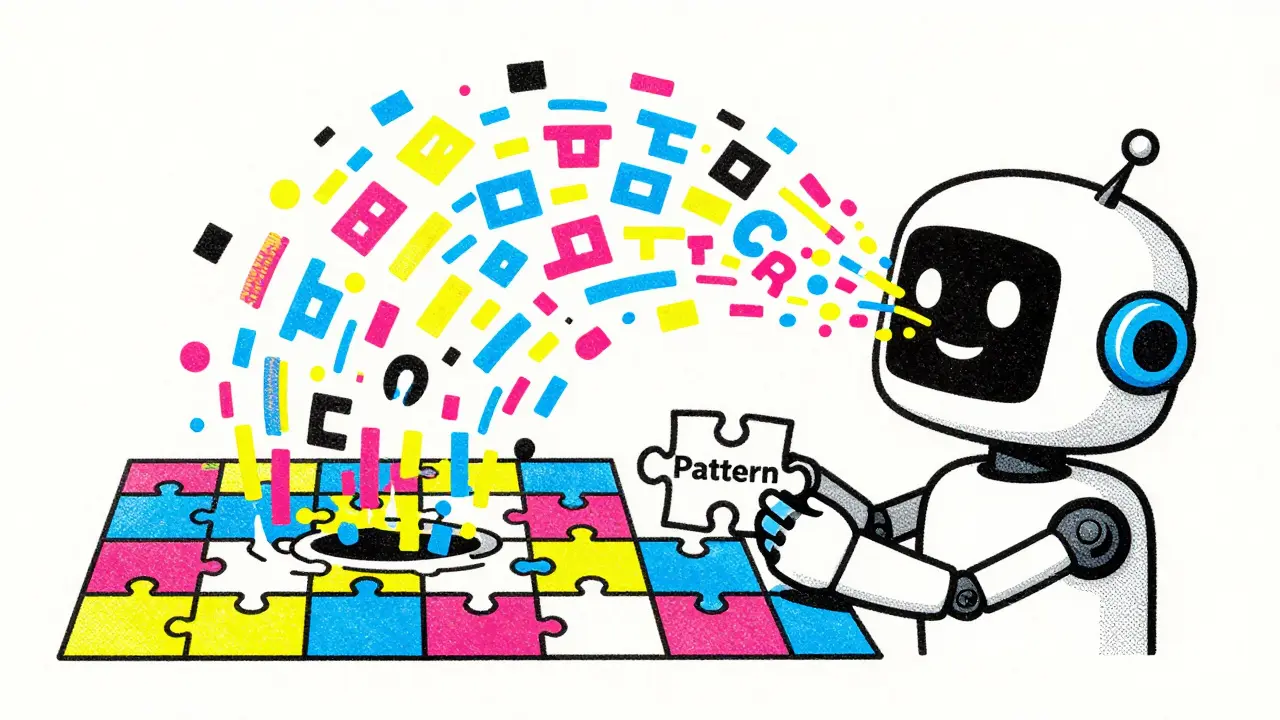
Self-Supervised Learning for Generative AI: From Pretraining to Fine-Tuning
Explore how self-supervised learning powers modern generative AI by leveraging unlabeled data. Learn about pretraining mechanisms, fine-tuning benefits, and real-world enterprise adoption trends.
Read More
Why Large Language Models Outperform Task-Specific Systems on Many NLP Tasks
Large language models outperform task-specific NLP systems on complex, context-heavy tasks due to their scale, architecture, and ability to generalize. But for simple, domain-specific tasks, traditional models still win on accuracy and efficiency.
Read More