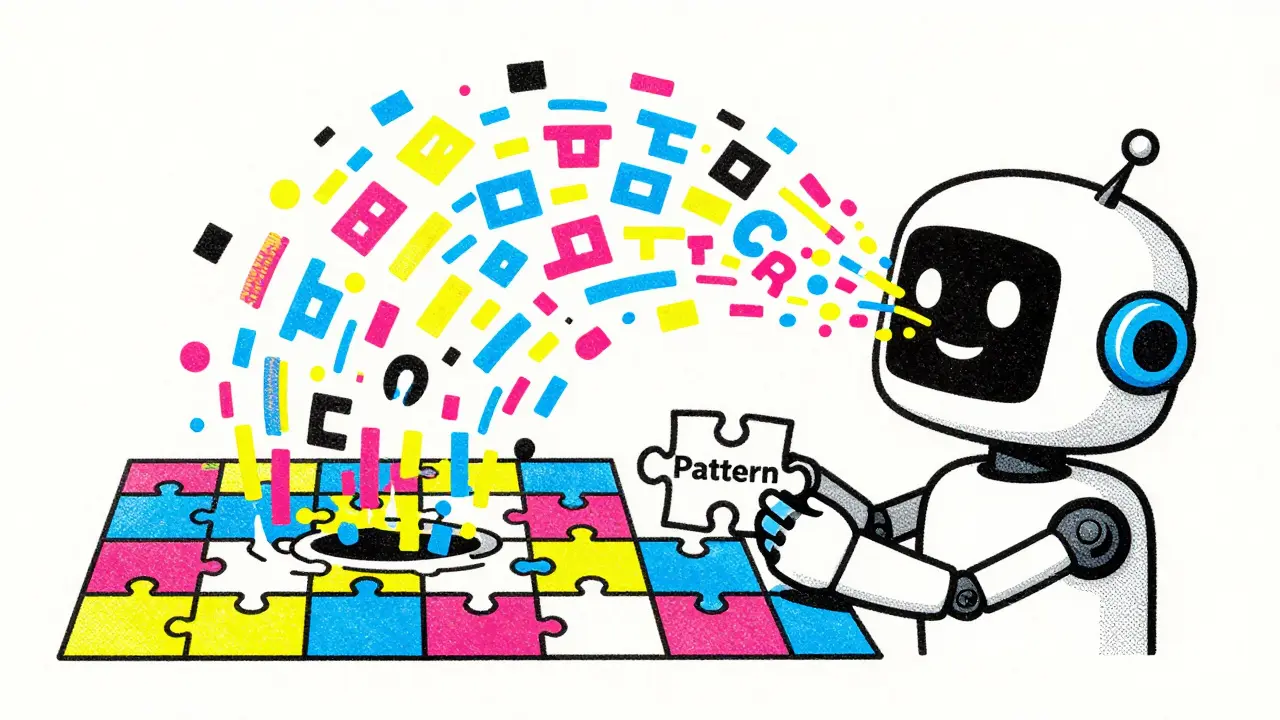
Imagine teaching a child to recognize a cat without showing them thousands of labeled photos. Instead, you let them play with puzzles, fill in missing pieces, and guess what comes next in a story. That is essentially how Self-Supervised Learning works. It is the engine behind the most powerful Generative AI systems today, allowing models to learn from vast amounts of unlabeled data by creating their own training tasks. As of 2026, this approach has moved from experimental research to the backbone of enterprise AI, powering everything from creative content generation to complex fraud detection.
The shift toward self-supervised learning (SSL) addresses a massive bottleneck in artificial intelligence: the scarcity of high-quality labeled data. Human labeling is slow, expensive, and often biased. SSL bypasses this by leveraging the estimated 98% of global data that remains unlabeled. By forcing models to solve "pretext tasks"-like predicting the next word in a sentence or reconstructing a masked part of an image-these systems build deep internal representations of the world. This article breaks down how SSL transforms raw data into intelligent behavior, guiding you from the technical foundations of pretraining to the practical realities of fine-tuning for specific business needs.
The Core Mechanism: How Self-Supervised Learning Works
At its heart, self-supervised learning is about generating labels from the data itself. Unlike supervised learning, which requires explicit human annotations (e.g., "this is a dog"), SSL creates pseudo-labels through structural constraints within the data. The model learns by trying to predict parts of the input based on other parts, effectively teaching itself the underlying patterns and relationships.
For text-based generative AI, the dominant method is Causal Language Modeling. Models like GPT-4 use this approach, where the system predicts the next token in a sequence using only previous tokens as context. With a context window of up to 32,768 tokens, these models learn grammar, logic, and factual knowledge by processing billions of documents. Another common technique is Masked Language Modeling, popularized by BERT. Here, 15% of tokens are hidden, and the model must predict them based on surrounding context, achieving over 90% accuracy in reconstruction tasks.
In visual domains, the mechanics differ. Contrastive Learning frameworks like SimCLR train models to distinguish between similar and dissimilar image augmentations. Meanwhile, diffusion models used in image generation, such as DALL-E 3, rely on inpainting techniques. These models mask 50-80% of an image’s pixels and learn to reconstruct the missing regions. This process requires significant computational power, often consuming millions of GPU hours, but it results in a profound understanding of visual structures, lighting, and object relationships.
Pretraining: Building the Foundation
Pretraining is the phase where the bulk of learning occurs. During this stage, the model ingests massive datasets-often terabytes of text, images, or audio-to develop generalizable features. This is where the term "dark matter of intelligence," coined by Meta AI scientists, truly applies. The model isn’t being taught specific tasks; it’s absorbing the statistical regularities of the world.
The scale of modern pretraining is staggering. For instance, training a medium-scale model with one billion parameters can cost approximately $45,000 in cloud computing resources alone. Larger models, like those powering top-tier generative services, require exaflops of compute power. However, the investment pays off. Models pretrained via SSL have demonstrated the ability to generalize across diverse domains without further specialized training. They understand concepts like cause-and-effect, spatial reasoning, and linguistic nuance simply by observing patterns in unlabeled data.
A critical component of effective pretraining is the choice of pretext task. Research shows that performance can vary by up to 22% depending on how well the pretext task aligns with downstream applications. Recent advancements, such as Meta’s "adaptive masking" introduced in Llama 3, dynamically adjust the difficulty of these tasks based on data complexity. This innovation improved fine-tuning efficiency by 23%, making the pretraining phase more resource-effective while maintaining high representation quality.

Fine-Tuning: Specializing the Model
Once pretraining establishes a strong foundation, fine-tuning tailors the model to specific applications. This step bridges the gap between general intelligence and specialized utility. Thanks to SSL, fine-tuning requires significantly less labeled data than traditional methods. While pure supervised learning might need 100% labeled datasets, SSL-pretrained models often achieve comparable performance with just 10-20% labeled examples.
This data efficiency is transformative for industries where labeling is costly or difficult. In healthcare, for example, SSL pretraining on one million unlabeled X-rays improved pneumonia detection accuracy by 18.7% compared to supervised-only approaches. In manufacturing, Siemens used SSL to analyze factory sensor data, achieving 92% accuracy in predicting equipment failures 72 hours in advance using only 5% labeled failure examples. This reduction in downtime highlights the practical ROI of SSL-driven fine-tuning.
However, fine-tuning is not without challenges. Practitioners report that hyperparameter tuning and selecting appropriate augmentation strategies remain difficult. The risk of "representation collapse"-where the model fails to capture meaningful distinctions-requires careful mitigation techniques like temperature-scaled contrastive loss. Additionally, while SSL reduces labeling costs, it demands expertise in transformer architectures and domain-specific knowledge to design relevant pretext tasks. A 2024 survey indicated that machine learning engineers spend 3-6 months mastering these techniques before deploying them in production.
| Feature | Supervised Learning | Self-Supervised Learning |
|---|---|---|
| Data Requirement | 100% Labeled Data | Mostly Unlabeled Data |
| Labeling Cost | High | Low |
| Compute Intensity (Pretraining) | Moderate | Very High |
| Generalization Ability | Limited to Training Domain | Broad Cross-Domain |
| Fine-Tuning Efficiency | Requires Large Labeled Sets | Effective with Small Labeled Sets |
Enterprise Adoption and Real-World Impact
The transition from research to production has been rapid. According to Gartner’s 2025 AI Survey, 92% of enterprises now incorporate SSL into their AI development pipelines. The financial sector leads this adoption, with institutions analyzing millions of unlabeled transactions to detect fraud. One case study showed a 27% reduction in false positives and a 33% increase in fraud detection rates compared to traditional supervised systems.
The economic impact is substantial. The global SSL market, valued at $4.7 billion in 2024, is projected to reach $28.3 billion by 2028. Enterprises typically see ROI within 11.3 months of initial deployment, driven by reduced labeling expenses and superior model performance. Technology companies show the highest adoption rate at 95%, followed by healthcare at 87%. This widespread integration suggests that SSL is no longer an optional enhancement but a standard requirement for competitive AI systems.
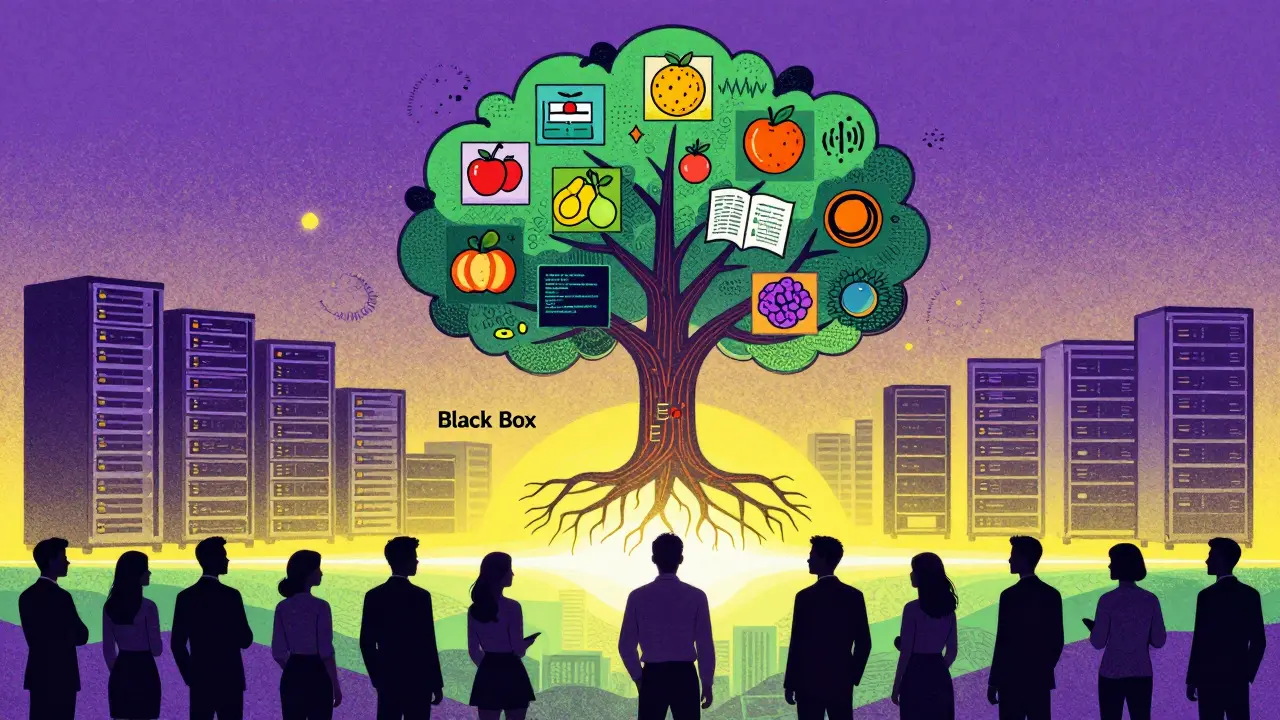
Despite the benefits, challenges persist. User feedback from engineering communities highlights concerns about computational costs and the "black box" nature of learned representations. Debugging why an SSL model made a specific prediction can be difficult, as the internal logic emerges from complex pattern recognition rather than explicit rules. Furthermore, SSL models can inherit and amplify biases present in unlabeled data at rates 18-25% higher than curated supervised datasets. This necessitates rigorous bias mitigation strategies and transparent documentation, especially under emerging regulations like the EU AI Act.
Future Trajectories and Emerging Trends
As we move through 2026, SSL is evolving toward greater efficiency and multimodal capabilities. Google’s PaLM-E 2 incorporates multimodal SSL pretraining across text, images, and sensor data, achieving state-of-the-art performance with 40% less compute than previous approaches. This convergence of modalities allows models to understand relationships between different types of data, enhancing their generative capabilities.
Researchers are also focusing on reducing the environmental and financial footprint of SSL. Stanford’s 2025 demonstration of "sparse SSL" approaches reduced pretraining compute requirements by 65% while maintaining 95% of performance. Industry analysts forecast that by 2027, 99% of enterprise generative AI systems will use SSL pretraining as a standard practice. However, experts like Gary Marcus caution that SSL alone cannot provide causal reasoning. To achieve true understanding, future systems will likely combine SSL with symbolic AI and causal inference techniques.
For developers and organizations, the path forward involves balancing scale with specificity. Leveraging frameworks like Hugging Face Transformers, which 82% of practitioners use, provides a solid starting point. Success depends on selecting appropriate pretext tasks, managing computational budgets, and continuously monitoring for bias and drift. As SSL becomes ubiquitous, the competitive edge will shift from merely adopting the technology to optimizing its application for unique business contexts.
What is the main advantage of self-supervised learning over supervised learning?
The primary advantage is data efficiency. Self-supervised learning leverages vast amounts of unlabeled data, which makes up 98% of available information, whereas supervised learning requires expensive and time-consuming human-labeled datasets. This allows models to learn richer representations and generalize better to new tasks with minimal labeled examples during fine-tuning.
How much does it cost to pretrain a self-supervised model?
Costs vary significantly by model size. Pretraining a medium-scale model with one billion parameters can cost around $45,000 in cloud computing fees. Larger foundational models may require millions of GPU hours, costing tens of millions of dollars. However, recent advancements in sparse SSL aim to reduce these compute requirements by up to 65%.
Can self-supervised learning replace human labeling entirely?
Not entirely. While SSL drastically reduces the need for labeled data, some labeled examples are still required for fine-tuning to align the model with specific tasks. Typically, 10-20% labeled data is sufficient after SSL pretraining, compared to 100% for traditional supervised methods. Human oversight remains crucial for addressing bias and ensuring safety.
What are the biggest risks associated with self-supervised learning?
Key risks include the amplification of biases present in unlabeled data, high computational costs, and interpretability issues. SSL models can inherit societal biases at higher rates than curated datasets. Additionally, the "black box" nature of learned representations makes debugging and explaining model decisions challenging, which is a concern for regulated industries.
Which industries are adopting self-supervised learning the fastest?
The technology sector leads with 95% adoption, followed by healthcare (87%) and financial services (82%). These industries benefit most from SSL’s ability to handle large volumes of unlabeled data, such as medical imaging records or transaction logs, improving diagnostic accuracy and fraud detection while reducing operational costs.