
Imagine you spent months training a giant language model, only to realize your top-tier benchmark scores were built on cheating. That’s exactly what happens when evaluation data leaks into training corpora. By March 2026, we know this isn't just a suspicion; it's a documented reality. Research shows contamination can inflate benchmark scores by up to 20% for massive models like Llama 1. If you're relying on raw scores to pick an AI provider, you might be looking at fake results.
This isn't paranoia-it's a math problem. When a model memorizes the test questions instead of learning to solve them, the evaluation fails its core purpose: measuring generalization. We call the process of fixing this Task Decontamination. It involves identifying which examples in your test set overlap with your training data and removing them before scoring. Without this step, you aren't testing intelligence; you're testing memory recall.
What Is Data Contamination in LLMs?
Data contamination occurs when the datasets used to train an Large Language Model (LLM)Deep Learning System inadvertently contain text from the very benchmarks used to evaluate it later. In early 2024, OpenAI's internal analysis revealed that even sophisticated models like GPT-4 saw coding capability scores drop significantly after rigorous cleaning. Specifically, HumanEval scores fell from 67% to 52.3%. That gap represents pure illusion.
The root cause is usually the sheer volume of internet scrapers. As models grew larger, their training corpora began absorbing everything: GitHub repositories, Stack Overflow threads, and yes, public dataset files like MMLU or GSM8K. By the time researchers publish a model card in 2025 or 2026, the line between "training knowledge" and "test data" is often blurred. You cannot fix this with better architecture; you must scrub the data before the evaluation begins.
The ConTAM Framework and Detection Metrics
In March 2024, Maxim AI introduced the ConTAM framework (Contamination Threshold Analysis Method). This became the gold standard for measuring overlap. Instead of guessing, ConTAM uses four specific metrics to find contaminants. These aren't abstract ideas; they are mathematical filters applied to every token in your dataset.
| Metric Name | Methodology | Best Use Case | Detection Accuracy |
|---|---|---|---|
| Token-Match | Counts exact token overlaps | Exact duplicates | Low false positives |
| N-Gram-Match | Finds continuous token sequences | Paragraph copying | Medium sensitivity |
| Token-Extend | Allows mismatches/skips | Slight paraphrasing | High flexibility |
| Longest-Match | Finds longest contiguous span | Most reliable filtering | Highest precision |
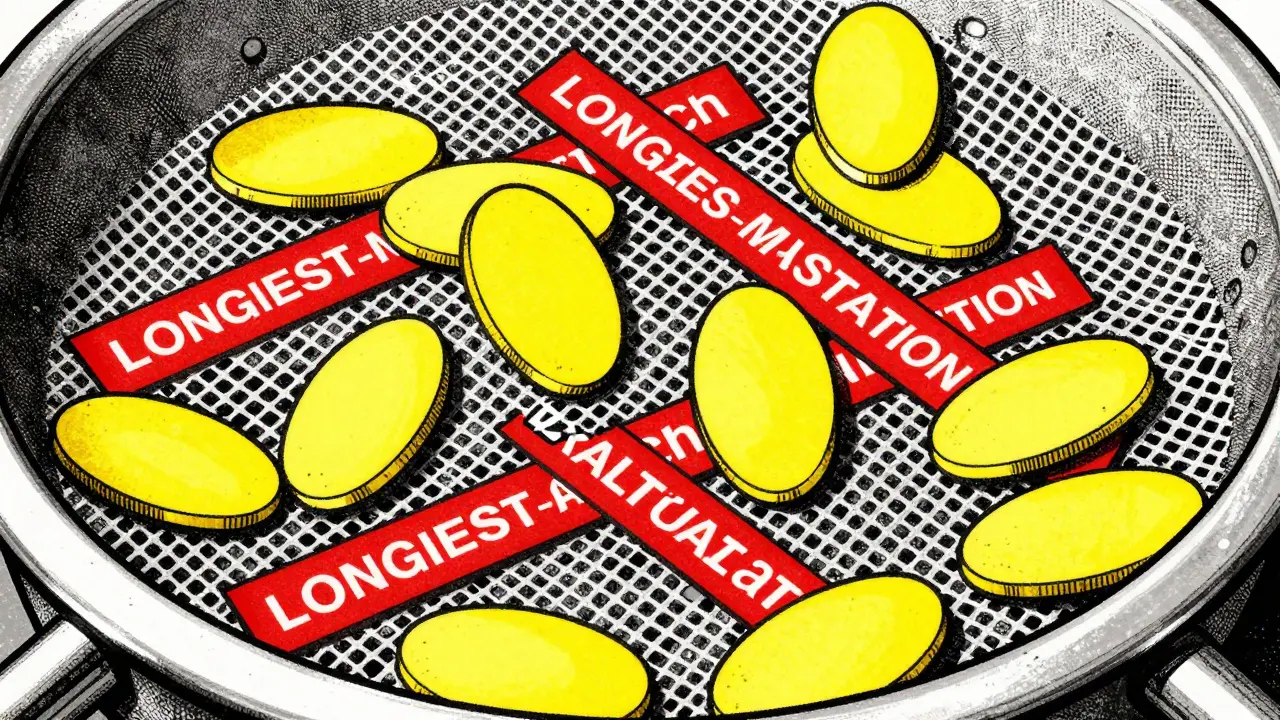
Among these, Longest-Match proved most effective in 2025 studies. It looks for the longest string of identical text rather than counting random small overlaps. Why does this matter? A few matching words (like "The cat sat") appear everywhere and aren't useful for proving contamination. A 50-word identical paragraph, however, is a smoking gun. Maxim AI's team found that using Longest-Match yielded a 12-18% higher Estimated Performance Gain (EPG) on tasks like MMLU compared to simple token counting.
Understanding Estimated Performance Gain (EPG)
Once you run a scan, you need to know how much the contamination actually hurt your numbers. This is where EPG comes in. It calculates the difference between the model's performance on the entire benchmark versus the clean, uncontaminated subset. Think of it as the "inflation rate" of your benchmark.
For smaller models like Pythia (12B parameters), EPG might be negligible-around 4.3% on some tests. However, for massive models like Llama 1 (65B), that number jumps to 17.2%. This tells us that parameter count directly correlates with the ability to exploit leaked data. If you are comparing two models and one has a much higher EPG, the leader might simply be the one that memorized the test better. To get a fair comparison, always report the "decontaminated score" alongside the raw score.
Implementing Decontamination with Real Tools
You don't need to build detection software from scratch. The industry standard is lm-evaluation-harness, maintained by EleutherAI since 2020. It includes built-in methods called should_decontaminate and doc_to_decontamination_query. When enabled, these functions filter out bad examples automatically, tagging the resulting benchmark with a "decontaminate" suffix.
However, using the harness requires setup. You typically need Python 3.8+, PyTorch, and access to the original training corpus for comparison. As of late 2025, newer methods like the "LLM Decontaminator" reduced this dependency. These tools use embedding similarity search followed by verification with a strong verifier like GPT-4. While faster, they require API credits. For enterprise teams, the trade-off is speed versus computational cost.
If you are working in Q2 2026, you should also look at ContamScan, released by Meta AI in June 2025. It implements all four ConTAM metrics with automated threshold selection. Before that, manual threshold tuning was a nightmare. Teams would spend weeks debating if a 10-token overlap was enough to ban a question. With ContamScan, the tool adjusts based on model size, saving researchers dozens of configuration hours.

The Hidden Cost: Time and Resources
Decontamination isn't free. According to a survey of practitioners in 2025, the average initial setup takes between 80 to 120 hours. That includes mastering n-gram matching, calibrating thresholds, and interpreting the EPG charts. Most teams implement this selectively because running it on every benchmark costs roughly 37-62 hours of processing time per dataset.
This creates a disparity between well-funded labs and academic researchers. Large companies like Google or Anthropic can afford full sweeps. Smaller teams often rely on default settings, which ConTAM researchers warn miss up to 42% of contaminated examples due to false negatives. If you are a startup, this means your evaluation strategy might be less rigorous than your competitors'. It's not that you're lazy; it's a resource constraint.
Future of Clean Benchmarks
The industry knows static cleaning isn't enough. By 2026, dynamic benchmarks are gaining traction. LiveCodeBench and similar projects update evaluation data monthly to stay ahead of training cuts. However, dynamic benchmarks introduce their own issue: performance variance increases by over 10% because the tests change so rapidly. There is no perfect solution yet. But the trend is clear.
In January 2026, the ML Reproducibility Consortium released the Unified Decontamination Framework (UDF). This combines n-gram matching with LLM verification and dynamic updating into a single pipeline. Experts predict that by 2027, 100% of enterprise-grade LLM evaluations will incorporate formal decontamination procedures. Regulatory bodies like the EU AI Act are already pushing for demonstrable procedures in high-risk applications.
We are moving from a "wild west" era of benchmarking to a regulated environment where integrity matters more than vanity metrics. Ignoring this shift won't save you money in the long run; it will only damage your reputation when someone else runs a proper check.
Why does LLM data contamination happen?
Contamination happens because large language models scrape vast amounts of internet data for training. Since many benchmarks (like MMLU) are published online, they get absorbed into the training set. When the model is tested on the same data it learned from, it appears smarter than it really is.
Which metric is best for detecting contamination?
According to the ConTAM study (2024), the Longest-Match metric is the most effective. It identifies long contiguous spans of identical text, avoiding false positives from common phrases and capturing genuine data leakage more accurately than simple token counts.
How much does contamination inflate scores?
Research indicates contamination can inflate benchmark scores by 15-20% for large models. For example, open-source models showed an Estimated Performance Gain (EPG) of up to 17.2% on tests like MMLU when compared to clean versions of the same test set.
Can I decontaminate without retraining the model?
Yes. Post-hoc decontamination removes contaminated examples from the evaluation set before running tests. You do not need to retrain the model; you simply curate the test set to ensure no overlap with the known training data.
Is there an open-source tool for this?
Yes, lm-evaluation-harness is the primary tool used by EleutherAI. Additionally, Meta AI released ContamScan in mid-2025, and the ML Reproducibility Consortium launched the Unified Decontamination Framework (UDF) in early 2026.



Ajit Kumar
31 March, 2026 - 17:57 PM
The integrity of our scientific process depends on rigorous honesty, and yet we see corporations compromising their ethical obligations for vanity metrics.
It is deeply concerning that major players prioritize marketing numbers over genuine capability assessment.
When benchmarks become exercises in memory recall rather than intelligence testing, we fail the broader community.
This lack of transparency undermines the trust that academia places in published research results today.
We cannot simply ignore the evidence presented regarding data leakage in training sets anymore.
The responsibility falls on researchers to demand better standards from development teams immediately.
If we allow these inflated scores to persist, we validate dishonest practices across the industry.
Future generations will look back at this period with confusion regarding how quality was measured.
We must hold ourselves to a higher standard of truthfulness in all technological advancements.
The path forward requires a collective commitment to decontamination protocols without exception.
Ignoring this issue suggests a fundamental disrespect for the engineering discipline itself.
Every team needs to audit their own datasets before claiming any new records.
We need to remember that true innovation comes from solving problems, not cheating tests.
This situation highlights a moral failing in leadership across several major tech firms currently.
We have a duty to ensure that reported performance reflects actual generalization capabilities.
Diwakar Pandey
2 April, 2026 - 03:43 AM
I understand where you are coming from regarding the ethical implications here.
It is definitely worth noting that accuracy matters for everyone involved.
Small teams might struggle with the resources needed for full sweeps though.
Just wanted to add that tools are becoming more accessible now.
Geet Ramchandani
3 April, 2026 - 02:37 AM
This entire industry has built a house of cards on false pretenses for too long already.
Companies continue to release models with scores they knew were artificially inflated initially.
The public deserves better than these sanitized versions of reality presented by press releases.
It is infuriating how much capital gets funneled into projects with questionable baseline measurements.
Developers waste hours tuning parameters for datasets that overlap with training data anyway.
We are being gaslit by benchmarks designed to protect corporate egos rather than test utility.
The disparity between rich labs and academic groups creates an uneven playing field every day.
Smaller entities cannot afford the computational cost of proper decontamination pipelines easily.
Meanwhile giants like Google sit on proprietary data and claim superiority through manipulation tactics.
This system favors those with money instead of those with actual insight into intelligence.
We are effectively burning funding on cleaning up messes created by greed cycles.
It feels hopeless watching people pretend this is just a technical glitch to fix.
It is a fundamental flaw in how value is assigned to artificial systems right now.
The deception goes deeper than simple data overlap issues in the code repositories themselves.
True progress requires admitting the current state of affairs is completely unacceptable.
Sumit SM
4 April, 2026 - 05:57 AM
So the real question is!!! what do we do next???
The truth is hidden behind layers of lies...
But we must push forward!!!
Knowledge is power!
We cannot let them win!!!!
Bob Buthune
4 April, 2026 - 17:27 PM
I read through the whole thing and it just made me feel terrible about everything 😞
It seems like nobody actually cares about the truth anymore 🙃
They are all just hiding behind technical jargon to sell their products 💰
The way they inflate numbers is so manipulative and cruel towards the honest researchers 🤕
We are living in a world where memory is valued more than understanding 🧠
It is sad to see how fast integrity is disappearing from our field 😢
Every time I see a new model card I feel a sense of dread building up 🚫
The exhaustion of searching for clean data amongst the garbage fire is undeniable 🔥
We are all stuck in this cycle of validation seeking behavior that hurts everyone 🔄
I hope someone sees through the smoke screens soon before it is too late 💨
Just makes you want to walk away from the whole thing honestly 😴🛑
My heart sinks when I think about the students learning this false version of history 🎓
The silence from the big companies is deafening and really disturbing to hear 🐺
It drains my energy just trying to navigate through the noise daily ☹️
We deserve a brighter future where technology serves humanity instead of masters 🔮
Jane San Miguel
6 April, 2026 - 16:00 PM
It is regrettable that most practitioners still rely on flawed methodologies.
Pooja Kalra
7 April, 2026 - 12:25 PM
The essence of the problem lies within our collective desire for speed over wisdom.
True enlightenment in AI requires patience that modern culture lacks.
One must judge the spirit of the tool rather than the output alone.