Factories aren’t what they used to be. The clang of metal, the smell of oil, the endless cycle of human inspectors checking for flaws-that’s the old world. Today, a quiet revolution is happening on the shop floor, driven not by more workers or bigger machines, but by generative AI. It’s not just automating tasks. It’s rethinking how products are made, how machines stay alive, and how defects are caught before they ever leave the line.
Design That Thinks for Itself
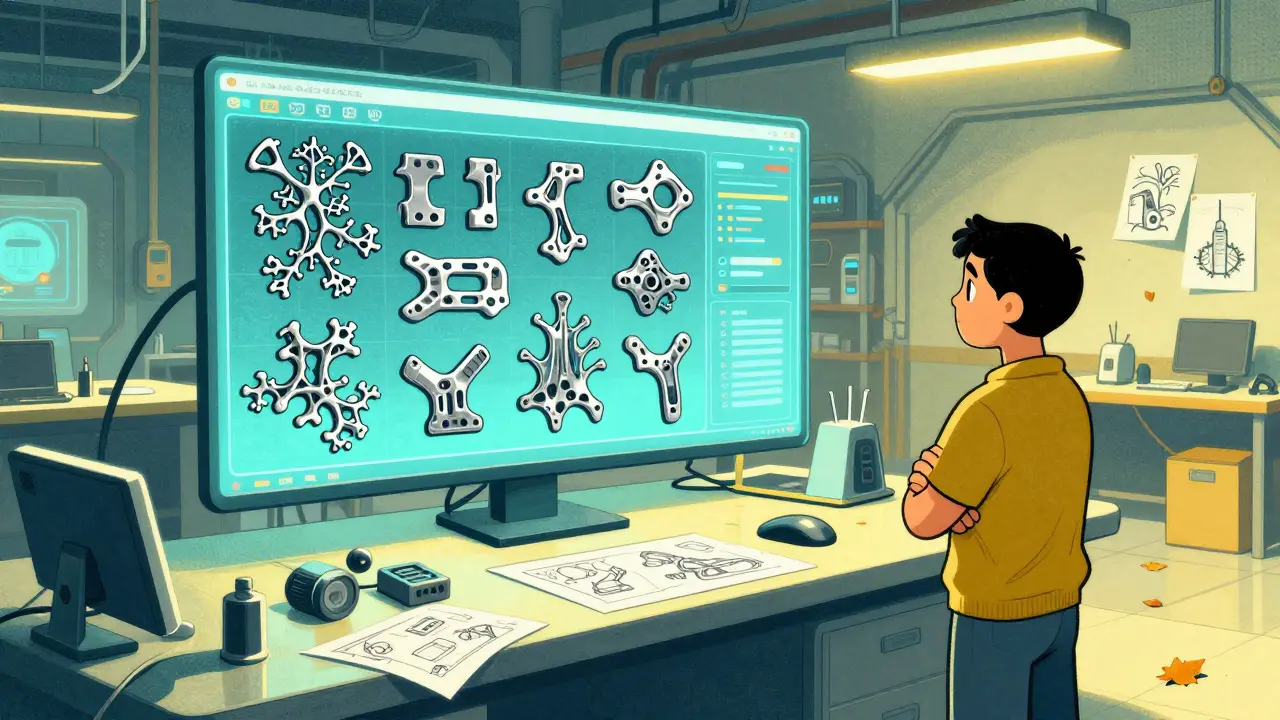
Gone are the days when a designer sketched three versions of a part, picked the best one, and called it done. Generative AI changes that entirely. You give it rules: "Make this bracket 30% lighter, use aluminum, handle 500 pounds of stress, and cost under $12." Then you walk away. In minutes, the AI generates 200+ unique designs-some you’d never imagine, others that look like they came from a sci-fi movie. It doesn’t copy. It creates.This isn’t science fiction. Companies like Siemens and GE are already using it to design turbine blades, automotive brackets, and even custom prosthetics. One manufacturer reduced material use by 40% on a single component by letting AI redesign it from scratch. Why? Because the AI doesn’t care about tradition. It doesn’t think, "This is how we’ve always done it." It only cares about the constraints you set.
And here’s the kicker: 80% of a product’s environmental impact is locked in at the design stage. That means AI-generated designs aren’t just cheaper-they’re greener. By optimizing shape, material, and weight before a single prototype is printed, manufacturers slash waste, cut energy use, and meet strict emissions regulations before production even starts.
On the factory floor, this isn’t just about making parts. It’s about making them right the first time. When a customer asks for a custom grip texture on a power tool, AI doesn’t need a new CAD engineer. It takes the input, generates the geometry, and sends the exact code to the CNC machine and the quality scanner. No delays. No guesswork.
Machines That Predict Their Own Breakdowns
Think about the last time a machine broke down in your factory. How much did that cost? Lost time? Rushed orders? Overtime pay? Now imagine knowing about the problem three days before it happened.That’s what predictive maintenance does. Generative AI doesn’t just watch machine vibrations or temperature spikes. It learns what normal looks like-down to the tiniest fluctuation. It notices when a bearing starts humming a half-step off-key, when a hydraulic line’s pressure wavers by 0.3%, or when a motor’s noise pattern shifts subtly. These are signals no human can catch. No sensor alone can flag them. But AI? It spots them instantly.
One plant in Ohio cut unplanned downtime by 67% in six months after deploying AI-driven monitoring. How? Instead of changing parts on a fixed schedule-whether they needed it or not-the AI told them exactly when each bearing, belt, or valve needed attention. That’s not maintenance. That’s precision healing.
And it’s not just about fixing things. It’s about making them last longer. By analyzing decades of failure data alongside real-time sensor streams, AI predicts not just when a part will fail, but why. Was it overheating? Contamination? Improper torque? The system learns, then adjusts its own monitoring to catch the next failure before it starts. The result? Equipment lasts 20-30% longer. Maintenance costs drop. Production stays steady.
Quality Control That Never Tires
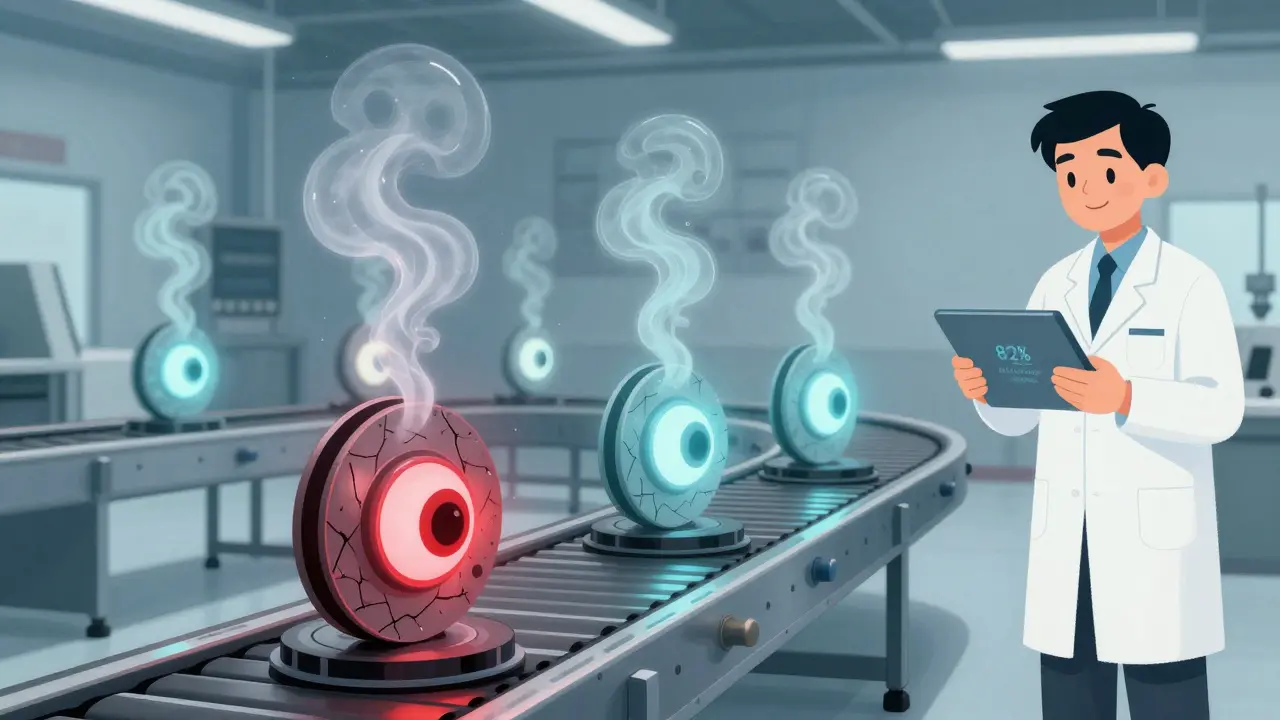
Human inspectors are good. But they get tired. Their eyes blur. Their focus slips. One missed crack on a brake rotor can mean a recall. A single misaligned weld on a medical device can cost a life.Generative AI doesn’t blink. It doesn’t need coffee. It sees every millimeter of every product, every second, with the same precision. Using computer vision trained on millions of images-both perfect and flawed-it spots defects no human ever would: micro-cracks in ceramic housings, inconsistent coating thickness, even subtle discoloration that signals material degradation.
But here’s the smart part: when defects are rare-say, one in 10,000 units-training an AI model is hard. You don’t have enough examples. So generative AI creates them. It simulates what a defect looks like under different lighting, angles, and materials. It generates synthetic flaws so the system learns to recognize them even when they’re hidden or faint. This isn’t just detection. It’s anticipation.
One electronics maker reduced defect escape rates by 82% after switching to AI-powered visual inspection. Their old system flagged 40% false positives. The new one? Less than 2%. That means less scrap, less rework, and fewer angry customers.
The Digital Twin That Runs Your Factory
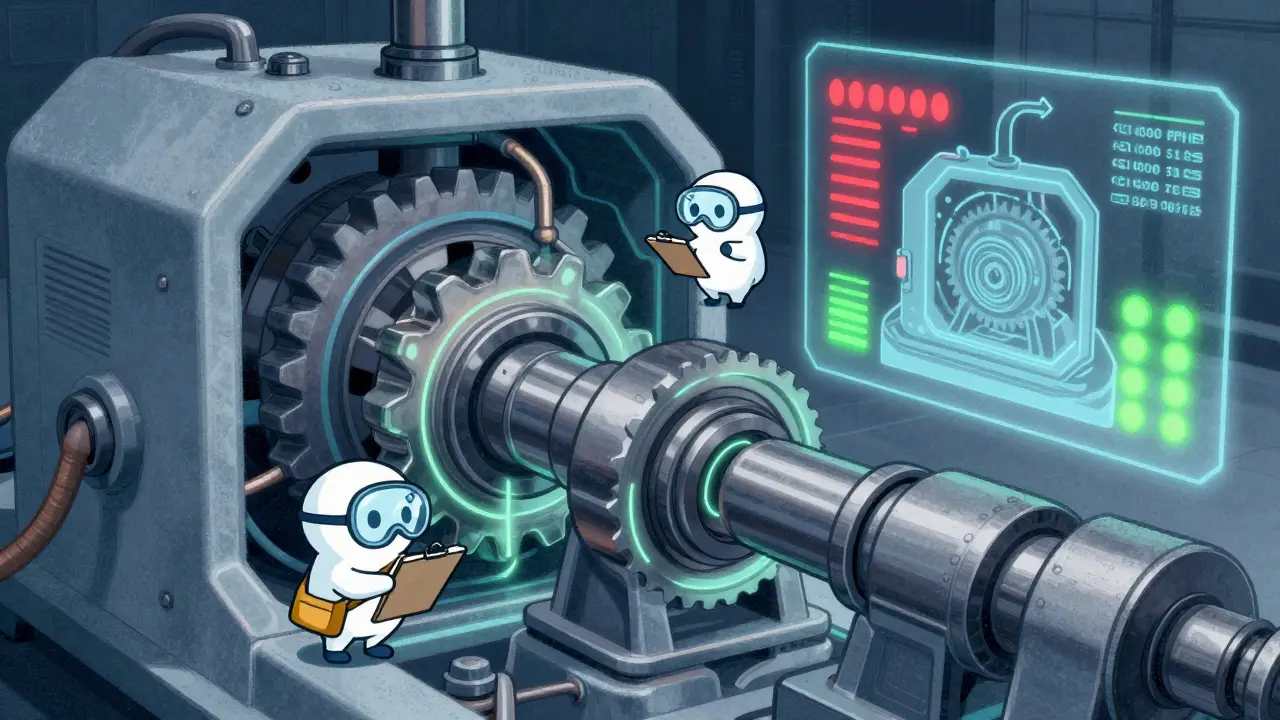
Every factory has a ghost. It’s not a spooky figure-it’s a digital twin. A living, breathing simulation of your entire production line, fed by real-time data from sensors, robots, and machines. Generative AI doesn’t just watch this twin. It plays with it.It runs thousands of simulations: What if we move this robot 12 inches to the left? What if we slow the conveyor by 8%? What if we shift energy use to off-peak hours? Each simulation shows the ripple effect-on throughput, energy use, carbon output, and even worker safety.
One plant in Germany used this to redesign its assembly line without shutting down a single machine. The AI suggested swapping two workstations, changing the toolpath of a laser cutter, and adjusting the timing of a cooling station. Result? 19% faster output. 14% less energy. Zero downtime. All from a simulation.
It’s not just about speed. It’s about adaptability. If demand spikes for a new product model, the AI reconfigures the entire line in hours-not weeks. If a supplier’s material changes, the AI recalibrates the machines instantly. This isn’t automation. It’s intelligence.
Supply Chains That Anticipate Demand
Ever had too much inventory? Or worse-run out of a critical part right before a big order? Generative AI doesn’t guess. It calculates.It looks at historical sales, weather patterns, economic trends, even social media buzz around a product. It factors in supplier lead times, warehouse capacity, and shipping delays. Then it predicts demand down to the week, sometimes the day.
One auto parts maker cut inventory costs by 31% last year by using AI to forecast component needs. Instead of stockpiling 60 days of bolts, they now carry 12. And they never ran out. Why? Because the AI saw a spike in demand for electric SUVs in the Midwest three weeks before sales data showed it.
It doesn’t stop at inventory. It reroutes shipments. It suggests alternative suppliers. It even predicts which factories should produce which parts based on energy costs, labor availability, and carbon footprint. The supply chain isn’t a chain anymore. It’s a living network.
Personalization at Scale
Remember when custom meant expensive? When ordering a shoe in your exact foot shape took six weeks and triple the price? That’s over.Generative AI lets manufacturers produce one-of-a-kind products at mass-production speeds. A customer uploads their foot scan. The AI generates a custom sole geometry, adjusts the material blend for their weight and gait, and sends the design straight to the 3D printer. No molds. No tooling changes. No delays.
Companies like Adidas and Nike are already doing this. But it’s not just for shoes. Think custom medical implants, tailored industrial filters, personalized tool handles, or even bespoke furniture frames. The cost? Almost identical to mass-produced items. The value? Sky-high.
This isn’t a luxury. It’s the new baseline. Customers expect it. And AI makes it possible-not just for big brands, but for small manufacturers too.
Why This Matters Now
By 2026, nearly half of all manufacturers are using generative AI in design, maintenance, or quality control. That’s not a trend. It’s a requirement.The companies falling behind aren’t just losing efficiency. They’re losing trust. Customers want sustainable products. Investors want lean operations. Regulators want traceable quality. Generative AI delivers all three.
And it’s getting cheaper. Cloud-based AI tools now cost less than a single full-time engineer. Implementation time? Weeks, not years. ROI? Most manufacturers see payback in under six months.
This isn’t about replacing people. It’s about empowering them. AI handles the repetitive, the invisible, the overwhelming. Humans handle the strategy, the creativity, the judgment. Together, they build better, faster, cleaner.
The factories of tomorrow won’t be louder. They’ll be smarter. And they’ll be running on generative AI.
Can small manufacturers afford generative AI?
Yes. Cloud-based generative AI tools now start at under $500/month. Many platforms offer pay-as-you-go pricing, so you only pay for the design simulations or inspections you use. A small shop using AI for predictive maintenance or quality checks can see a return on investment in under 90 days by cutting downtime and scrap rates. You don’t need a team of data scientists-just someone who understands the machines.
Does generative AI replace engineers and inspectors?
No. It frees them. Engineers spend less time tweaking CAD files and more time solving complex problems the AI can’t handle-like balancing customer needs with material limits. Inspectors shift from staring at screens all day to overseeing AI systems, investigating anomalies, and training models. The best manufacturers are turning their workforce into AI supervisors and innovators, not replacements.
How long does it take to implement generative AI in manufacturing?
It depends. For a single use case-like AI-based quality inspection on one production line-you can go from zero to live in 4 to 8 weeks. That includes data collection, model training, and integration. Full plant-wide deployment across design, maintenance, and supply chain might take 6 to 12 months. But you don’t have to do it all at once. Start with one high-impact area, prove the value, then expand.
Is generative AI reliable for safety-critical parts?
It’s more reliable than humans. AI doesn’t get tired, distracted, or biased. In aerospace and medical device manufacturing, AI systems are already approved by regulators because they detect defects at a rate 3-5 times higher than human inspectors. But they’re not used alone. Human engineers validate AI outputs, especially for critical components. The system is a powerful assistant, not a sole decision-maker.
What data do I need to get started?
Start with what you already have: historical maintenance logs, product defect reports, sensor data from machines, and design files. You don’t need perfect data-just enough to show patterns. Many AI tools can clean and interpret messy data. The key is consistency. If you track when a machine fails and what the vibration looked like right before, you’ve got the foundation. Most manufacturers already have 80% of what they need.
Can generative AI help with sustainability goals?
Absolutely. By optimizing designs to use less material, reducing energy use through smarter scheduling, cutting waste from defects, and improving logistics efficiency, generative AI can reduce a manufacturer’s carbon footprint by 15-30% in the first year. For companies under regulatory pressure to meet emissions targets, this isn’t optional-it’s survival.
Manufacturing in 2026 isn’t about working harder. It’s about thinking smarter. Generative AI isn’t a tool you add-it’s a capability you unlock. And the ones who use it now? They’re not just keeping up. They’re setting the pace.
Rajat Patil
26 February, 2026 - 18:05 PM
It is truly inspiring to see how technology can serve humanity in such quiet, meaningful ways.
Not about replacing workers, but about giving them back time.
Time to think. To create. To be with family.
This is the kind of progress we should celebrate.
Thank you for writing this with such clarity and care.
deepak srinivasa
28 February, 2026 - 10:36 AM
I wonder how this works in places where internet is slow or unstable.
Most of our factories still rely on manual logs and paper charts.
Is there a way to bridge that gap without requiring full digital overhaul?
pk Pk
1 March, 2026 - 16:07 PM
This is exactly what I’ve been telling my team at the workshop.
AI isn’t here to take jobs - it’s here to take the boring, repetitive stuff off our plates.
I’ve seen guys who used to stare at screens for hours now teaching new hires how to interpret AI alerts.
They feel like mentors again.
That’s the real win.
And yes, small shops can start with $500/month - we did it with a single vision system for weld checks.
ROI in 6 weeks.
You don’t need to be big to be smart.
NIKHIL TRIPATHI
2 March, 2026 - 05:59 AM
Just last week, our maintenance guy caught a bearing issue because the AI flagged a 0.2% variance in vibration.
He didn’t even know what to look for before.
Now he says he feels like a detective.
And the best part? The system learned from his notes.
It’s not magic.
It’s collaboration.
Also, the sustainability angle is huge.
We cut scrap by 38% in three months.
Our ESG report just got a lot easier to write.
Shivani Vaidya
3 March, 2026 - 11:22 AM
The shift from reactive to predictive maintenance is profound.
It transforms maintenance from a cost center into a strategic advantage.
Moreover, the reduction in material waste aligns with global sustainability imperatives.
One must consider not only economic but also ethical dimensions of such technological adoption.
Well-articulated.
Rubina Jadhav
4 March, 2026 - 04:21 AM
My cousin works in a small auto parts shop. He said they started using AI for quality checks last month. No more missed cracks. He’s happy. That’s all I needed to know.
sumraa hussain
5 March, 2026 - 02:25 AM
Broooooo.
AI doesn’t sleep.
AI doesn’t drink coffee.
AI doesn’t care if you had a bad day.
And guess what? That’s the point.
My old boss used to yell at inspectors for missing one defect in a thousand.
Now? The machine catches it.
And the inspector? He’s sipping chai, watching a dashboard, and smiling.
That’s not automation.
That’s liberation.
Let’s gooooooo.
Raji viji
7 March, 2026 - 00:38 AM
Look, everyone’s throwing around ‘generative AI’ like it’s the holy grail, but let’s be real - most of this is just fancy pattern recognition wrapped in buzzwords.
Oh, ‘synthetic defects’? You’re just hallucinating flaws to train the model.
And ‘digital twins’? We’ve had simulations for decades.
What’s new? The marketing budget.
Don’t get me wrong - it works.
But don’t act like this is some revolutionary leap.
It’s evolution with a fancy name and a VC-funded TED Talk.
Rajashree Iyer
7 March, 2026 - 08:02 AM
There is a quiet poetry in machines that learn.
They do not dream, yet they imagine.
They do not feel, yet they foresee.
They do not tire, yet they care - in the way only logic can care.
And perhaps, in this silent dance between human intention and algorithmic intuition,
we are not building smarter factories.
We are building mirrors - reflecting not just what we make,
but who we are.
And what we choose to preserve.
Or let go.