Category: Technology - Page 3

Safety in Multimodal Generative AI: Content Filters for Images and Audio
Explore essential content filters for multimodal AI, comparing Google, Amazon, and Microsoft solutions. Learn to block hidden threats in images and audio.
Read More
Robustness and Generalization Tests for Large Language Model Reliability
Explore essential robustness and generalization tests for LLM reliability. Learn about adversarial attacks, OOD evaluation, and frameworks like G-Eval to ensure model stability.
Read More
Why Transformers Power Modern Large Language Models: Core Concepts Explained
Discover why Transformers dominate modern AI. Learn about self-attention, encoder-decoder structures, and how they outperform RNNs in speed and context understanding.
Read More
How Internal Verification in LLMs Cuts Hallucinations and Errors
Explore how internal verification techniques like self-consistency and learned verifiers reduce LLM hallucinations. Learn practical implementation strategies for 2026.
Read More
Edge Cases That Trigger Hallucinations in Generative AI: Patterns and Prevention
Explore the specific edge cases that trigger AI hallucinations in generative models. Learn how prompt ambiguity, domain gaps, and rare data lead to errors, and discover proven prevention strategies like RAG and automated fact-checking.
Read More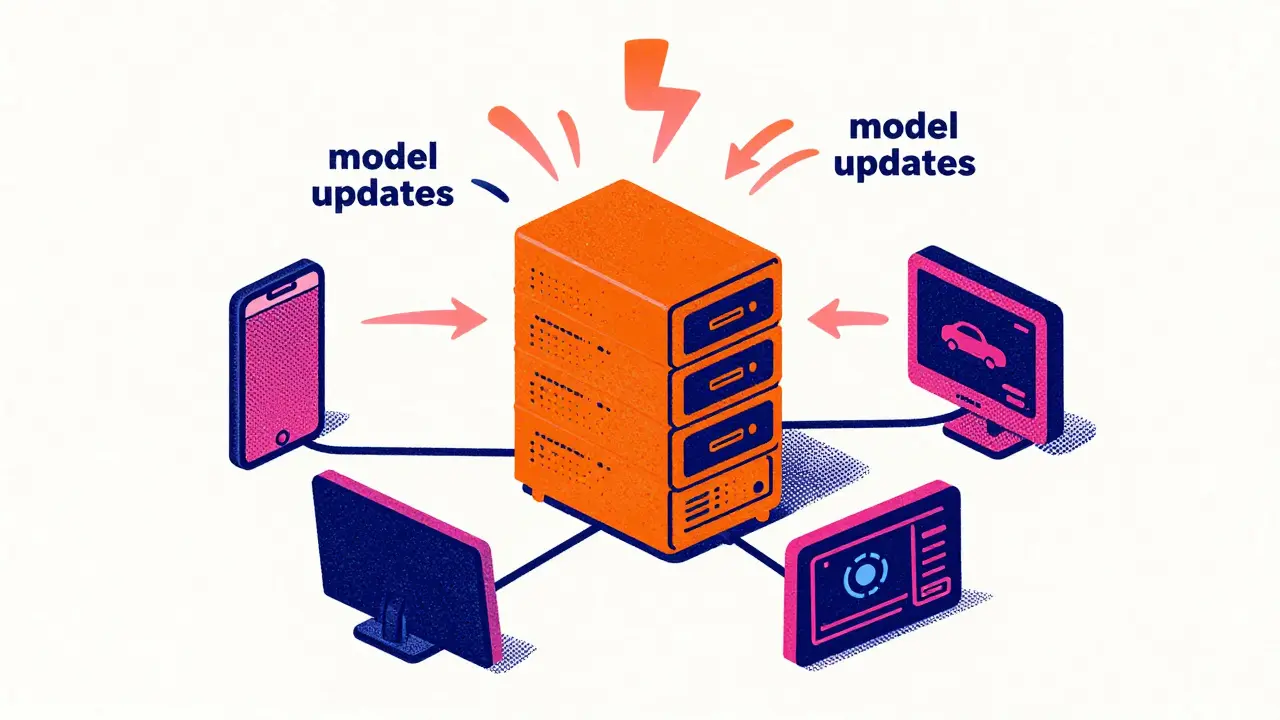
Federated Learning for Generative AI: Privacy-Preserving Collaboration
Explore how federated learning enables privacy-preserving collaboration for generative AI. Learn about secure multi-party computation, differential privacy, and real-world applications in healthcare and finance.
Read More
Why Output Tokens Cost More: The Computation Behind LLM Generation
Discover why output tokens cost 4-8x more than input tokens in 2026. Learn about autoregressive generation, parallel processing differences, and how to optimize LLM API costs.
Read More
Public Sector Generative AI Policies: Procurement, Transparency, and Accountability in 2026
Explore 2026 public sector generative AI policies covering procurement rules, transparency mandates, and accountability frameworks under new executive orders.
Read More
How Large Language Models Capture Semantics and Syntax through Self-Supervision
Discover how Large Language Models master language rules. Learn how self-supervised learning and attention mechanisms enable AI to capture complex syntax and semantics without explicit instruction.
Read More
Consent Management in LLM Apps: Protecting User Rights & Data Privacy
Explore how consent management is evolving for LLM apps. Learn why traditional cookie banners fail AI, the three tiers of data usage, and how to comply with GDPR and CCPA while maintaining user trust.
Read More
COPPA 2025 Update: How New AI Rules Change Children’s Data Consent
The 2025 COPPA update changes how companies handle children's data for AI. Learn about new consent rules, biometric definitions, and compliance deadlines before April 2026.
Read More
Grounding LLM Reasoning with External Verifiers: A Practical Guide
Learn how grounding LLM reasoning with external verifiers like CoRGI, FOLK, and GRiD reduces hallucinations and improves accuracy in AI systems.
Read More