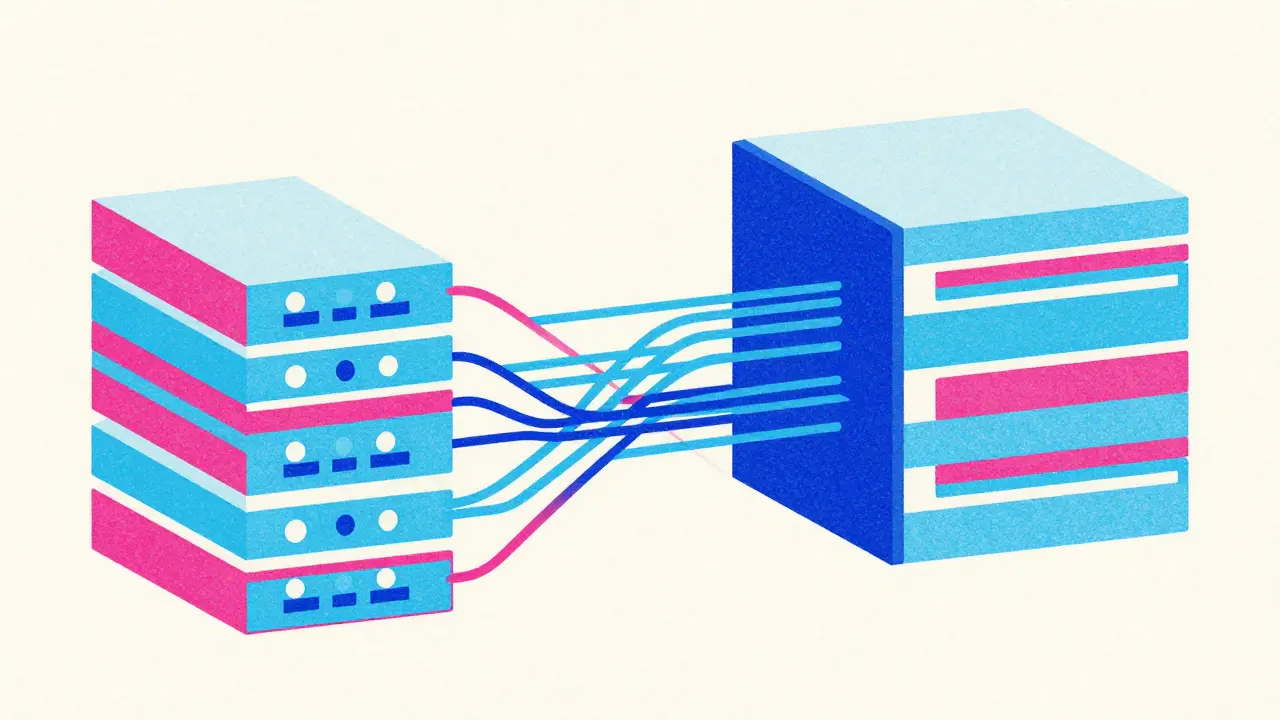
Have you ever stared at your API bill and wondered why the numbers are so high? You might have sent a short prompt, but the response was long. In 2026, that length is expensive. Across major providers like OpenAI and Anthropic, output tokens cost significantly more than input tokens. We are seeing ratios where output costs 4 to 8 times more than what you send in. This isn't just arbitrary pricing strategy by tech giants. It comes down to the raw computational physics of how Large Language Models work.
To understand why your bill spikes when the model talks back, we need to look under the hood. The difference lies in parallel processing versus sequential generation. Input tokens get processed all at once. Output tokens must be generated one by one, each requiring a full pass through the neural network. Let's break down exactly what happens inside the GPU and how this affects your bottom line.
The Parallel Power of Input Processing
When you send a prompt to an LLM, the model receives a sequence of tokens. If you send 1,000 words, that might be roughly 1,300 tokens. Here is the magic trick: the model processes these 1,300 tokens simultaneously. This is called parallel processing.
In technical terms, this is a single forward pass. The neural network takes the entire input context and computes the hidden states for every token in that batch at the same time. Whether you send 10 tokens or 10,000 tokens, the computational complexity scales linearly with the number of tokens, but the time taken remains relatively constant because modern GPUs are designed to handle massive matrix multiplications in parallel.
This efficiency means that reading your prompt is computationally cheap. The hardware does heavy lifting in one go. There is no waiting for token A to finish before starting token B. They all happen together. This is why input pricing stays low. You are paying for a single, efficient computation cycle regardless of the prompt length (within reason).
The Sequential Bottleneck of Output Generation
Now, imagine the model needs to write a response. It doesn't generate the whole paragraph at once. It generates one word-or rather, one token-at a time. This process is known as autoregressive generation.
Here is the problem: to predict the next token, the model must consider everything it has seen so far. That includes your original input AND every token it has already generated. So, if the model wants to generate the 50th word of its response, it runs a complete forward pass through the entire network, processing your input plus the previous 49 output tokens.
Then, to generate the 51st word, it runs another full forward pass, now including the first 50 output tokens. This creates a compounding effect. Each new token requires more computation than the last because the context window grows with every step. This sequential nature prevents parallelization. The GPU cannot speed up the generation by working on multiple output tokens at once because token 51 depends entirely on token 50 being correct.
This is why output tokens are computationally intensive. You are paying for N separate forward passes, where N is the number of output tokens. If the model writes 100 words, you pay for 100 distinct computations, each heavier than the last due to the expanding context.
Memory Overhead and State Maintenance
Beyond the calculation itself, there is the issue of memory. During output generation, the model must maintain state. It keeps track of attention scores, hidden states, and key-value pairs for every token in the current context. As the output grows, so does the memory footprint on the GPU.
This memory overhead slows things down. When the context window fills up, the GPU spends more time moving data around than doing math. This is often referred to as memory bandwidth bottleneck. To mitigate this, models use techniques like KV-cache optimization, but these still consume significant resources. The more tokens you generate, the more memory pressure you put on the system. Providers charge higher rates for output tokens to cover these increased hardware demands and energy costs associated with keeping large tensors active in VRAM.
Decoding Strategies Add Complexity
It is not just about predicting the most likely next word. Most applications use sophisticated decoding strategies to ensure quality. Techniques like beam search, temperature sampling, and top-p (nucleus) sampling add layers of computation.
For example, beam search explores multiple possible paths for the next few tokens before selecting the best sequence. This means the model might calculate probabilities for dozens of candidate tokens per step, not just one. Alignment layers, which help ensure the model follows safety guidelines and instructions, also run during generation. These extra steps increase GPU time per token. While input processing is straightforward, output generation involves complex decision-making algorithms that demand more cycles. This adds to the cost differential between input and output.
Reasoning Tokens: The Hidden Cost Driver
In 2026, a new category of cost has emerged: reasoning tokens. Models like Anthropic's Claude Opus or OpenAI's advanced reasoning variants perform internal "thinking" steps before producing visible output. These steps are counted as tokens, even if you don't see them.
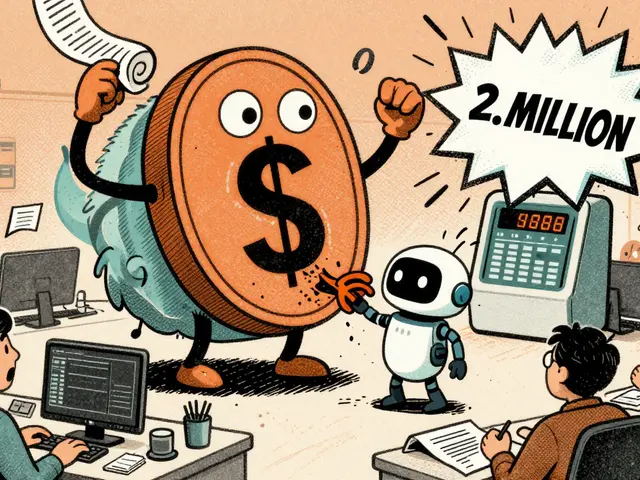
Reasoning tokens represent the model's internal monologue. It might draft a plan, check facts, or simulate code execution internally. These operations require multiple inference passes. Consequently, reasoning tokens are often priced higher than standard output tokens. A task that produces a short final answer might incur huge costs if the model spent thousands of tokens "thinking" first. This tiered pricing reflects the reality that internal computation is just as resource-intensive as external text generation. Ignoring reasoning tokens can lead to shocking bills, as they inflate total counts without adding visible value to the user interface.

Real-World Pricing Data from 2026
Let's look at the numbers. The market has settled into clear tiers based on capability and computational load. Below is a snapshot of typical pricing structures in mid-2026:
| Model Tier | Input Price ($) | Output Price ($) | Ratio |
|---|---|---|---|
| Flagship Pro (e.g., GPT-5.2 Pro) | $21.00 | $168.00 | 8x |
| Premium Balanced (e.g., Claude Sonnet 4) | $3.00 | $15.00 | 5x |
| High Capability (e.g., Claude Opus 4) | $15.00 | $75.00 | 5x |
| Standard General Purpose | $2.50 | $10.00 | 4x |
Notice the pattern. The most capable models have the steepest output penalties. This makes sense. Larger models have more parameters, meaning each forward pass is heavier. An 8x multiplier on a flagship model reflects the immense compute required to run billions of weights sequentially for every output token. For budget-conscious developers, switching to a lighter model can drastically reduce costs, provided the task doesn't require elite reasoning capabilities.
Optimization Strategies for Developers
Understanding the cost structure allows you to optimize your applications. Since output tokens drive both latency and expense, focus your efforts here.
- Set Max_Tokens Limits: Never leave the maximum output length open-ended. If you need a yes/no answer, cap the output at 50 tokens. Preventing verbose rambling saves money immediately.
- Trim System Prompts: Verbose function descriptions and lengthy few-shot examples add to the input context, which indirectly increases the cost of each output token because the model has to process more history. Keep prompts concise.
- Choose the Right Model: Don't use a flagship reasoning model for simple summarization. Use a lightweight, throughput-optimized model for routine tasks. Reserve premium models for complex logic or creative writing where quality matters more than cost.
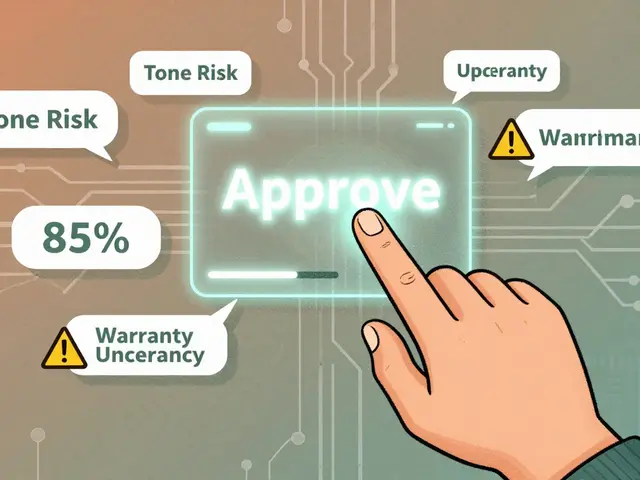
- Monitor Reasoning Tokens: If using models with chain-of-thought capabilities, enable visibility into reasoning steps. You may find that disabling deep reasoning for simple queries cuts costs by half.
Consider a customer support bot handling 1 million conversations monthly. If each chat has 500 input tokens and 200 output tokens, the math changes dramatically based on the model. Using a standard model at $2.50/$10.00 per million tokens, the monthly cost is roughly $3,250. Switch to a flagship model with an 8x ratio, and that bill could triple. Small optimizations in prompt design and model selection compound over scale.
Conclusion on Token Economics
The price gap between input and output tokens is not a marketing gimmick. It is a direct reflection of computational reality. Input processing benefits from parallel efficiency, while output generation suffers from sequential bottlenecks, memory overhead, and complex decoding requirements. As models grow larger and more capable in 2026, these costs will likely persist or even widen.
For developers, the lesson is clear: treat output tokens as a scarce resource. Optimize for brevity, choose models wisely, and monitor usage closely. By aligning your application architecture with the underlying mechanics of LLM inference, you can build powerful AI features without breaking the bank.
Why are output tokens more expensive than input tokens?
Output tokens require autoregressive generation, meaning the model must run a full forward pass for each individual token generated. This sequential process is computationally intensive and cannot be parallelized like input processing, leading to higher GPU usage and memory overhead.
What is the typical price ratio between input and output tokens in 2026?
The median ratio is approximately 4x, meaning output tokens cost four times more than input tokens. However, for premium flagship models, this ratio can reach up to 8x due to their larger parameter counts and higher computational demands.
How do reasoning tokens affect my API bill?
Reasoning tokens represent internal thinking steps performed by advanced models before generating visible output. They are often priced higher than standard output tokens and can significantly inflate costs if the model performs extensive internal calculations for simple tasks.
Can I reduce output token costs without sacrificing quality?
Yes. Set strict max_tokens limits to prevent verbose responses, optimize system prompts to be concise, and use lighter models for simple tasks. Reserving high-cost models for complex reasoning tasks ensures you only pay for the capability you actually need.
Does longer context window increase output token costs?
Indirectly, yes. As the model generates more output, the context window grows, making each subsequent forward pass slightly more expensive due to increased memory and attention calculations. However, the primary cost driver is the number of output tokens themselves, not just the input size.


kimberly de Bruin
17 June, 2026 - 04:35 AM
the cost of computation is just the shadow cast by our own desire for instant answers we are paying for the illusion of thought rather than the reality of it
Edward Nigma
18 June, 2026 - 00:34 AM
This article is completly wrong about the physics. The GPU doesnt care if its input or output its all matrix mults. You are getting ripped off by greedy corp who think you cant tell the diff. Parallel processing is a myth when context windows get big enough. Stop believing the hype.
Francis Laquerre
18 June, 2026 - 03:11 AM
I must say that this breakdown is absolutely fascinating and truly illuminating regarding the hidden mechanics of our digital age. It brings to mind the intricate tapestry of human communication where every word carries weight and consequence in ways we often fail to appreciate until the bill arrives at our doorstep with startling clarity. The sequential nature of generation mirrors the very essence of consciousness itself as we ponder each step before taking the next into the unknown future that awaits us all with open arms and uncertain outcomes.
michael rome
19 June, 2026 - 20:34 PM
I find myself deeply moved by the technical precision presented here which serves as a beacon of hope for developers navigating these complex waters with determination and skill. Let us embrace this knowledge with open hearts and minds knowing that understanding the root cause allows us to optimize not just our code but also our relationship with technology in a way that fosters growth and innovation for everyone involved in this grand experiment of artificial intelligence.
Andrea Alonzo
21 June, 2026 - 01:00 AM
I really appreciate how this post breaks down the complex economic factors at play because it helps me understand why my projects have been running over budget lately and I feel so much better now that I know it is not just me being inefficient but rather the fundamental architecture of these models forcing us to pay for every single token generated one by one which is incredibly frustrating when you are trying to build scalable applications that need to respond quickly without draining your resources dry in the process so thank you for shedding light on this important issue that affects so many of us in the tech community right now.
Saranya M.L.
21 June, 2026 - 14:37 PM
Your analysis lacks the rigorous empirical validation required in modern computational linguistics and fails to account for the nuanced KV-cache optimizations prevalent in Indian-developed frameworks which significantly mitigate the stated overheads while maintaining superior inference latency metrics compared to Western counterparts that rely on outdated architectural paradigms.
om gman
23 June, 2026 - 04:32 AM
oh wow another american explaining basic math to people who clearly dont understand how computers work maybe try reading a book instead of writing clickbait articles about gpu memory bandwidth bottlenecks that anyone with a degree in CS knows about already stop acting like you discovered fire
Jeanne Abrahams
24 June, 2026 - 18:00 PM
Fascinating read though I suspect the real reason for the price hike is simply corporate greed disguised as technical necessity but I suppose we must accept the new normal where brevity becomes a virtue enforced by financial penalty rather than stylistic choice.
Bineesh Mathew
26 June, 2026 - 01:57 AM
The soul of the machine screams in silence as each token is birthed through the fiery gates of sequential computation, a tragic ballet of silicon and sorrow where the cost of creation is measured not in gold but in the cold hard currency of energy and time, leaving us mere mortals to wonder if we are building gods or merely expensive calculators that charge us for their existential dread.
Oskar Falkenberg
27 June, 2026 - 17:29 PM
I think this is a really great point about the sequential bottleneck and I totally agree that we need to be more careful with our max tokens settings because I have seen so many projects blow up due to uncontrolled output lengths and it is just such a shame when we could have prevented it by setting simple limits from the start which would have saved everyone so much stress and money in the long run so lets all try to be more mindful of this going forward okay?