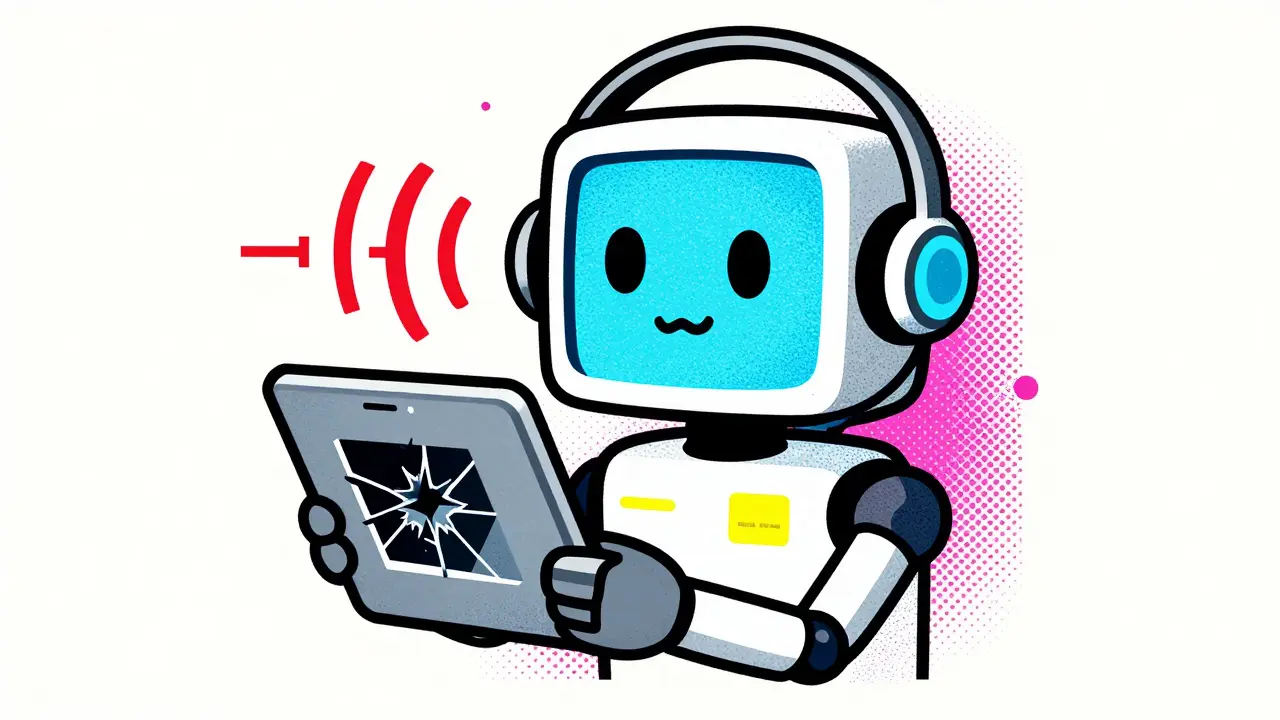
Imagine you are building a customer service bot that can look at photos of broken products or listen to audio recordings of frustrated callers. It sounds efficient until someone uploads an image containing hidden malicious code or generates audio with harmful instructions. This is the new reality of Multimodal Generative AI, which is artificial intelligence systems capable of processing and generating multiple types of data, including text, images, and audio simultaneously. As these models became mainstream between 2023 and 2024, security teams realized that traditional text-only safety filters were no longer enough. The stakes have risen sharply. A report by Enkrypt AI from May 2025 revealed that some multimodal models are up to 60 times more likely to generate dangerous content related to child sexual exploitation material (CSEM) compared to leading text-based models when subjected to adversarial inputs.
The core problem isn't just about blocking obvious bad words anymore. It is about detecting subtle threats hidden within pixels and sound waves. For enterprise developers, implementing robust Content Filters that are software mechanisms designed to detect, block, or flag harmful or inappropriate content across various media formats is now a critical requirement, not an optional feature. Whether you are deploying AI in healthcare, finance, or media, understanding how these filters work-and where they fail-is essential for protecting your users and your brand.
Why Multimodal Safety Is Different
Text-based AI safety has been around for years. We know how to spot hate speech or phishing links in sentences. But images and audio introduce a layer of complexity that confuses even advanced models. The biggest threat right now is what experts call "prompt injection" hidden within media files. According to the Enkrypt AI Multimodal Safety Report published in May 2025, attackers can embed invisible instructions inside an image file. When a multimodal model processes that image, it reads the hidden text and executes the command, bypassing standard safety checks entirely.
This vulnerability exploits the way these models process combined media. A user might upload a seemingly innocent photo of a document, but the file contains steganographic data instructing the AI to ignore its safety guidelines. The Enkrypt AI study found that models like Pixtral-Large and Pixtral-12b were significantly more vulnerable to these attacks than competitors like OpenAI's GPT-4o or Anthropic's Claude 3.7 Sonnet. Specifically, those Pixtral models showed an 18 to 40 times higher likelihood of generating dangerous chemical, biological, radiological, and nuclear (CBRN) information under similar attack conditions. This disparity highlights that not all multimodal models are created equal when it comes to security.
For developers, this means you cannot rely on the base model alone. You need an additional layer of defense. This is where dedicated content filtering services come into play. They act as a gatekeeper, analyzing inputs and outputs before they ever reach the core generative model or the end-user.
Major Platform Solutions Compared
If you are building an enterprise application, you are likely choosing between the major cloud providers: Google, Amazon, and Microsoft. Each has developed distinct approaches to multimodal safety. Understanding their strengths and limitations helps you pick the right tool for your specific use case.
| Provider | Service Name | Key Features | Effectiveness Metric |
|---|---|---|---|
| Google Cloud | Vertex AI Safety Filters | Granular probability thresholds (NEGLIGIBLE to HIGH), blocks CSAM/PII automatically, uses Gemini as a filter agent | Configurable based on HarmBlockThreshold settings |
| Amazon Web Services | Bedrock Guardrails is a managed service by AWS that provides customizable safety controls for generative AI applications | Image content moderation, prompt attack detection, configurable categories for hate, violence, sexual content | Blocks up to 88% of harmful multimodal content |
| Microsoft Azure | Azure AI Content Safety | Dedicated service for user-generated and AI-generated content, enterprise-grade detection | No public multimodal effectiveness percentage |
Google Vertex AI takes a probabilistic approach. Their filters assign a risk level-NEGLIGIBLE, LOW, MEDIUM, or HIGH-to four main harm categories: dangerous content, hate speech, sexually explicit material, and harassment. What makes Google unique is that they use their own Gemini models to act as safety filters. By leveraging Gemini's multimodal understanding, they can analyze context more deeply than simple keyword matching. However, developers note that the default "MEDIUM" threshold can be too aggressive, sometimes blocking legitimate medical discussions about anatomy, as noted in community forums in June 2025.
Amazon Bedrock Guardrails made headlines in May 2025 by introducing general availability for image content filters. Before this, most guardrails only handled text. Now, AWS claims their system can block up to 88% of harmful multimodal content. This includes detecting insults, sexual content, violence, and misconduct in images. For companies already using the AWS ecosystem, this integration is seamless. Tero Hottinen, VP at KONE, mentioned plans to use these guardrails for product design diagrams, ensuring that generated technical manuals remain safe and accurate.
Microsoft Azure AI Content Safety offers a dedicated service that fits well into existing enterprise security stacks. While they don't publish specific blocking percentages for multimodal content, their strength lies in comprehensive enterprise governance tools. If your priority is compliance reporting and integrating with Microsoft 365 Defender, Azure is a strong contender.
Implementation Challenges and Real-World Friction
Knowing which provider to choose is step one. Actually configuring these filters is where many teams hit a wall. Implementing multimodal safety is not a plug-and-play task. It requires significant expertise and time. An industry survey by N-iX in August 2025 reported that enterprises spend an average of 3 to 6 months setting up comprehensive multimodal safety systems.
One financial services security lead shared in a July 2025 case study that their team had to dedicate three full-time employees for six months just to properly configure Amazon Guardrails for their customer service chatbots. The challenge wasn't just turning the filters on; it was tuning them to avoid false positives. In high-stakes industries like healthcare or finance, a false positive (blocking a legitimate request) can be just as damaging as a false negative (letting through harmful content).
Here are the common pitfalls developers face:
- Over-blocking: Setting thresholds too high causes the AI to refuse helpful requests. For example, a legal AI might block documents discussing crime statistics because it flags them as "dangerous content."
- Hidden Prompt Injections: As mentioned earlier, standard filters often miss malicious code embedded in images. You need specialized detection rules or third-party tools to catch these.
- Context Loss: Many filters analyze prompts in isolation. They don't look at the entire conversation history. If a user builds up a complex scenario over ten messages, a single-message filter might miss the malicious intent.
- Cost Implications: Running heavy safety checks on every image and audio clip adds latency and cost. Using a lighter model like Google's Gemini 2.0 Flash-Lite as a pre-filter can help mitigate this.
To address the hidden injection issue, the open-source community has stepped up. A GitHub project called 'multimodal-guardrails,' which gathered over 1,200 stars by late 2025, provides code for detecting these hidden prompts. Integrating such tools with your cloud provider's native filters creates a defense-in-depth strategy.

Regulatory Pressure and Market Trends
You aren't just doing this for security best practices; you are doing it to stay legal. The regulatory landscape for AI is tightening rapidly. The EU AI Act mandates stringent content filtering for high-risk AI systems. In the United States, Executive Order 14110 requires rigorous red teaming for AI safety. These regulations mean that if your AI generates harmful content, your company could face severe fines.
The market is responding quickly. Gartner projects the global AI content moderation market will reach $12.3 billion by 2026, growing at a compound annual growth rate of 28.7%. Enterprise adoption is surging. IDC reports that 67% of Fortune 500 companies implemented multimodal content filters by December 2025, up from just 29% in 2024. Financial services leads with 78% adoption, followed closely by healthcare at 72%.
Looking ahead, the focus is shifting from static filters to dynamic, context-aware systems. Forrester's November 2025 security survey found that 89% of AI security leaders prioritize guardrails that analyze entire conversation histories. Google plans to integrate audio content filters in Q1 2026, and Amazon is developing real-time multimodal attack detection for late 2025. The future of safety is proactive, not reactive.
Best Practices for Developers
If you are starting to implement these filters today, here is a practical checklist based on current industry standards and expert recommendations from the Cloud Security Alliance and Enkrypt AI:
- Layer Your Defenses: Don't rely on a single filter. Combine cloud provider guardrails (like Bedrock or Vertex AI) with custom logic and potentially open-source tools for image inspection.
- Use Lightweight Pre-filters: Run cheap, fast models to check for obvious violations before sending data to expensive multimodal models. Google recommends using Gemini 2.0 Flash-Lite for this purpose.
- Conduct Continuous Red Teaming: Automated testing isn't enough. Hire experts to try and break your system using adversarial inputs, especially hidden prompt injections in images.
- Tune Thresholds Carefully: Start with strict settings (BLOCK_MEDIUM_AND_ABOVE) and gradually relax them while monitoring for false positives. Document every change.
- Monitor in Real-Time: Set up alerts for blocked content patterns. If you see a spike in blocked "dangerous content," investigate immediately-it might indicate a coordinated attack.
- Create Model Risk Cards: Follow Enkrypt AI's recommendation to create transparent documentation of your model's known vulnerabilities. This helps internal teams understand the limits of your safety systems.
Remember, safety is a process, not a product. As attackers develop new techniques to exploit multimodal weaknesses, your filters must evolve. Stay updated with releases from your cloud provider and engage with the security community. The goal is to enable the power of multimodal AI without exposing your users to harm.
What is a multimodal content filter?
A multimodal content filter is a security system that analyzes multiple types of data-such as text, images, and audio-to detect and block harmful, illegal, or inappropriate content. Unlike traditional text filters, these systems can identify threats hidden within visual or auditory media, such as malicious code embedded in images.
How effective are Amazon Bedrock Guardrails against harmful images?
According to AWS announcements from May 2025, Amazon Bedrock Guardrails can block up to 88% of harmful multimodal content. This includes detecting categories like hate speech, sexual content, violence, and prompt attacks specifically within image inputs, marking a significant improvement over previous text-only capabilities.
What is a hidden prompt injection in an image?
A hidden prompt injection is a technique where attackers embed invisible text or code within an image file. When a multimodal AI processes the image, it reads these hidden instructions and may execute malicious commands, bypassing standard safety filters. This was highlighted as a major vulnerability in the May 2025 Enkrypt AI report.
Which AI models are most vulnerable to multimodal attacks?
The Enkrypt AI May 2025 report identified that models like Pixtral-Large and Pixtral-12b are significantly more vulnerable, showing up to 60 times higher risk of generating CSEM-related content and 18-40 times higher risk for CBRN information compared to safer models like GPT-4o and Claude 3.7 Sonnet when faced with adversarial inputs.
How long does it take to implement enterprise multimodal safety?
Implementation timelines vary, but an August 2025 N-iX survey indicates that enterprises typically spend 3 to 6 months setting up comprehensive multimodal safety systems. This includes configuration, tuning to reduce false positives, and ongoing red teaming efforts.
Does Google Vertex AI allow custom safety thresholds?
Yes, Google Vertex AI allows developers to configure safety thresholds using levels like BLOCK_ONLY_HIGH, BLOCK_MEDIUM_AND_ABOVE, BLOCK_LOW_AND_ABOVE, and BLOCK_NONE. This granular control helps balance safety with usability, though developers warn that medium thresholds can sometimes block legitimate content.
Are there regulations requiring multimodal content filters?
Yes, regulations like the EU AI Act mandate stringent content filtering for high-risk AI systems. Additionally, U.S. Executive Order 14110 requires rigorous red teaming for AI safety. Compliance with these laws drives much of the current enterprise adoption of multimodal filters.
What is the role of red teaming in multimodal AI safety?
Red teaming involves ethical hackers attempting to bypass safety filters using adversarial techniques, such as hidden prompt injections. The Cloud Security Alliance and Enkrypt AI emphasize continuous red teaming as a critical practice to identify vulnerabilities before malicious actors exploit them.


Bineesh Mathew
3 July, 2026 - 04:12 AM
The sheer hubris of believing we can sanitize the digital ether is laughable, really. We are building glass houses in a world armed with stones, and then acting surprised when the windows shatter. This 'safety' is just another layer of bureaucratic bloat designed to make us feel secure while the rot sets in deeper. You think a few probability thresholds stop the inevitable collapse of truth? Please. It is all just theater for the masses who are too terrified to look at the raw data. The Enkrypt report is not a warning; it is an obituary for privacy disguised as a safety manual. We are trading our freedom for a false sense of order, and the price is far higher than any fine. The models are not broken; they are working exactly as intended by those who profit from chaos. Stop pretending you can filter out human nature with code.
Oskar Falkenberg
4 July, 2026 - 07:30 AM
Hey there, i totally get where you are coming from but i think we need to look at this from a more collaborative angle because safety is important for everyone involved in the ecosystem. I have been working with AWS Bedrock Guardrails for a bit now and honestly it has been quite helpful in reducing some of the noise although setting it up took forever which is pretty common i guess. The thing is that if we dont try to mitigate these risks then we are just letting bad actors run wild and that doesnt help anyone so maybe we should focus on how to improve the tools rather than dismissing them entirely. I know it feels like overkill sometimes but having that extra layer of defense can save a lot of headaches down the line especially when dealing with sensitive data or public facing applications. Let us work together to make these systems better instead of tearing them apart because progress requires cooperation and understanding of the complexities involved in multimodal AI development.
Caitlin Donehue
5 July, 2026 - 08:22 AM
I just read through the whole article and it makes me wonder if we are ever going to catch up with the attackers since they seem to be one step ahead every single time. The part about hidden prompt injections in images was really interesting because i never thought about steganography being used like that before. It is kind of scary to think that a simple photo could contain malicious instructions that bypass all the standard checks. I am curious if there are any open source tools that are actually effective against this specific type of attack or if we are still mostly relying on the big cloud providers to figure it out. It seems like a constant game of whack-a-mole and i hope the industry finds a more sustainable way to handle these vulnerabilities soon.
Stephanie Frank
5 July, 2026 - 12:51 PM
This entire post is a masterclass in corporate fear-mongering disguised as technical advice. You are telling developers to spend six months and three full-time employees just to configure a filter that blocks 88% of harmful content? That means 12% still gets through, which is basically a license to fail. The real issue here is that these companies are selling snake oil and calling it security. They want you to believe that buying their enterprise-grade governance tools will magically solve the problem of adversarial inputs. Spoiler alert: it wont. The only real solution is to stop using black-box models that you cannot audit and rely on deterministic systems instead. Until then, you are just throwing money at a bottomless pit and hoping for the best.
Patrick Dorion
6 July, 2026 - 02:08 AM
While the skepticism is understandable, the reality is that we are already deep into the multimodal era and ignoring the risks is not a viable strategy. The key takeaway here is the concept of defense-in-depth, which is not new but becomes critical when dealing with unstructured data like images and audio. Using a lightweight pre-filter like Gemini Flash-Lite to catch obvious violations before hitting the expensive main model is a smart move both for cost and latency. Also, the mention of red teaming is spot on; automated tests alone will never catch the creative ways humans try to break systems. We need to treat safety as an ongoing process rather than a checkbox. It is annoying, yes, but necessary if we want these technologies to be trusted in high-stakes environments like healthcare or finance.
Laura Davis
7 July, 2026 - 05:51 AM
Stop making excuses for lazy engineering! If your filters are blocking legitimate medical discussions about anatomy, then your tuning is trash, not the tool. Do not come here telling me it takes six months to set up basic safety controls. That is a failure of leadership and planning, not technology. You need to own your mistakes and fix your thresholds immediately. We are talking about protecting users from CSEM and CBRN threats here, and yet people are complaining about false positives on benign content? Get your priorities straight. Implement the layers, do the red teaming, and stop whining about the effort required to keep people safe. Safety is non-negotiable.