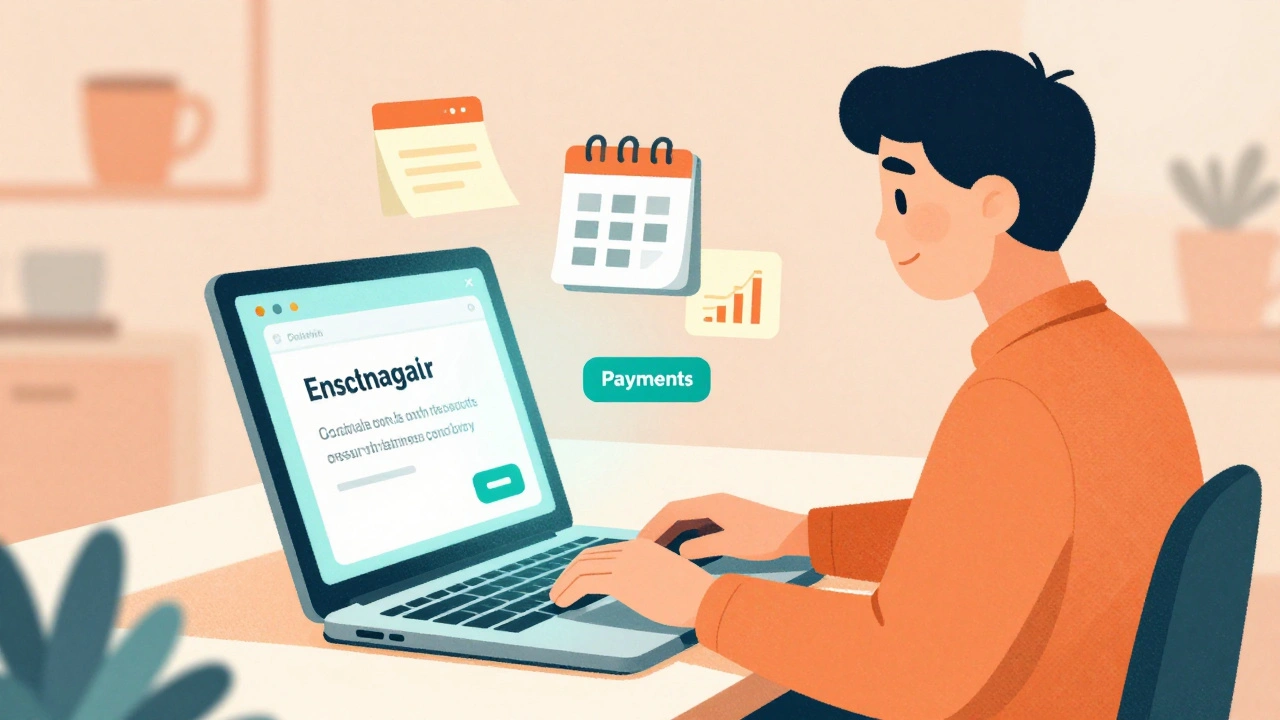
Imagine you have a business idea. Not just a napkin sketch, but a real one-something that solves a problem people actually have. You’ve talked to customers. You know the pain points. You’re ready to build. But you don’t know how to code. You’ve tried no-code tools before. You got stuck on drag-and-drop grids, confusing workflows, and interfaces that felt like trying to assemble IKEA furniture without the manual. Then you heard about vibe coding.
Vibe coding isn’t magic. It’s not a replacement for developers. But for non-technical founders, it’s the fastest way to turn an idea into something real-something investors, users, or partners can touch, click, and react to-in less than 48 hours.
What Exactly Is Vibe Coding?
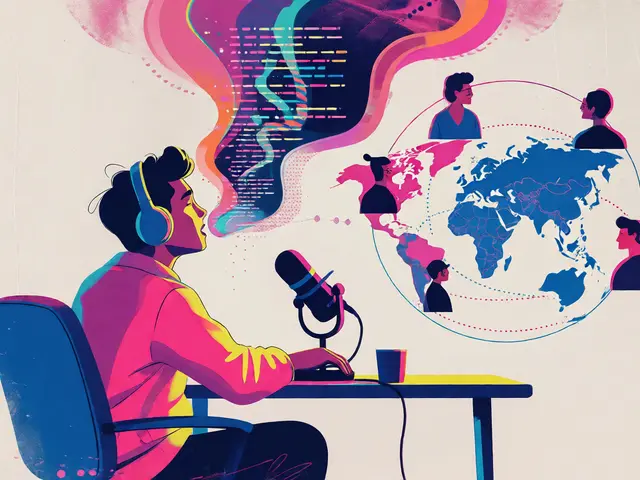
Vibe coding means describing what you want in plain English, and letting AI write the code for you. No syntax. No variables. No debugging JavaScript errors at 2 a.m. You say: "I need an app where customers can book appointments with coaches, see real-time availability, and pay with Stripe." Within seconds, you get a working screen with a calendar, a booking form, and a payment button. That’s vibe coding.
It’s powered by AI tools like GitHub Copilot, Google’s Gemini for Developers, and platforms like Knack and Netlify that now have built-in natural language interfaces. These aren’t just code suggestions-they’re full UIs, backend logic, and API connections generated from your words. The AI doesn’t just guess what you mean. It learns from millions of similar apps built before and picks the most reliable patterns.
Unlike traditional no-code tools that force you to learn their logic, vibe coding speaks your language. You don’t need to know what a “database” or “API endpoint” is. You just say what you want. And the system builds it.
How Fast Are We Talking?
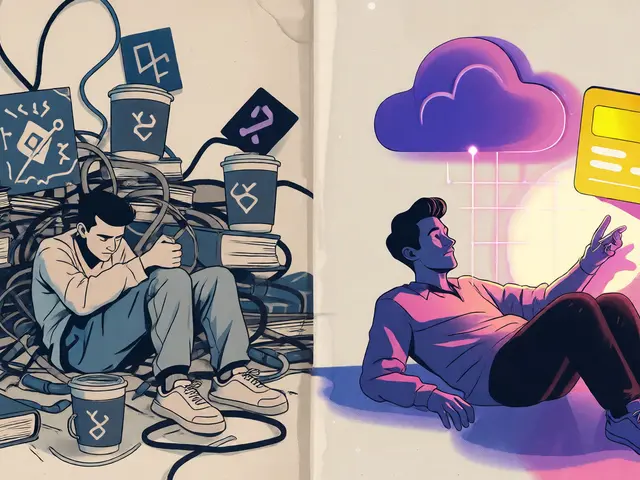
Traditional app development? Four to six weeks. $15,000 to $50,000. A team of developers. Multiple rounds of revisions. You’re lucky if you even get a prototype by month’s end.
Vibe coding? One to three days. Often under $500 in platform fees. Sometimes free. And you’re holding a working prototype by lunchtime on day two.
Take the case of a fitness coach in Austin who wanted to track client workouts and progress. She didn’t know SQL or React. She typed into Knack: "Create a dashboard where clients can log their reps and weight for each exercise, see their progress over time, and get weekly email summaries." In 11 hours, she had a fully functional app with login, data entry, charts, and automated emails. She showed it to five potential customers. Three said they’d pay $15/month. She raised $250,000 in pre-seed funding within two weeks.
Another founder built a customer onboarding tool for a SaaS startup in eight hours. He used Google’s Gemini interface to describe each step: "First screen asks for company name and industry. Second asks for team size. Third shows a checklist of setup tasks. Fourth sends a welcome email with a Zoom link." The AI generated the whole flow. He tested it with 12 users. Fixed one confusing button. And shipped it.
These aren’t outliers. According to a Y Combinator survey, founders using vibe coding cut their validation cycle from 6.2 weeks to just 1.4 weeks. That’s not a small win. That’s a revolution.
What Can You Actually Build?
Vibe coding isn’t for everything. But it’s perfect for the kind of apps most non-technical founders actually need:
- Customer booking systems (like Calendly, but custom)
- Internal dashboards for tracking sales, leads, or support tickets
- Simple e-commerce product pages with payment integration
- Client portals with file uploads and status updates
- Feedback collection forms with automatic follow-ups
- Membership sites with gated content
- Appointment scheduling for service businesses
These are all CRUD apps-Create, Read, Update, Delete. The kind of tools that power 80% of small businesses. And AI is now really, really good at building them.
Platforms like Knack and Netlify come with pre-built templates for these exact use cases. You don’t start from scratch. You pick "Client Dashboard," then describe how you want it to look and behave. The AI fills in the rest.
Integration is easy too. Most vibe coding tools connect to Stripe, Google Workspace, Salesforce, and Zapier out of the box. You don’t need to write code to make payments work or send emails. You just say: "When someone books, send them a Google Calendar invite and a Stripe invoice."
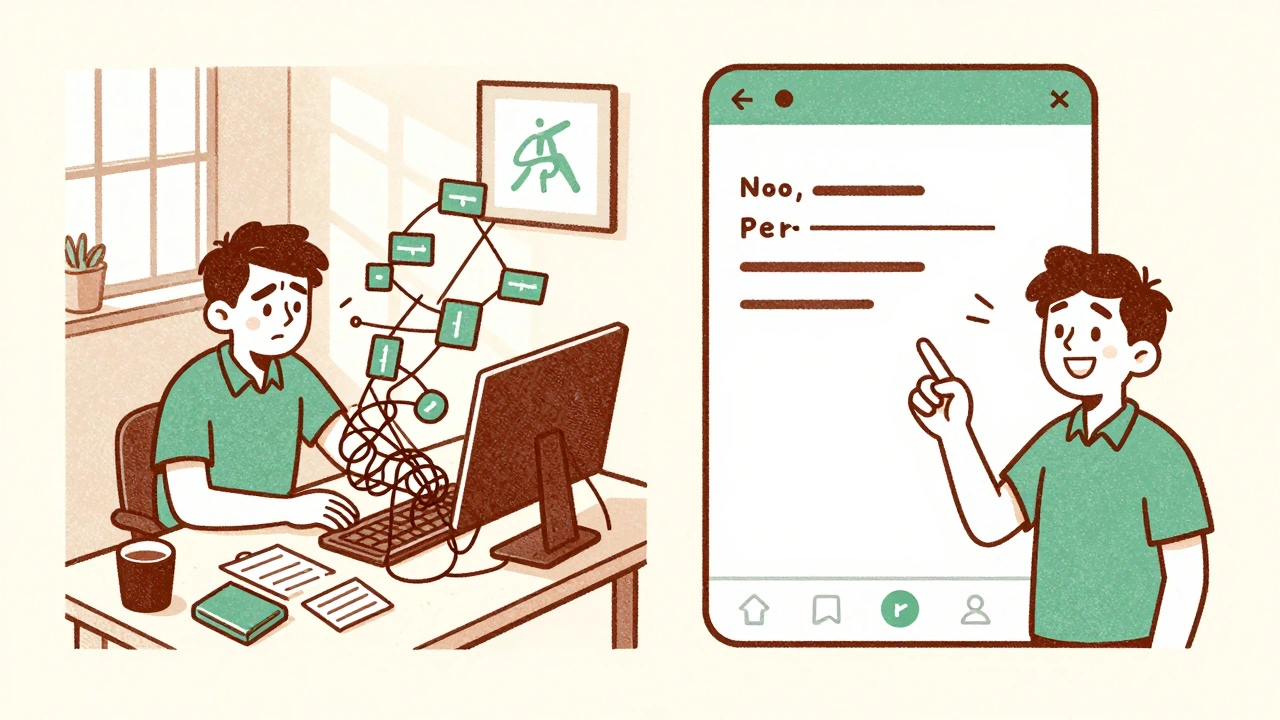
The Catch: It’s Not Production-Ready
Here’s the hard truth: vibe coding prototypes are not scalable products. They’re validation tools.
AI-generated code is fast, but messy. It’s full of shortcuts. It doesn’t handle edge cases well. It doesn’t scale under load. It’s like building a house with LEGO bricks-it looks great on the surface, but it won’t survive a storm.
According to Google Cloud’s own developer team, vibe-coded prototypes should have a 2-week shelf life. After that, you need to hand it off to a developer.
One founder on HackerNews spent three days building what she thought was a complete app. When she tried to scale it to 100 users, the backend crashed. She spent $12,000 fixing it. That’s not the fault of vibe coding. That’s the fault of thinking it’s a final product.
AI also makes UI mistakes. Buttons in the wrong place. Forms that don’t validate. Text that’s too small. These aren’t bugs-they’re design gaps. The AI doesn’t understand user psychology. It just copies patterns it’s seen before.
And if you want to change something later? Good luck. The code it generates is often hard to read. You can’t just open it up and tweak a line. You have to go back to the prompt, rephrase it, and regenerate. That’s why precision in your descriptions matters more than ever.
How to Use Vibe Coding Right
If you’re a non-technical founder, here’s how to use vibe coding without getting burned:
- Start with a single, focused feature. Don’t try to build your whole app at once. Pick the core thing users will pay for. Maybe it’s just booking. Or just payment. Nail that first.
- Be specific in your prompts. Instead of "Make a dashboard," say: "Create a dashboard that shows monthly revenue, number of new users, and top 5 services sold. Add filters for date range and region. Color-code revenue above $5,000 in green."
- Test it with real users immediately. Don’t wait for it to be "perfect." Show it to five people. Ask: "Would you use this? Would you pay for it?" Their feedback is worth more than perfect code.
- Set a 14-day deadline. Treat your vibe-coded prototype like a sketch. You have two weeks to validate. After that, hand it off to a developer-or walk away.
- Document everything. Write down every prompt you used. Save every version. You’ll need it when you hand it to a developer later.
Think of vibe coding as your rapid prototyping tool-not your development stack. It’s the difference between sketching a car design on paper and building the engine. You don’t need to know how to weld to prove the design works.
What Comes After the Prototype?
Once you’ve validated your idea, you need to build something that lasts. That’s where professional developers come in.
But here’s the secret: you’re not starting from zero. You’ve already done the hardest part-figuring out what people want. Now you have a working model, real user feedback, and a clear list of features. That makes you a much better client.
Instead of saying: "Build me an app," you say: "Here’s what users said they liked. Here’s what they hated. Here’s the prototype we tested. Here’s the code we used. Can you clean this up and make it scalable?"
Developers love this. You’ve removed the guesswork. You’ve saved them weeks of discovery. And you’ve proven there’s demand.
Y Combinator now includes vibe coding in their official founder curriculum-not as a replacement for coding, but as the new first step. It’s the new lean startup.
Who’s Using This Right Now?
It’s not just hobbyists. It’s real founders raising real money.
A marketing agency founder in Atlanta used vibe coding to build a client reporting tool in 10 hours. He showed it to 12 potential clients. Eight signed up on the spot. He now charges $200/month and has 47 customers. He didn’t hire a developer until he hit $10,000 in monthly revenue.
A mom in Ohio built a meal planning app for busy parents. She described it in one sentence: "An app that generates weekly grocery lists based on family preferences and dietary restrictions, with one-click ordering." The AI generated a full app with recipe selection, shopping list export, and Amazon integration. She tested it with 30 moms. They loved it. She raised $150,000 from local angel investors who saw the prototype and said: "This is exactly what we need."
These aren’t tech people. They’re teachers, coaches, consultants, and small business owners. They just had a problem-and a way to solve it without learning to code.
The Future Is Hybrid
Vibe coding won’t replace developers. But it’s changing who gets to build.
Five years ago, if you weren’t a programmer, you needed money to hire one. Now, if you have an idea and can describe it clearly, you can build a prototype yourself. That’s a massive shift.
Platforms are getting smarter. Google just launched "Gemini for Startups" with templates for common founder needs. Knack added "Founder Mode" that simplifies prompts even further. GitHub is working on explaining errors in plain language-so if the AI messes up, you’ll understand why.
The future isn’t "no-code." It’s "code-without-coding." And it’s here.
If you’re a non-technical founder with an idea, don’t wait for a developer. Don’t spend months on Figma mockups. Don’t waste cash on agencies. Open a vibe coding tool. Type your idea. Hit generate. And see what happens.
You might just build your first prototype before lunch.
Can I really build an app without knowing how to code?
Yes. Vibe coding tools let you describe what you want in plain English, and AI generates the working code. You don’t need to write a single line of code. You just need to be clear about what you want. Founders with zero technical background have built functional apps in under 12 hours.
Is vibe coding the same as no-code tools like Bubble or Webflow?
No. No-code tools require you to learn their interface-dragging elements, connecting logic blocks, setting up workflows. Vibe coding skips all of that. You just type your request in natural language, like "Create a form that collects emails and sends a thank-you message." The AI does the rest. It’s faster, more intuitive, and requires no training.
How much does vibe coding cost?
Most platforms offer free tiers to get started. For serious prototyping, expect to pay $20-$100/month for tools like Knack, Netlify, or Google Cloud’s Gemini integration. That’s a fraction of the cost of hiring a developer. You’re paying for speed, not infrastructure.
Can I scale a vibe-coded prototype into a real product?
Not directly. The code generated is optimized for speed, not scalability. It’s full of shortcuts and technical debt. But you can hand it off to a developer who can rebuild it properly-using your prototype as a blueprint. This hybrid approach saves time and money compared to starting from scratch.
What if the AI builds something I didn’t mean?
That’s common. AI misinterprets vague prompts. The fix? Be more specific. Instead of "Make a dashboard," say: "Show total revenue, new users, and top product category. Add filters for month and region. Highlight revenue over $5,000 in green." If it still gets it wrong, describe what you see and ask for a change: "Make the button blue and move it to the top right."
Is vibe coding safe for sensitive data?
Most platforms are secure for early-stage prototypes, but avoid using real customer data until you’ve reviewed their privacy policies. For regulated industries like healthcare or finance, wait until you’ve hired a developer who can ensure compliance. Vibe coding isn’t ready for HIPAA or GDPR-heavy apps yet.
What if I get stuck and can’t fix the prototype?
Join communities like the "Vibe Coding Founders" subreddit (12,500+ members) or check out weekly prototype showcases. You’ll find others who’ve hit the same wall. Most problems have been solved before. Often, someone has posted a fix, a better prompt, or a workaround. Don’t give up-just ask.
Start today. Describe your idea. Let the AI build it. Test it. Learn. Then decide: keep going, or pivot. Either way, you’ve moved from thinking to doing-and that’s the only thing that matters.
chioma okwara
8 December, 2025 - 14:56 PM
yo i tried this vibe coding thing and it made my booking app send emails to the wrong people like 17 times and the button was purple and i didnt even ask for purple????? why does ai think i want purple????? its like it read my ex's vibe or something
Samar Omar
9 December, 2025 - 00:18 AM
I mean, I suppose if you’re the type of person who still thinks a prototype is a product, then yes, this is delightful. But let’s be honest-this isn’t innovation, it’s emotional labor disguised as productivity. The AI doesn’t understand context, it doesn’t understand pain points, it doesn’t understand that a user’s frustration isn’t a bug to be patched but a signal to be listened to. You get a shiny thing that works until it doesn’t, and then you’re left with a pile of brittle, untraceable spaghetti code and a founder who thinks they’ve "solved" something. This isn’t democratizing development. It’s creating a generation of amateur architects who think they’ve built a cathedral when they’ve just glued together a bunch of matchsticks and called it architecture.
John Fox
10 December, 2025 - 10:27 AM
i tried it with knack and got a calendar that worked but the submit button was behind the footer. i just moved it with dev tools and called it a day
Tasha Hernandez
11 December, 2025 - 16:53 PM
Oh my god. I just watched a 62-year-old yoga instructor build a $200K revenue app in 11 hours while sipping matcha and humming to Fleetwood Mac. Meanwhile, I spent 8 months building a "scalable" SaaS with a team of 5 devs and a budget that could’ve bought a small island. And now I’m sitting here in my 12th-floor office with a view of the city, wondering if I’ve been living in a simulation where the only real power is in the ability to say "make it blue and move it up" and have the universe obey. I’m not mad. I’m just… spiritually confused.
Anuj Kumar
12 December, 2025 - 05:41 AM
this is just a distraction. big tech wants you to think you can build an app without learning anything. they dont want you to know how the system works. they want you dependent. next thing you know theyll charge you 500 a month to keep your vibe app alive. its all a trap
Christina Morgan
13 December, 2025 - 23:43 PM
I love this so much. I taught my mom how to use Knack last weekend-she’s 71, never used a computer before 2020-and she built a meal planner for her book club in under an hour. She said, "I just told it what I wanted, and it listened." That’s the magic. It’s not about replacing developers. It’s about removing the gatekeepers. If you have a problem and you can describe it, you deserve to solve it. No permission needed.
Kathy Yip
14 December, 2025 - 20:21 PM
i think this is beautiful but also kinda scary. like… if you can build a product without understanding the system behind it, what happens when it breaks? or when it collects data you didn’t mean to collect? or when the ai starts making decisions based on patterns you didn’t even realize it learned? we’re not just building apps anymore. we’re training invisible minds. and we don’t even know how to talk to them
Bridget Kutsche
15 December, 2025 - 14:09 PM
If you’re a founder with an idea and zero coding skills, DO THIS. Not because it’s perfect. Not because it’s scalable. But because it lets you prove your idea exists in the real world before you burn through your savings. I used it to build a feedback tool for my coaching clients. Took me 6 hours. Showed it to 8 people. Two said "I’d pay for this." That’s all I needed. Now I’ve got a dev rewriting it properly. And guess what? I know exactly what to ask for because I’ve lived the experience. This isn’t cheating. It’s strategy.
Jack Gifford
16 December, 2025 - 18:55 PM
you guys are overthinking this. vibe coding is just the new excel. nobody says "but i dont know how to write formulas" anymore-you just tell it what you want and it figures it out. same thing here. if the ai messes up, you tweak the prompt. if it works, you ship. if it breaks later, you hire someone. no drama. no guilt. just get stuff done