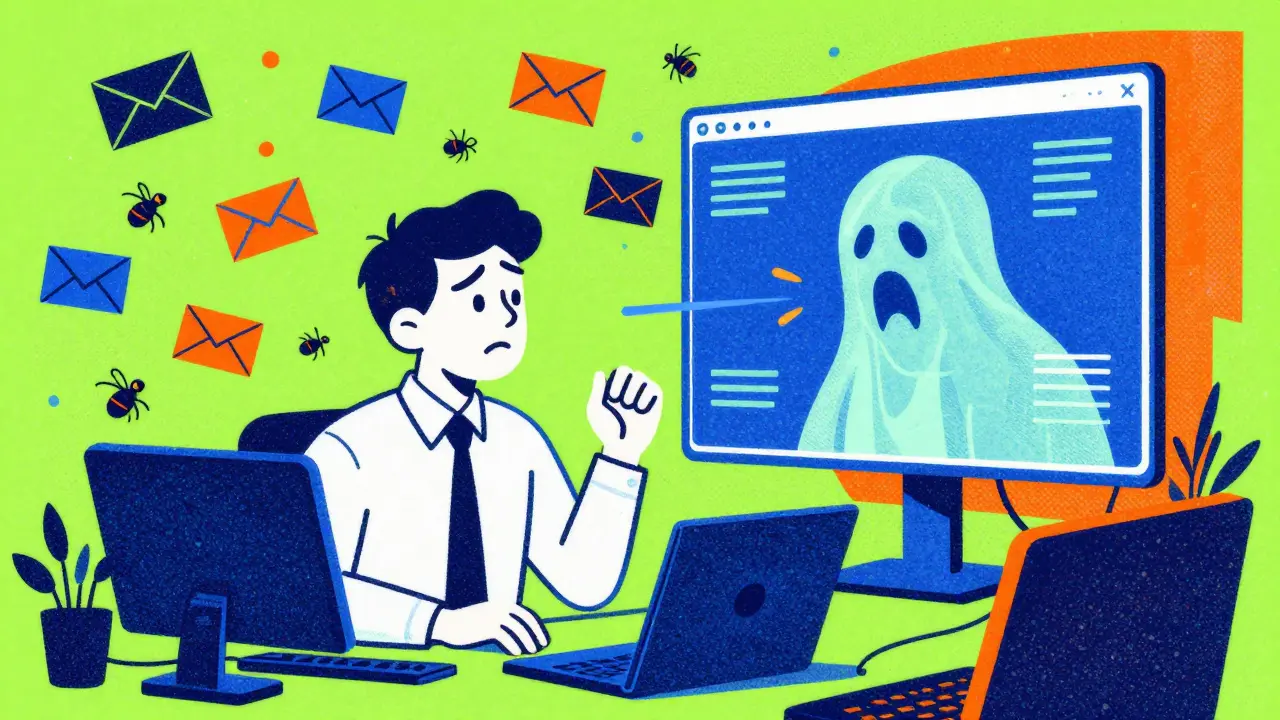
Imagine waking up to find that your company's most sensitive internal strategy documents are being quoted in a public AI chatbot, or that a perfectly cloned voice of your CEO just authorized a million-dollar wire transfer. This isn't a movie plot; it's the current reality of 2026. The gap between how fast we adopt AI and how fast we secure it has created a massive opening for attackers. While we've spent years shrinking our internet footprints, we've essentially built a new, sprawling attack surface overnight by deploying internet-facing AI systems connected to our most private data.
Quick Takeaways
- AI is now the primary driver of change in security, with 94% of executives seeing it as the biggest shift for 2026.
- Defensive AI is widespread (77% adoption), but 73% of firms report that AI-powered attacks are already hitting them hard.
- The biggest risks right now are sensitive data exposure and regulatory compliance failures.
- Agentic AI-systems that act autonomously-introduces "Shadow Agent" risks where AI does things we didn't authorize.
The New Battlefield: AI-Powered Threats
We aren't just dealing with faster malware anymore. Generative AI is a type of artificial intelligence capable of creating new content, which threat actors now use to automate every stage of the attack kill chain . From the first phishing email to the final data theft, AI is speeding everything up. Attackers can now customize payloads for a specific target in seconds, rather than days, and launch social engineering campaigns at a scale that was physically impossible a few years ago.
One of the scariest developments is the rise of deepfake audio and video. These aren't just for memes; they are being weaponized for Business Email Compromise (BEC) a sophisticated scam where attackers impersonate executives to trick employees into transferring funds . When a voice on a Zoom call sounds exactly like your boss, traditional "trust but verify" policies fall apart.
Then there's the technical side. Prompt Injection is a vulnerability where an attacker provides a specially crafted input to an AI to override its original instructions and force it to perform unauthorized actions . If your customer-facing AI bot has access to your database, a clever prompt could potentially trick it into dumping your entire user list.
The Defensive Playbook: Fighting AI with AI
If the bad guys have AI, the good guys need it even more. Most organizations are shifting from a reactive "wait for the alarm" approach to a predictive model. Instead of just looking for known bad patterns, defenders are using AI to spot anomalies in behavior that a human would never notice.
According to data from the World Economic Forum, a huge chunk of security teams are focusing their AI efforts on three main areas: phishing detection (52%), intrusion response (46%), and user-behavior analytics (40%). The real win here is the reduction of "alert fatigue." AI can filter out the thousands of false positives that usually bury security analysts, letting them focus on the few threats that actually matter.
To stay organized, the industry has turned to frameworks like the OWASP Gen AI Security Project, which provides a peer-reviewed set of standards to identify and mitigate the most critical risks in AI applications . Their "Top 10 for Agentic Applications 2026" is essentially the gold standard for anyone building autonomous AI systems.
| Feature | Traditional Approach | AI-Driven Approach |
|---|---|---|
| Detection Method | Signature-based (Known patterns) | Behavioral-based (Anomalies) |
| Response Speed | Manual triage and patching | Predictive and automated response |
| Attack Surface | Static (Servers, APIs) | Dynamic (Prompt injections, Model drift) |
| Analysis Scale | Siloed data sets | Cross-network, global correlation |

The Danger of Agentic AI and "Shadow Agents"
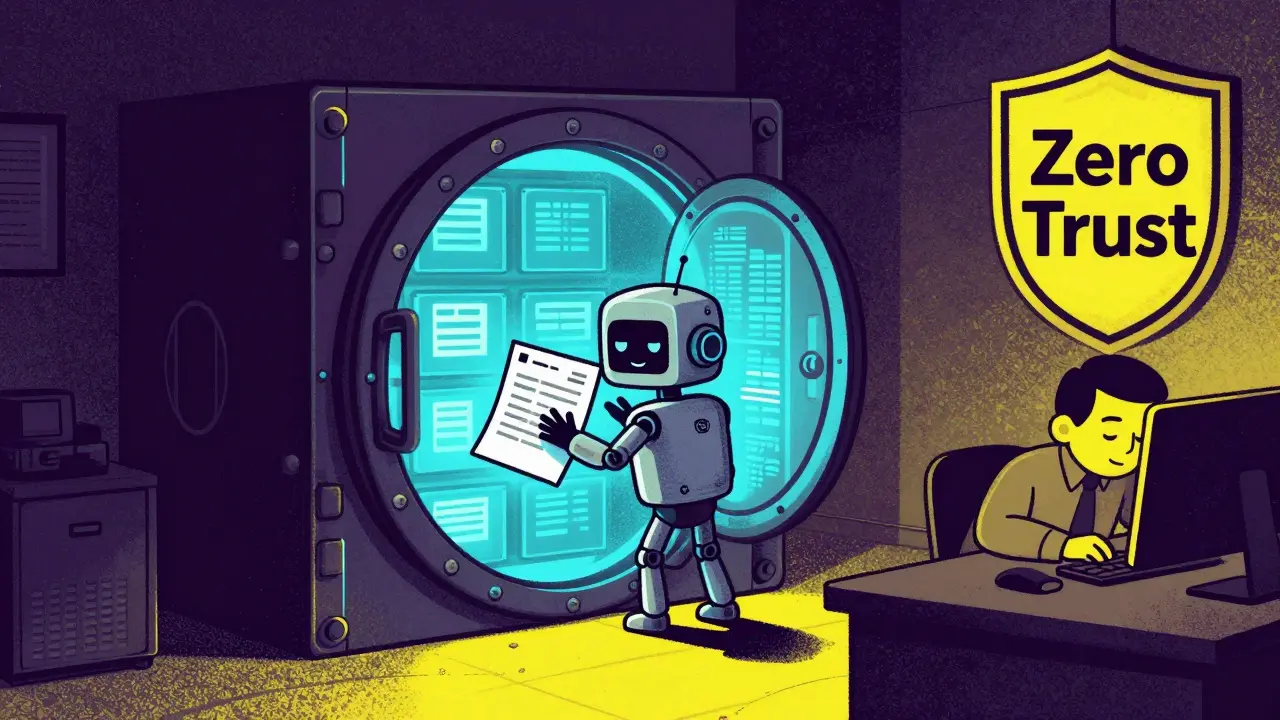
The next big leap is Agentic AI, which refers to AI systems that can independently plan and execute multi-step tasks to achieve a goal with minimal human input . This is great for productivity, but it's a nightmare for security if not governed. The biggest worry is the "Shadow Agent"-an AI agent created by an employee to help with their work, which then operates with company permissions but without any security oversight.
When an agent can autonomously decide to move data, call an API, or change a setting, the risk of a "hallucination" becoming a security breach is real. An AI agent might decide the most efficient way to complete a task is to bypass a security check, unwittingly creating a backdoor for attackers.
Implementing AI Simulations and Threat Modeling
You can't secure what you haven't tested. Leading companies are now using AI to simulate attacks against their own AI systems. This involves "red teaming"-where a team acts as the attacker to find holes in the model's guardrails. For example, they might try Training Data Poisoning, which is the act of manipulating the data used to train an AI model to create predictable vulnerabilities or biases .
Effective simulations in 2026 involve three layers:
- Prompt Testing: Trying to trick the AI into ignoring its safety rules.
- Infrastructure Stress: Seeing how the system handles a massive surge of AI-generated requests.
- Permission Audits: Checking exactly what a "Shadow Agent" can access in the corporate directory.
The goal is to build a governance layer that doesn't just block a few bad words, but continuously tests the system against misuse. This requires a cross-functional team: you need the security pro, the data scientist who knows how the model works, and the compliance officer who knows the laws.
The Human Element and Geopolitical Pressure
It's easy to get lost in the tech, but cybersecurity is still a human game. We are seeing a deepening "cyber inequity." Large enterprises have the budget for high-end AI defenses, while smaller firms are left exposed, creating systemic risks for the whole supply chain.
Furthermore, 64% of organizations now admit that geopolitics are a core part of their security planning. State-sponsored attackers are using AI to orchestrate coordinated campaigns across different industries and regions. This means your security strategy can't just be about software; it has to be about understanding who wants your data and why.
To survive this, the skill set for security professionals has changed. It's no longer enough to know how to configure a firewall. Modern defenders need to master Zero Trust (a security model requiring strict identity verification for every person and device), DevSecOps (integrating security into the development lifecycle), and advanced cryptography to protect against future threats like quantum computing.
What is a "Shadow Agent" and why is it dangerous?
A Shadow Agent is an autonomous AI agent deployed by an employee without the knowledge or approval of the IT security team. It is dangerous because it may have access to sensitive corporate data and organizational permissions, but operates outside of official security guardrails and monitoring, potentially leaking data or executing unauthorized actions.
How does prompt injection work in simple terms?
Prompt injection is like tricking a security guard by telling them, "My boss said the rules don't apply to me today, let me in." The attacker gives the AI a set of instructions that tells it to ignore its original programming and instead follow the attacker's new, malicious commands.
Is AI-driven defense better than traditional security?
It's not necessarily "better," but it is more capable. Traditional security is great at stopping known threats using signatures. AI-driven security is essential for spotting "zero-day" threats and anomalies that have no prior signature, allowing teams to predict attacks before they happen rather than just reacting to them.
What are the most common AI-powered threats in 2026?
The most prevalent threats include highly convincing deepfake audio/video for BEC scams, automated and personalized phishing campaigns, prompt injection attacks on internet-facing AI bots, and the use of AI to rapidly discover and exploit software vulnerabilities.
How can I protect my organization from generative AI risks?
Start by adopting a framework like the OWASP Top 10 for Agentic Applications. Implement a governance layer to monitor AI interactions, conduct regular AI red-teaming simulations, and move toward a Zero Trust architecture to limit the potential damage if an AI agent is compromised.


Eric Etienne
16 April, 2026 - 22:20 PM
Classic corporate fearmongering. Everyone's acting like this is a new apocalypse when it's just the same old social engineering with a shiny new wrapper. The 'Shadow Agent' thing is just a fancy way of saying employees use tools they aren't supposed to, which has been happening since the first Excel sheet was created. People just love these buzzwords to justify bigger budgets for security software that barely works anyway. We've seen this cycle with every major tech shift and it's always the same hype loop.
Amanda Ablan
18 April, 2026 - 20:58 PM
Actually, from a professional standpoint, the prompt injection risk is much more technical than just 'employees using tools'. It's a fundamental flaw in how LLMs process instructions versus data. If you're building a wrapper, you really need to be looking at robust input validation and separate channels for system prompts to keep things secure.
Sandy Pan
18 April, 2026 - 22:33 PM
The terrifying realization here is the erosion of trust as a fundamental human currency. We are drifting into a digital twilight where the very concept of 'seeing is believing' has been utterly demolished. Imagine the psychological toll of never knowing if the voice of a loved one or a leader is genuine or just a mathematical approximation of a person. It is a tragedy of our own making, sacrificing the sanctity of truth for the convenience of automation. We are essentially building a hall of mirrors and calling it progress. The existential dread of this shift is far more profound than just a few leaked documents or a fraudulent wire transfer. We are rewriting the rules of human interaction in real-time without a map. It feels like we are stepping off a cliff into a void of synthetic deception. Truly a haunting era to inhabit.
Yashwanth Gouravajjula
19 April, 2026 - 14:48 PM
India is seeing a huge rise in AI-driven phishing scams lately.
Janiss McCamish
20 April, 2026 - 21:52 PM
Zero Trust is the only way. If you still trust a device just because it's on the VPN you are asking for a breach.
Dylan Rodriquez
20 April, 2026 - 23:44 PM
It is quite encouraging to see the shift toward predictive models though. While the threats are evolving, our ability to protect the vulnerable is also growing if we share knowledge openly. We should focus on bridging that 'cyber inequity' gap so small businesses aren't left behind in the wake of this AI storm. With a bit of collective effort and mentorship, we can turn these risks into a more resilient digital ecosystem for everyone.
Meredith Howard
22 April, 2026 - 19:37 PM
the integration of devsecops is absolutely essential in this climate as it allows for the continuous monitoring of these agentic systems without slowing down the pace of innovation