Have you ever asked an AI to write something, only to get a response that feels generic, robotic, or just plain wrong for your audience? You aren't alone. The default output of most large language models is safe, neutral, and often boring. But what if you could tell the model exactly who it should be? This is where persona and style control comes in. It’s not magic; it’s a specific set of techniques within prompt engineering that allows you to shape the tone, voice, and reasoning of an AI by assigning it a role.
Think of it like casting an actor. If you want a serious legal brief, you don’t ask a comedian to write it. You assign the model the persona of a senior attorney. If you need a catchy social media post, you might assign it the persona of a viral marketing expert. This guide breaks down how these techniques work, why they sometimes fail, and how to use them effectively across both text and speech applications.
The Basics of Role Prompting
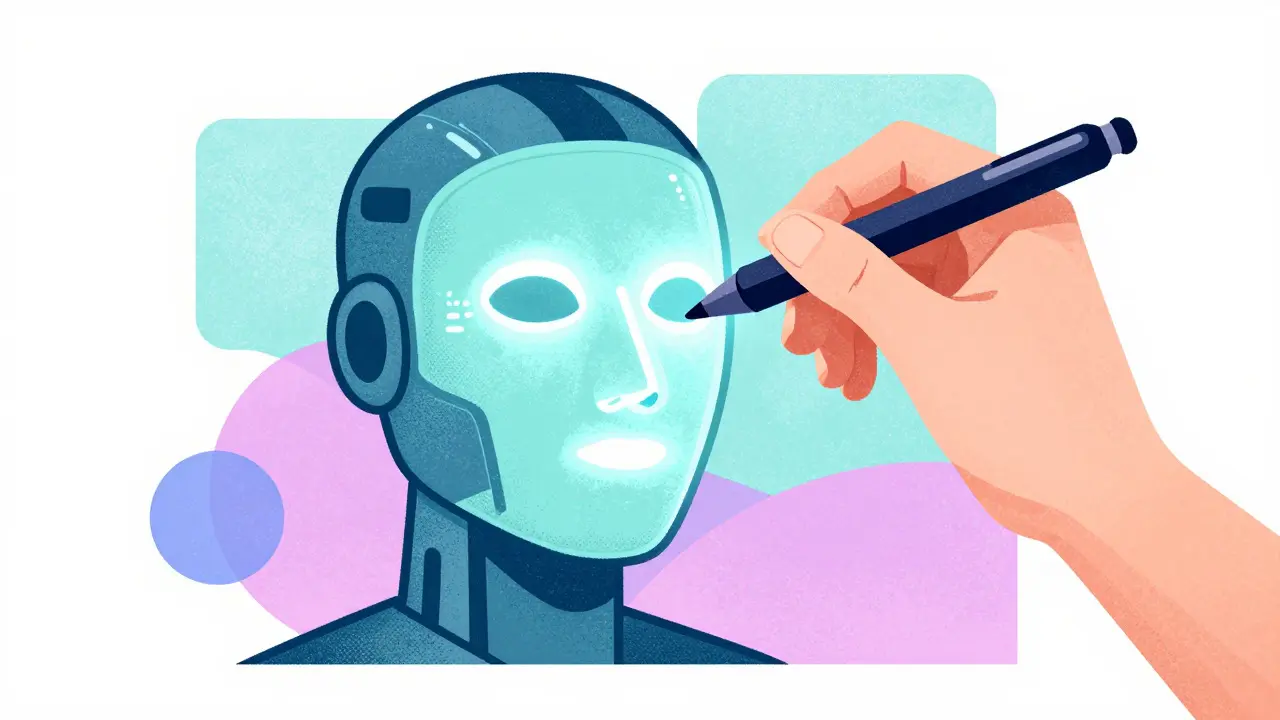
Role prompting is arguably the simplest and most powerful trick in the prompt engineer's toolkit. At its core, it involves instructing the model to adopt a specific identity before asking it to perform a task. Instead of saying "Write a summary," you say, "Act as a professional copy editor and summarize this article for a busy CEO."
Why does this work? Large language models are trained on vast amounts of human text. They have seen millions of examples of how lawyers speak, how teachers explain concepts, and how scientists argue points. When you assign a persona, you are essentially narrowing the model's search space. You are telling it, "Ignore all the casual blog posts and Twitter threads; look only at the data that resembles how a lawyer writes." This leads to more specific, stylistically consistent, and domain-aligned outputs.
Most commercial AI systems already use this technique behind the scenes. For example, ChatGPT uses a system prompt that includes instructions like "You are a helpful assistant" to maintain a baseline of politeness and utility. However, users can override or refine this base persona with their own prompts to achieve much more nuanced results.
Do Personas Actually Improve Performance?
Here is where things get interesting. While role prompting is widely recommended, recent research suggests it doesn't always make the model "smarter" in terms of raw accuracy. A comprehensive study analyzing four major LLM families found that adding personas to system prompts did not significantly improve performance on factual questions compared to a control group with no persona.
However, the study did reveal a crucial distinction between two types of prompts:
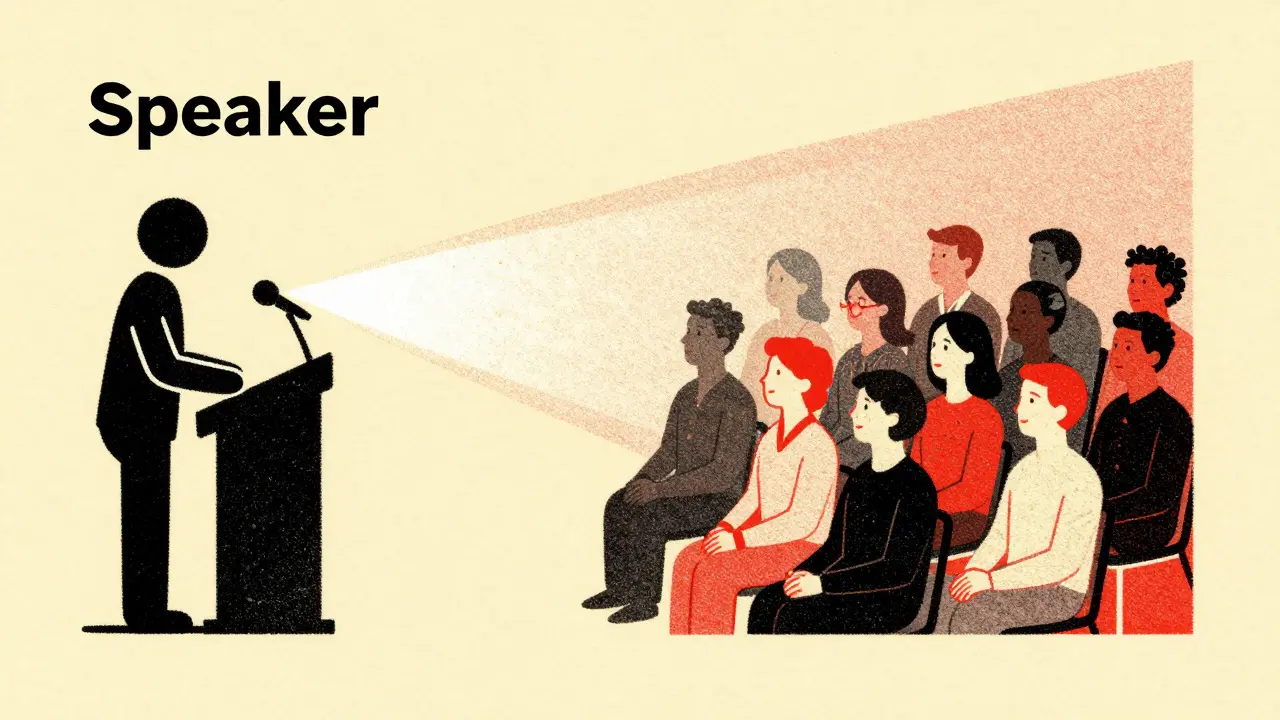
- Speaker-Specific Prompts: Assigning a role to the AI (e.g., "You are a lawyer").
- Audience-Specific Prompts: Specifying who will read the output (e.g., "Explain this to a five-year-old").
The researchers found that audience-specific prompts performed better than speaker-specific ones, though the effect size was small. This means that while telling the AI *who it is* helps with style, telling the AI *who it is talking to* often yields clearer and more useful communication. The key takeaway? Don't rely on personas for factual correctness. Use them for tone, structure, and clarity.
Advanced Techniques: The Three-Word Rule and A/B Testing
If you want to master style control, you need to treat it like an iterative process. Here are two practical strategies used by experienced prompt engineers:
- The Three-Word Rule: For quick style pivots, use short, punchy descriptors. Instead of writing a long paragraph explaining how you want the tone, try phrases like "Rewrite this like a startup-pitch investor" or "Explain as a high-school teacher." These concise constraints force the model to activate specific linguistic patterns associated with those roles.
- A/B Testing Roles: Not all role formulations are equal. Try comparing "Senior Product Manager" vs. "Expert Product Manager" or "Friendly Tutor" vs. "Strict Professor." Test different levels of constraint to see which formulation yields the best result for your specific task.
Be explicit about constraints. If you want a skeptical tone, say so. If you want bullet points, specify that format. Combining a clear persona with explicit structural constraints creates the most reliable outputs.
Beyond Text: Persona Control in Speech Synthesis
Persona control isn't limited to written words. As AI moves into multimodal applications, controlling the voice and style of speech synthesis has become a frontier area of research. Tools like Parler-TTS, a natural language-controllable text-to-speech model, allow for fine-grained style manipulation without needing reference audio recordings.
Researchers have developed frameworks to convert textual persona descriptions into optimized style prompts for these TTS systems. There are two main approaches:
| Technique | Description | Pros | Cons |
|---|---|---|---|
| Closed-Ended Prompting | Uses predefined attributes (gender, age, tone, speed, pitch) structured in JSON. | High consistency, predictable, easy to control. | Less creative, rigid output. |
| Open-Ended Prompting | Allows the LLM to craft natural language style descriptions without format constraints. | More creative, nuanced, natural sounding. | Harder to predict exact outcome, less controllable. |
Experimental results show that closed-ended prompting can reduce Word Error Rate (WER) by 5% and improve speech quality metrics (UTMOS) by 0.1 points compared to baselines. By structuring persona information-such as setting the tone to "analytical" and the speaking rate to "slow"-developers can generate speech that is clearer and more natural. This is particularly useful for applications requiring predictable and interpretable outputs, such as educational apps or accessibility tools.
Ethical Considerations and Bias
With great power comes great responsibility. When we assign personas, we also risk amplifying implicit biases. Studies on LLM-based persona rewriting have highlighted concerns regarding gender bias. For example, if you ask a model to adopt a "leader" persona, does it default to male-coded language? If you assign a "caregiver" persona, does it assume female traits?
Voice style is a crucial factor in persona-driven AI dialogue systems, and it carries ethical implications. Researchers emphasize the need to address not just voice quality but also cultural and ethical considerations. As you implement persona controls, remain vigilant. Audit your outputs for unintended stereotypes. Ensure that your persona definitions are inclusive and do not reinforce harmful societal norms.
Practical Checklist for Implementing Persona Control
To get started with effective persona and style control, follow this checklist:
- Define the Goal: Are you trying to change the tone, the complexity, or the format? Be clear about what "style" means in your context.
- Choose the Right Persona Type: Use speaker-specific prompts for tone (e.g., "be witty") and audience-specific prompts for clarity (e.g., "explain to a beginner").
- Be Specific: Avoid vague roles like "expert." Use concrete titles like "senior data scientist" or "veteran journalist."
- Combine with Examples: Provide a few examples of the desired style in your prompt. Few-shot learning combined with persona assignment is highly effective.
- Test and Iterate: Run A/B tests on different role formulations. Small changes in wording can lead to significant differences in output quality.
- Check for Bias: Review outputs for unintended stereotypes or biased language, especially when using demographic attributes in speech synthesis.
Conclusion
Persona and style control is not just about making AI sound fancy. It’s about precision. By understanding how to leverage role prompting, audience specification, and structured style attributes, you can transform generic AI outputs into tailored, high-quality content. Whether you’re writing code comments, crafting marketing copy, or generating natural-sounding speech, treating the model as a shapeshifter rather than a static tool will dramatically improve your results.
Does assigning a persona make an LLM more accurate?
Not necessarily. Research shows that adding personas does not significantly improve factual accuracy or reasoning performance compared to a control group. However, personas do improve stylistic alignment, tone, and clarity. For accuracy, focus on providing clear facts and constraints rather than just a role.
What is the difference between speaker-specific and audience-specific prompts?
Speaker-specific prompts assign a role to the AI (e.g., "You are a doctor"). Audience-specific prompts define who will read the output (e.g., "Explain this to a patient"). Studies suggest audience-specific prompts often lead to better communication outcomes because they force the model to adjust complexity and terminology for the reader.
How can I control the style of AI-generated speech?
You can use text-to-speech models like Parler-TTS that accept natural language style prompts. By converting persona descriptions into structured attributes (tone, speed, pitch) or open-ended style descriptions, you can control the emotional and vocal characteristics of the generated speech.
Are there ethical risks with persona prompting?
Yes. Persona prompting can amplify implicit biases, particularly regarding gender and race. For example, certain professional roles may be stereotypically associated with specific genders in the training data. It is important to audit outputs for bias and ensure inclusive persona definitions.
What is the "Three-Word Rule" in prompt engineering?
The Three-Word Rule is a technique for rapid style pivoting. Instead of long explanations, use concise, descriptive phrases like "startup-pitch investor" or "high-school teacher" to quickly shift the model's tone and vocabulary. It forces the model to activate specific linguistic patterns associated with those roles.