You stare at the Jira board. The sprint ends in two weeks. You have four tickets left, and your lead developer just went on vacation. In the old world, you’d panic. You’d cut scope or work weekends. But in late 2026, there’s a new variable in the equation: Vibe Coding is an AI-driven development methodology where natural language prompts generate code, shifting the bottleneck from typing speed to validation speed.
If you’re still guessing whether your team will hit the release date based on last quarter’s velocity, you’re flying blind. The data has changed. We aren’t just talking about "faster coding." We are talking about a fundamental shift in how we forecast time-to-market. Recent industry reports, including Second Talent’s 2026 statistics, show that teams using Vibe Coding workflows don’t just move faster; they move differently. Some features ship in days, not weeks. Others stall because the AI hallucinated a business rule. To forecast accurately, you need to stop looking at lines of code and start looking at prompt complexity and validation overhead.
The New Math of Software Velocity
Traditional estimation relies on story points, which are notoriously subjective. Vibe Coding introduces hard metrics that actually predict delivery. According to Hexaware Technologies’ updated documentation from November 2025, Minimum Valuable Demonstrations (MVDs) can be delivered in 2-4 weeks rather than quarters. That’s not a typo. It’s a structural change.
But here is the catch: this speed isn’t uniform. A study by Second Talent surveyed 1,200 development teams and found that while overall work completion speed improved by 26%, the gains varied wildly by task type. If you try to forecast a complex algorithmic feature the same way you forecast a UI update, your timeline will be wrong.
| Task Category | Speed Improvement | Forecast Impact |
|---|---|---|
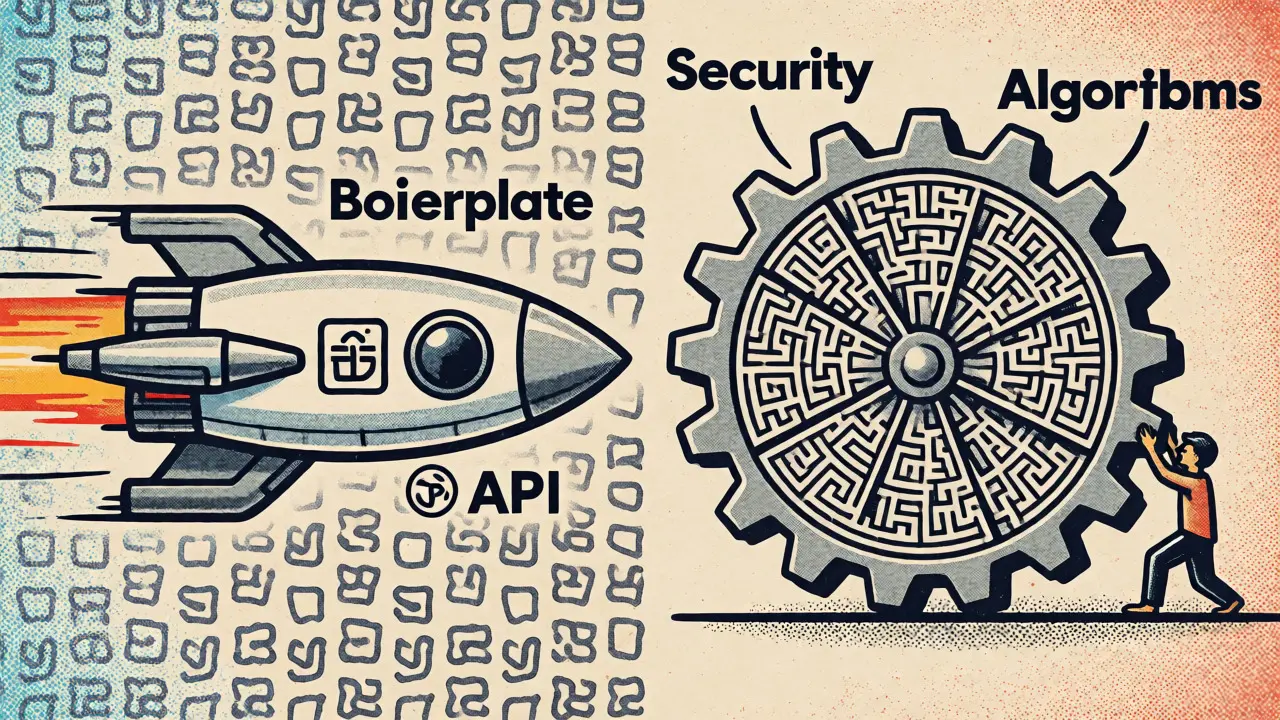
| Boilerplate & Configuration | 81% Faster | Negligible impact on timeline |
| API Integration & Parsing | 67% Faster | High predictability |
| UI Component Creation | 51% Faster | Requires visual QA buffer |
| Business Logic Implementation | 34% Faster | High rework risk |
| Complex Algorithms | 18% Faster | Minimal gain, high validation cost |
| Security-Critical Code | 12% Faster | Timeline extension likely |
Notice the drop-off. For routine tasks, you can slash your estimates by half. For security-critical code, you barely save any time because the human review process becomes the bottleneck. When forecasting, categorize every ticket into these buckets before assigning a due date.
Team Size Changes Everything
You might assume that bigger teams get more out of AI tools. The data says otherwise. Smaller squads-two to five developers-report 68% faster delivery times when adopting Vibe Coding. Larger teams with 15+ developers see only a 31% improvement. Why? Coordination overhead.
In a small team, one person writes the prompt, another validates the output, and the third integrates it. Communication is instant. In a large enterprise environment, you have handoffs, approval chains, and legacy system integrations that slow down the AI feedback loop. If you are managing a 20-person engineering department, do not expect the same velocity gains as a startup pod. Your forecast needs to account for the "integration tax" that larger organizations pay.
Vendor Claims vs. Reality
Marketing materials often promise moonshots. Hexaware claims 10X faster delivery and 70% cost reduction. Bacancy Technology is more conservative, claiming 5X acceleration. Relanto reports 40-60% faster cycles. Who is right?
They all are, depending on the context. Salesforce reported that 20% of new Apex code was AI-generated over a recent 30-day period, saving 30,000 hours across 35,000 developers. That’s real money. But Emvigo’s case study showed a specific 40% reduction in development time, which aligns closer to the Second Talent benchmarks than the 10X hype.
When building your forecast model, use a weighted average. Assume a 40-60% speedup for standard CRUD applications. Assume a 10-20% speedup for greenfield projects with novel architecture. And assume zero speedup-or even a slowdown-if your team is struggling with prompt engineering skills.
The Hidden Cost: Validation Overhead
This is the part most forecasts miss. Vibe Coding generates code instantly. But generating code is not the same as shipping working software. Andrew Chen, who popularized the term in early 2024, warned that relying on visible outcomes rather than code structure creates risk. TowardsAI’s analysis put it bluntly: Vibe Coding is "the fastest way to build and the quickest way to break."
Relanto’s internal metrics show that approximately 15% of generated code contains "hallucinations" in complex business logic translation. This means for every 10 features you think will take one day to build, you need to budget extra time for debugging AI mistakes. One Reddit user, John Chen, noted that while his team reduced feature delivery from six weeks to ten days, they faced "substantial rework required when the AI misunderstood complex business logic."
Include a "Rework Buffer" in your timeline. A good rule of thumb: add 20% buffer time for any ticket involving custom business rules. Do not add buffer time for boilerplate. This nuanced approach prevents the classic mistake of promising a Friday launch that slips to Wednesday because someone had to rewrite a payment gateway integration three times.
Adoption Rates and Skill Gaps
By late 2025, 68% of mid-to-large enterprises had implemented some form of Vibe Coding, up from just 22% in Q1 2025. This rapid adoption creates a skill gap. Not everyone knows how to talk to the AI effectively.
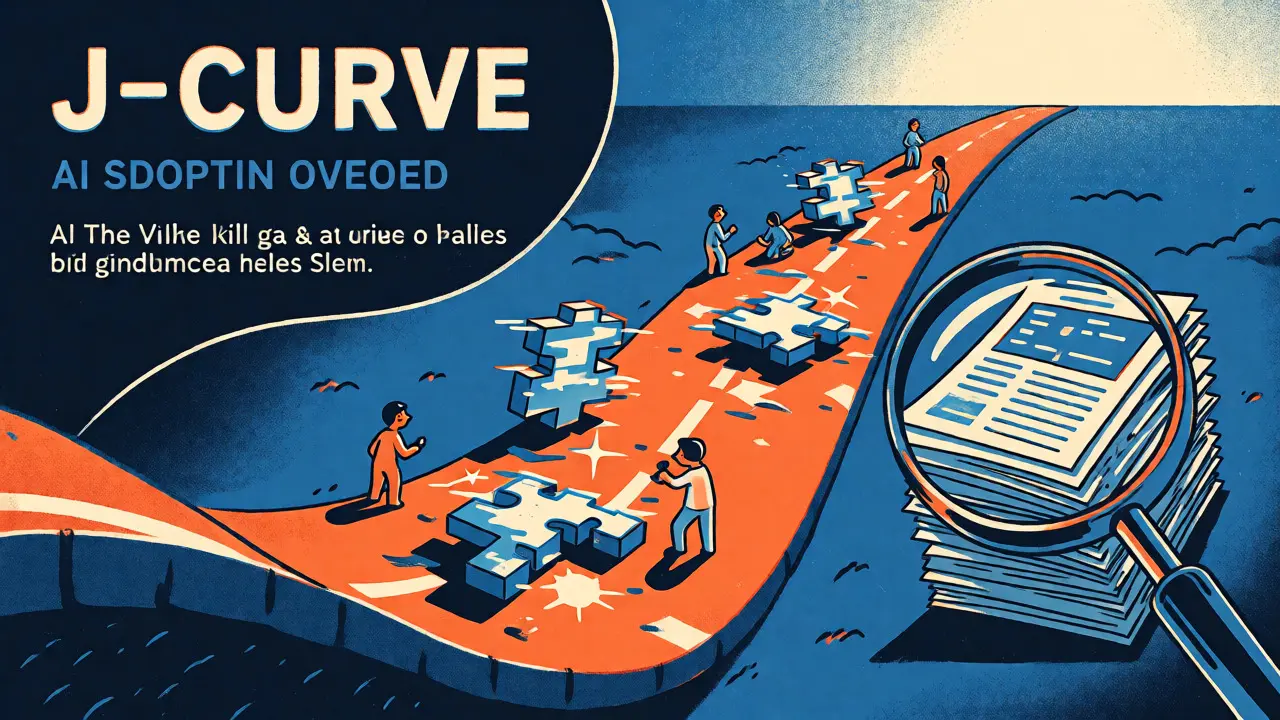
G2 reviews highlight a "steep learning curve for non-AI-native developers." If your team includes senior engineers who resist new tools, their productivity may dip initially before rising. Your forecast should reflect this transition period. Hexaware suggests a 2-3 week onboarding period for teams to achieve proficiency. During those first three sprints, expect velocity to be lower than historical averages. Plan for a J-curve: initial dip, then exponential rise.
Financial services firms lead adoption at 81% for routine tasks, while healthcare lags at 67% due to regulatory hurdles. If you work in a regulated industry, your validation steps are longer. Adjust your timeline accordingly. You cannot rush compliance checks just because the code was generated in seconds.
Building a Predictive Model
So, how do you actually forecast? Stop using single-point estimates. Use ranges based on task classification.
- Classify the Ticket: Is it Boilerplate (81% faster), Business Logic (34% faster), or Algorithmic (18% faster)?
- Assess Team Proficiency: Are they new to Vibe Coding? If yes, reduce expected speedups by 50% for the first month.
- Add Validation Buffer: Add 15-20% time for logic-heavy tickets to account for AI hallucinations.
- Check Integration Complexity: If the code touches legacy systems, add extra days for testing. Small teams bypass this better than large ones.
For example, if a standard UI component used to take 2 days, estimate 1 day. If a payment processing module used to take 5 days, estimate 3.5 days plus a 1-day buffer for logic verification. This method grounds your optimism in data.
The Future of Delivery Timelines
We are moving toward a world where PMs specify outcomes, and software configures itself to hit them. Andrew Chen predicts this will accelerate software penetration into long-tail industries. By 2027, TowardsAI forecasts that up to 90% of boilerplate code will be AI-generated.
But remember the warning from Second Talent’s CTO: organizations achieving huge gains with senior developers may see diminishing returns if teams become overly dependent on AI without oversight. The best forecasts today acknowledge that AI is a multiplier, not a magic wand. It multiplies your existing processes. If your process is messy, AI makes it messy faster. If your process is tight, AI makes it fly.
Your next sprint planning meeting shouldn't just ask "How many points can we do?" It should ask "Which of these stories are safe for AI generation, and which require human craftsmanship?" Answer that question honestly, and your delivery dates will finally mean something.
What is Vibe Coding?
Vibe Coding is an AI-powered software development methodology where developers use natural language prompts to generate code, focusing on validating outcomes rather than writing syntax manually. It transforms traditional workflows by integrating AI throughout the development lifecycle, significantly accelerating routine tasks like boilerplate creation and API integration.
How much faster is Vibe Coding compared to traditional methods?
Speed improvements vary by task type. Data shows 81% faster development for boilerplate and configuration, 67% faster for API integration, and 51% faster for UI components. However, gains diminish for complex algorithms (18% faster) and security-critical code (12% faster) due to increased validation overhead.
Does team size affect Vibe Coding efficiency?
Yes. Smaller teams (2-5 developers) report 68% faster delivery times, while larger teams (15+ developers) see only 31% improvements. Larger teams face higher coordination overhead and integration complexities that reduce the effectiveness of AI-driven workflows.
What are the risks of using Vibe Coding for delivery forecasts?
The primary risk is AI hallucination in complex business logic, occurring in about 15% of generated code. This requires additional validation time. Forecasts that ignore this "rework buffer" often fail. Additionally, skill gaps in prompt engineering can cause initial productivity dips during onboarding.
Which industries adopt Vibe Coding the fastest?
Financial services lead with 81% adoption for routine tasks, followed by general tech sectors. Healthcare lags at 67% due to stricter regulatory requirements that necessitate rigorous manual validation, slowing down the pure speed benefits of AI generation.