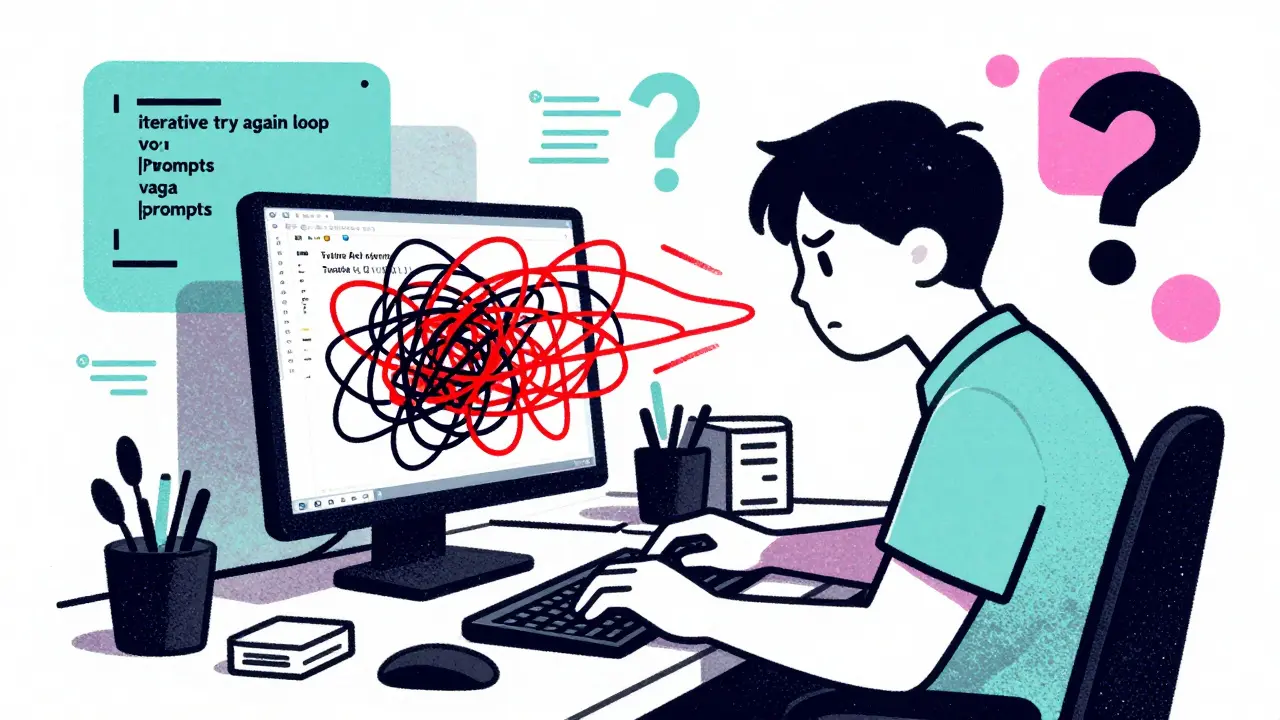
Stop typing the same instructions over and over. If you are building apps with Vibe Coding, a modern approach to software development that relies on natural language prompts rather than traditional syntax, you probably know the frustration of the 'iterative try again loop.' You ask an AI assistant to build a login page, it gives you something close but not quite right, you tweak the prompt, run it again, and repeat until it works. According to Strapi.io's 2024 analysis of 1,200 developer workflows, this back-and-forth consumes approximately 37% of your total development time. That is more than a third of your day spent just talking to a machine instead of shipping features.
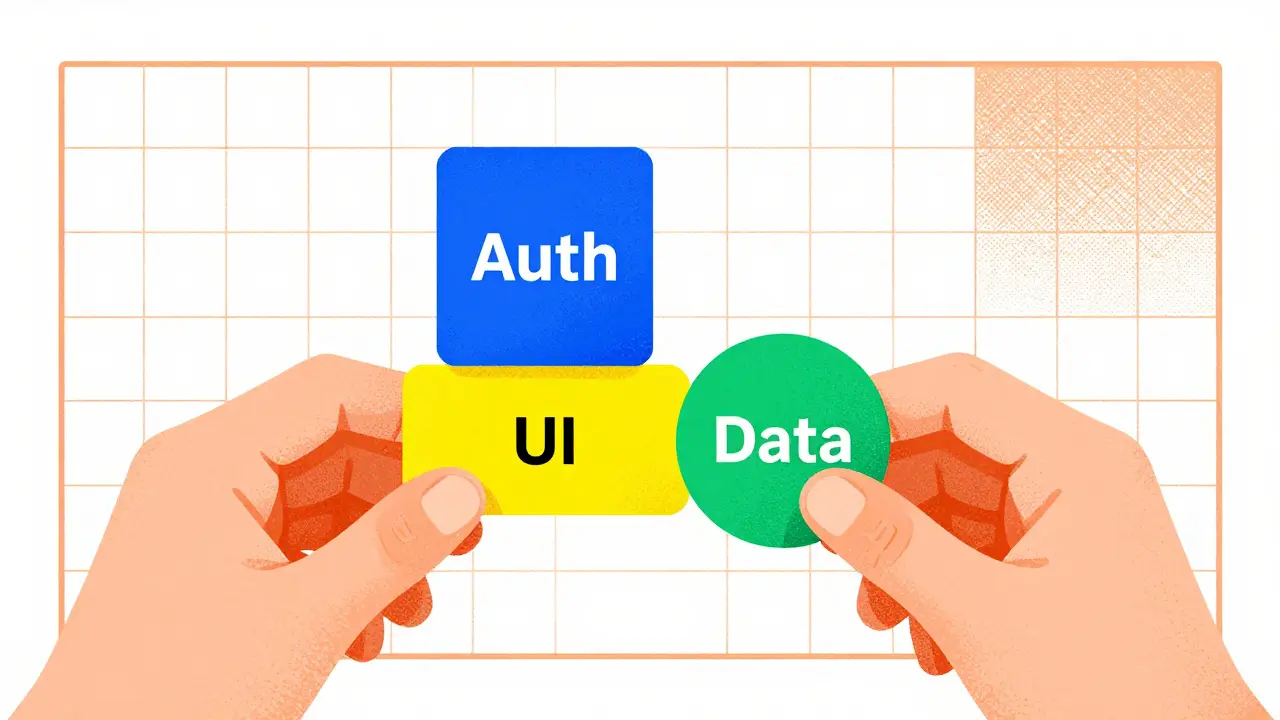
The solution isn't to write better prompts from scratch every time. It is to build a library of reusable prompt snippets, standardized blocks of instruction text that can be combined to generate complex application features quickly and accurately. Think of these snippets as LEGO bricks for your code generation process. Instead of describing how to build a wall brick by brick, you grab a pre-made 'wall' block, a 'window' block, and snap them together. This methodology transforms AI coding from a novelty into a professional engineering practice, as noted by Sarah Drasner, VP of Developer Experience at Netlify, in her November 2025 keynote. By establishing consistent patterns, you reduce stylistic drift by 41% and cut revision cycles significantly.
Why Reusable Snippets Beat Full Templates
You might wonder why you should use snippets instead of full prompt templates. A template is like a rigid form where you fill in blanks. If the form doesn't fit your specific need, you have to rewrite the whole thing. Snippets are modular. You can mix a 'form validation' snippet with a 'responsive layout' snippet to create a unique login form prompt without rewriting common elements.
According to Ranthebuilder.cloud's March 2025 comparative study of 500 developers, snippet-based prompting reduced prompt creation time by 53 seconds per feature compared to full-template approaches. That might sound small, but if you are building ten features a day, that is nearly nine minutes saved daily. Over a year, that adds up to hours of reclaimed focus time. The flexibility allows you to adapt to changing requirements instantly. If your API changes, you update one 'API integration' snippet, and every prompt using that snippet automatically improves.
| Feature | Ad-hoc Prompting | Full Templates | Reusable Snippets |
|---|---|---|---|
| Time to Create Prompt | High (varies widely) | Medium | Low (seconds) |
| Flexibility | High | Low | High |
| Consistency Across Team | Poor | Moderate | Excellent |
| Maintenance Effort | None | High (rewrite all) | Low (update once) |
| Revision Cycles | High | Medium | 68% fewer than ad-hoc |
Core Categories for Your Snippet Library
To get started, you don't need hundreds of snippets. You need a solid foundation. Vibe Coding Toolbox's documentation recommends starting with 5-7 core categories aligned with common feature types. These are the areas where most developers spend the most time tweaking prompts.
- Authentication Flows: This is the most reused category. In a survey, 87% of developers reported reusing 'JWT implementation' snippets. Authentication involves complex security logic that is easy to mess up if described vaguely. A good snippet specifies token expiration, refresh strategies, and secure storage methods.
- Data Handling: Data tables are ubiquitous. 76% of developers reuse snippets for 'pagination and sorting.' Instead of asking the AI to 'make a table,' you provide a snippet that defines column types, sort order defaults, and pagination limits.
- UI Components: Buttons, modals, and cards follow standard design patterns. Reusing UI snippets ensures your app looks consistent. Mix a 'responsive layout' snippet with a 'card component' snippet to speed up dashboard creation.
- Error Management: Error handling is often an afterthought. 68% of developers leverage 'error handling' snippets for API integrations. A robust snippet includes user-friendly messages, logging requirements, and fallback states.
- API Integrations: Connecting to external services requires precise headers, authentication tokens, and data mapping. Snippets here prevent the 'it works on my machine' syndrome by standardizing request formatting.
Building Your First Snippet Library
You don't need expensive software to start. Many developers begin with simple text files or notes apps. However, dedicated tools like Vibe Coding Toolbox, a specialized platform for creating, organizing, and deploying standardized prompt components for AI coding agents offer significant advantages. Launched in Q4 2023, it has become the industry reference standard, holding approximately 62% market share among professional developers according to G2's Q4 2025 report.
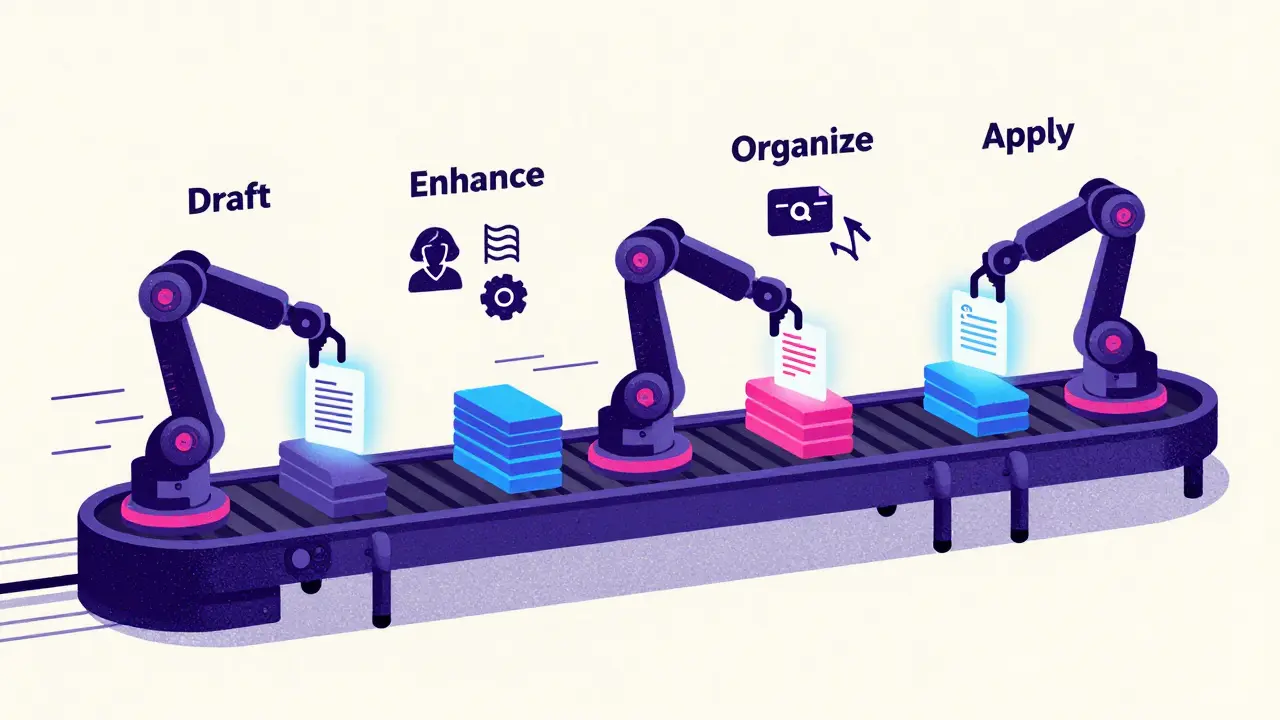
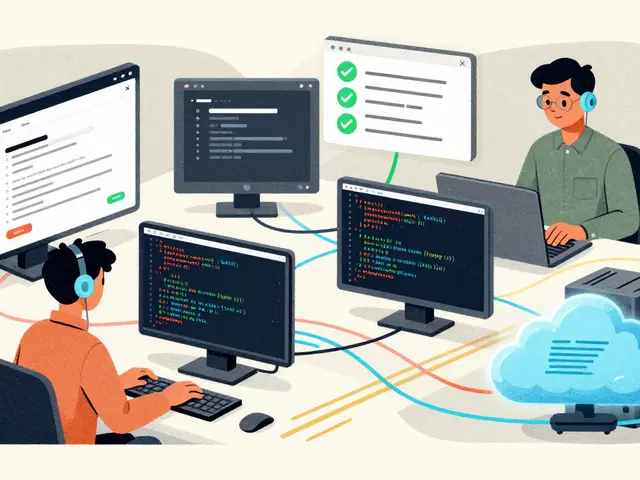
The system processes prompts through a four-stage workflow:
- Draft: Write your initial prompt in natural language. For example, 'Create a login form with email and password fields.'
- Enhance: Use AI optimization to improve technical clarity. The tool might add specifics about input validation, accessibility attributes, and state management.
- Organize: Categorize the snippet by tags (e.g., #auth, #ui) and projects. This step is crucial for retrieval later.
- Apply: Deploy the snippet with your AI coding assistant. Copy-paste or use CLI integration to inject the prompt directly into your workflow.
If you prefer command-line interfaces, Vibe Coding Toolbox offers CLI integration compatible with Node.js v16+ and works within Replit's Shell tab, as documented in their January 12, 2025 technical update. For those who stay in their IDE, VS Code's Prompt Engineering Toolkit (released November 2025) now includes native snippet management used by 34% of developers.
Best Practices for Maintenance and Quality
A snippet library is only as good as its maintenance. Without care, it becomes a graveyard of outdated instructions. Here is how to keep yours sharp.
Version Control is Non-Negotiable. Treat your snippets like code. 67% of professional teams use Git to track snippet evolution. When you update a 'React 18 hook' snippet, commit the change with a clear message. This allows you to revert if a new version breaks compatibility with older projects.
Prune Regularly. Teams that review snippets quarterly see 22% higher effectiveness according to Strapi.io's data. Delete snippets that are no longer relevant. If you haven't used a 'jQuery animation' snippet in six months, archive it. Cognitive overhead increases when you have too many choices.
Standardize Naming Conventions. Adopted by 84% of successful teams, consistent naming makes retrieval intuitive. Use prefixes like `feat_`, `comp_`, or `sec_` to indicate the type of snippet. For example, `sec_jwt_auth_v2` tells you exactly what you are getting.
Beware of Context Mismatch. A common complaint is that snippets for React 17 cause errors in React 18 projects. To mitigate this, include version constraints in your snippet metadata. Tag snippets with `react-v18` or `node-v20` so you only pull compatible instructions.
Common Pitfalls to Avoid
While snippet libraries offer huge benefits, they are not a silver bullet. Be aware of these traps.
Over-Engineering. As Ik5 warned in the Dev.to article '10 Things I Learned from Vibe Coding' (August 2025), 'over-engineering snippet libraries can become a productivity sinkhole.' Don't spend more time curating snippets than writing code. Start small. Aim for 15-20 project-specific snippets before expanding further.
Snippet Fragmentation. 32% of users report that 'too many tiny snippets create cognitive overhead.' If you have separate snippets for 'button color,' 'button border,' and 'button padding,' you are making life harder. Group related concepts into cohesive blocks unless you have a specific reason to split them.
Ignoring Security. Only 37% of community-shared snippets pass basic security validation checks according to Snyk's January 2026 audit. Never blindly trust snippets from public repositories. Audit them for hardcoded secrets, insecure defaults, or deprecated practices. Always test new snippets in a sandbox environment first.
Future Trends: Smart Chaining and Auto-Tagging
The field is evolving rapidly. Vibe Coding Toolbox's January 10, 2026 release introduced 'Smart Snippet Chaining,' which automatically connects related snippets for multi-step features. For instance, selecting a 'User Registration' snippet might automatically suggest and chain 'Email Verification' and 'Welcome Dashboard' snippets. This reduced manual composition time by 28 seconds per feature in internal testing.
Additionally, the Prompt Engineering Standards Consortium, announced in January 2026, is developing RFC-style specifications for common feature snippets. Authentication patterns are expected to be the first ratified standard by Q3 2026. This means you will soon be able to download certified, interoperable snippets that work across different AI coding assistants, solving the current issue where only 22% of snippets work seamlessly across platforms due to model-specific formatting requirements.
What is the best tool for managing prompt snippets?
Vibe Coding Toolbox is currently the industry leader with 62% market share among professionals. It offers a web-based interface and CLI integration. However, VS Code's native Prompt Engineering Toolkit is a strong alternative for developers who prefer staying within their IDE. Choose based on your existing workflow preferences.
How long does it take to learn reusable prompt snippets?
For developers familiar with prompt engineering, the learning curve averages 3.2 hours according to Capterra's December 2025 assessment. Proficiency typically comes after creating 15-20 project-specific snippets. The key is to start with high-frequency tasks like authentication and data tables.
Are reusable snippets safe to use from public sources?
Exercise caution. Snyk's January 2026 audit found that only 37% of community-shared snippets pass basic security validation. Always audit public snippets for hardcoded secrets, insecure defaults, or deprecated practices before integrating them into your production workflow. Prefer curated libraries or build your own from trusted sources.
Can I use snippets with any AI coding assistant?
Currently, cross-platform compatibility is limited. Wisprflow.ai's December 2025 matrix shows only 22% of snippets work seamlessly across different AI coding assistants due to model-specific formatting requirements. However, the upcoming Prompt Engineering Standards Consortium aims to fix this with ratified standards by late 2026.
How do I avoid snippet fragmentation?
Group related concepts into cohesive blocks rather than splitting them into tiny pieces. For example, combine button styling properties into a single 'Button Component' snippet unless you have a specific need to vary them independently. Review your library quarterly to merge or delete underused snippets.
Stephanie Frank
7 June, 2026 - 07:22 AM
another corporate buzzword salad disguised as productivity advice. vibe coding is just lazy programming with extra steps and a marketing budget. you are not saving time by copy-pasting prompts, you are creating technical debt that will haunt you when the underlying models change their output formats overnight. i have seen teams spend more time curating these 'snippets' than actually debugging the code they generated. it is a house of cards built on sand.
Patrick Dorion
9 June, 2026 - 00:38 AM
look, i get the skepticism, but there is a philosophical shift happening here. we are moving from syntax to semantics. the snippet library is essentially a shared ontology for developers. if you treat it like a living document rather than a static template, it becomes a form of collective intelligence. think of it as folklore for the digital age, passed down and refined through usage. it is about reducing cognitive load so we can focus on architecture rather than boilerplate.
Marissa Haque
10 June, 2026 - 21:59 PM
OMG!!! YES!!! Finally someone gets it!!! I was literally crying yesterday because my auth flow kept breaking every single time I asked the AI to regenerate it!!! But then I found this snippet method and WOW!!! It is like magic!!! My dashboard looks SO much better now!!! The consistency is AMAZING!!! I feel like a genius programmer instead of a prompt monkey!!! Thank you so much for sharing this!!! We need more people talking about this!!!
Keith Barker
12 June, 2026 - 19:58 PM
the essence of coding is not in the typing but in the intent. snippets are merely shadows of our true thoughts cast upon the wall of the cave. do not mistake the shadow for the reality. yet one must acknowledge that efficiency has its own merit in the grand scheme of things. perhaps there is wisdom in the repetition of forms.
Lisa Puster
14 June, 2026 - 08:23 AM
typical american obsession with speed over quality. european devs write clean code without needing these crutches. your snippet libraries are just evidence of declining skills in the us tech sector. nobody cares about your market share stats from some random tool. real engineers know how to structure their own logic without relying on pre-chewed instructions. it is pathetic really.
Joe Walters
15 June, 2026 - 15:38 PM
honestly this whole vibe coding thing is total bs. i tried using those snippets and half of them broke my build because the ai hallucinated dependencies. also the tool mentioned is super buggy and crashes my vscode constantly. dont waste your time on this hype train. just learn react properly like we did back in the day. no need for fancy prompt engineering nonsense.
Robert Barakat
16 June, 2026 - 22:26 PM
there is a quiet dignity in the act of creation that is lost when we delegate to machines. however, the pragmatic application of standardized fragments allows for a certain harmony in team workflows. it is not about laziness, but about alignment. the snippet is a bridge between human intent and machine execution, provided one maintains strict discipline in its curation.
Michael Richards
18 June, 2026 - 22:19 PM
stop making excuses for bad engineering practices. if your prompts require constant tweaking, your understanding of the system is flawed. reusable snippets are a band-aid on a bullet hole. you should be mastering the fundamentals of software architecture, not hiding behind a library of copied text. this trend is lowering the bar for entry and flooding the market with incompetent developers who cannot debug basic issues.
Laura Davis
19 June, 2026 - 02:08 AM
hey everyone lets keep this discussion respectful! while some of you are skeptical, others are finding real value here. its important to remember that tools are only as good as we make them. if you are struggling with snippets, maybe take a step back and review your core categories. dont let negativity discourage innovation! we are all learning together in this new era of development. stay positive and keep experimenting!