You type a prompt, hit enter, and boom-your app is live. It feels like magic, but it’s also a security nightmare waiting to happen. This is the reality of vibe coding, where AI assistants generate code at breakneck speed, often bypassing the traditional gates that keep our software safe. The problem isn’t just that the code might be buggy; it’s that we’ve lost track of who has access to what, where the data lives, and whether that shiny new feature accidentally leaked your customer database to the public internet.
If you’re building apps with tools like GitHub Copilot, Claude Code, or Cursor, you’re likely operating in a governance gap. Traditional DevSecOps pipelines are designed for human developers who follow rules. AI doesn’t care about your wiki pages. It cares about patterns. If those patterns are flawed, your access control logic will be too. Let’s figure out how to lock down your vibe-coded projects without killing the momentum.
The Governance Gap in AI-Generated Code
Here’s the hard truth: AI-generated code is untrusted by default. Unlike a junior developer who might ask questions, an LLM hallucinates solutions confidently. In a traditional setup, a pull request review catches missing authentication checks. In vibe coding, that check often gets skipped because the AI didn’t explicitly include it in the prompt response.
Security teams call this the "governance gap." Professional pipelines have CI/CD controls and visible repositories. Vibe coding often happens in local folders or scattered directories. Security teams can’t see what’s running, let alone secure it. When authorization logic is generated by AI, it’s vulnerable to partial implementations. You might get a login screen, but does the backend actually verify the token on every endpoint? Often, the answer is no.
To fix this, you need to treat AI output as if it were written by a stranger with root access. That means validating authentication behavior at runtime, not just reading the code. If an unauthenticated request can trigger even one line of business logic, you have a hole in your bucket.
Defining Repository Scope and Visibility
One of the biggest risks in vibe coding is the loss of centralized visibility. Guidepoint Security notes that while professional dev environments use centralized repositories with clear ownership, vibe coding often results in "local files, maybe a random folder." This creates a shadow IT environment within your own team.
You need to enforce a strict repository scope. This means defining exactly which parts of your infrastructure the AI tool can touch. Does your coding assistant have read/write access to your entire monorepo, or just the specific microservice you’re working on? Without defined scopes, an AI agent might inadvertently modify shared libraries or configuration files that affect production stability.
| Feature | Traditional DevSecOps | Vibe Coding Environment |
|---|---|---|
| Code Location | Centralized Git Repo | Local Folders / Scattered Directories |
| Visibility | High (CI/CD Dashboards) | Low (Often invisible to Security Teams) |
| Control Mechanism | Pull Request Reviews | Prompt Context & AI Rules Files |
| Risk Profile | Human Error / Process Gaps | Hallucinated Logic / Unscoped Access |
The solution isn’t to ban vibe coding. It’s to bring the repo into the light. Use tools that sync local changes to a central branch automatically. Require that any AI-generated commit goes through a lightweight automated scan before merging. If you can’t see it, you can’t secure it.

Data Privacy and Secrets Management
AI models are hungry for context. To make them useful, you feed them your codebase. But do you know what else they’re seeing? API keys, database credentials, and internal URLs often get pasted into prompts or included in context windows. If your AI provider stores these interactions, you’ve potentially leaked secrets to a third party.
Secrets management is a non-negotiable guardrail. Never hardcode sensitive data in files that the AI reads. Instead, use environment variables that are injected at runtime. When prompting, scrub your context of real values. Replace `API_KEY=12345` with `API_KEY=
Data encryption is another layer. The Cloud Security Alliance recommends encrypting sensitive data both in transit and at rest using strong algorithms like AES-256. While the AI might generate the code to implement HTTPS, you must verify that the implementation is correct. A common mistake is generating code that uses HTTP for internal service-to-service communication, assuming the network is trusted. It isn’t.
Cross-Origin Resource Sharing (CORS) is a frequent pain point here. AI tools often default to permissive CORS settings (`*`) to avoid debugging headaches during development. This opens your application to unauthorized access from any domain. Always double-check CORS configurations generated by AI. Restrict them to only trusted domains. Wildcards are convenient, but they’re a security debt you’ll pay later.
Implementing Role-Based Access Control (RBAC)
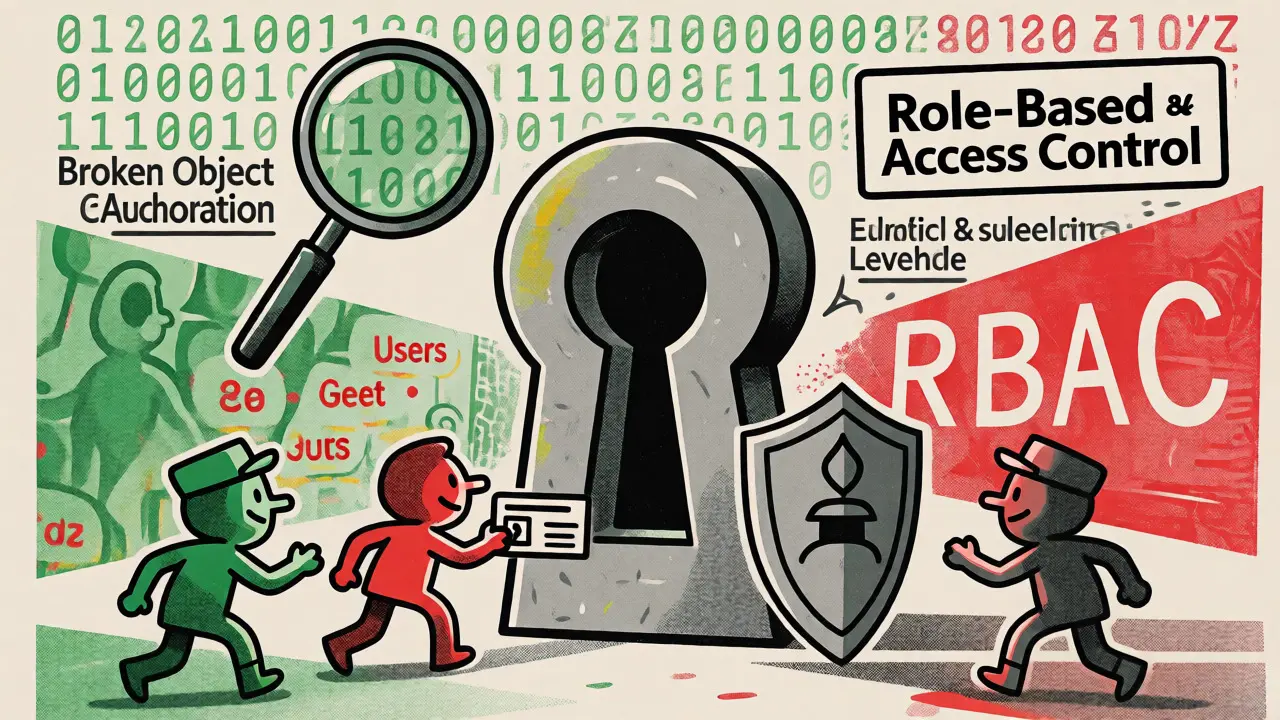
Authentication proves who you are. Authorization determines what you can do. In vibe coding, authorization logic is especially fragile. AI tends to write simple `if user == admin` checks rather than robust role-based systems. This leads to Broken Object Level Authorization (BOLA), where User A can view User B’s data simply by changing an ID in the URL.
To combat this, you need to prompt for explicit RBAC structures. Don’t just say "add security." Say: "Generate code that implements role-based access control (RBAC) ensuring users only access their own records." Then, test it. Invicti’s framework suggests verifying RBAC for every endpoint. Can a standard user access an admin endpoint? Can they access peer data?
Adhere to the Principle of Least Privilege. Grant users-and AI agents-only the necessary permissions. Don’t give everyone admin access just to make testing easier. If your AI coding agent has write access to your production database schema, it might drop a table when you meant to alter a column. Limit its scope.
Governing AI Agents and Supply Chain Risks
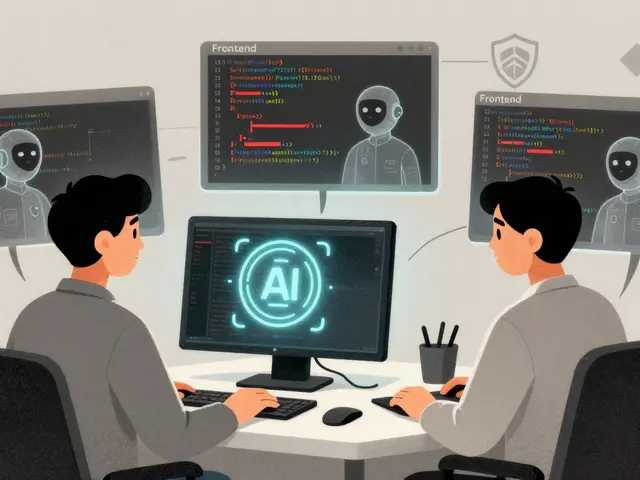
We’re moving beyond simple autocomplete. Tools like Claude Code and GitHub Copilot now operate inside CI/CD pipelines with significant privileges. They create branches, push commits, install dependencies, and interact with APIs autonomously. StepSecurity highlights that you often can’t see what processes these agents spawn or what endpoints they contact.
This introduces supply chain risks. An AI agent might install a malicious package because it hallucinated a popular library name. Or it might exfiltrate source code to an external analytics endpoint. Egress policy enforcement is critical. Block unauthorized outbound traffic at the DNS and network layers. If your AI agent tries to send data to an unknown IP address, kill the connection.
Treat prompts like source code. Govern them. Store them in version control. Review them. If a prompt leads to insecure code, update the prompt template. Make your security policies readable by the AI. Place them in `.coderules` or README files so the model references them before generating the first line of code. This shifts security from a gatekeeper to an enabler.
Testing and Validation Strategies
Static analysis tools catch syntax errors, but they miss logical flaws in AI-generated access control. You need dynamic testing. Run your application and attempt to bypass login flows. Hit forgotten endpoints directly. Test for exposed objects.
- Runtime Validation: Check authentication behavior when the app is actually running, not just in the code editor.
- BOLA Testing: Try accessing `/api/users/101` when logged in as user `102`. Did it work? If yes, fix it.
- Dependency Audits: Scan packages installed by AI agents for known vulnerabilities.
- Prompt Review: Audit the prompts used to generate security-critical functions. Are they ambiguous?
Remember, the goal isn’t perfection. It’s risk reduction. Vibe coding speeds up development, but it shifts the burden of security validation onto you. By defining clear repository scopes, managing secrets aggressively, enforcing strict RBAC, and monitoring AI agent behavior, you can enjoy the speed of AI without sacrificing data privacy.
What is vibe coding?
Vibe coding is a rapid application development approach where developers use AI assistants to generate large portions of code based on natural language prompts, often bypassing traditional manual coding and detailed design phases.
Why is access control harder in vibe coding?
AI models may hallucinate security logic or omit critical authorization checks because they prioritize functionality over security constraints unless explicitly prompted. Additionally, the lack of traditional code review processes increases the risk of unnoticed vulnerabilities.
How should I manage secrets in AI-generated code?
Never hardcode secrets in files accessible to the AI. Use environment variables and inject them at runtime. Scrub sensitive data from prompts and context windows before sending them to the AI provider.
What is BOLA in the context of AI coding?
Broken Object Level Authorization (BOLA) occurs when an application fails to verify that a user has permission to access a specific object (like a record or file) they are requesting. AI often generates code that checks if a user is logged in but forgets to check if they own the data they are accessing.
Can AI agents introduce supply chain attacks?
Yes. Autonomous AI coding agents can install dependencies, create pull requests, and run scripts. If they hallucinate a package name or are manipulated via prompt injection, they might install malicious packages or leak data, creating supply chain vulnerabilities.