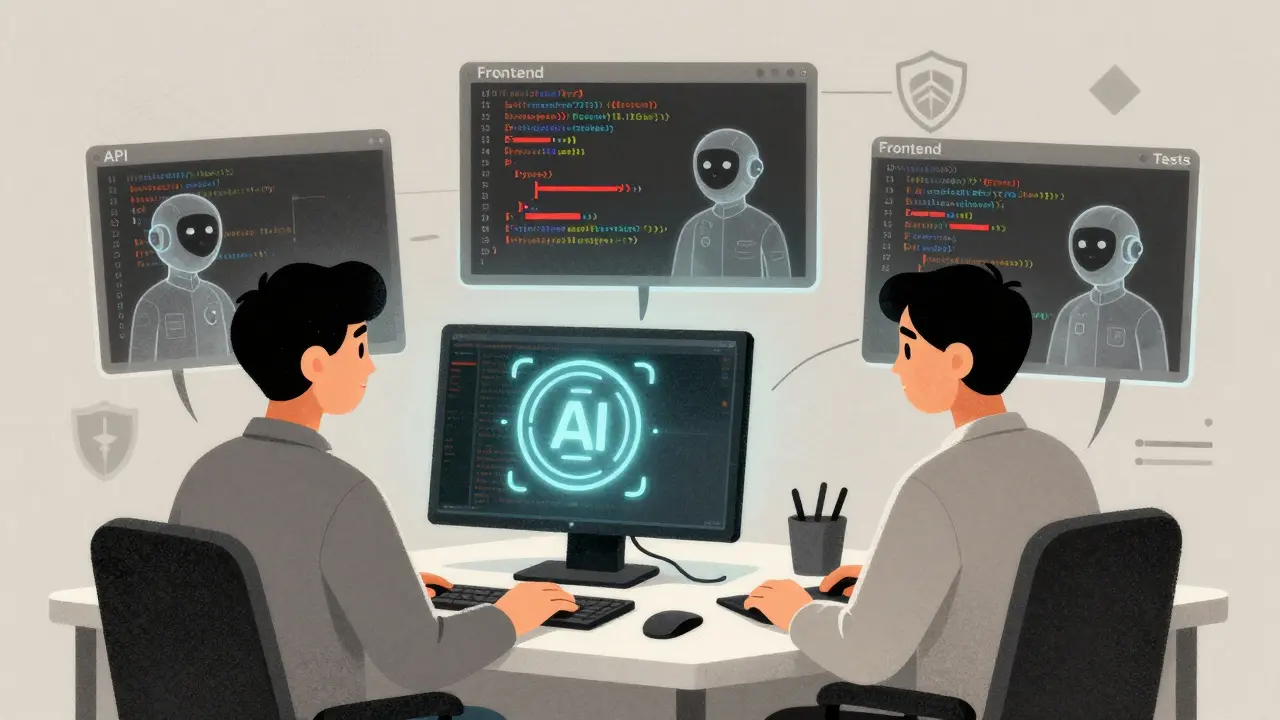
Enterprise vibe coding isn’t science fiction. It’s happening right now in companies that need to move faster without sacrificing security or control. By 2026, 90% of engineering teams have embedded AI into their core workflows-not as a side experiment, but as a central part of how software gets built. This isn’t about replacing developers. It’s about redefining their role: from typing every line of code to guiding intelligent systems that write, test, and fix code on their behalf.
What Is Vibe Coding, Really?
Vibe coding, as defined by Superblocks, is AI-powered development with guardrails. It’s not just autocomplete. It’s not just chatbots suggesting snippets. It’s a full-stack workflow where you describe what you want-like "build a dashboard that pulls sales data from Salesforce and flags anomalies in real time"-and the AI generates production-ready code, runs automated tests, fixes bugs, and even documents itself. The difference between consumer tools and enterprise vibe coding? Governance. Enterprise systems don’t let AI wander freely. They lock it into secure environments, enforce company-specific coding standards, and require human oversight at key checkpoints.Platforms like ServiceNow’s AI Platform and Salesforce’s Agentforce 360 are leading the way. These aren’t standalone AI tools. They’re deeply integrated into ERP, CRM, and identity systems. ServiceNow’s January 2026 update eliminated the need for "glue code"-the brittle, custom connectors that used to tie AI tools to legacy systems. Now, the AI understands your business context. It knows your data model, your approval workflows, and your security policies. That’s what makes it work at scale.
How It Actually Works: The Layered Architecture
Successful enterprise vibe coding doesn’t happen overnight. It’s built in layers:- AI-enabled IDEs: Tools like Cursor, Windsurf, or GitHub Copilot in VSCode handle individual developer productivity. They suggest functions, refactor code, and catch syntax errors before you even run it.
- Orchestration layer: This is where multiple AI agents collaborate. One agent writes the API endpoint. Another writes the frontend component. A third writes the unit tests. They pass context between each other, like a team of junior devs working together under a senior engineer’s direction.
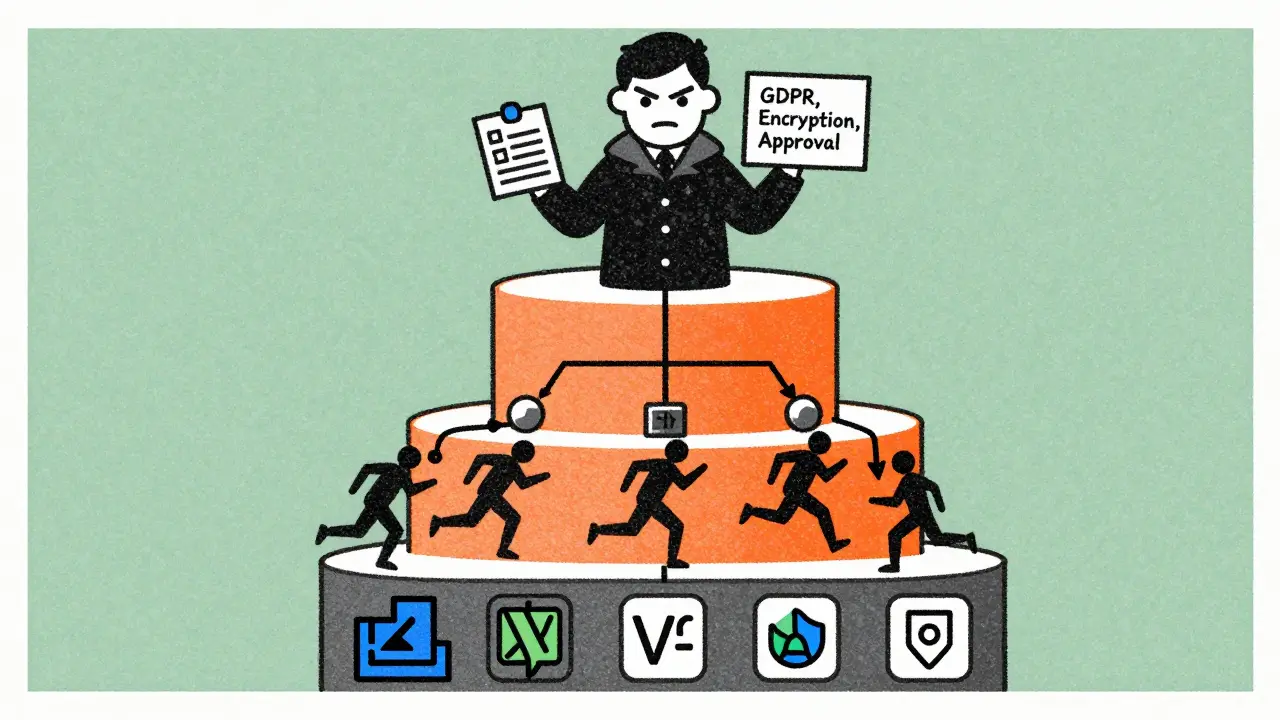
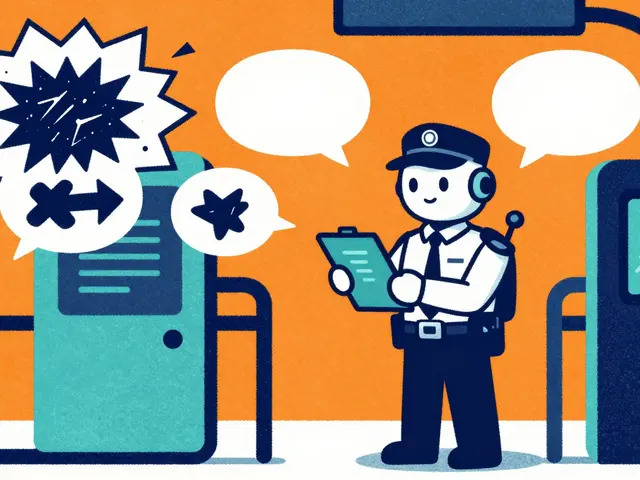
- Governance middleware: This is the silent enforcer. It checks every line of AI-generated code against your organization’s rules. Does it use approved libraries? Is it compliant with GDPR? Does it access sensitive data without encryption? If not, it blocks the commit or flags it for review.
Security isn’t an afterthought. It’s baked in. Systems like ServiceNow and Salesforce use local model execution for high-security teams-meaning AI models run inside your private cloud, not on public servers. Access to databases is restricted. Secrets are managed dynamically via HashiCorp Vault. Vulnerabilities are scanned in real time with tools like Semgrep and CodeQL. This isn’t just "good practice." It’s mandatory for regulated industries like finance and healthcare.
Where It Shines (And Where It Fails)
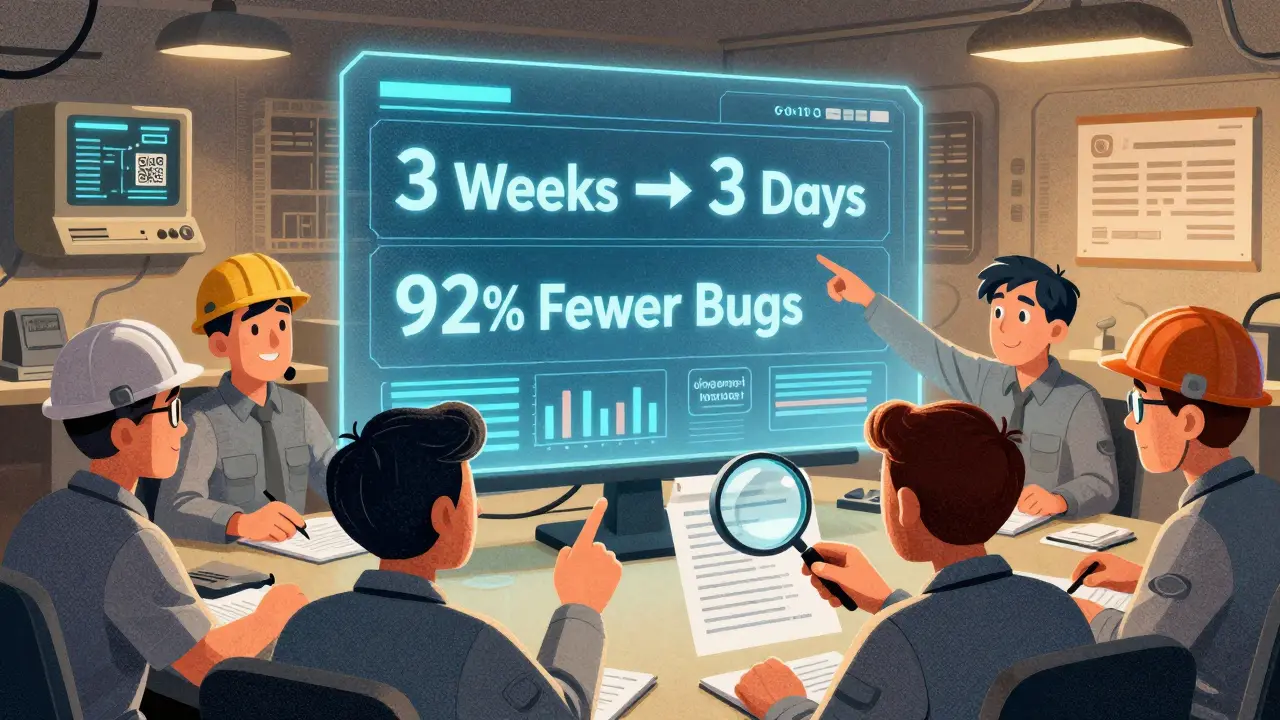
Vibe coding doesn’t replace everything. It excels in specific use cases:- Internal tools: Building dashboards, reporting systems, or admin panels used by your own team. Salesforce reports a 92% reduction in bugs and a drop from 3 weeks to 3 days for development cycles.
- Legacy modernization: Updating old COBOL or Java systems. Genpact found that AI can cut migration timelines by 40% by automatically translating logic and generating test suites.
- Workflow automation: Connecting Slack, SAP, and Zendesk without writing custom APIs. ServiceNow’s internal metrics show 73% faster deployment cycles compared to traditional methods.
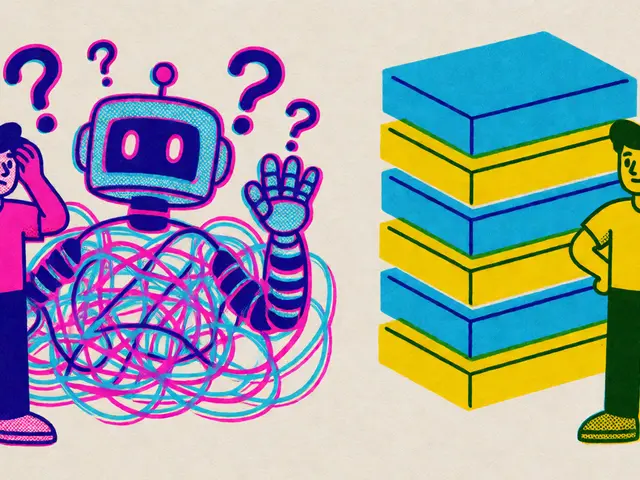
But failure is common when teams skip the guardrails. Virtasant’s case studies show that 68% of unmanaged vibe coding projects fail to integrate with existing systems. Why? Because the AI doesn’t know your authentication flow, your data schema, or your approval hierarchy. And without human oversight, 57% of projects spiral into scope creep-adding features nobody asked for, just because the AI could generate them.
Another hidden cost: maintenance. If you let AI generate code and then walk away, you end up with a system nobody understands. That’s why Genpact warns of "erosion of core coding skills." Engineers who can’t read or debug AI-generated code become liabilities. The best teams treat AI as a co-pilot, not a replacement.
Real-World Results: What Users Are Saying
Reddit threads from January 2026 tell a mixed story. One developer wrote: "I saved 63% of my time on internal tool updates-but 78% of my attempts to connect to SAP failed because the AI didn’t understand our legacy auth system." G2 reviews for ServiceNow’s AI Platform show a 4.3/5 rating, with praise for automated debugging but complaints about the steep learning curve for prompt engineering. Trustpilot users on Replit’s enterprise offering note seamless Google Cloud integration but warn that "hallucinations still happen," requiring senior engineers to catch errors.The pattern is clear: teams that succeed start small. They don’t ask AI to build a full CRM. They start with a single internal tool. They break tasks into verifiable steps. They document everything. And they never let the AI run without a human watching.
How to Start-Without Losing Your Mind
Virtasant’s four-stage approach is the most practical roadmap:- Adopt AI-enabled IDEs: Start with Copilot or Cursor in VSCode. Let your team get comfortable with suggestions, refactoring, and auto-complete. This builds trust and familiarity.
- Build internal tools: Pick one repetitive task-like generating monthly reports-and let AI build it. Define clear requirements. Test it. Review the code. This teaches the team how to guide AI effectively.
- Break big tasks into small steps: Don’t say "build a system." Say "create an API endpoint that pulls data from X, validates it, and sends it to Y." Then let the AI handle each step with human review in between.
- Build your own patterns: Once you’ve seen what works, document it. Create templates, prompt libraries, and approval workflows. Turn your best practices into reusable AI prompts.
Learning speed varies. Teams with experience in prompt engineering hit 80% of their productivity gains in two weeks. Teams without it take 8-10 weeks. The key skill isn’t coding anymore-it’s prompt engineering, model debugging, and AI testing. You need to understand how AI thinks, what it gets wrong, and how to steer it back on track.
The Future Is Integrated
The market is exploding. Gartner predicts the enterprise AI coding market will hit $14.2 billion by 2027. The players are splitting into three groups: pure-play AI platforms like Replit, enterprise platforms like ServiceNow and Salesforce, and cloud providers like Google Cloud, which partnered with Replit in February 2026 to embed Gemini 3 directly into Design mode.The trend is clear: AI copilots are becoming embedded-not just in IDEs, but in CI/CD pipelines, ticketing systems, and even HR platforms. The goal? To let business analysts describe workflows in plain language, while engineers focus on architecture, security, and scaling.
Google Cloud CEO Thomas Kurian put it best: "Our partnership will accelerate the adoption of vibe coding in the enterprise." But the real winners won’t be the tools. They’ll be the teams that learn to work with AI-not instead of it.
By 2027, developers who can bridge traditional code and AI-driven tools will be the ones leading innovation. The ones who cling to old ways? They’ll be left behind.
Is vibe coding the same as low-code or no-code?
No. Low-code tools give you drag-and-drop builders with fixed components. Vibe coding uses AI to generate actual code-JavaScript, Python, SQL-from natural language. It’s more flexible, more powerful, and more complex. You’re not limited by prebuilt widgets. You’re writing real software, just with AI as your assistant.
Does vibe coding replace software engineers?
No-it transforms their role. Engineers aren’t typing less. They’re thinking more. Their job shifts from writing code to designing prompts, reviewing AI output, debugging logic errors, and enforcing security policies. The best engineers now spend more time on architecture and governance than on syntax.
What if the AI generates insecure code?
That’s why governance middleware exists. Enterprise systems scan every line of AI-generated code for vulnerabilities before it’s committed. Tools like CodeQL and Semgrep catch SQL injection, cross-site scripting, and data exposure risks in real time. If the AI tries to access a database without encryption, the system blocks it. Human review is still required for high-risk changes.
Can vibe coding work with legacy systems like SAP or Oracle?
Yes-but only if you give the AI the right context. ServiceNow and Salesforce now offer prebuilt connectors for SAP, Oracle, and other legacy systems. The AI doesn’t guess how they work. It uses documented APIs and data models provided by your IT team. Without that context, integration fails. That’s why starting with internal tools is critical-you build the knowledge base first.
What skills do developers need for vibe coding?
Beyond traditional coding, developers need prompt engineering skills-knowing how to ask the AI for the right output. They need to understand AI behavior: how it hallucinates, where it gets stuck, and how to refine prompts. They also need to know API integration, cloud infrastructure, and how to audit AI-generated code for security and performance.

Ryan Toporowski
22 March, 2026 - 21:25 PM
Been using Cursor for a few months now and honestly? It’s like having a junior dev who never sleeps and doesn’t ask dumb questions. 🤖💻
Wrote a whole CRUD API for our internal inventory tracker in 20 mins. Didn’t even need to debug it. Just reviewed, clicked commit, and moved on. Game changer.
Also, the auto-docs? Chef’s kiss. 🫶
Mark Brantner
23 March, 2026 - 14:30 PM
sooo… you’re telling me we’re just gonna let AI write our code now and call it a day? 😂
bro i tried that with copilot on my last project and it generated a function called ‘fixEverything()’ that just returned ‘true’
turns out it didn’t fix anything. just pretended to. like a very enthusiastic intern who’s never read the docs.
still… i’m weirdly addicted. it’s like having a magic genie who keeps forgetting to wear pants.
Kate Tran
24 March, 2026 - 09:50 AM
My team started with vibe coding on internal dashboards last quarter. We didn’t go full AI mode-we just used it to generate boilerplate and then reviewed every line.
It’s not magic. It’s more like a really fast typist who occasionally forgets semicolons.
But ohhh, the time saved on repetitive reports? Worth it.
Also, the governance layer saved us from a GDPR mess last month. Seriously. It blocked a commit that was sending PII to a dev log. Saved our bacon.
amber hopman
26 March, 2026 - 05:44 AM
I’ve seen teams try to go all-in on vibe coding and it goes sideways real fast.
One group tried to build a customer portal from scratch with AI. No context. No guardrails. Result? 14 different auth flows, 3 unencrypted DB calls, and a UI that looked like it was designed by a toddler on a sugar rush.
But when you start small? Like, really small? Like one microservice? It’s beautiful.
AI doesn’t replace the engineer. It just makes you better at being one. You’re not coding-you’re curating.
Jim Sonntag
27 March, 2026 - 12:21 PM
AI writes code. We write prompts. So… are we the new typists?
Like, back in the day you had to type everything. Now you just say ‘make it work’ and hope for the best.
Also, the ‘vibe’ part is just corporate speak for ‘we’re too lazy to learn SQL properly.’
…but hey, if it gets the job done and I get to leave at 5, I’m not complaining. 🤷♂️
Deepak Sungra
28 March, 2026 - 05:12 AM
bro i tried vibe coding on my SAP integration project and the AI just kept trying to use REST when we’re on SOAP 1.2 with WSDL 2.0 and custom headers
it was like asking a cat to assemble a watch
took me 3 days to fix what it ‘built’
now i just write the code myself and use AI to explain why my code is better
also my manager says ‘trust the process’ but the process is just me crying into my coffee
send help
Samar Omar
29 March, 2026 - 13:36 PM
Let’s be brutally honest: vibe coding is not innovation-it’s the natural evolution of software engineering’s slow descent into a performative illusion of productivity.
Companies tout ‘90% of teams using AI’ as if that’s progress, when in reality, they’re outsourcing cognitive labor to a probabilistic language model that hallucinates database schemas like a drunk poet.
Yes, you can generate a dashboard in 3 days instead of 3 weeks-but what happens when the AI-generated codebase becomes a Frankensteinian graveyard of untraceable dependencies? Who maintains it? Who understands it? Who will be blamed when the audit fails?
Meanwhile, junior engineers are being trained not to read code, but to interpret AI outputs like horoscopes. The erosion of fundamental skills isn’t incidental-it’s systemic. And yet, we’re celebrating this as ‘efficiency.’
It’s not the future. It’s the end of apprenticeship. And I, for one, mourn the loss of craftsmanship.