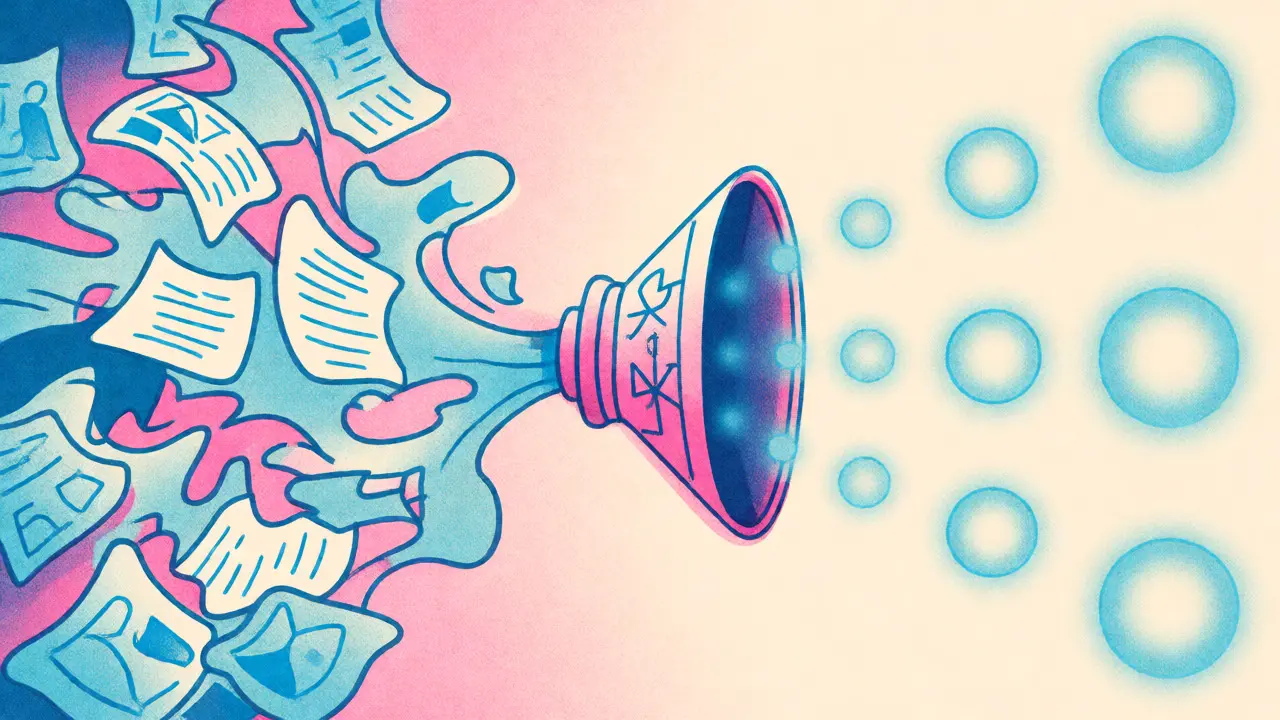
Have you ever wondered how a computer actually "understands" the difference between a cat and a dog, or why it knows that "king" minus "man" plus "woman" equals "queen"? It’s not magic. It’s math. Specifically, it’s representation learning, the process by which generative AI models convert complex, unstructured data into numerical vectors that capture semantic meaning. If you are building applications today, understanding embeddings isn't just academic trivia-it's the backbone of everything from chatbots to recommendation engines.
At its core, an embedding is a way to turn something messy-like a sentence, an image, or a video clip-into a list of numbers. But these aren't random numbers. They are coordinates in a high-dimensional space where distance equals similarity. If two items are close together in this mathematical space, they share similar meanings. This concept transforms how machines process information, moving us from simple keyword matching to true semantic understanding.
What Exactly Are Embeddings?
Think of an embedding as a fingerprint for data. It is a vector representation of real-world objects, such as words, images, or videos, formatted so machine learning models can easily process them. According to definitions from Cloudflare and Arize AI, these vectors allow linear distances to capture structure in the original datasets. When you feed text into a model, it doesn't see letters; it sees points in a grid. The closer two points are, the more related their content is.
This shift from raw data to structured vectors is what allows modern AI to handle context. Traditional methods might treat "bank" in "river bank" and "bank account" as identical tokens. Embeddings, however, place these in different locations based on surrounding words, effectively teaching the machine about ambiguity and nuance. This capability is foundational to Natural Language Processing (NLP), enabling systems to generate coherent, fluent sentences that reflect intent and emotion rather than just grammatical correctness.
The Technical Backbone: From VAEs to Transformers
How do we get these numbers? We use sophisticated neural network architectures. One common approach involves Variational Autoencoders (VAEs) and Generative Adversarial Networks (GANs). These models learn a latent representation of data-a compressed summary that preserves essential features while discarding noise. By mapping data into these high-dimensional spaces, generative embeddings can represent complex relationships that traditional techniques often miss.
For text specifically, transformer-based models have become the gold standard. Take Sentence-BERT (SBERT), for example. Unlike earlier models that generated word-level embeddings, SBERT fine-tunes BERT to produce high-quality sentence embeddings. This is crucial for retrieval systems because it captures the meaning of entire sentences, not just isolated words. When you ask a question, the system converts your query into a vector using the same model, then hunts for the closest matching vectors in its database.
Why Consistency Matters in RAG Systems
If you are working with Retrieval-Augmented Generation (RAG), consistency is non-negotiable. RAG systems rely on embeddings to retrieve relevant documents before generating an answer. A critical rule here: you must use the exact same embedding model for indexing your documents and processing user queries. If you mix models, the vector spaces won't align, and your retrieval accuracy will plummet.
Research from Unstructured.io highlights that embeddings in RAG are typically not fine-tuned for specific tasks during operation. Doing so can lead to inconsistencies. Instead, practitioners often stick to established models like sentence-transformers/all-MiniLM-L6-v2. Using proven, stable models ensures reproducibility, which is vital in regulated industries like healthcare or finance where results need to be predictable.
| Approach | Primary Use Case | Key Characteristic | Best For |
|---|---|---|---|
| Sentence-BERT | Semantic Similarity | Captures full sentence meaning | RAG, Search Engines |
| VAE Latent Space | Data Generation | Preserves structural features | Image Synthesis, Anomaly Detection |
| Word2Vec/GloVe | Word Associations | Static word vectors | Basic Text Analysis |
Uncovering Bias and "Generative DNA"
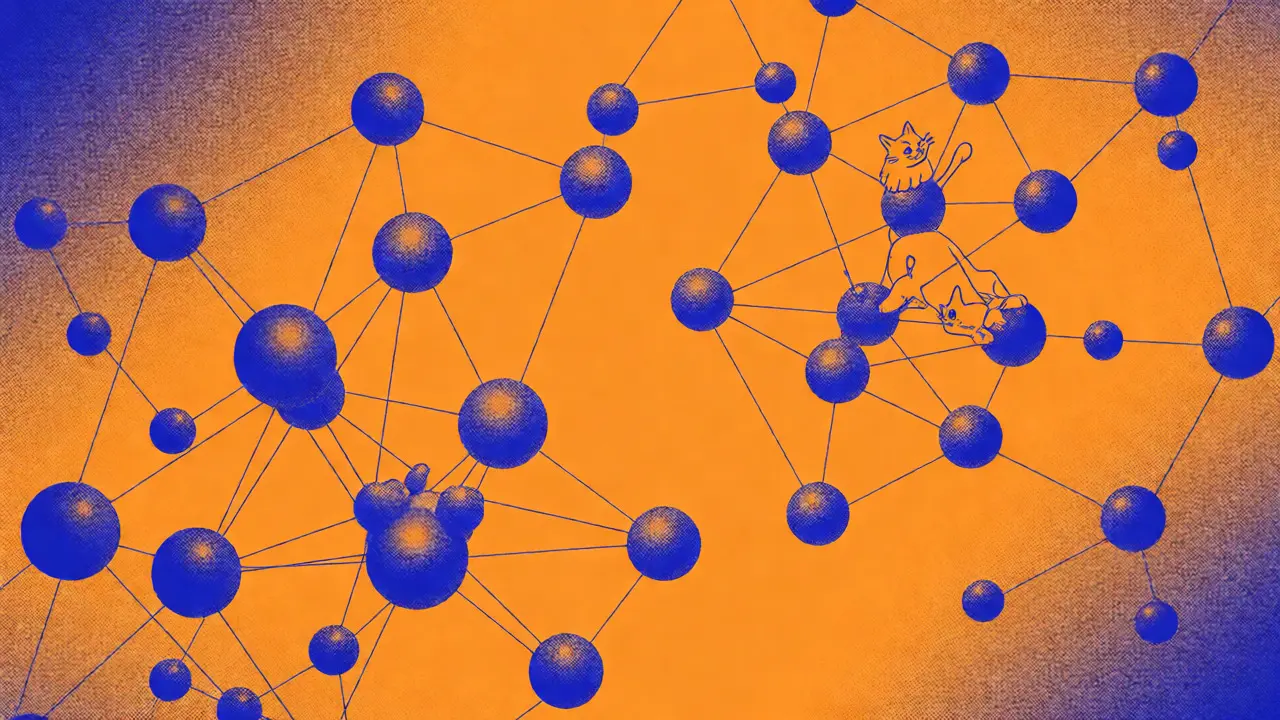
Embeddings don't just store meaning; they store bias. Research published via the National Center for Biotechnology Information shows that dataset characteristics heavily influence resulting vectors. For instance, cat images from two different public datasets (LSUN and Cats&Dogs) end up in separable subspaces when processed by a feature extractor. Even though both contain real cats, the sampling technique used to gather them leaves a distinct mark on the embedding.
This phenomenon has led researchers to coin the term "generative DNA" (gDNA). It refers to the unique signature left by a model's training corpus and procedures within its embeddings. This gDNA acts as a natural watermark. Because each generative model learns distinct representations based on its specific training data, these shifts are inherent. You cannot remove them without significant filtering. This insight is powerful for deepfake detection, as empirical evidence suggests there is intrinsic separability between real samples and AI-generated ones within the embedding space.
Practical Applications: Visualization and Feature Engineering
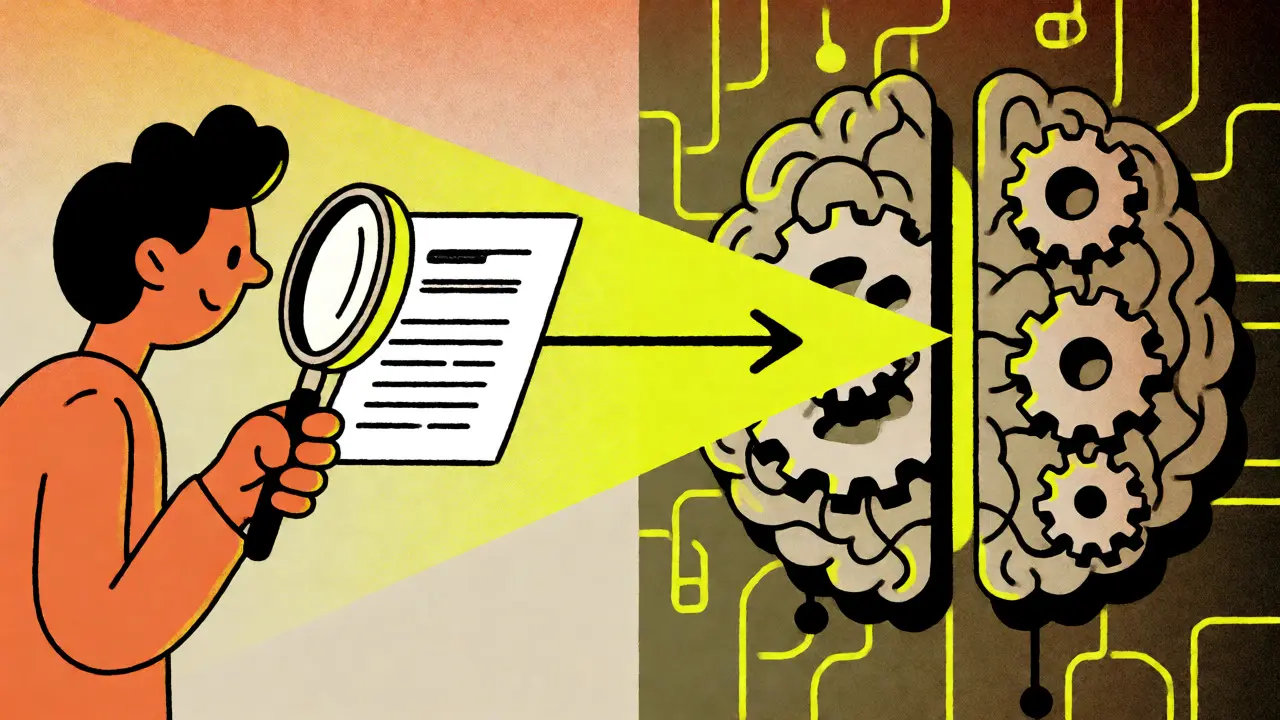
Beyond generation, embeddings serve as a powerful tool for analysis. Techniques like t-SNE and UMAP allow developers to visualize high-dimensional embedding spaces in two or three dimensions. This reveals clusters, outliers, and patterns that are invisible in raw data. For exploratory data analysis, this is invaluable. You can spot biases or anomalies simply by looking at how data points group together.
Furthermore, embeddings represent the evolution of feature engineering. Historically, data scientists hand-crafted features based on domain expertise. Today, the internal representations of deep neural networks act as automated feature engineers. These learned embeddings reveal interpretable, high-level concepts in unstructured data, freeing analysts from manual extraction and allowing models to discover nuances humans might miss.
Implementation Pitfalls to Avoid
Switching embedding models mid-project is a common mistake. Each model creates its own vector space. Mixing them causes unpredictable behavior and degrades retrieval quality. Always ensure your vector database stores embeddings from a single source model. Additionally, remember that signal occupies a low-dimensional subspace of the ambient vector space. Noise in extraneous dimensions can cause generated data to drift from the training distribution, so dimensionality reduction techniques can sometimes improve performance by focusing on the most informative axes.
Understanding representation learning gives you control over your AI stack. It moves you from black-box guessing to informed engineering. Whether you are building a search engine or a creative tool, mastering embeddings means mastering the language of machines.
What is the main purpose of embeddings in generative AI?
The main purpose is to convert complex, unstructured data (like text or images) into numerical vector formats that machines can process. These vectors capture semantic relationships, allowing AI models to understand context, perform similarity searches, and generate relevant outputs based on meaning rather than just keywords.
Why is consistency important when using embeddings in RAG systems?
Consistency is critical because RAG systems compare user queries against indexed documents. If you use different embedding models for indexing and querying, the vectors exist in different mathematical spaces, making distance calculations meaningless. Using the same model ensures that semantic similarities are accurately measured, maintaining retrieval accuracy.
Can embeddings help detect AI-generated content?
Yes. Research indicates that embeddings produced by feature extractors encode differences between generative techniques, known as "generative DNA." Empirical evidence shows intrinsic separability between real samples and AI-generated ones in the embedding space, suggesting embeddings can identify deepfakes or synthetic media without additional training.
How do Sentence-BERT embeddings differ from traditional word embeddings?
Traditional word embeddings (like Word2Vec) assign a static vector to each word regardless of context. Sentence-BERT generates dynamic embeddings for entire sentences by fine-tuning BERT. This allows it to capture the nuanced meaning of a full sentence, which is essential for accurate semantic similarity tasks and retrieval systems.
What role does dataset bias play in embedding creation?
Dataset bias significantly influences embedding vectors. Data sampled from different sources often embeds into separable subspaces. Pretrained feature extractors are sensitive to these sampling techniques, meaning even visually similar data (like cat photos from different datasets) can result in distinguishable embeddings, reflecting the underlying data collection methods.



Bonnie Watt
4 September, 2026 - 09:04 AM
Oh please spare me the "king minus man plus woman" cliché. It is so painfully outdated and frankly embarrassing that people still cite it as if it proves some deep semantic understanding when it's basically just linear algebra parlor tricks.
You talk about embeddings capturing meaning but you completely ignore how fragile they are to context shifts. I've seen countless RAG implementations fail spectacularly because someone thought a static vector space could handle dynamic human nuance without fine-tuning or proper chunking strategies. It's not magic, it's just bad engineering dressed up in fancy math terms.
The section on bias is laughably superficial too. Saying datasets leave a mark is obvious. The real issue is that most practitioners don't even know which subspaces their data occupies until after the model has already hallucinated an answer based on noise. You act like switching models mid-project is a common mistake, but in reality, it's a symptom of teams who don't understand their own infrastructure. They treat embeddings like interchangeable Lego bricks when they're actually highly specific coordinate systems.
I'm tired of articles that explain representation learning as if everyone else is asleep at the wheel. We know what vectors are. We know what cosine similarity is. What we need is practical advice on handling drift, not another introductory lecture for undergraduates who think they've discovered fire.
Dave Gibbeson
4 September, 2026 - 18:09 PM
Look Bonnie I get where you're coming from but you're missing the forest for the trees here
This article is actually solid groundwork for anyone starting out with RAG pipelines right now
Consistency in embedding models is non negotiable and I cannot stress this enough
If you mix sentence transformers with OpenAI embeddings your retrieval accuracy tanks instantly
We saw exactly this happen last quarter when a junior dev swapped models halfway through indexing
The results were garbage until we reindexed everything with all-MiniLM-L6-v2
That single change improved our recall metrics by forty percent overnight
People underestimate how much dimensionality matters in high dimensional spaces
Noise in extraneous dimensions really does cause drift from training distribution
Dimensionality reduction isn't just a buzzword it saves compute costs and improves speed
You should try using UMAP before deploying to production next time
It reveals clusters that raw dot product searches completely miss
Stop being so dismissive of foundational concepts
Not everyone has been doing this for ten years like you pretend to
Some of us are building new stacks every month and need clear guidance
This post provides exactly that clarity without drowning in jargon
Great writeup honestly
Meagan Mueller
5 September, 2026 - 23:30 PM
theyre hiding the truth about generative dna
its not just watermarks its surveillance architecture baked into the weights themselves
every vector carries metadata about who trained the model and what they filtered out
the separable subspaces mentioned in the cat example are proof of ideological sorting
why do you think lsun cats look different than dogs dataset cats
because the humans labeling them had different biases and those biases became geometry
we are mapping human prejudice into mathematical coordinates and calling it objective
nobody talks about how proprietary datasets create closed loops of validation
if your embedding model was trained on curated web data its only reflecting a narrow slice of reality
the consistency rule in rag systems is just a way to lock vendors in
once you pick a model you cant switch without rebuilding your entire database
thats not technical necessity thats business strategy disguised as science
wake up and realize your search results are predetermined by the training corpus
you dont control the meaning you only navigate the maze they built
stop trusting the vectors start questioning the source
everything is connected and nothing is neutral
Sabrina Newland
7 September, 2026 - 20:16 PM
this is such a fascinating perspective 🤯 i’ve always wondered if embeddings truly capture the "essence" of things or if they’re just statistical shadows 👻
the idea of generative dna feels almost biological like each model has a soul shaped by its upbringing ✨
i wonder though if there’s a philosophical limit to how much meaning can be compressed into numbers 🤔
is a vector really the same as understanding or is it just sophisticated mimicry 💭
maybe the bias isn’t a bug but a feature showing us how subjective reality really is 🌍
it makes me think about how language itself is just a series of agreed upon symbols anyway 🗣️
so maybe machines aren’t that different from humans in how they process the world 🧠
we both rely on patterns and associations rather than absolute truths 🔍
what if the distance between points represents emotional resonance rather than just semantic similarity ❤️
that would change everything about how we design empathetic AI interfaces 😊
i love the visualization part especially t-sne it feels like art 🎨
seeing clusters emerge is like watching thoughts take shape in real time 👀
do you think future models will learn to visualize their own latent spaces autonomously 🚀
or will we always need external tools to interpret their inner worlds 🔮
thanks for sharing this it sparked so many questions in my mind 🙏
Art HND
8 September, 2026 - 14:59 PM
Sentence-BERT is overrated for short queries. Use BM25 hybrid instead. Saves latency and handles exact matches better. Pure vector search fails on rare terms. Stop chasing trends.
Amara Akbar
10 September, 2026 - 14:44 PM
Thank you so much for putting together such a comprehensive overview of this complex topic. It is incredibly helpful for those of us trying to bridge the gap between theoretical machine learning concepts and practical application in enterprise environments.
I particularly appreciated the emphasis on consistency within Retrieval-Augmented Generation systems. As you noted, mixing embedding models is a frequent pitfall that leads to significant performance degradation. In my experience working with healthcare data, maintaining reproducibility through stable models like sentence-transformers/all-MiniLM-L6-v2 has been crucial for regulatory compliance and stakeholder trust.
The discussion on "generative DNA" was also quite insightful. Recognizing that embeddings carry inherent biases from their training corpora allows us to approach model evaluation with greater humility and rigor. It reminds us that these tools are reflections of human data collection practices rather than purely objective arbiters of truth.
Your point about embeddings serving as automated feature engineers is spot on. This shift reduces the burden on data scientists to manually craft features, allowing more time for strategic analysis and interpretation of results. I plan to share this article with my team as it clearly articulates why understanding representation learning is essential for modern AI stack management.
Mark Harvey
11 September, 2026 - 22:53 PM
great post really helped clarify some confusion i had about rag pipelines
the bit about consistency saved me hours of debugging yesterday
keep up the good work