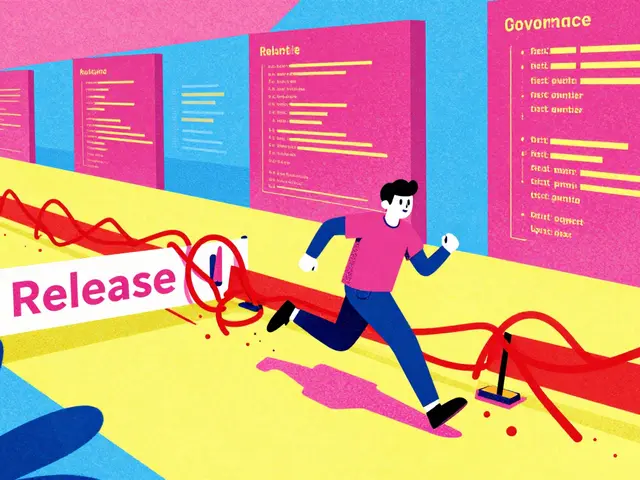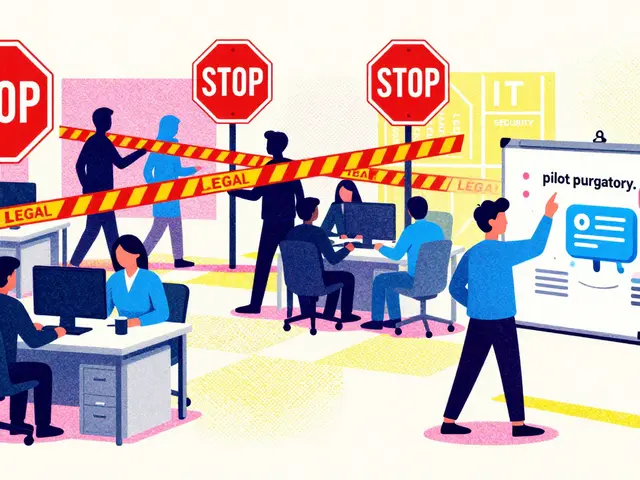
Imagine your team ships a critical update in half the usual time because an AI coding assistant is a software tool that uses large language models to generate, suggest, or complete code snippets for developers wrote most of the logic. It works perfectly in staging. Then, production hits. Within hours, attackers exploit a subtle input validation flaw hidden deep in the AI-generated function-a vulnerability no human reviewer caught because it looked like standard boilerplate. This isn’t science fiction; it’s the emerging reality for teams adopting generative AI without robust security guardrails.
The phrase "AI code is guilty until proven secure is a zero-trust policy stance where all AI-generated code is treated as untrusted by default and must pass explicit security verification before reaching production" captures the necessary shift in mindset. We can no longer assume code is safe just because it runs. When AI writes code, we must verify its safety before deployment. This approach adapts long-standing zero-trust principles are security models based on the assumption that threats exist both outside and inside the network perimeter, requiring continuous verification of every user and device from network security into our development workflows. It forces us to treat AI output with the same skepticism we’d apply to code from an unvetted external contractor.
Why AI-Generated Code Needs a Presumption of Guilt
You might wonder why we need such a strict stance. After all, AI tools are trained on millions of lines of secure, open-source code. Shouldn’t they learn good habits? The data says otherwise. A pivotal 2023 report by the Center for Security and Emerging Technology (CSET) is a research center at Georgetown University focused on the intersection of technology, national security, and public policy evaluated code produced by five major code-generation models. They found that nearly half of the generated code snippets contained bugs-many of which were impactful and potentially exploitable. These weren’t minor syntax errors; they were missing input validations, weak authentication checks, and unsafe memory handling patterns.
This creates three distinct classes of risk that traditional security reviews often miss:
- Insecure code generation: Models may output code lacking proper error handling or authorization checks because these nuances are harder to capture in training data than basic functionality.
- Model-level vulnerabilities: The AI models themselves can be manipulated through adversarial prompt injection or poisoned training data, leading them to produce malicious outputs intentionally or accidentally.
- Systemic supply-chain effects: If insecure AI-generated code enters popular libraries, it gets reused across thousands of projects, creating widespread systemic risks.
Contrast Security is an application security company providing runtime application self-protection and cloud-native security solutions notes that AI doesn’t necessarily make code less secure than human-written code, but it drastically increases volume and speed. More code means a larger attack surface. If your security processes don’t scale with that velocity, vulnerabilities slip through simply because there’s too much to review manually.
Building the Policy Foundation: Governance and Accountability
Technology alone won’t solve this problem. You need clear policies that define who does what. A "guilty until proven secure" framework starts with governance. According to guidance from Checkmarx is a leading provider of application security testing solutions including static and interactive analysis tools, organizations must establish granular AI code usage policies. These shouldn’t be vague guidelines; they need specific rules about which tools are permitted, in what capacity (prototyping vs. production), and where AI-generated code is prohibited entirely-such as in cryptographic modules or core authentication flows.
Consider integrating these policies into the NIST AI Risk Management Framework (AI RMF) is a voluntary framework developed by NIST to help organizations manage risks associated with artificial intelligence systems through four core functions: Govern, Map, Measure, and Manage. This gives you a structured way to:
- Govern: Establish roles, responsibilities, and high-level policies for AI code usage.
- Map: Identify exactly where AI is used in your SDLC, which systems touch sensitive data, and who owns those decisions.
- Measure: Track metrics like vulnerability density in AI-generated code versus human-written code, time-to-remediation, and the percentage of codebase affected.
- Manage: Implement technical controls and procedures to mitigate identified risks continuously.
Crucially, you need a shared responsibility model. Developers can’t be expected to catch every subtle logic flaw in AI output, and security teams can’t manually review every line. The solution lies in cross-functional accountability: developers validate AI suggestions critically, AppSec engineers provide automated scanning and threat modeling support, and product owners accept the business risk only after security sign-off.
Technical Controls: Automating the "Proof" Phase
If AI code is guilty until proven secure, how do we prove it? Automation is key. Manual code review scales poorly against AI’s output volume. Instead, embed security checks directly into your workflow using layered technical controls.
| Control Type | Function | Integration Point |
|---|---|---|
| Static Application Security Testing (SAST) is analysis of source code without executing it to identify security vulnerabilities, bugs, and compliance issues | Detects insecure patterns like SQL injection or hardcoded secrets early in development | IDE plugins and pre-commit hooks |
| Dynamic Application Security Testing (DAST) is testing of running applications to identify security vulnerabilities from an attacker's perspective | Finds runtime issues like broken access control or improper session management | CI/CD pipeline stages post-deployment to test environments |
| Software Composition Analysis (SCA) is tooling that identifies and manages open-source components within software to detect known vulnerabilities and license risks | Ensures AI-generated dependencies don’t introduce vulnerable third-party libraries | Build pipelines and dependency management systems |
| Runtime Application Self-Protection (RASP) is security technology embedded within the application runtime to monitor and block attacks in real-time | Catches exploits that bypass pre-deployment tests by monitoring actual execution behavior | Production environment agents |
Tools like Cisco’s Project CodeGuard offer open-source frameworks to build secure-by-default rules directly into AI coding workflows. These validators enforce security rules automatically as code is generated, effectively shifting left even further. Meanwhile, platforms like ZeroPath allow you to define custom security rules in natural language, translating human-readable requirements into machine-enforceable policies. This means if your policy states "no AI-generated code in payment processing modules," the system blocks that commit automatically.
Operationalizing the Framework: Discovery and Prioritization
Before you can secure AI code, you need to find it. Many organizations have no idea how much AI-generated code already exists in their repositories. ArmorCode is an application security platform specializing in AI-driven code governance and automated remediation workflows emphasizes that successful governance starts with automated discovery. You must map your AI footprint: which repositories contain AI-generated code, how does it flow into production, and what level of sensitivity does it touch?
Once discovered, not all findings are equal. Treating every low-risk warning with the same urgency as a critical remote code execution flaw leads to alert fatigue and governance paralysis. Instead, adopt risk-based prioritization. Focus your manual review efforts on:
- Code touching PII, financial data, or authentication mechanisms.
- Changes to core business logic where context matters more than syntax.
- New dependencies introduced by AI suggestions.
For lower-risk areas, rely on automated scans and peer review. This balanced approach ensures your team isn’t overwhelmed while maintaining rigorous protection where it counts most.
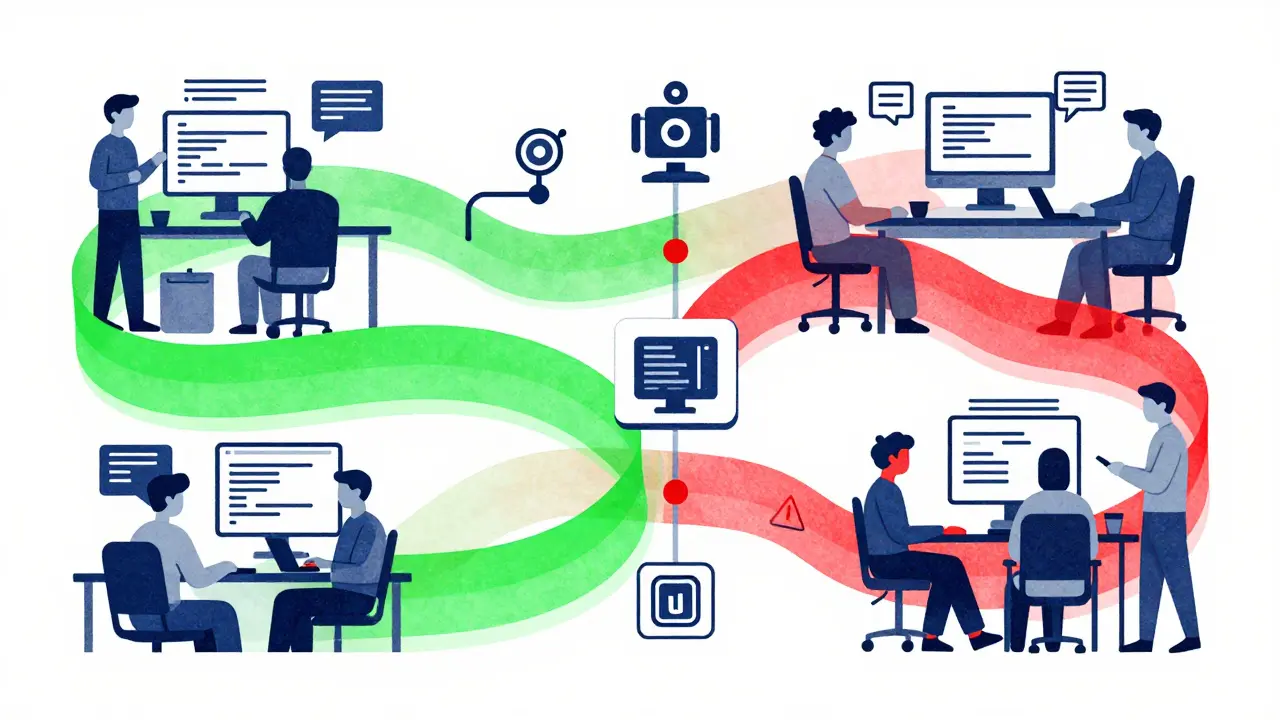
Cultural Shifts: Training and Developer Mindset
Policies and tools fail without cultural buy-in. Developers accustomed to trusting AI assistants need retraining. Education must go beyond generic secure coding principles. Teach teams specifically how GenAI generates code, what typical weaknesses look like, and why blind acceptance is dangerous.
Encourage a mindset of skeptical validation. When an AI suggests a complex algorithm, ask: "Does this handle edge cases? Are there privilege boundaries here? Is this random number generator cryptographically secure?" Foster shared ownership of security outcomes. When developers see security as an enabler rather than a blocker, adoption improves dramatically.
Start small. Pilot the framework in one team or project. Measure results. Adjust policies based on real-world friction points. Gradually expand coverage as maturity increases. Remember, perfection isn’t the goal-continuous improvement is.
Looking Ahead: The Future of AI Code Security
As AI adoption accelerates, so will the sophistication of attacks targeting AI-generated code. Industry analysts predict that AI code security will evolve into a distinct discipline combining continuous threat modeling, contextual knowledge graphs, and intelligent automation. We’ll likely see tighter integration between AI coding agents and security validators, making secure-by-default the norm rather than the exception.
Regulatory pressure will also grow. While current frameworks like NIST’s AI RMF are voluntary, expect governments and industry consortia to develop mandatory standards for AI-assisted development. Organizations implementing a "guilty until proven secure" framework today will be better positioned to demonstrate due diligence tomorrow.
The bottom line? Don’t wait for a breach to prove AI code needs scrutiny. Build the proof now. Treat every line of AI-generated code as suspect until verified. Your future self-and your customers-will thank you.
What does "AI code is guilty until proven secure" mean?
It means treating all AI-generated code as untrusted by default. Before any AI-written code reaches production, it must undergo explicit security verification through automated scans, peer review, and policy enforcement. This zero-trust approach assumes vulnerabilities exist until proven otherwise.
Is AI-generated code inherently less secure than human-written code?
Not necessarily. Research shows AI-generated code has similar vulnerability rates to human code but introduces unique risks due to volume, speed, and potential lack of contextual understanding. The main issue isn't inherent insecurity-it's the scalability challenge of reviewing massive amounts of code quickly enough to catch flaws before deployment.
How do I start implementing this framework in my team?
Begin with discovery: identify where AI tools are currently used and map existing AI-generated code. Next, establish clear usage policies defining approved tools and restricted areas (like auth modules). Integrate automated SAST/DAST scanning into your CI/CD pipeline. Finally, train developers on recognizing common AI-induced vulnerabilities and foster a culture of skeptical validation.
Which tools help enforce a guilty-until-proven-secure policy?
Key tools include Static Application Security Testing (SAST) for early detection, Dynamic Application Security Testing (DAST) for runtime validation, Software Composition Analysis (SCA) for dependency checks, and Runtime Application Self-Protection (RASP) for live monitoring. Platforms like Checkmarx, Contrast Security, and Cisco’s Project CodeGuard provide specialized capabilities for securing AI workflows.
Should I ban AI coding assistants entirely if they’re risky?
No. Banning AI ignores its productivity benefits. Instead, govern its use responsibly. Allow AI for non-critical tasks like boilerplate generation or documentation, but restrict it in high-security zones like cryptography or payment processing. Combine usage restrictions with strong automated security controls to mitigate risk while retaining efficiency gains.