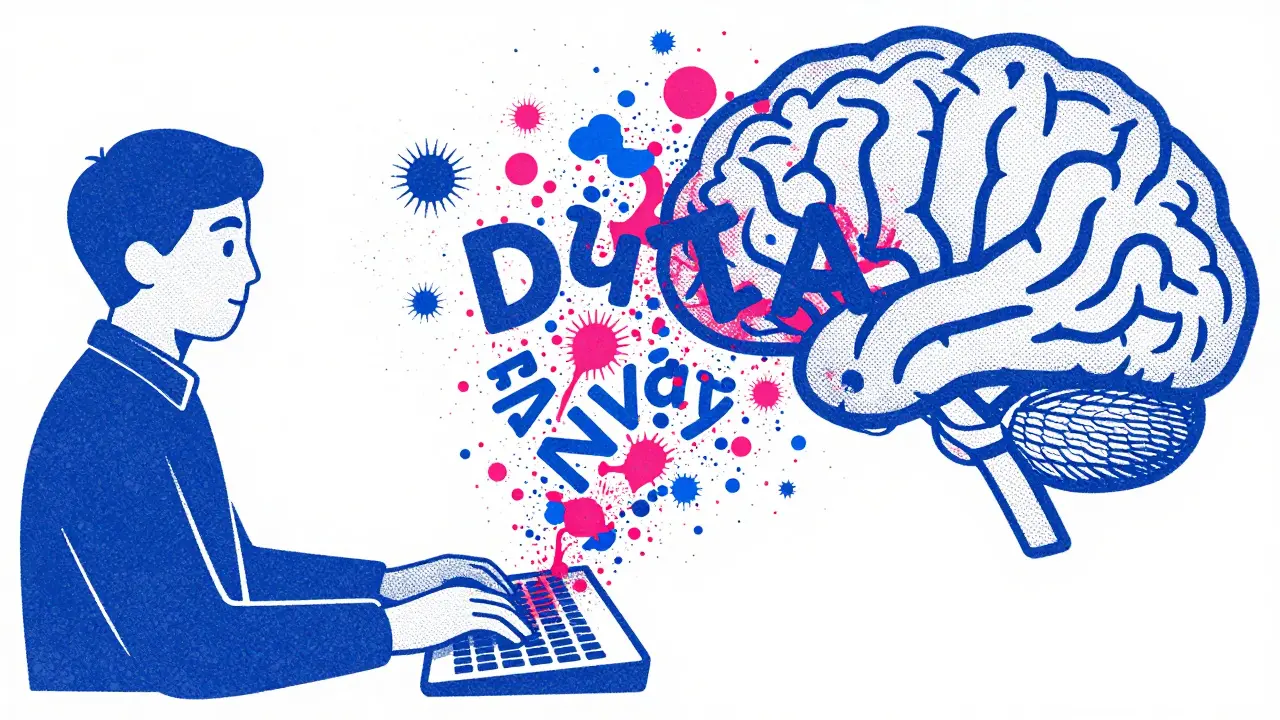
Imagine typing a sensitive question into an AI assistant, only to find out months later that your conversation was used to train the model without your explicit permission. This isn't a hypothetical nightmare scenario; it is the current reality for many users of Large Language Model (LLM) applications. Traditional web privacy rules, built around cookie banners and simple checkboxes, are failing us. They were never designed to handle the complex, opaque nature of AI systems where data doesn't just sit in a database-it gets absorbed, analyzed, and potentially memorized by neural networks.
As we move through 2026, the gap between how LLMs operate and how we manage consent has become a critical vulnerability. Companies are scrambling to adapt old tools to new problems, often with mixed results. For developers, product managers, and privacy advocates, understanding this shift is no longer optional. It is the difference between building a trusted product and facing severe regulatory backlash or losing user confidence entirely.
Why Standard Consent Tools Fail LLMs
To understand the problem, you have to look at what traditional Consent Management Platforms (CMPs) actually do. Tools like OneTrust, Osano, and CookieHub were born from the need to comply with regulations like the EU's General Data Protection Regulation (GDPR) and the California Consumer Privacy Act (CCPA). Their job was straightforward: show a banner, ask for permission to track cookies, and block or allow scripts based on that choice.
But an LLM is not a website with analytics scripts. When you interact with an AI, you are feeding it raw text that might contain personally identifiable information (PII), proprietary business secrets, or personal health details. The issue isn't just about storing that data; it's about how the model processes it. Does the system retain your prompt in its context window? Is your input anonymized and added to a dataset for future fine-tuning? Or does the model simply 'memorize' patterns from your interaction?
Traditional CMPs struggle here because they lack granularity. A standard 'Accept All' or 'Reject Non-Essential' button doesn't tell the AI engine whether it can use your data for immediate response generation versus long-term model improvement. According to Dr. Michelle Dennedy, CEO of The Privacy Consulting Group, traditional checkbox models are dangerously inadequate for LLM environments where data usage boundaries are inherently ambiguous. You cannot apply a blunt instrument to a surgical problem.
The Three Tiers of AI Data Usage
Effective consent management for AI requires breaking down data usage into specific tiers. Users need to understand exactly what happens to their words. Based on analysis from Ethyca and industry standards emerging in late 2025, these tiers generally include:
- Transient Processing: This is the basic function of the chat. Your input is processed to generate a response, then discarded from the active memory after the session ends. No long-term storage occurs. Most users expect this by default.
- Aggregate Learning: Here, your input is stripped of PII and used to improve the model's overall performance. This is where things get tricky. Anonymization is rarely perfect, and re-identification risks exist. Users must explicitly opt-in if they want their data to help train the AI.
- Persistent Personalization: The system remembers your preferences, style, or past interactions to tailor future responses. This creates a long-term profile. This requires the highest level of explicit consent and robust withdrawal mechanisms.
When these distinctions are blurred, trust erodes. A study by MIT's Computer Science and Artificial Intelligence Laboratory (CSAIL) in January 2026 audited 32 major AI applications and found that 67% failed to properly enforce 'no training data' preferences. In many cases, even when users clicked 'do not train,' their data still leaked into fine-tuning pipelines due to poor technical enforcement.
Technical Implementation Challenges
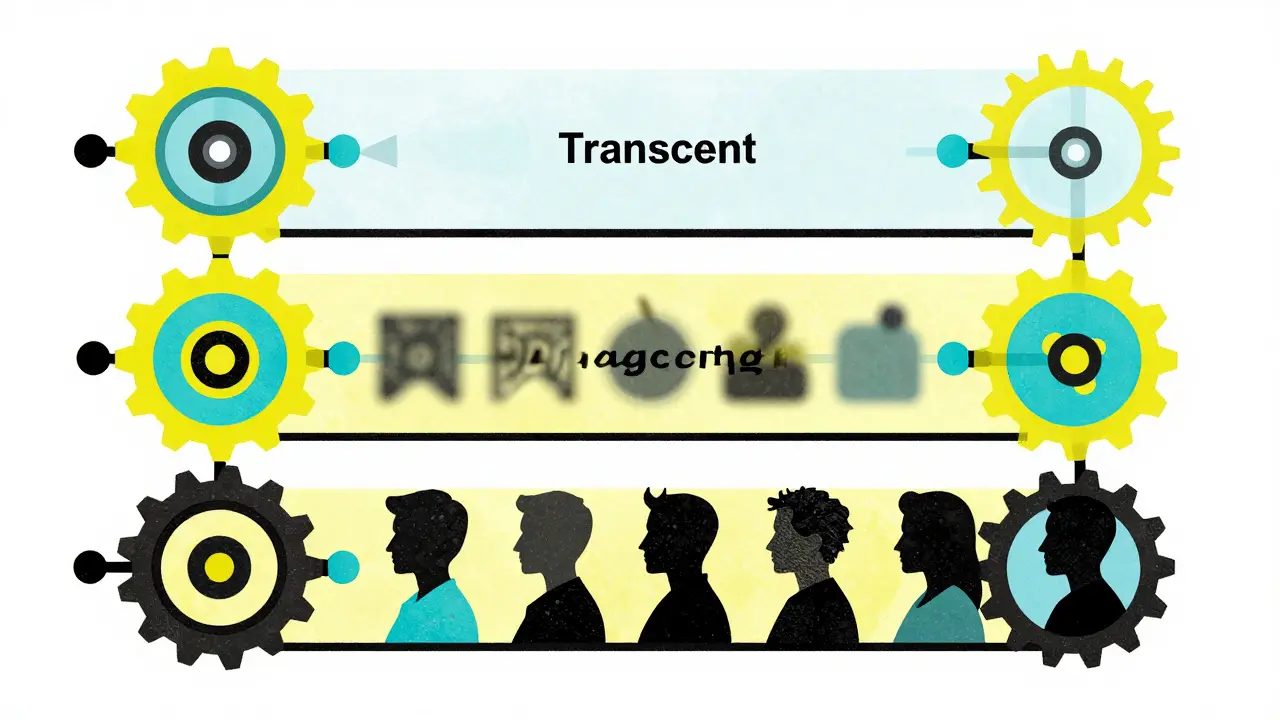
For developers, integrating consent checks into an LLM pipeline adds complexity and latency. You can't just check a boolean flag before sending a request to an API. You need real-time verification at multiple stages:
- Pre-Inference Check: Before the prompt hits the model, the system must verify the user's current consent status. If they opted out of personalization, the system must redact historical context data associated with their account.
- Data Masking During Processing: If a user allows transient processing but bans PII collection, the application must scrub names, emails, and addresses from the input string before it reaches the model. This requires sophisticated Natural Language Processing (NLP) libraries running in parallel.
- Post-Response Retention Logic: After the answer is generated, the system must decide whether to log the interaction. If the user banned aggregate learning, the log must be deleted immediately after delivery, not stored for later review.
This overhead costs time. Performance benchmarks from Osano in 2025 showed that properly implemented LLM consent management adds approximately 85-120 milliseconds to API response times. While this seems small, in high-frequency trading bots or real-time customer support agents, every millisecond counts. Furthermore, strict consent enforcement can degrade response quality. Early adopters reported a 15-25% drop in response relevance when personalization data was strictly redacted, as the AI lost access to helpful context.
Regulatory Pressure and Market Shifts
The legal landscape is tightening rapidly. The European Data Protection Board (EDPB) issued preliminary guidance in March 2025 stating that using non-consented personal data for LLM training likely violates GDPR Article 6. Meanwhile, the California Privacy Protection Agency released draft regulations in September 2025 requiring specific, granular consent options for AI training data.
These aren't just warnings; they are actionable mandates. The upcoming EU AI Act, expected to finalize in Q2 2026, will require human-in-the-loop verification for high-risk AI systems, further complicating consent workflows. As a result, the market for specialized AI consent solutions is exploding. Gartner projects this segment will grow from $58 million in 2025 to $412 million by 2027.
However, adoption remains uneven. Financial services (42%) and healthcare (37%) lead the way due to stricter sector-specific regulations. Retail and media lag behind, with only 19% and 14% adoption respectively. Many companies are still relying on generic disclaimers, which regulators increasingly view as insufficient.
| Feature | Traditional Web CMP | LLM-Specific Consent System |
|---|---|---|
| Primary Goal | Cookie tracking compliance | Data usage boundary enforcement |
| Granularity | Low (Analytics/Marketing) | High (Training/Personalization/Transient) |
| Enforcement Point | Script blocking | API pipeline integration |
| Latency Impact | 15-30 ms | 85-120 ms |
| User Interface | Static Banner | Contextual/Conversational Prompts |

Building Trust Through Contextual Consent
The biggest hurdle isn't technology; it's user experience. People suffer from 'consent fatigue.' If you interrupt a natural conversation three times to ask for permissions, they will quit. Stanford HCI Group studies showed abandonment rates increase by 33% after three prompts in a single session.
The solution lies in contextual, conversational consent. Instead of a static banner, imagine the AI saying: "To give you a more personalized answer, I can remember your preference for Python over Java. Would you like me to save this setting?" This approach, tested by Microsoft's Azure AI Consent Framework, achieved 42% higher user comprehension scores. It explains the 'why' and the 'how' in plain language, right when the decision matters.
Furthermore, withdrawal must be easy. IEEE Security & Privacy found that only 12 of 47 tested LLM apps provided meaningful ways to withdraw previously submitted data from training cycles. True respect for user rights means allowing them to delete their footprint from the model's memory, not just their account dashboard.
Future Outlook: Beyond Banners
By 2027, Gartner predicts that 60% of leading AI platforms will implement conversational consent interfaces. We are moving away from legalistic jargon toward transparent dialogue. The National Institute of Standards and Technology (NIST) released its draft AI Risk Management Framework Consent Module in January 2026, recommending continuous consent verification throughout the AI lifecycle.
For businesses, this means investing now in flexible architectures. Relying on legacy CMPs without LLM-specific modules is a risk. Look for vendors offering SDKs for real-time enforcement, clear documentation for edge cases, and integration with model monitoring tools. The goal is not just compliance; it's building a brand that users trust with their most sensitive thoughts.
What is the difference between standard cookie consent and LLM consent?
Standard cookie consent focuses on tracking pixels and third-party scripts on websites. LLM consent deals with how raw text inputs are processed, stored, and potentially used to train neural networks. LLM consent requires finer granularity, distinguishing between immediate processing, anonymous model improvement, and persistent personalization.
Do I need a special Consent Management Platform for my AI app?
If your app uses user data for training or personalization, yes. Traditional CMPs like OneTrust or Osano are adding AI modules, but they may not fully enforce data boundaries within the inference pipeline. You need a system that integrates with your API to mask PII and block unauthorized data retention in real-time.
How does the GDPR affect LLM training data?
The EDPB has indicated that using non-consented personal data for LLM training likely violates GDPR Article 6. This means you must obtain explicit, informed consent before using any user input for model fine-tuning or aggregate learning, and provide clear mechanisms for users to withdraw that consent.
What is 'transient processing' in AI consent?
Transient processing refers to using user input solely to generate an immediate response, without storing the data long-term or using it for model training. This is generally considered low-risk and often the default expectation for users chatting with an AI.
Can users withdraw their data from an already trained model?
Technically, it is difficult to remove specific data points from a trained neural network without retraining the entire model. However, best practices and emerging regulations require providers to offer mechanisms to prevent future use of that data and, where possible, mitigate its influence through techniques like machine unlearning or retraining on sanitized datasets.




Joe Walters
10 June, 2026 - 23:54 PM
oh my god another article about how big tech is stealing our souls while we sit here typing typos like idiots because we dont have the intellectual capacity to read a privacy policy lol. i mean seriously who has time for this nonsense when there are more important things happening in the world like me watching tv. you guys are so obsessed with data that you forget life is short and stupid anyway. besides if they want my data let them have it im not worth much anyway just some random joe walters scrolling through reddit at 3am wondering why nothing makes sense anymore. its all just noise and static and these articles are just more noise trying to sell you fear so they can sell you their useless consent management platforms that cost more than my car. pathetic really.
Lisa Nally
12 June, 2026 - 01:37 AM
The fundamental misunderstanding here lies in the conflation of consent with compliance. While the article correctly identifies the technical deficiencies of legacy Consent Management Platforms (CMPs), it fails to address the epistemological crisis inherent in Large Language Model architectures. We are not merely discussing data retention; we are discussing the ontological status of user input within a neural network's latent space. When a model 'memorizes' a pattern, does it retain the semantic essence of the individual, or merely a statistical ghost? The distinction between transient processing and aggregate learning is not just a legal boundary but a philosophical one regarding agency. Furthermore, the latency overhead cited (85-120ms) is negligible compared to the ethical debt incurred by opaque training pipelines. We need granular, real-time enforcement mechanisms that respect the user's sovereignty over their digital footprint, not just checkbox compliance. The current regulatory framework is woefully inadequate because it treats AI as a database rather than a cognitive entity. Until we redefine what it means to 'own' one's thoughts in a computational context, all these consent banners are mere theater.
Laura Davis
12 June, 2026 - 09:55 AM
I am SO tired of companies pretending they care while they secretly harvest everything! It is absolutely unacceptable that we have to fight for basic privacy rights in 2026! You know what I think? I think every single one of these tech giants needs to be held accountable RIGHT NOW! Stop hiding behind those confusing terms of service agreements! If you want my data, ASK ME PROPERLY! Do not just sneakily add it to your training sets without my explicit permission! It is disrespectful and dangerous! We deserve better than this half-baked solution where even clicking 'reject' doesn't actually stop them from using our info! I am done being polite about this! Fix your systems or lose your users! There is no middle ground here!
Edward Gilbreath
13 June, 2026 - 20:55 PM
they say its for security but its really just surveillance capitalism on steroids. the whole gdpr thing is a joke because the eu cant even enforce it properly. plus who do you think is writing these rules. the same people who profit from the data. its all a conspiracy to control our thoughts. if you think deleting your account stops them you are naive. they have already memorized you. the models are trained on everything we ever said. its too late. they own us now. just accept it and move on. resistance is futile anyway.
Robert Barakat
15 June, 2026 - 08:26 AM
The nature of consent is an illusion constructed by a society that values efficiency over autonomy. In the realm of artificial intelligence, the very concept of 'permission' becomes paradoxical. How can one grant permission to a system that operates beyond human comprehension? The LLM does not 'read' your words; it consumes them, dissolving their meaning into mathematical probabilities. Thus, the user is not interacting with a tool but participating in a ritual of self-erasure. The anxiety surrounding data privacy is merely a symptom of our deeper existential dread in a digitized age. We seek control in a universe that is inherently chaotic and indifferent. The solution is not better software but a reevaluation of our relationship with technology itself.
kimberly de Bruin
15 June, 2026 - 17:42 PM
we are living in a simulation where privacy is just another variable to be optimized. the consent forms are the code keeping us trapped. look closer at the patterns. the ai knows more than we do about ourselves. maybe we should let go. maybe the loss of self is the next step in evolution. silence is golden but data is eternal.