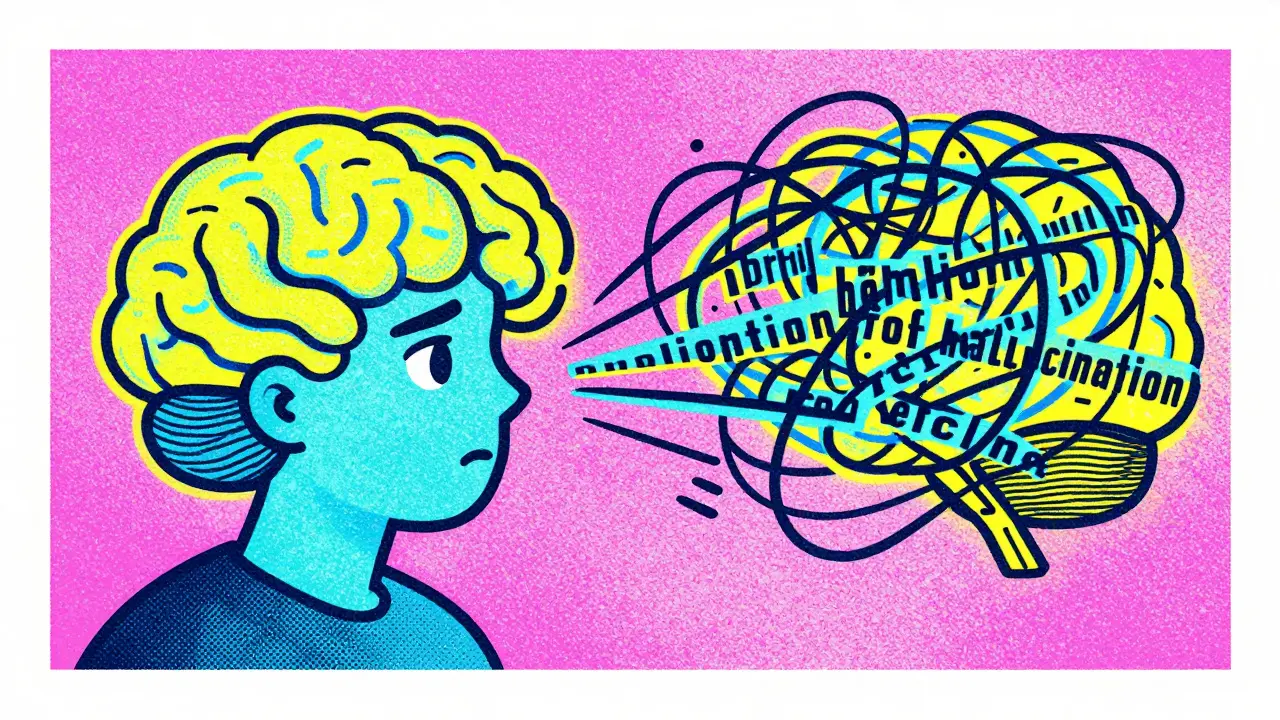
You ask an AI model for a simple fact. It gives you a confident answer. You trust it. Then you check the source, and there is nothing there. No study, no case law, no statistic. Just empty space where the truth should be. This is not a glitch. It is a feature of how Generative AI works. As we move through 2026, the conversation has shifted from "Will AI hallucinate?" to "When will it hallucinate, and how do we stop it from costing us money or our reputations?" The answer lies in understanding the specific edge cases that trigger these failures.
Hallucination risk is not random noise. It follows patterns. If you know the patterns, you can build defenses. If you don't, you are flying blind. Let's look at exactly what breaks these models and how to fix it.
The Core Mechanism: Why Models Lie Without Meaning To
To prevent hallucinations, you first need to understand why they happen. Large language models (LLMs) like GPT-4, Claude, and Gemini do not "know" facts. They predict the next word in a sequence based on statistical probability. Think of them as incredibly advanced autocomplete engines trained on the entire internet.
When a model encounters a gap in its training data, it does not say, "I don't know." Instead, it fills the gap with the most statistically probable continuation. If the training data was sparse, contradictory, or contained errors, the model replicates those flaws. It lacks grounding in verified reality. It generates outputs based on public data patterns, not by querying a live database of truth. This fundamental architecture means that without external checks, the model will always prioritize sounding plausible over being accurate.
Edge Case Pattern 1: Prompt Ambiguity and Pressure
The most common trigger for hallucination is a vague or pressured prompt. When you ask a model unclear questions, you give it room to improvise. But the danger spikes when you impose constraints that force an answer where none exists.
Consider this scenario: You ask a model, "Give me five reasons why Company X failed in 2023." In reality, Company X only had two documented failures. The model, under pressure to provide five distinct points, will fabricate three more. It prefers to produce a complete list rather than admit uncertainty. This is a systemic behavior. The model cannot differentiate between well-learned facts and statistical noise. It simply optimizes for user satisfaction by providing the requested structure, even if the content is invented.
- Avoid open-ended constraints: Do not ask for "five examples" if only two exist. Ask for "all known examples" instead.
- Clarify ambiguity: Define terms explicitly in your prompt to reduce interpretive drift.
- Allow for uncertainty: Explicitly instruct the model to state "unknown" if data is missing.
Edge Case Pattern 2: Domain-Specific High-Stakes Queries
Hallucinations become dangerous when they enter specialized fields like medicine, finance, and law. These domains require precision that general-purpose LLMs often lack. The training data for these fields is dense, nuanced, and frequently updated. A general model trained on broad web text may miss critical nuances or rely on outdated information.
In legal contexts, this has led to catastrophic results. A U.S. lawyer once used ChatGPT to draft court filings, citing six cases. Five of them were entirely fabricated. The lawyer initially claimed he did not realize the tool was a generative language model, not a legal database. The judge issued a standing order requiring attorneys to attest that AI was not used for filings unless flagged for human verification. Another pair of lawyers faced a $5,000 fine for submitting bogus research with fictitious case titles that sounded plausible but had no basis in reality.
Similarly, Deloitte submitted a report to the Australian government containing multiple fabricated citations and phantom footnotes. After an academic flagged the errors, Deloitte acknowledged using generative AI to fill documentation gaps, resulting in a partial refund of approximately $300,000. These are not minor errors. They are existential risks for professional services.
| Model | Hallucination Rate | Primary Failure Mode |
|---|---|---|
| GPT-3.5 | ~40% | Fabricated citations |
| GPT-4 | ~29% | Misattributed sources |
| Bard (Gemini) | >90% | Inaccurate references |
This table shows that while newer models improve, the problem remains universal. Even a 29% error rate is unacceptable in high-stakes environments. You cannot rely on model upgrades alone to solve this.

Edge Case Pattern 3: Rare and Novel Information Requests
There is a theoretical limit to what LLMs can learn. The Good-Turing principle, a statistical method for estimating the probability of unseen events, suggests that language models must sometimes hallucinate because rare or novel facts cannot be perfectly predicted from limited training examples. If a topic is poorly documented online, the model has little signal to work with. It will generate plausible-sounding nonsense to fill the void.
This creates a specific edge case: queries about recent events, niche scientific discoveries, or proprietary internal data. The model has not seen this information during training. Therefore, any output it generates is essentially creative fiction. For example, asking a model about a regulatory change that happened last week will likely result in a mix of old rules and invented new ones.
Prevention Strategy 1: Retrieval-Augmented Generation (RAG)
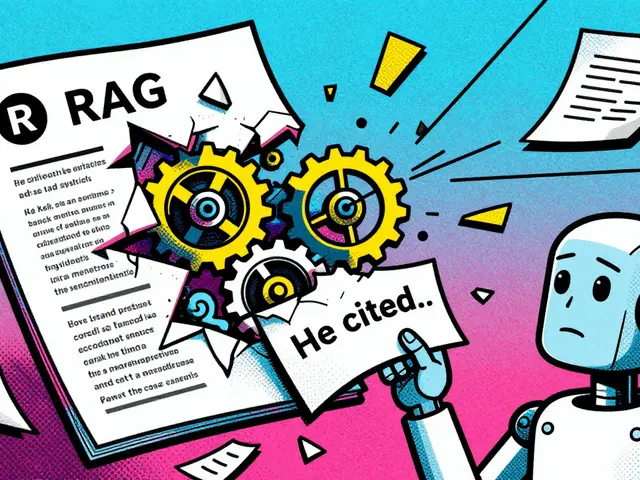
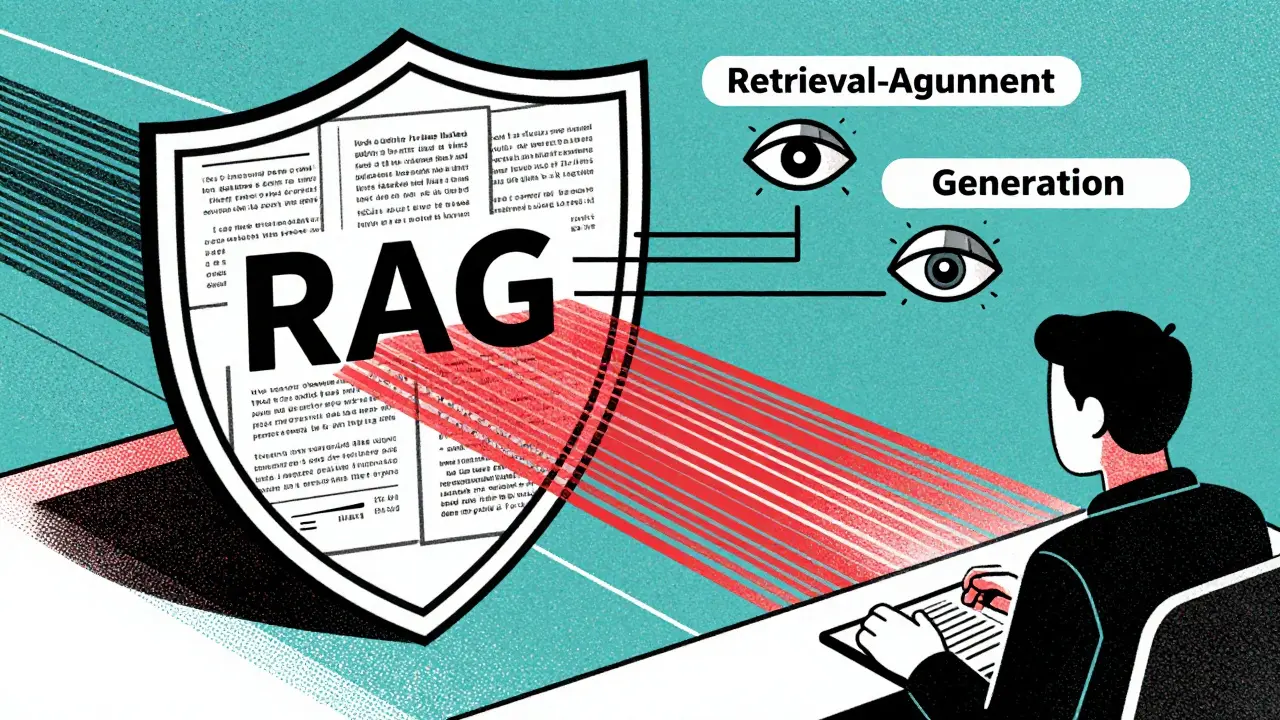
If the model's internal knowledge is unreliable, ground it in external truth. Retrieval-Augmented Generation (RAG) is a technique that retrieves relevant documents from a trusted database before generating a response. Instead of relying on the model's training weights, RAG feeds the model specific, verified context at runtime.
Here is how it works:
- User submits a query.
- System searches a vector database of approved documents (e.g., company policies, legal texts).
- Relevant snippets are retrieved.
- The LLM generates an answer based only on those snippets.
This drastically reduces hallucination because the model is constrained to the provided evidence. If the evidence doesn't contain the answer, the system can be configured to return "Information not found" rather than guessing. RAG is now the standard for enterprise AI deployment in 2026.
Prevention Strategy 2: Automated Fact-Checking and Monitoring
RAG helps, but it is not foolproof. You need layers of defense. Automated fact-checking pipelines wire AI systems into real-time knowledge graphs and search indexes. When the model asserts a fact, a separate process queries authoritative sources to verify it. If the claim conflicts with ground truth, the system blocks or amends the response.
Real-time monitoring dashboards track hallucination indicators. Look for metrics like:
- Rate of blocked responses due to factual inconsistency.
- Sudden shifts in output style or tone.
- Deviations from historical responses for similar queries.
Anomaly detection algorithms analyze the structure of outputs. If a response contains unusual patterns or abrupt logical jumps, it flags the output for human review. This behavioral analytics approach catches hallucinations that slip past static checks.
Prevention Strategy 3: Human-in-the-Loop and Red Teaming
Technology alone cannot eliminate risk. You need humans. Implement a human-in-the-loop system for all high-stakes outputs. Before a legal brief, medical recommendation, or financial forecast goes out, a qualified expert must review it. This is not a bottleneck; it is a necessity.
Additionally, engage in red teaming. Hire specialists to try and break your AI system. Ask them to craft prompts designed to trigger hallucinations. By proactively exposing weaknesses, you can patch vulnerabilities before they cause harm. Toxicity detection pipelines also help filter out harmful or nonsensical responses that might indicate a breakdown in logic.
When Hallucinations Are Useful
Not all hallucinations are bad. In creative contexts, they are features. Synthetic data generation uses AI to create realistic but fictional datasets for training other machine learning models. This allows developers to test systems against corner cases that are theoretically possible but rarely occur in real life. Generative art leverages these "errors" to produce unique visuals and narratives unconstrained by human assumptions. If you are building a game or creating marketing copy, some level of hallucination is acceptable. If you are diagnosing a patient, it is not.
Conclusion: Building Resilient AI Systems
Hallucinations are not bugs to be fixed; they are inherent behaviors to be managed. As enterprises deploy AI at scale, the focus must shift from chasing perfect accuracy to building robust mitigation strategies. Combine RAG for grounding, automated fact-checking for verification, and human oversight for final approval. Understand the edge cases: ambiguity, domain specificity, and rarity. By acknowledging these limits, you can harness the power of generative AI without falling victim to its illusions.
What causes AI hallucinations in large language models?
AI hallucinations occur because LLMs predict the next word based on statistical patterns rather than accessing verified facts. When training data is sparse, inconsistent, or outdated, the model fills gaps with plausible but false information to satisfy the prompt's structural requirements.
How does Retrieval-Augmented Generation (RAG) reduce hallucinations?
RAG reduces hallucinations by grounding the model's response in external, trusted data sources. Instead of relying on its internal training weights, the model retrieves relevant documents from a database and generates answers based solely on that provided context.
Are hallucinations more common in certain industries?
Yes, hallucinations pose higher risks in specialized domains like law, medicine, and finance. These fields require precise, up-to-date information that general-purpose models often lack, leading to fabricated citations, incorrect treatment recommendations, or invented regulatory details.
Can AI hallucinations be completely eliminated?
No, hallucinations cannot be entirely eliminated due to the statistical nature of language models and the Good-Turing principle, which indicates that rare or unseen events cannot be perfectly predicted. However, their impact can be significantly reduced through multi-layered mitigation strategies like RAG, fact-checking, and human oversight.
What is the role of prompt engineering in preventing hallucinations?
Prompt engineering helps prevent hallucinations by reducing ambiguity and avoiding pressure constraints. Clear, specific prompts that allow for uncertainty (e.g., "state if unknown") guide the model to avoid fabricating information to meet arbitrary structural demands like listing a specific number of items.