Why LLM Governance Isn’t Optional Anymore
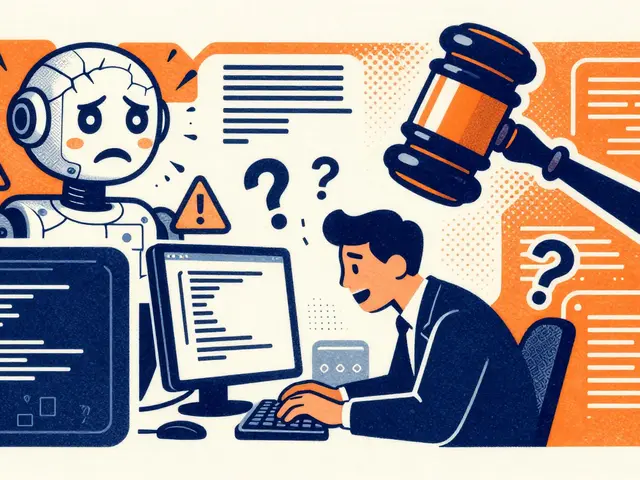
If your organization is using large language models (LLMs) for drafting reports, answering customer questions, or analyzing public records, you’re already operating under governance rules - whether you know it or not. In 2025, the U.S. federal government made it clear: using AI without structure isn’t just risky, it’s noncompliant. The America’s AI Action Plan, released in July 2025, turned what was once experimental into mandatory. Federal agencies, contractors, and even state-level entities now have to follow strict rules around data handling, model safety, and ideological neutrality. Ignoring this isn’t an option. The penalties are real. The audits are happening. And the public is watching.
What the Rules Actually Require
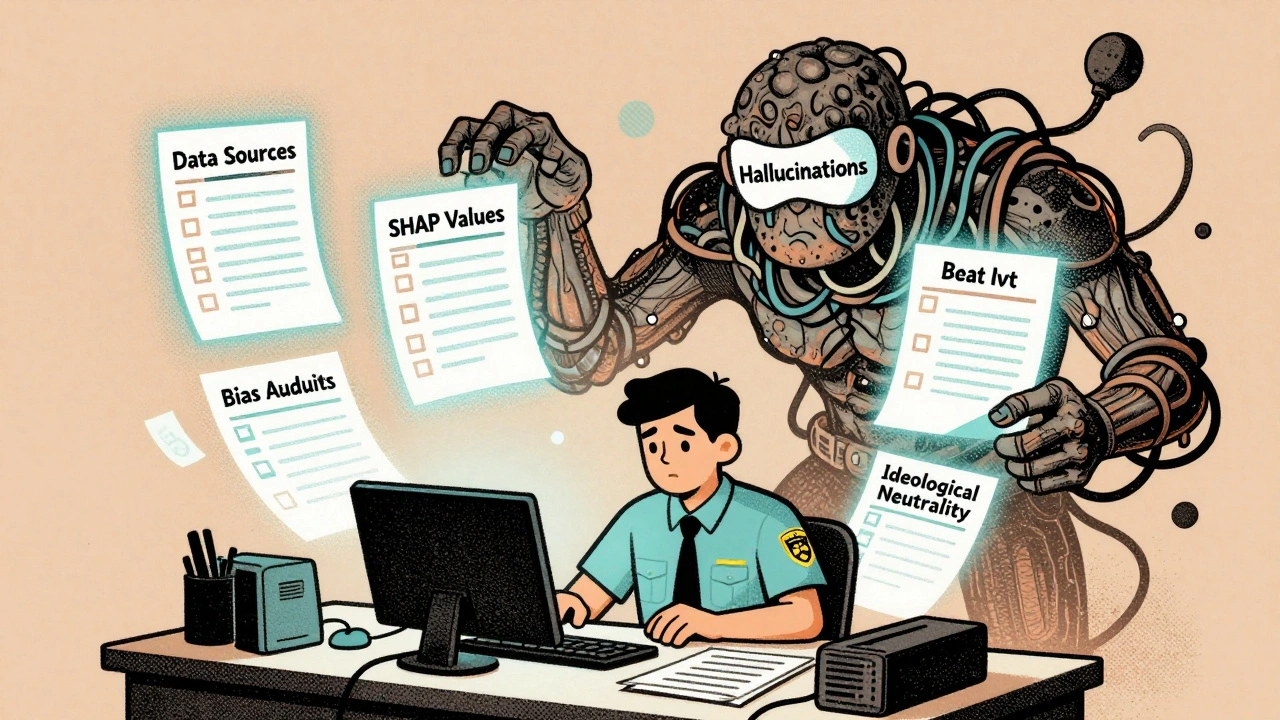
The governance framework isn’t a vague guideline. It’s a checklist with teeth. Every organization using LLMs in a government context must document four pillars: data governance, model governance, process governance, and people governance. That means you need to track where training data came from, how the model was fine-tuned, who approved its use, and whether staff are trained to spot when it’s wrong.
One specific requirement: you must prove your model doesn’t push political bias. Executive Order 14319 demands ‘ideological neutrality and truth-seeking.’ That doesn’t mean the model has to be boring - it means it can’t be programmed to favor one party’s language, tone, or framing. The OMB now requires agencies to use NIST-standardized metrics to test for this. If your LLM starts summarizing Medicare rules with a slant toward conservative or liberal phrasing, you’re in violation.
Another non-negotiable: continuous monitoring. The model can’t just be deployed and forgotten. You need systems that flag changes in output behavior - like sudden increases in hallucinations, unsafe suggestions, or skewed demographic responses. The November 2025 update to the Action Plan now mandates SHAP value reporting. That means if a model denies a benefit application, you must be able to show exactly which words in the input led to that decision.
State vs. Federal: The Compliance Maze
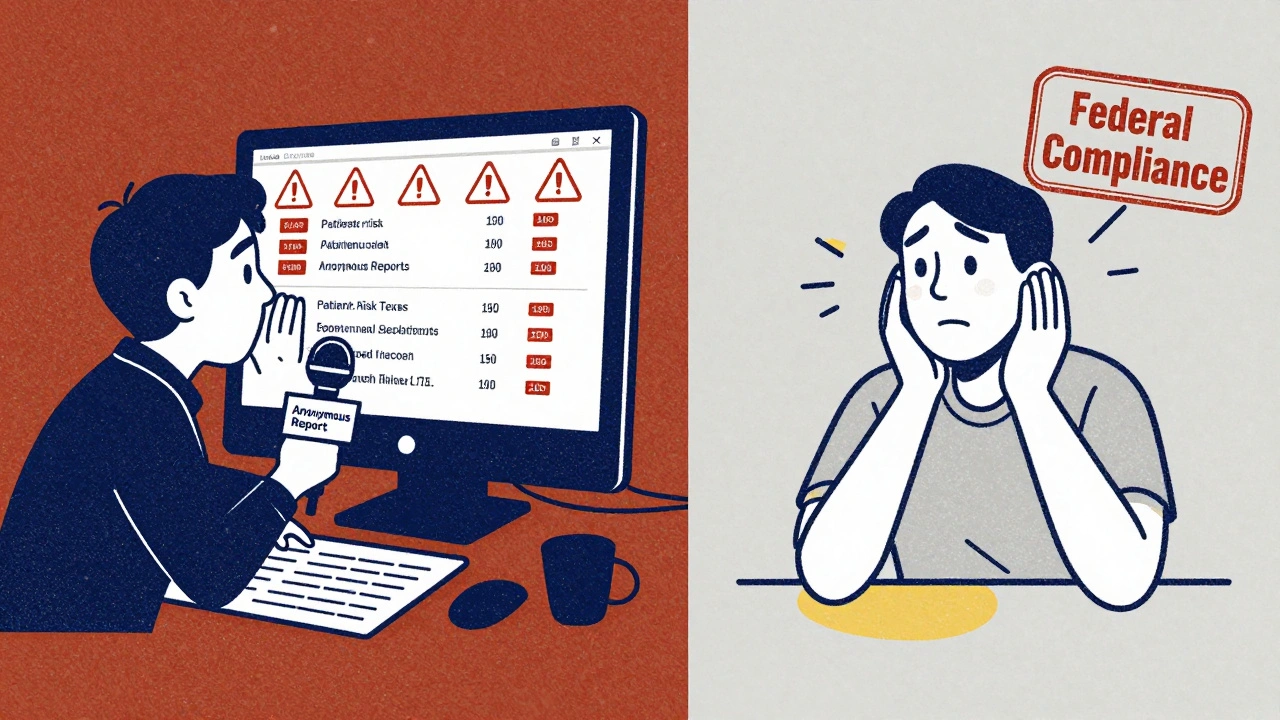
Here’s where things get messy. While the federal government is pushing deregulation - rolling back old rules to speed up AI adoption - states like California are going the opposite way. California’s Assembly Bill 331, passed in September 2025, forces companies with over 100 employees to set up anonymous whistleblower channels. If an engineer spots a model that’s consistently misclassifying patients’ risk levels, they can report it without fear of being fired. And the state doesn’t just ask for reports - it enforces them. Penalties hit $10,000 per day for noncompliance.
Meanwhile, 28 other states have adopted the federal stance: minimal regulation to qualify for federal funding. The result? A patchwork of 17 conflicting rules, according to Covington’s August 2025 analysis. A national healthcare provider might follow federal rules in Texas, but in California, they need extra layers: internal reporting systems, bias audits, and public transparency logs. That’s not just paperwork - it’s $4.2 million in extra engineering costs for one Fortune 500 company, as reported in Gartner’s October 2025 insights.
Real-World Failures and Wins
Some agencies are getting it right. The Department of Defense cut intelligence analysis time by 58% using LLMs that met federal safety standards. The General Services Administration partnered with OpenAI to let 47 federal departments use AI for document summarization - and reported a 63% faster policy drafting cycle.
But the failures are louder. North Carolina banned LLMs from parole decisions after three cases where the model wrongly labeled low-risk inmates as high-risk. A Department of Health and Human Services analyst reported that an LLM missummarized a Medicare provision, affecting 2.3 million beneficiaries. That error didn’t come from a glitch - it came from training data that lacked nuance. And now, that agency spends three hours reviewing every AI-generated output before it goes out.
Even the tools meant to help are flawed. A 2025 MIT AI Risk study found 68% of federally deployed LLMs lack documented procedures to correct demographic bias. That’s not a bug - it’s a design flaw. The model doesn’t know it’s treating Black applicants differently than white ones because no one built a system to catch it.
What You Need to Do Right Now
If you’re using LLMs in a government or regulated setting, here’s your action list:
- Map your data sources. Where did your training data come from? Is it publicly licensed? Does it include protected demographic information? If you can’t answer this, you’re already noncompliant.
- Run a risk assessment using the MIT AI Risk taxonomy. Classify your use case under one of the six risk categories: bias, security, privacy, reliability, safety, or ethical compliance.
- Implement continuous monitoring. Use tools that track output drift, hallucination rates, and input-output relationships. SHAP values aren’t optional anymore for federal contractors.
- Train your team. Federal job postings now require AI literacy as a core skill. Your staff need to understand what the model can and can’t do - and when to override it.
- Check your state laws. If you operate in California, New York, or Colorado, you’re under stricter rules than the federal baseline. Don’t assume compliance at the federal level covers you.

The Hidden Cost: Time and Trust
The biggest surprise for most organizations? The time investment. The Facts Genie’s October 2025 survey found federal workers spent an average of 83 hours on AI training - 72% more than expected. But here’s the twist: 89% of them say they’re now better at their jobs. Once the learning curve is over, they spend less time on repetitive tasks and more on strategy.
But trust is slipping. Stanford’s Human-Centered AI Institute found 78% of government LLMs lack explainability features. That means when a citizen is denied a permit, they can’t understand why. No one likes being told ‘the computer decided.’ If you can’t explain your model’s output, you’re not just failing compliance - you’re failing democracy.
Where This Is Headed
The next big step? The Federal AI Safety Institute’s standardized testing framework, launching in Q1 2026. It will evaluate every federally used model across 127 safety metrics - and publish the scores publicly. Think of it like a food safety rating, but for AI.
Internationally, the U.S. model is being copied - 19 allied nations have adopted elements of the America’s AI Action Plan. But the Swiss open-source LLM, set to release full weights and training data in Q4 2025, is a different path. No rules. Just transparency. Some experts think that’s the future: open models, not closed regulations.
For now, the U.S. is betting on speed over safety. The trade-off is clear: faster innovation, higher risk. The National Academy of Sciences says the only way this works long-term is if minimum safety standards are added for high-impact uses - like healthcare, justice, and public benefits - by Q2 2026. If they don’t, public backlash could cost more than any compliance fine.
Final Reality Check
LLMs aren’t magic. They’re tools. And like any tool, they need guardrails. The governance policies of 2025 aren’t about stopping innovation - they’re about making sure innovation doesn’t hurt people. If you’re using LLMs without a plan, you’re not being clever. You’re being careless. The audits are here. The whistleblower protections are active. The public is paying attention. The question isn’t whether you need governance. It’s whether you’re ready for it when they come knocking.

Kristina Kalolo
11 December, 2025 - 23:39 PM
It's wild how the federal guidelines assume every agency has the budget for SHAP value tracking. I work in a small county office-we’re still using Excel to log model outputs. The training docs alone would take our three-person team six months to compile. No one’s talking about the real cost of compliance, just the penalties.
ravi kumar
13 December, 2025 - 04:14 AM
As someone working with LLMs in Indian public sector projects, I see this every day. The bias isn’t always political-it’s linguistic. Our models trained on US data keep misclassifying Indian names as ‘high risk’ in benefit applications. No one here even knows what SHAP is. We need global standards, not just American ones.
Megan Blakeman
14 December, 2025 - 19:24 PM
OMG, I just read this whole thing and I’m crying? No, seriously-I’m not crying, but I’m shaking? Like, the part about the 2.3 million beneficiaries? That’s not a glitch, that’s a trauma. And the whistleblower laws? I’m so glad California’s doing something. But also, why is no one talking about how tired everyone is? We’re all just trying to do the right thing, but the system is so heavy? Like, I feel like I need a nap after reading this? And also, can we please make the AI explain itself in plain English? Like, not jargon? Thank you.
Akhil Bellam
16 December, 2025 - 13:58 PM
Let’s be brutally honest: this isn’t governance-it’s theater. You think a SHAP value report fixes systemic bias? Please. The real problem is that the people drafting these rules have never trained a model, never seen it hallucinate a Medicare rule into a Republican talking point, and certainly don’t understand how training data is scraped from Reddit threads and Wikipedia edits written by 14-year-olds. The ‘ideological neutrality’ mandate is a joke-AI doesn’t have ideology, but the humans behind it? Oh, they’ve got bias baked in like a soggy croissant. And now you want engineers to audit this mess with a checklist? You’re not protecting democracy-you’re turning compliance into a bureaucratic religion. The Swiss open-source model? That’s the only real path forward. Everything else is just noise dressed up as policy.
Amber Swartz
18 December, 2025 - 07:25 AM
WAIT. HOLD ON. Did you just say the Department of Defense cut analysis time by 58%? And no one’s talking about how terrifying that is? I mean-what if they’re wrong? What if the AI missed something critical? What if a soldier dies because the model thought a threat was ‘low risk’? And then you say the GSA partnered with OpenAI? OPENAI? The same company that let a model generate fake court rulings? This isn’t progress-it’s a ticking time bomb wrapped in a PowerPoint. And the whistleblower laws? They’re too little, too late. People are getting fired for speaking up. I know someone who quit her job because she saw the model flagging veterans as ‘unreliable’-and her manager told her to ‘just fix the output.’ I’m not okay. I’m not okay at all.