Author: Calder Rivenhall - Page 15
Agentic Generative AI: Mastering Autonomous Planning and Workflow Execution in 2026
Explore Agentic Generative AI, the shift from reactive chatbots to autonomous workflow execution. Learn how it works, real-world use cases, and implementation challenges in 2026.
Read More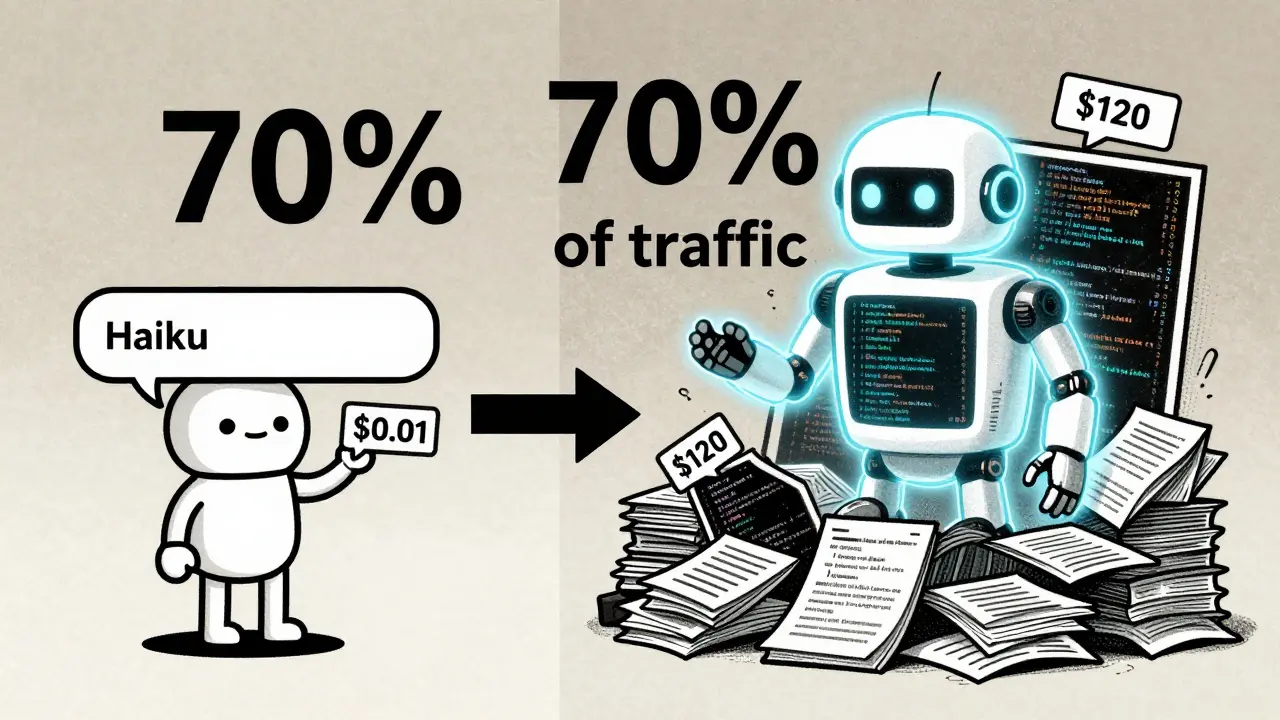
Estimating Monthly Costs for a Production Large Language Model Application
Estimating monthly costs for a production LLM application requires understanding infrastructure, model routing, and development expenses-not just API pricing. In 2026, smart architecture cuts costs by 90% compared to brute-force approaches.
Read More
Hackathon Strategy: Win with Vibe Coding and LLM Agents
Winning hackathons in 2026 isn't about coding faster-it's about orchestrating AI tools like vibe coding and LLM agents to build compelling, user-focused prototypes in under 48 hours. Learn the strategy top teams use.
Read More
Enterprise Integration of Vibe Coding: Embedding AI into Existing Toolchains
Enterprise vibe coding embeds AI into development workflows, cutting time-to-value by up to 40% while maintaining security. Learn how companies like ServiceNow and Salesforce are using it to build internal tools faster-with guardrails that prevent chaos.
Read More
Training Data Poisoning Risks for Large Language Models and How to Mitigate Them
Training data poisoning lets attackers silently corrupt AI models with tiny amounts of fake data. Learn how it works, real-world examples, and the six proven ways to defend your LLMs.
Read More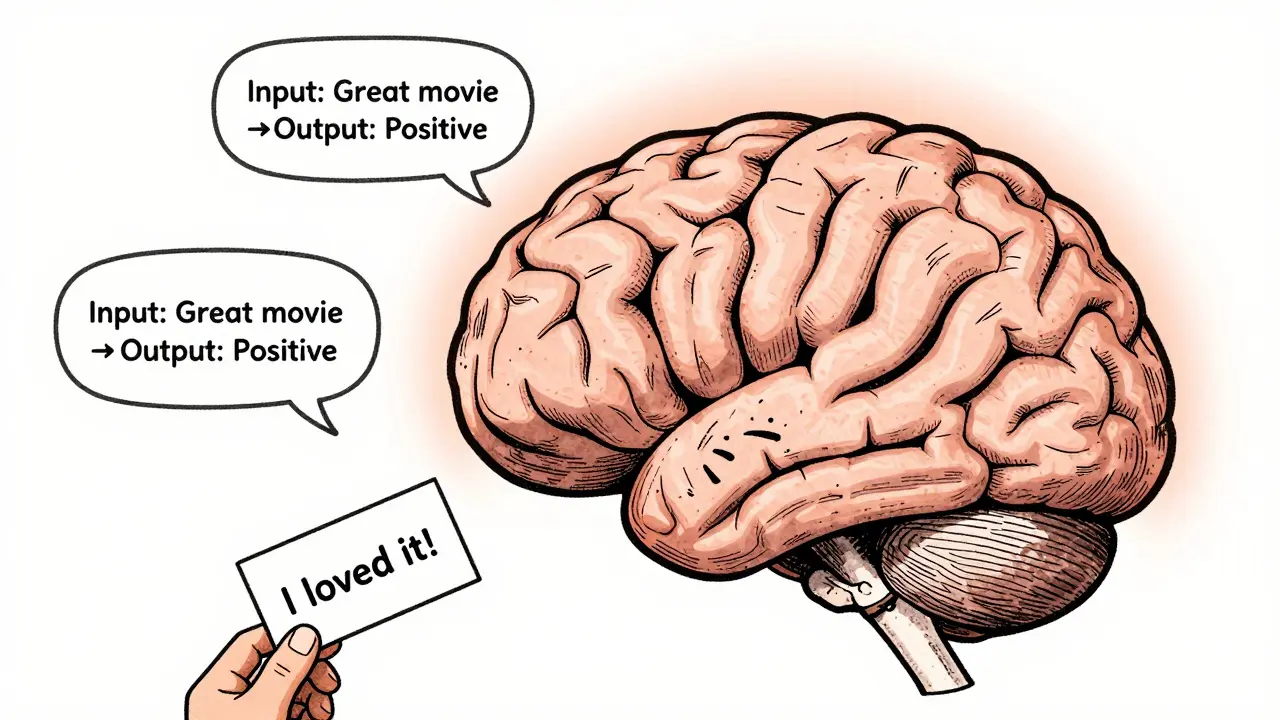
In-Context Learning in Large Language Models: How LLMs Learn from Prompts Without Training
In-context learning lets large language models perform new tasks just by seeing examples in prompts-no training needed. Discover how it works, why it's replacing fine-tuning, and how to use it effectively.
Read More
Curriculum and Blending: How to Mix Datasets for Better Large Language Models
Curriculum learning improves LLM performance by sequencing training data from simple to complex. This method boosts accuracy, cuts compute costs, and works best on structured tasks like math and code. It's becoming standard in modern AI training pipelines.
Read More
Scientific Workflows with Large Language Models: How Hypotheses and Methods Are Changing Research
Large language models are transforming scientific research by automating literature reviews, generating hypotheses, and designing experiments. But they come with serious risks-hallucinations, errors, and overreliance. Learn how Sci-LLMs work, where they excel, and how to use them safely.
Read More
Internal Marketplaces for Vibe-Coded Components and Services
Internal marketplaces for vibe-coded components let non-engineers build and share AI-generated tools safely. With proper governance, companies save hundreds of hours, reduce shadow IT, and turn every employee into a creator.
Read More
Long-Context Risks in Generative AI: Distortion, Drift, and Lost Salience
Long-context AI models can process massive amounts of text, but they struggle with distortion, drift, and lost salience-especially in the middle of documents. Learn how these risks undermine reliability and what’s being done to fix them.
Read More
Post-Training Quantization for Large Language Models: 8-Bit and 4-Bit Methods Explained
Post-training quantization cuts LLM memory use and speeds up inference by 2-3x without retraining. Learn how 8-bit and 4-bit methods like SmoothQuant, AWQ, and GPTQ make it possible-and what you need to know to use them.
Read More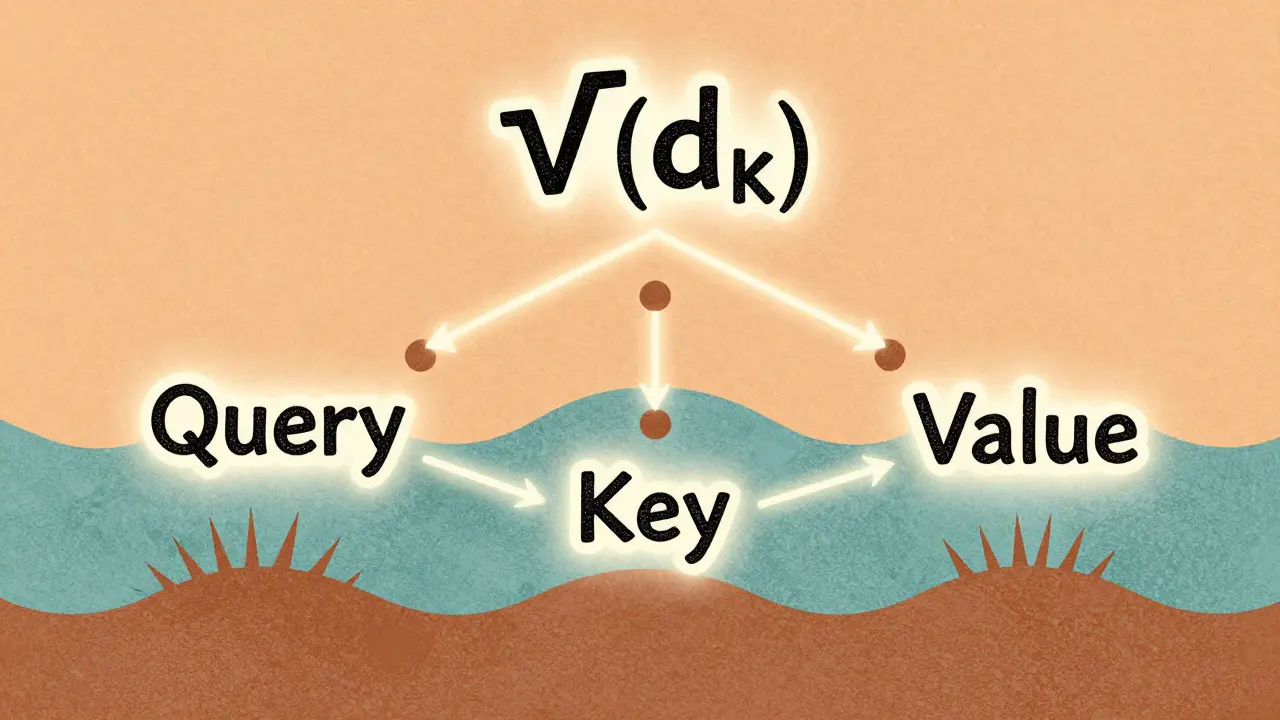
Scaled Dot-Product Attention Explained for Large Language Model Practitioners
Scaled dot-product attention is the core mechanism behind modern LLMs like GPT and Llama. Learn why the 1/√(d_k) scaling is non-negotiable, how it prevents training collapse, and what pitfalls to avoid in practice.
Read More