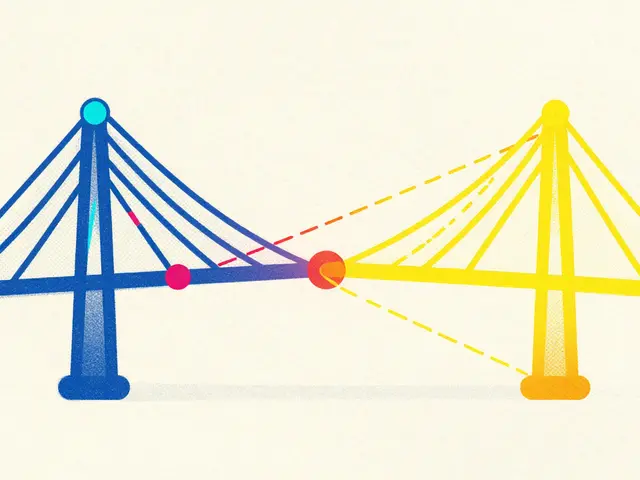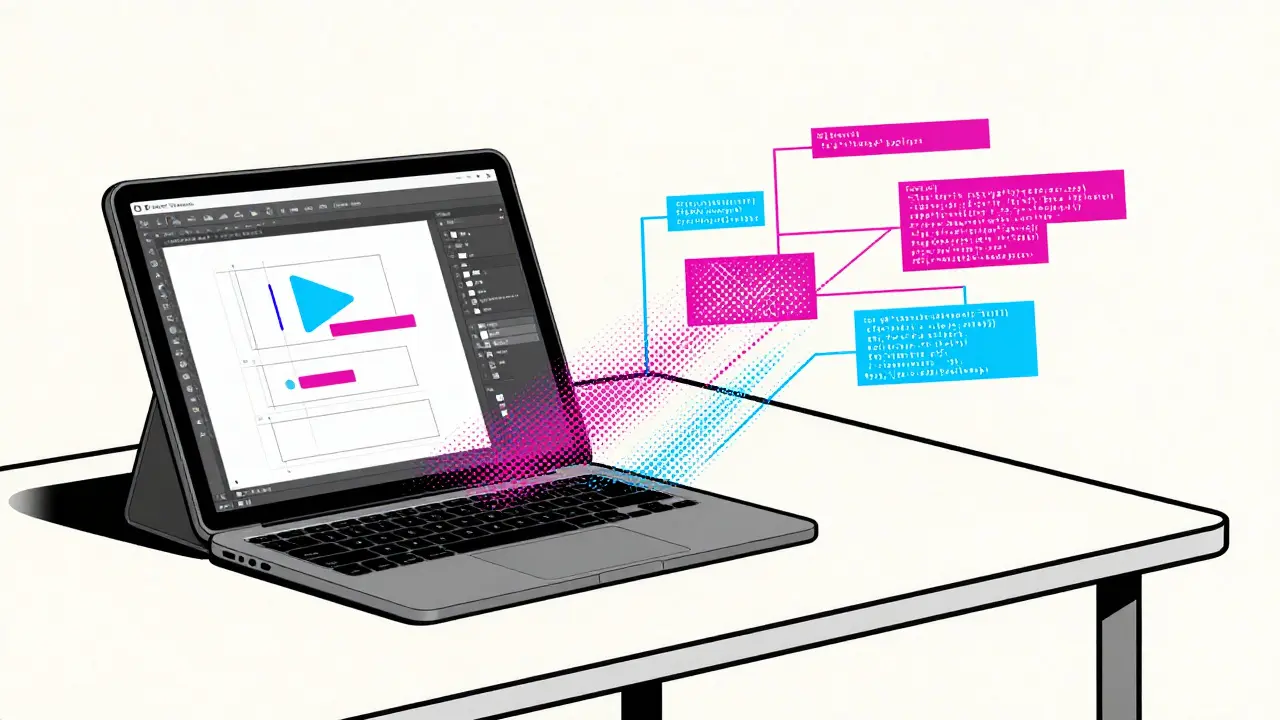
Remember when turning a pretty mockup into a working app meant handing off files to a developer and hoping for the best? Those days are fading fast. In 2026, designers aren't just drawing screens anymore; they are building them. This shift is driven by vibe coding, an emerging paradigm that uses artificial intelligence to transform Figma design files directly into functional code through natural language prompts. It’s not magic, but it feels close. By bridging the gap between visual design and engineering logic, vibe coding allows you to go from a static frame to a clickable prototype-or even a live MVP-in minutes rather than weeks.
The term might sound trendy, but the technology behind it is serious. Coined around late 2023, this approach has matured significantly. Tools like Figma Make, Cursor AI, and Replit are no longer just generating screenshots of code. They are creating structured, responsive applications that respect your design system. If you’ve ever wondered how non-technical founders are launching products so quickly, or why your dev team seems less stressed about UI implementation, the answer lies in this new workflow.
The Secret Sauce: Model Context Protocol
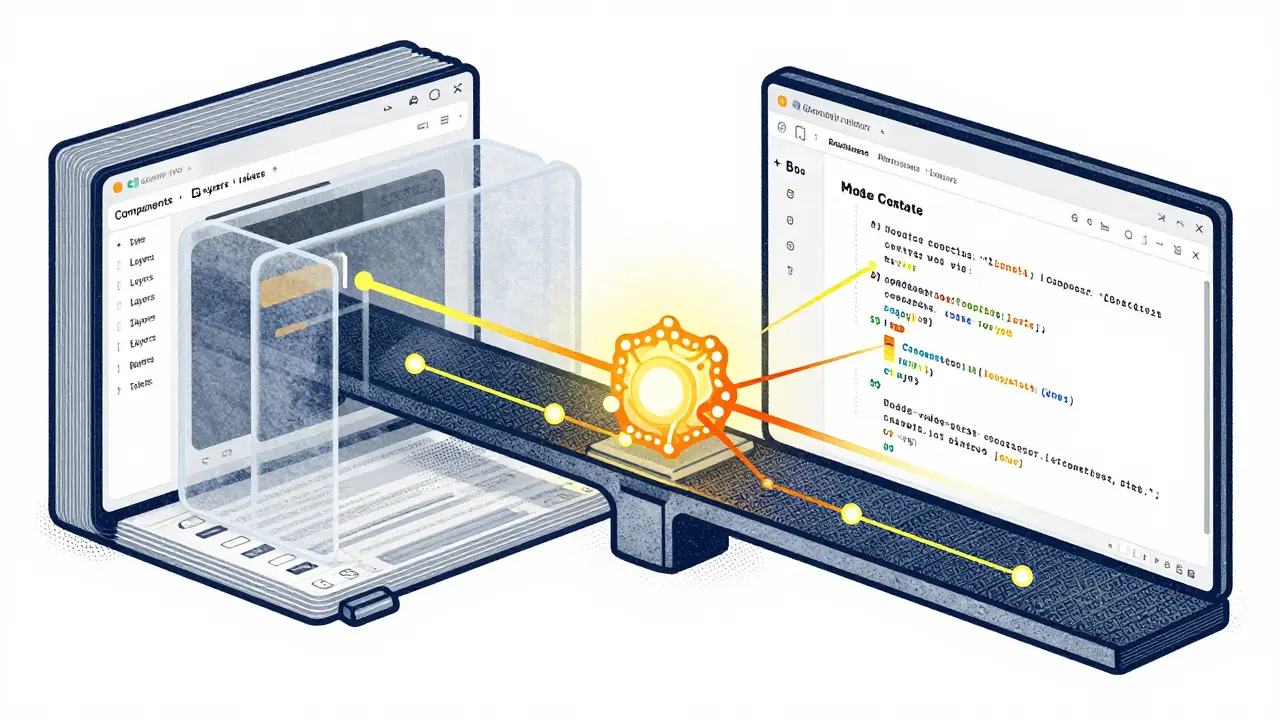
You might be thinking, "Can’t AI already turn images into code?" Technically, yes, but early attempts were messy. They saw pixels, not structure. The breakthrough came with the Model Context Protocol (MCP), a structured data format developed by Figma that preserves layer hierarchy, component relationships, and design system specifications. First publicly documented in January 2024, MCP allows AI tools to read the *intent* behind your design, not just its appearance.
When you use MCP-enabled tools, the AI understands that a button isn’t just a rectangle with text. It knows it’s a reusable component linked to a specific state variation, styled with global tokens, and nested within an auto-layout container. Simon Buckingham, writing in February 2024, noted that this contextual integration ensures design fidelity. Instead of guessing where margins should be, the AI reads the exact constraints you set in Figma. This means the generated code is cleaner, more maintainable, and actually looks like what you designed.
However, this power comes with a condition: your Figma file must be clean. As Laura Fehre, Designer Advocate at Figma, demonstrated in June 2024, proper layer naming and component structure can improve code generation accuracy from 62% to 89%. If your file is a mess of ungrouped layers and unnamed instances, the AI will struggle. Vibe coding rewards discipline.
Who Is Actually Building What?
The vibe coding landscape is crowded, but each tool has a distinct personality. Choosing the right one depends on whether you care more about speed, full-stack capabilities, or specific frameworks.
| Platform | Primary Output | Best For | Key Limitation |
|---|---|---|---|
| Figma Make | React | Seamless designer-to-dev handoff | Limited full-stack features |
| Cursor AI | Flutter / React | Mobile apps with complex state | Requires configuration for web |
| YouWare | HTML/CSS/JS | No-code game development | Lacks advanced business logic |
| Replit | Full-stack JavaScript | Rapid prototyping with backend | Slower initial load times |
| Lovable.dev | React Web Apps | E-commerce and rapid demos | Limited mobile framework support |
Figma Make leads in adoption among power users because it lives inside the tool you already use. It’s great for generating UI scaffolding, but you’ll still need a developer to handle state management. On the other end of the spectrum, Replit generates full-stack applications, meaning you get database connections and API endpoints alongside your UI. This is powerful for solo founders who want a working product, not just a pretty shell. However, as Business Insider reported in August 2024, these tools excel at prototyping but require expert oversight for production-quality code. Don’t expect to ship a bank-grade application without human review.
The Workflow: From Design to Deploy
Getting started is simpler than you might think. You don’t need to learn a new programming language overnight. The typical vibe coding workflow follows five clear steps, as outlined by Lovable.app in their July 2024 guide:
- Prepare your Figma file: Use auto-layout, name your layers clearly, and define components. This is the most critical step. Garbage in, garbage out applies here more than anywhere else.
- Enable MCP: Ensure your Figma settings allow for context extraction. Most modern tools handle this automatically via OAuth connections.
- Connect to your platform: Link your Figma account to your chosen vibe coding tool, whether it’s Cursor, Replit, or Lovable.
- Import frames: Select the specific screens or components you want to convert. Avoid importing entire boards unless necessary, as performance drops with over 1,000 layers.
- Refine iteratively: Use natural language prompts to adjust the output. Ask the AI to "make the header sticky" or "add validation to this form." This conversation is where the real customization happens.
Designers with no coding experience typically spend 2-5 hours learning this workflow. Developers often master it in under an hour. The barrier to entry is low, which explains why 38% of design teams were using some form of vibe coding for prototyping by late 2024, according to Adobe’s Design Trends Report.
The Reality Check: Speed vs. Quality
Vibe coding is not a silver bullet. While it accelerates the initial build phase dramatically-users report 60-80% time savings in prototyping-it introduces new challenges. David Heinemeier Hansson, creator of Ruby on Rails, warned in August 2024 that vibe-coded code often lacks proper separation of concerns. He cited cases where maintenance costs increased by 35-50% because the generated code was hard to scale.
This is the core tension of the era. You can build faster, but you must manage technical debt carefully. Tom Blomfield, co-founder of Monzo Bank, suggests asking the AI to generate integration tests alongside your UI. This catches 65% of common implementation errors before they become headaches. If you’re a startup founder, vibe coding lets you validate ideas in days. If you’re building enterprise software, treat the AI output as a highly efficient draft, not the final product.
The market is growing fast, projected to hit $1.2 billion by 2027. But consolidation is coming. Larger platforms like Figma and Replit are absorbing specialized features, while smaller tools struggle to keep up with security and quality demands. For now, the smartest move is to adopt the workflow for prototyping and internal tools, while keeping rigorous code reviews for customer-facing products.
Democratizing Development
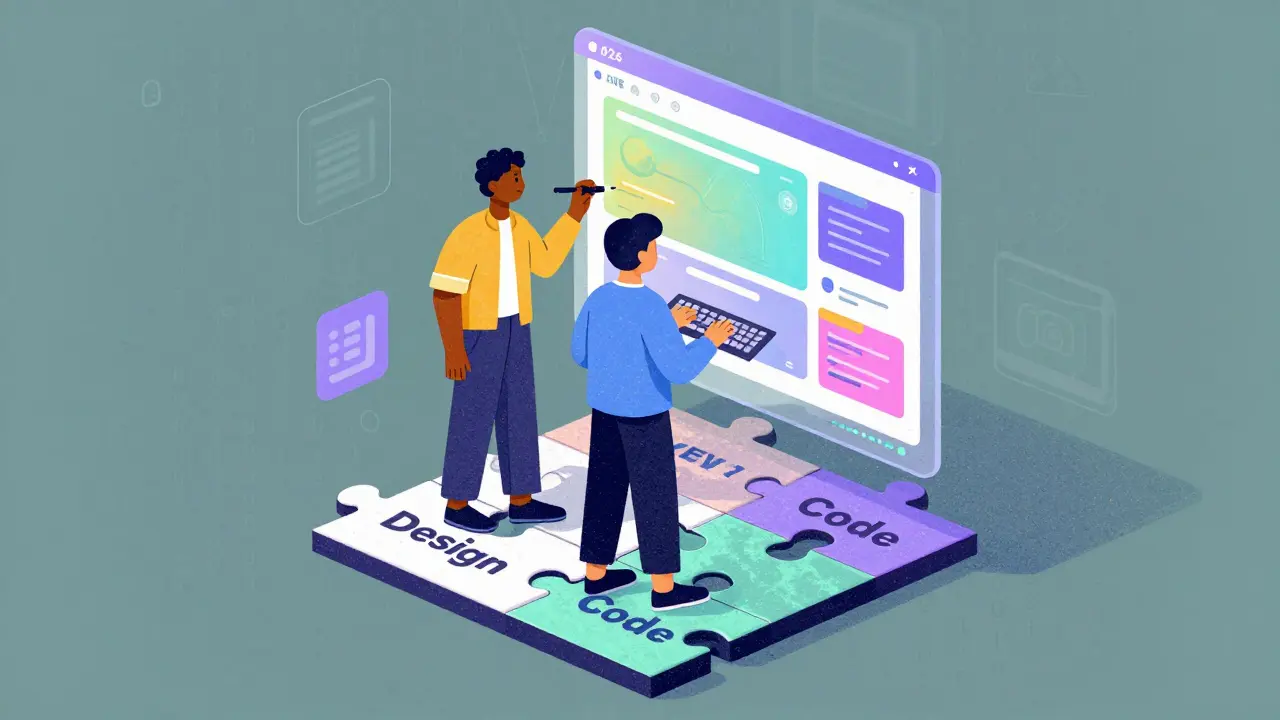
Perhaps the most profound impact of vibe coding is social. It breaks down the wall between "designer" and "builder." Non-technical founders can now visualize their ideas without waiting for a dev backlog. Designers can iterate on functionality without submitting tickets. This democratization doesn’t replace developers; it elevates them. Instead of spending days wiring up buttons, engineers focus on architecture, security, and performance-the parts that truly matter.
As we move through 2026, the question isn’t whether vibe coding will change software development. It already has. The question is how well you can balance its speed with the discipline required to build sustainable digital products.
What is vibe coding exactly?
Vibe coding is a method of software development where AI converts Figma designs into functional code using natural language prompts and the Model Context Protocol (MCP). It bridges the gap between visual design and engineering by interpreting design intent rather than just pixel positions.
Do I need to know how to code to use vibe coding?
Not necessarily. Tools like Lovable.dev and YouWare are designed for non-technical users. However, knowing basic coding concepts helps you refine the output and fix issues that the AI might miss, especially for production-ready applications.
Is vibe-coded code safe for production?
It depends. Vibe coding excels at prototyping and UI scaffolding. For production, industry experts recommend expert oversight to ensure code quality, security, and scalability. Generated code may lack proper separation of concerns, leading to higher maintenance costs if not reviewed.
How do I prepare my Figma file for vibe coding?
Use clear layer naming, implement auto-layout properly, and use named components. These structures provide the AI with the context needed to generate accurate code. Files should ideally be under 50MB with fewer than 1,000 layers for optimal processing.
Which vibe coding tool is best for beginners?
Lovable.dev is often recommended for beginners due to its user-friendly interface and strong e-commerce templates. Figma Make is also a great choice if you want seamless integration with your existing design workflow.
What is the Model Context Protocol (MCP)?
MCP is a structured data format created by Figma that allows AI tools to access the underlying structure of a design file, including layer hierarchy and component relationships, rather than just visual elements. This improves the accuracy of generated code.
Can vibe coding replace developers?
No. While it automates repetitive tasks like UI scaffolding, it cannot replace the strategic thinking, architectural planning, and quality assurance that human developers provide. It acts as a creative accelerator, not a replacement.
How much does vibe coding save in terms of time?
Users report a 60-80% reduction in initial prototyping time. Some case studies show conversions from design to functional demo in under 45 minutes, compared to weeks of traditional development.
What are the biggest limitations of current vibe coding tools?
Common limitations include difficulty handling complex animations, inconsistent responsive behavior across all devices, and the potential for "spaghetti code" that requires significant refactoring for long-term projects.
Is vibe coding secure?
Security depends on the platform and the code review process. Enterprise adoption lags due to compliance concerns. Always audit generated code for vulnerabilities, especially when handling sensitive data or integrating with external APIs.