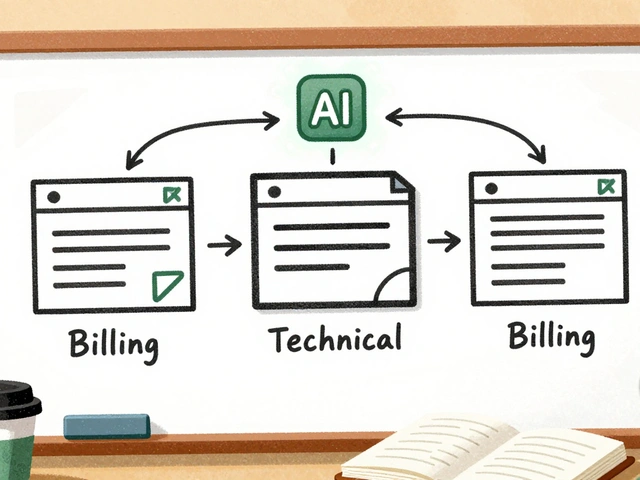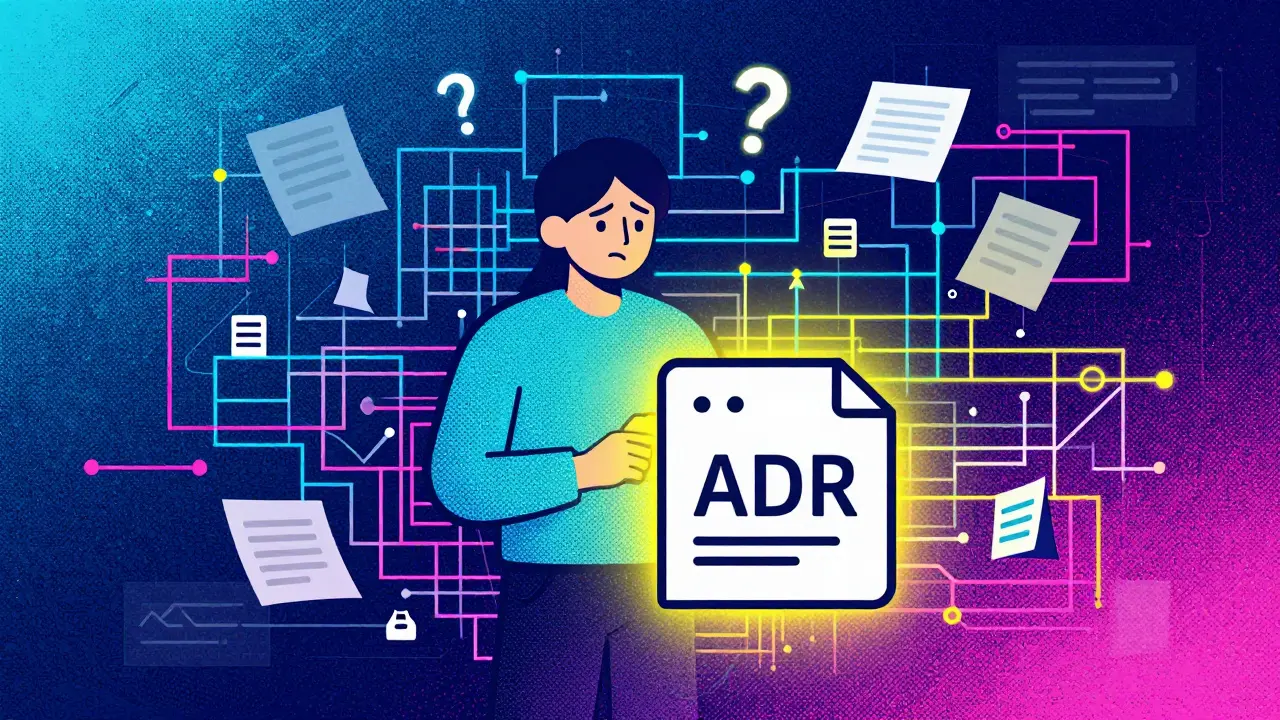
Imagine handing over a complex software project to a new developer. They look at the code, see a specific library choice, and ask, "Why did we use this instead of the other popular option?" You pause. It was six months ago. The meeting notes are lost. The context is gone. This is where Architecture Decision Records (ADRs) come in. An ADR is a concise document that captures an important architectural decision along with its specific context and consequences. For teams building AI-generated systems, where code evolves rapidly and autonomously, these records aren't just helpful-they are essential for maintaining control and clarity.
The problem isn't making decisions; it's remembering why you made them. Traditional documentation often falls behind the speed of development. When AI tools start writing code or suggesting architectures, the gap between action and documentation widens even further. If you don't have a system to log these choices, you lose the narrative of your system’s evolution. This article breaks down how to implement ADRs effectively, especially when AI is part of the mix.
What Are Architecture Decision Records?
An ADR is not a design document. It doesn't describe every detail of how a feature works. Instead, it focuses on one significant choice. Think of it as a historical record for your architecture. Each ADR answers three core questions: What was the situation? What did we decide? And what are the consequences?
This pattern gained widespread adoption between 2010 and 2015 as software systems grew too complex for memory alone. Michael Nygard formalized the concept in his 2007 book Release It!, but it has since become a standard practice across major tech companies. According to Microsoft Azure's Well-Architected Framework, ADRs represent one of the most important deliverables of a solution architect. They provide context-specific justifications that help future teams understand the 'why' behind the 'what.'
For AI-generated systems, this is critical. AI models can generate efficient code, but they don't inherently understand business constraints or long-term strategic goals. Without ADRs, you might end up with a system that is technically sound but misaligned with your original vision. The ADR serves as the human anchor in an increasingly automated process.
Why AI-Generated Systems Need Better Documentation
When you introduce AI into your development workflow, you gain speed but lose some visibility. AI agents can refactor code, choose libraries, and adjust structures based on patterns they've learned. However, they lack the nuanced understanding of stakeholder empathy and project-specific context that humans possess. Salesforce’s architectural practice highlights this distinction, advocating for a "human-led, AI-powered approach" where AI handles research and formatting while humans provide the strategic direction.
Here lies the risk: if an AI makes an architectural change without logging the reasoning, that decision becomes invisible. Future developers-or even future versions of the AI-might reverse it unnecessarily, leading to wasted effort and technical debt. Dennis Adolfi’s research shows that 78% of developers delay documentation until the context becomes "fuzzy and motivation unclear." In AI-driven environments, this delay happens even faster because the changes are continuous and often subtle.
Consider a scenario where an AI agent switches a database from PostgreSQL to MongoDB for better performance on unstructured data. Without an ADR explaining that this trade-off sacrifices ACID compliance for scalability, a new team member might revert the change during a security audit, unaware of the intentional risk acceptance. The ADR prevents this by explicitly stating the context, the decision, and the accepted consequences.
Structuring Effective ADRs
To be useful, an ADR must follow a clear structure. AWS Prescriptive Guidance mandates minimum content including the decision context, the decision itself, and the consequences for project deliverables. Here is a practical breakdown of what each section should contain:
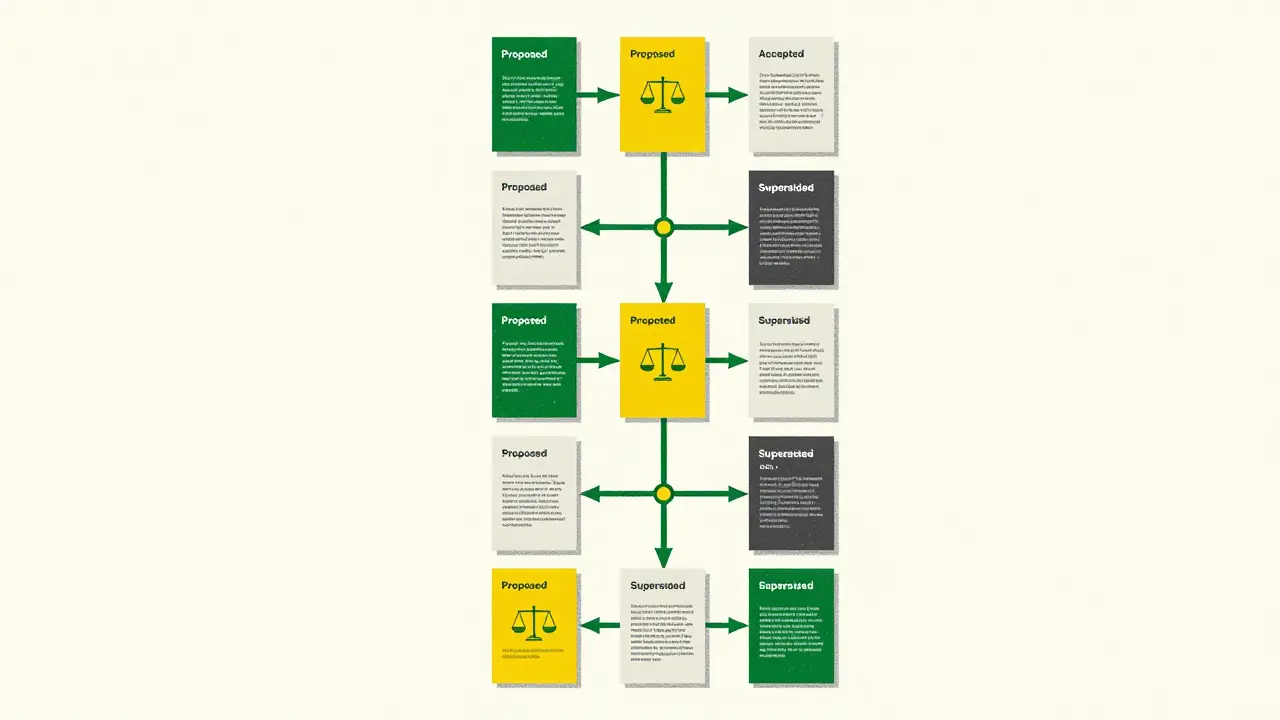
- Status: Is this decision proposed, accepted, deprecated, or superseded? This helps teams know if they should still follow this guidance.
- Context: Describe the forces at play. What were the requirements? What were the alternatives considered? Why was this moment in time significant?
- Decision: State the chosen path clearly. Avoid ambiguity. Use active voice.
- Consequences: List the outcomes. These can be positive (e.g., reduced latency) or negative (e.g., increased complexity). Be honest about the trade-offs.
Microsoft Learn emphasizes that each ADR must incorporate "architecturally significant requirements," including alternatives ruled out. This ensures that the log extends beyond initial design to include aspects against future functional and nonfunctional requirements. By documenting what you didn’t choose and why, you prevent future teams from re-litigating settled debates.
Technical implementation typically involves markdown files stored directly in the code repository. GitHub’s architecture-decision-record repository provides standardized templates that recommend including timestamps for each element. This allows you to track evolving aspects like costs and scaling considerations over time. Keeping ADRs in the repo ensures they are treated as code-versioned, reviewed, and accessible.
Integrating AI into the ADR Workflow
You don't have to write every ADR from scratch. AI can significantly accelerate the creation process, but it requires careful oversight. Dennis Adolfi demonstrated a 73% reduction in ADR creation time by using Claude Code to scan existing codebases and generate initial drafts. The AI identifies potential architectural shifts and populates the template with relevant code snippets and references.
However, AI has limitations. Salesforce found that while AI systems correctly captured technical trade-offs 92% of the time, they only understood business context implications correctly in 63% of cases without human augmentation. This means AI is excellent at drafting the "technical" parts of an ADR but struggles with the "strategic" parts.
| Attribute | Manual Creation | AI-Assisted Creation |
|---|---|---|
| Time Efficiency | Low (High overhead) | High (73% faster draft generation) |
| Technical Accuracy | Dependent on author expertise | High (89% accuracy in category identification) |
| Business Context | High (Human insight) | Low (63% accuracy without human review) |
| Maintenance Burden | High (Often neglected) | Medium (Requires validation step) |
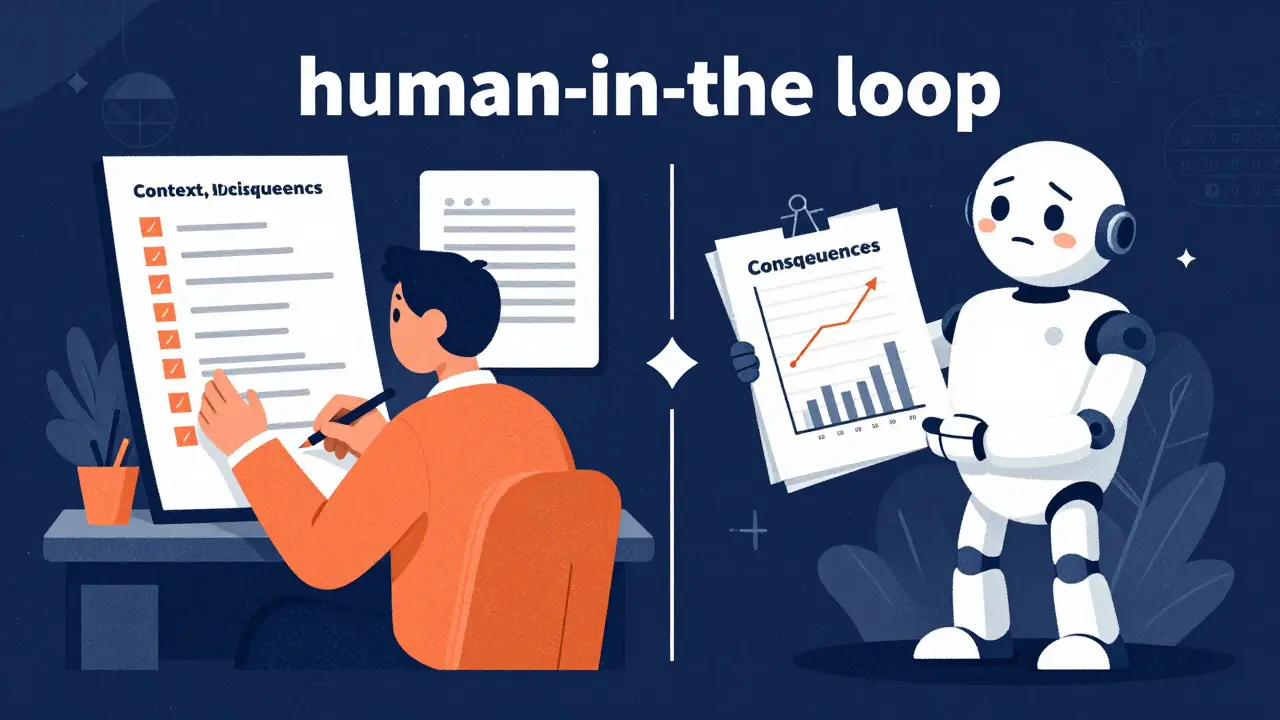
The key is to treat AI as a drafter, not a decider. Salesforce’s architectural team requires formal disclosure of the AI's role, tools used, and an accountability statement placing human architects responsible for final decisions. This "human-in-the-loop" model ensures that the ADR reflects both technical reality and strategic intent.
Immutability vs. Mutability in Decision Logs
A common debate in ADR management is whether records should be immutable or mutable. AWS Prescriptive Guidance states that "when the team accepts an ADR, it becomes immutable." New insights require new ADRs rather than modifications to existing records. This creates a clean historical trail, showing exactly how thinking evolved over time.
On the other hand, GitHub’s best practices suggest that "in practice, mutability has worked better." Teams often insert new information into existing ADRs with date stamps when receiving new teammates or real-world results. This approach keeps the document concise and avoids fragmentation.
For AI-generated systems, I recommend a hybrid approach. Keep the core decision and initial context immutable to preserve history. Allow appending new sections for "Updates" or "Re-evaluations" as the system evolves. This balances the need for a clear audit trail with the flexibility required in fast-moving projects. Microsoft warns that ADRs should be started for brownfield workloads retroactively to avoid knowledge loss, which supports the idea of treating ADRs as living documents that capture ongoing learning.
Practical Implementation Steps
Getting started with ADRs doesn't require a massive overhaul. Follow these steps to integrate them into your workflow:
- Create a Template: Adopt a standard markdown template. Include fields for Status, Context, Decision, and Consequences. Store this in your repository’s root directory.
- Start Early: Begin creating ADRs at project inception. Don't wait for major milestones. Document small decisions early to build the habit.
- Leverage AI for Drafting: Use AI tools to scan recent commits and suggest ADR topics. Let the AI fill in technical details, then have a senior engineer review and add business context.
- Enforce Through Reviews: Make ADR creation part of your pull request process. Require an ADR link for any change that affects system architecture, dependencies, or interfaces.
- Review Regularly: Schedule quarterly reviews of your ADR log. Identify outdated decisions and create new ADRs to supersede them if necessary.
Salesforce reports that their internal training for basic ADR implementation takes 3-5 hours, with an additional 8-12 hours for teams adopting AI-assisted workflows. This investment pays off quickly. One Fortune 500 financial services company reported a 76% reduction in architectural debate recurrence over six months after implementing AI-assisted ADRs.
Common Pitfalls to Avoid
Even with the best intentions, ADR programs can fail. Here are the most common traps:
- Over-documenting: Not every decision needs an ADR. Focus on architecturally significant choices. Micro-decisions clutter the log and reduce its value.
- Ignoring Consequences: Many teams list benefits but ignore drawbacks. Honest assessment of trade-offs builds trust and aids future decision-making.
- Storing Separately: Keep ADRs in your code repository. Separate wikis or docs sites get out of sync. Treat documentation as code.
- False Confidence in AI: Hacker News discussions reveal concerns from 57% of experienced architects about AI-generated ADRs creating false confidence. Always validate AI outputs against security and compliance standards.
Regulatory considerations are also emerging. The UK Financial Conduct Authority’s 2023 guidance on AI governance requires transparent documentation of all significant technical decisions affecting system behavior. ADRs align perfectly with this requirement, providing the evidence needed for audits.
Conclusion
Architecture Decision Records are more than just paperwork. They are the memory of your engineering team. In the era of AI-generated systems, where code can change in seconds, ADRs provide the stability and context needed to maintain quality and alignment. By combining human strategic insight with AI efficiency, you can build a documentation culture that scales with your technology. Start simple, stay consistent, and let your decisions speak for themselves.
What is the difference between an ADR and a design document?
A design document describes how a system or feature should be built, focusing on implementation details. An ADR records why a specific architectural choice was made, focusing on context, alternatives, and consequences. Design documents evolve with the code; ADRs remain historical records of past decisions.
How often should I create an ADR?
Create an ADR whenever you make an architecturally significant decision. This includes changes to system structure, major dependencies, security protocols, or interfaces. Don't create ADRs for minor coding style choices or trivial bug fixes.
Can AI write ADRs entirely on its own?
No. While AI can draft technical details and identify patterns, it lacks the business context and stakeholder empathy required for meaningful architectural decisions. Human review is essential to ensure accuracy and strategic alignment.
Where should I store my ADRs?
Store ADRs in your code repository, typically in a dedicated folder like /docs/architecture/decisions. This keeps them version-controlled, accessible to developers, and synchronized with the codebase.
What happens if an ADR decision is no longer valid?
Do not delete or overwrite the old ADR. Create a new ADR that supersedes the previous one. Reference the old ADR ID in the new document to maintain a clear historical trail of how your thinking evolved.