When governance fails, it doesn’t always make headlines. But the fallout does: regulatory fines, audit failures, data breaches, and lost trust. The difference between a company that survives and one that stumbles often comes down to one thing-governance KPIs. Not vague promises or annual checklists. Real, measurable indicators that show whether policies are actually working.
Why Governance KPIs Matter More Than Ever
Governance isn’t about filling out forms. It’s about making sure the rules you set actually change behavior. In 2025, companies face over 200 compliance requirements on average. That’s up from 147 just three years ago. If you’re still relying on manual audits or sporadic reviews, you’re already behind. The best organizations don’t just track compliance-they track impact. They know that policy adherence isn’t just about training completion rates. Review coverage isn’t just about having documents stored in a folder. And MTTR isn’t just about how fast you fix something-it’s about how often the same thing breaks again. Three KPIs dominate modern governance: policy adherence rate, review coverage, and mean time to resolution (MTTR). These aren’t optional metrics. They’re the foundation of resilience.Policy Adherence Rate: Are People Actually Following the Rules?
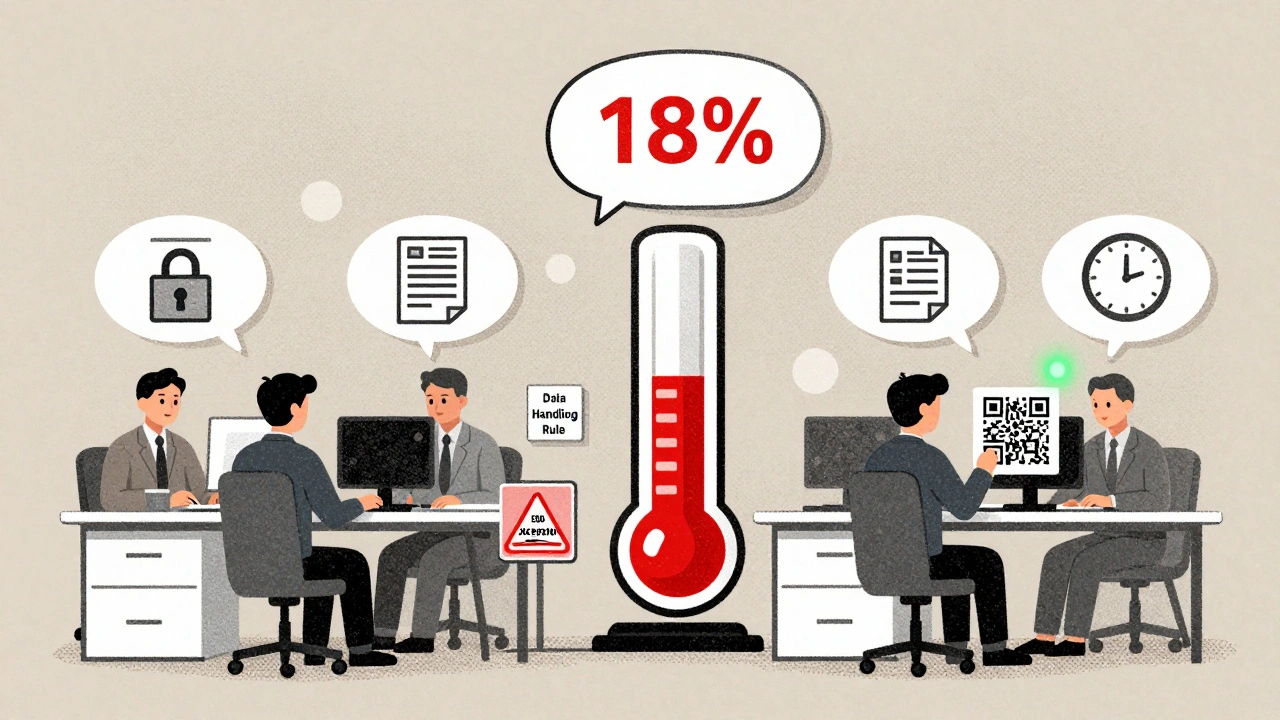
Policy adherence sounds simple: employees follow the rules. But in practice, it’s messy. You can have 100% training completion and still have 60% of staff ignoring data handling policies because the rules are unclear or don’t fit their workflow. Leading companies measure this differently. Instead of asking, “Did they attend the training?” they ask, “Did they break the policy?” The key metric here is the Policy and Procedure Exception Rate. That’s the percentage of times a rule was bypassed, even if approved. Top performers keep this under 5%. The industry average? 15-20%. How do they do it?- Automated monitoring tools track access logs, file transfers, and system changes in real time.
- Random policy quizzes-not mandatory training-are used to test actual understanding.
- Departmental scorecards tie adherence to performance reviews.
Review Coverage: Are Policies Alive-or Just Archived?
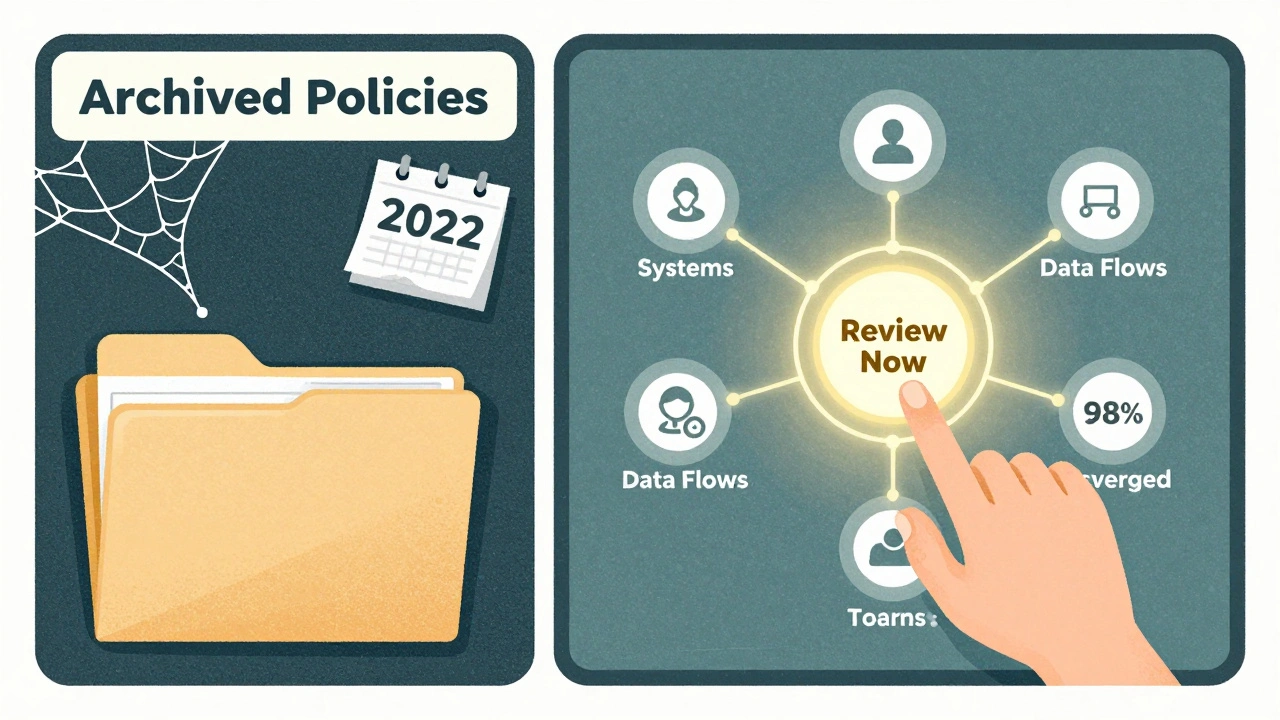
A policy that hasn’t been reviewed in two years isn’t a policy. It’s a liability. Review coverage measures whether governance documents are actively maintained. It’s not enough to have them. They need to be tested, updated, and enforced across every team, system, and location. The most effective organizations track two things:- Risk Assessment Completion Rate: What percentage of scheduled risk reviews were finished on time? High performers hit 95%+. The average? 72%.
- Policy Coverage Percentage: What percentage of systems, departments, or data flows have documented governance controls? One healthcare provider discovered only 80% of their environments had automated access controls. They set a goal: 100% by quarter-end. Six months later, access-related incidents dropped 37%.
MTTR: How Fast Do You Fix What Breaks?
Mean Time to Resolution (MTTR) is the heartbeat of governance. It tells you how quickly your organization responds when things go wrong. In governance, MTTR starts when an issue is detected-a policy violation, an audit finding, a security alert-and ends when it’s fully fixed and documented. Top performers keep MTTR under 15 days. The industry average? 45 days. Why does this matter? Organizations with MTTR under 24 hours see 82% fewer repeat incidents, according to Cyber Sierra’s 2023 analysis. That’s because slow responses create a culture of tolerance. If violations linger for weeks, people assume they’re acceptable. Here’s what good MTTR looks like in practice:- Financial services: 28-hour average time to detect and resolve issues.
- Manufacturing: 72-hour average-nearly three times slower.
- Clear escalation paths
- Standardized response playbooks
- Automated alerts tied to governance platforms
The Bigger Picture: From Compliance to Business Value
The old model of governance was about avoiding penalties. The new model is about creating value. DataGalaxy’s 2024 research shows 68% of enterprises now track “value realization rate”-a metric that asks: Did this governance effort save money, reduce risk, or improve decision-making? Some companies now tie governance KPIs directly to executive bonuses. Forty-one percent do. That’s not punishment. It’s alignment. This shift is why hybrid frameworks are the future. Forrester predicts 74% of companies will combine compliance metrics with business outcomes by 2026. You don’t have to choose between control and innovation. You can have both. But only if your KPIs reflect that balance.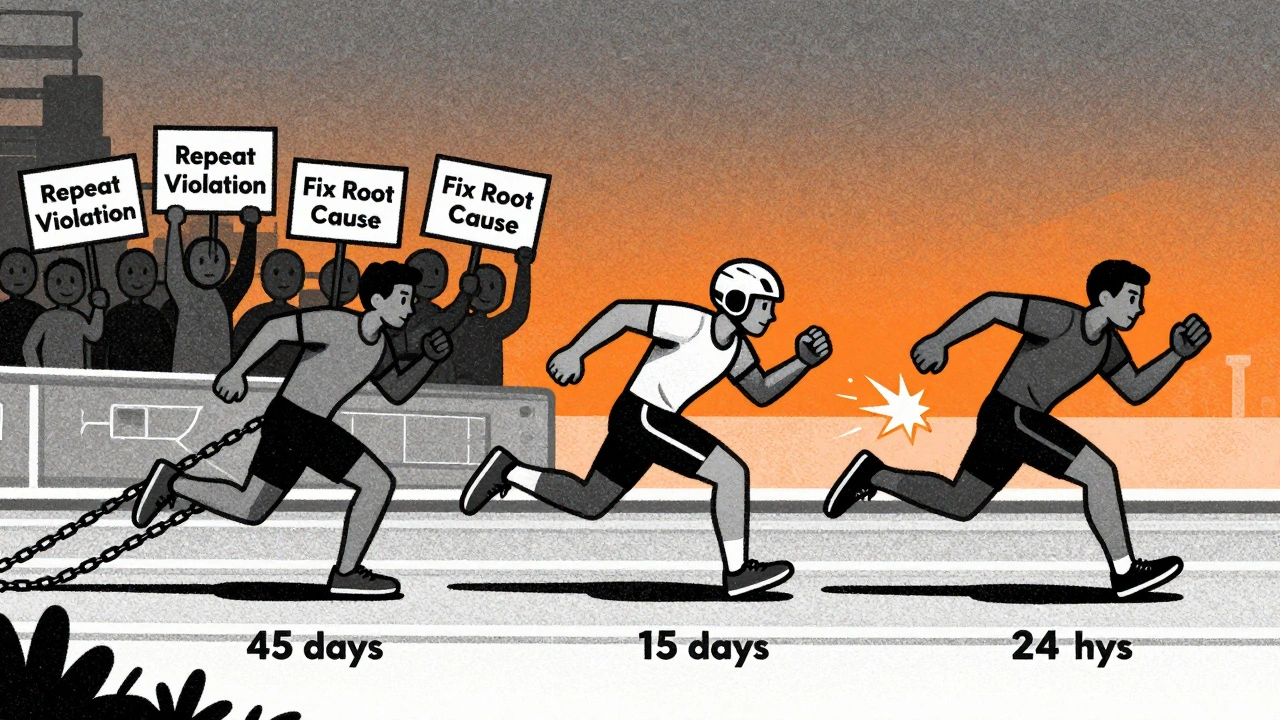
How to Implement These KPIs (Without Overwhelming Your Team)
Start small. Don’t try to track everything at once. Follow this four-step approach used by leading organizations:- Define your success metrics based on business goals. Not compliance checklists. Real outcomes: fewer breaches, faster audits, lower fines.
- Assign ownership. Every KPI needs a person. Not a team. One person. If no one owns it, it won’t get done.
- Integrate with your governance tools. OneTrust, ServiceNow, or even a well-built Excel tracker with automated alerts. Manual tracking doesn’t scale.
- Review monthly. Look for trends, not just numbers. Is adherence dropping in one department? Are reviews piling up? Fix the pattern, not just the symptom.
What’s Next? The Future of Governance KPIs
The next wave of governance isn’t about more metrics. It’s about smarter ones. IBM OpenPages launched AI-powered compliance risk prediction scores in May 2024. They analyze past behavior to forecast which teams are most likely to violate policies-with 87% accuracy. By 2026, 73% of organizations plan to use real-time governance dashboards. 41% are exploring blockchain-verified policy attestations. 68% are linking governance data to ESG reporting. Deloitte found that companies linking governance KPIs to business outcomes achieve 23% higher operational efficiency. That’s not a bonus. That’s a competitive edge. Governance isn’t a cost center anymore. It’s a performance lever. The organizations that win in 2025 and beyond won’t be the ones with the most policies. They’ll be the ones with the clearest metrics-and the courage to act on them.What’s the difference between policy adherence and training completion?
Training completion tells you people showed up. Policy adherence tells you they followed the rules afterward. A company might have 100% training completion but only 65% adherence if policies are unclear or poorly enforced. Real adherence is measured through audits, exception logs, system monitoring, and random quizzes-not attendance records.
Can MTTR be too low? Is faster always better?
Speed without accuracy is dangerous. If your team rushes to close an issue without fixing the root cause, you’ll see repeat violations. The goal isn’t just speed-it’s sustainable resolution. Top performers aim for MTTR under 15 days, but they also track “repeat incident rate” to ensure fixes stick. A 10-day MTTR with a 40% repeat rate is worse than a 20-day MTTR with a 5% repeat rate.
Which governance KPIs should I track first?
Start with the one that’s causing the most pain. If you’re getting fined for outdated policies, focus on review coverage. If audits keep uncovering the same violations, track policy adherence. If issues take months to fix, prioritize MTTR. Pick one, measure it well, fix it, then move to the next. Don’t try to boil the ocean.
Do small businesses need these KPIs too?
Yes-even more than large ones. Small businesses often lack legal teams and compliance staff. That means every policy violation carries higher risk. You don’t need fancy tools. Start with a simple spreadsheet: track how many policies were reviewed last quarter, how many exceptions occurred, and how long it took to fix the biggest issue. That’s enough to get started.
How do I get executive buy-in for these metrics?
Don’t talk about compliance. Talk about money and risk. Show them how a 10% improvement in policy adherence could cut audit fines by 30%. Show how reducing MTTR from 45 to 15 days could prevent a $2M breach. Use real numbers from your industry. Executives care about outcomes-not processes.





Jennifer Kaiser
9 December, 2025 - 17:40 PM
It’s wild how we still treat governance like a paperwork exercise instead of a living system. You can’t audit culture with checklists. The real magic happens when policy adherence becomes a reflex, not a requirement. That hospital system? They didn’t just tweak a dashboard-they changed the incentive structure. People respond to consequences, not lectures. And the fact that 68% of companies now track value realization? That’s the shift. Governance isn’t about avoiding fire-it’s about building a house that doesn’t catch fire in the first place.
Stop measuring training completion. Start measuring behavior. The data doesn’t lie.
Also-MTTR should never be a race. It’s a rhythm. Speed without depth is just noise.
TIARA SUKMA UTAMA
10 December, 2025 - 08:35 AM
policy adherence is just a fancy way of saying ‘did they do the thing?’
stop overcomplicating it. if they broke the rule, they broke the rule. no need for 10 slides and a webinar.
Jasmine Oey
11 December, 2025 - 11:59 AM
OH MY GOSH I JUST CRIED READING THIS?? Like, actually. Tears. Not because it’s sad-but because someone finally said it out loud. We’ve been drowning in PDFs for years while the world burns. And now? We’re measuring *impact*?? Like… actual human impact??
Someone get this person a medal. Or at least a latte. I’d buy it. I’m serious. This isn’t just governance-it’s *revolution*. And I’m here for it. 10/10 would recommend to my CEO (who still prints out policies and files them in a drawer labeled ‘maybe later’).
Also-blockchain attestations?? Are we living in 2026 already?? I’m so ready.
Marissa Martin
12 December, 2025 - 19:39 PM
I’ve seen this play out too many times. Teams implement the KPIs, dashboards light up, everyone nods… and then nothing changes. The metrics become performative. The real issue? Ownership is assigned to someone who doesn’t have authority. Or worse-assigned to a committee. Governance fails not because the tools are bad, but because the people aren’t held accountable. And accountability isn’t a slide deck. It’s a conversation. A hard one. That no one wants to have.
So we don’t. And the cycle continues.
James Winter
13 December, 2025 - 10:05 AM
USA is the only country that actually gets governance. Canada? We just print more forms and call it ‘compliance.’
Stop pretending this is a global thing. This is American discipline. You want results? Copy the US. Not the ‘chill observer’ crowd.
Aimee Quenneville
14 December, 2025 - 21:03 PM
James, you’re adorable. 😌
Canada doesn’t ‘print more forms’-we just don’t pretend that filling out a form = fixing a problem. You think your ‘American discipline’ is why your MTTR is 45 days? Nah. It’s because you’re too busy yelling at the spreadsheet to actually fix the code.
Also, ‘blockchain attestations’? That’s not a feature, that’s a glitter bomb. We’re trying to *govern*, not host a crypto convention.
…but hey, if you wanna spend $2M on a dashboard that says ‘compliance: green’ while your server room’s on fire… go ahead. We’ll be here, sipping tea, fixing the actual problem.