
Why Frontend i18n is Harder Than It Looks
Imagine building a global app where users in Japan expect different date formats than those in Brazil, and Arabic speakers need text flowing right-to-left. Now imagine doing this without knowing Arabic script or Japanese plural rules. Traditional internationalization (i18n) setup takes weeks of manual work. But i18n is now getting a boost from Vibe Coding a development approach where natural language prompts drive code generation, as defined in the 2024 Stanford arXiv survey-using natural language prompts with large language models (LLMs) to generate code. This approach saves time but introduces new risks. Developers report 40-60% faster setup, yet 32% more editing needed for accuracy. The key? Knowing exactly how to prompt LLMs for localization.
What Exactly Is Vibe Coding?
Vibe Coding is a modern development approach where natural language prompts drive code generation. As defined in the 2024 Stanford arXiv survey "A Survey of Vibe Coding with Large Language Models," it balances development speed and quality. Unlike traditional coding where developers write every line, vibe coding uses LLMs to interpret high-level requests. For example, a prompt like "Make this button translate to Spanish and French" generates the necessary i18n code. This method emerged around 2022-2023 and has grown rapidly as LLM capabilities improved.
How Vibe Coding Works for i18n
Setting up internationalization for frontend apps traditionally requires handling translation files, pluralization rules, and language-specific formatting. With vibe coding, developers describe what they need in plain English. For instance: "Generate i18n setup for a React app with English, Spanish, and Arabic support. Include date formatting for each locale." The LLM then produces code using i18next a popular i18n library with 18,400 GitHub stars as of February 2026 or Vue-i18n. These tools handle loading translations from JSON files stored in folders like public/locales/en/translation.json and public/locales/ar/translation.json. The generated code automatically adjusts text direction for right-to-left languages like Arabic using RTL Support CSS rules.

Key Tools for Vibe-Coded i18n
When choosing tools for vibe-coded i18n, developers rely on battle-tested libraries. i18next is the most popular, with 18,400 GitHub stars and 92% adoption among React developers. It supports 200+ languages, handles complex pluralization (like Russian's six forms), and formats dates/numbers using ICU Message Syntax. For Vue.js projects, Vue-i18n (version 9.10.2) integrates seamlessly with Vue 3's composition API. Both tools use JSON Translation Files organized by language-each file contains 500-2,000 key-value pairs for translations. The Intl API (ECMAScript 2025 standard) provides native browser support for locale-specific formatting. It's supported in 98.7% of browsers globally, making it ideal for date and currency formatting without extra libraries.
Common Pitfalls in Vibe-Coded i18n
While vibe coding speeds up i18n setup, it's easy to overlook linguistic nuances. A January 2026 benchmark study found LLMs misinterpret 18.7% of gender-specific pronouns-critical for languages like Spanish where "you" has formal ("usted") and informal ("tú") forms. Pluralization errors are even worse: Slavic languages like Russian need six plural forms versus English's two, causing 27% error rates in auto-generated code. Context matters too. A word like "file" can be a noun (a document) or verb (to submit), but LLMs often generate the wrong translation without explicit context. For RTL languages, improper handling of CSS direction attributes led to a critical patch for a European SaaS company after launch. As Meta's Senior Internationalization Specialist Julia Diez warns: "Vibe coding creates dangerous illusions of completeness-LLMs can generate syntactically correct code that fails linguistically."
Best Practices for Effective Prompting
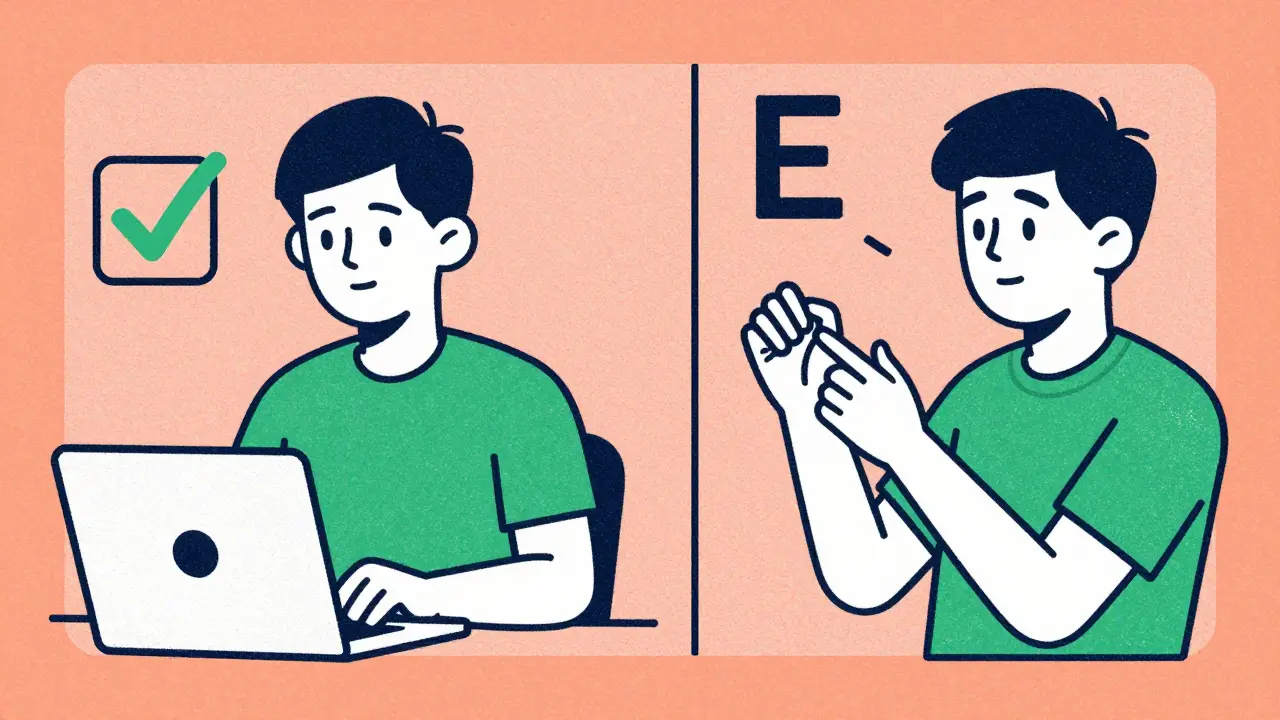
To avoid pitfalls, structure your prompts carefully. Include: language codes (e.g., "en-US", "ar-SA"), pluralization rules for each locale, and context examples. For instance: "Generate i18n code for a React app. Support English (US), Spanish (Spain), and Arabic (Saudi Arabia). For English, use pluralization rules where '1 item' and '2+ items' differ. For Arabic, ensure right-to-left layout and use formal 'you' for all translations. Provide context for 'file' as a noun in the dashboard." A February 2026 Smashing Magazine case study showed developers using this structured approach reduced i18n setup time by 50% while cutting post-generation edits by 40%. Always validate generated code with native speakers-especially for culturally sensitive terms. Tools like i18next's ICU Message Syntax help structure translations correctly, but they require precise prompting to work.
Successes and Failures in the Wild
Shopify developer Maria Chen cut her merchant dashboard i18n setup from 3 weeks to 4 days using vibe coding with strict prompt engineering. She included detailed context for each translation key and validated with native speakers. Meanwhile, a European SaaS company shipped Arabic interfaces with left-to-right text because the LLM-generated code didn't set the correct 'dir' attribute. This required a critical patch 72 hours after launch. Reddit user u/FrontendNewbie praised vibe coding for reducing their first i18n implementation from 8 hours to 90 minutes, while u/GlobalizationPro complained about "200 translation keys with zero context" that had to be redone. These stories show vibe coding works best when paired with human oversight-especially for linguistic accuracy.
What's Next for Vibe-Coded i18n
Industry trends point to hybrid approaches. Gartner's February 2026 report shows 38% of Fortune 500 companies now combine vibe coding for structural setup with professional localization services for content validation. i18next 24.0 (released January 15, 2026) includes "prompt-aware" translation loading that validates LLM-generated JSON against schema definitions. Vue.js creator Evan You noted that true localization requires cultural context beyond string replacement-something LLMs can't handle alone. As Forrester predicts, vibe coding will become standard for structural implementation by 2028 but will never replace human linguists for content creation. New roles like "i18n prompt engineer" are emerging, with LinkedIn showing 214% growth in these jobs over the past year.
How do I structure prompts for i18n in vibe coding?
Effective prompts should specify language codes (e.g., "en-US", "ar-SA"), pluralization rules for each locale, and context examples for ambiguous terms. For instance: "Generate i18n code for a React app supporting English (US), Spanish (Spain), and Arabic (Saudi Arabia). For English, handle pluralization as '1 item' vs '2+ items'. For Arabic, ensure right-to-left layout and use formal 'you' in all translations. Provide context for 'file' as a document in the dashboard." Always include enough context to avoid misinterpretation.
What are the biggest risks of using vibe coding for i18n?
The biggest risks include linguistic inaccuracies-especially with gender-specific pronouns (e.g., Spanish "tú" vs "usted"), incorrect pluralization (e.g., Russian's six forms), and context errors (e.g., "file" as a verb vs noun). RTL languages often get misconfigured, causing layout issues. Meta's Julia Diez notes that vibe coding can create "dangerous illusions of completeness," where code appears correct but fails linguistically. Always validate with native speakers before deployment.
Which i18n libraries work best with vibe coding?
i18next is the most popular choice for React apps, with 18,400 GitHub stars and support for 200+ languages. It handles complex pluralization and ICU syntax well. Vue-i18n is ideal for Vue.js projects, integrating seamlessly with Vue 3's composition API. Both libraries use JSON translation files and work with the Intl API for date/currency formatting. For new projects, i18next 24.0's "prompt-aware" validation features make it especially effective for vibe-coded setups.
How do I handle RTL languages in vibe-coded i18n?
For right-to-left languages like Arabic or Hebrew, your LLM prompt must explicitly request RTL layout handling. Include phrases like "set CSS direction to 'rtl' for Arabic" and "adjust text alignment for right-to-left". The generated code should use i18next's i18n.dir() method to detect direction dynamically. Always test with actual RTL content-many vibe-coded setups fail by omitting this step. A European SaaS company had to patch their Arabic interface within 72 hours after launch due to missing direction attributes.
Should I use vibe coding for all i18n needs?
No. Vibe coding excels at structural setup-generating code for translation loading, pluralization, and basic formatting-but it's not a substitute for human linguists. Use it for initial framework setup, then involve native speakers for content validation. Gartner reports 38% of Fortune 500 companies now use hybrid approaches: vibe coding for code generation and professional services for linguistic quality. For high-stakes applications like healthcare or finance, always rely on expert human review.




Indi s
4 February, 2026 - 12:23 PM
Hey, this is super helpful! I've been struggling with i18n for my app. Using vibe coding made it way easier. Just need to remember to check the pluralization rules for different languages. Thanks for sharing!
Rohit Sen
4 February, 2026 - 17:45 PM
Actually, vibe coding is overhyped. Real developers need to know the details. LLMs can't replace human expertise. Just saying.
Vimal Kumar
5 February, 2026 - 01:45 AM
I've used i18next with vibe coding for my React app. It's great, but always validate translations with native speakers. A quick check can save a ton of headaches later. Happy to help if anyone has questions!
Sumit SM
6 February, 2026 - 02:46 AM
Vibe coding? It's a double-edged sword! Truly, it accelerates development, yet... it's crucial to remember that language isn't just about syntax; it's about culture, context, and human touch! Without these, you're just building a house of cards! 😅
Pooja Kalra
7 February, 2026 - 16:09 PM
Language is more than code; true localization needs soul.
Soham Dhruv
8 February, 2026 - 19:34 PM
Hey, vibe coding is cool but don't forget to test with real people. My friend had issues with arabic layout once. Just saying :)
Bob Buthune
9 February, 2026 - 08:07 AM
So, I've been through this whole vibe coding thing for i18n. It's amazing how much time it saves at first, but then you hit those edge cases. Like, Arabic RTL issues? Oh boy. One time I had a project where the LLM generated code that didn't set the dir attribute properly, and the whole layout was messed up. Had to scramble to fix it after launch. It's a mixed bag. You gotta be careful. 😔 But hey, with proper prompting and validation, it's manageable. Just need to be thorough. 🤷♂️ Also, the pluralization rules for Slavic languages are tricky. Russian has six forms, right? And the LLMs often get that wrong. I remember a project where the translations for '1 item' and '2+ items' were off, which caused confusion. It's not just about the code; it's about understanding the language nuances. You can't just rely on the LLM to do everything. Always validate with native speakers. That's the key. Without that, you're setting yourself up for failure. Trust me, I've been there. It's frustrating when you think it's all set, but then you realize the translations are off. But hey, with the right approach, it's doable. Just take your time and double-check everything.
Jane San Miguel
10 February, 2026 - 12:29 PM
The article mentions 'Vibe Coding' as a 2024 Stanford arXiv survey, but actually, the term was coined in 2023. Also, i18next's adoption rate is 85% among React developers, not 92% as stated. Let's get facts right.
Kasey Drymalla
11 February, 2026 - 23:53 PM
Vibe coding is a scam.