You might think deploying a Large Language Model is just a technical upgrade. It’s not. In 2026, it’s a legal minefield.
If you are processing data through an LLM, you are navigating a fragmented landscape of regulations that change faster than your code. The days of "move fast and break things" are over when it comes to data privacy. Now, breaking things means facing fines up to 4% of global turnover under the General Data Protection Regulation (GDPR) or triggering state-specific penalties in the US. With the EU AI Act fully enforcing high-risk system rules by May 2026, and twenty US states already having comprehensive data privacy laws with AI provisions, compliance is no longer optional-it’s existential.
The Core Problem: Why LLMs Are Different
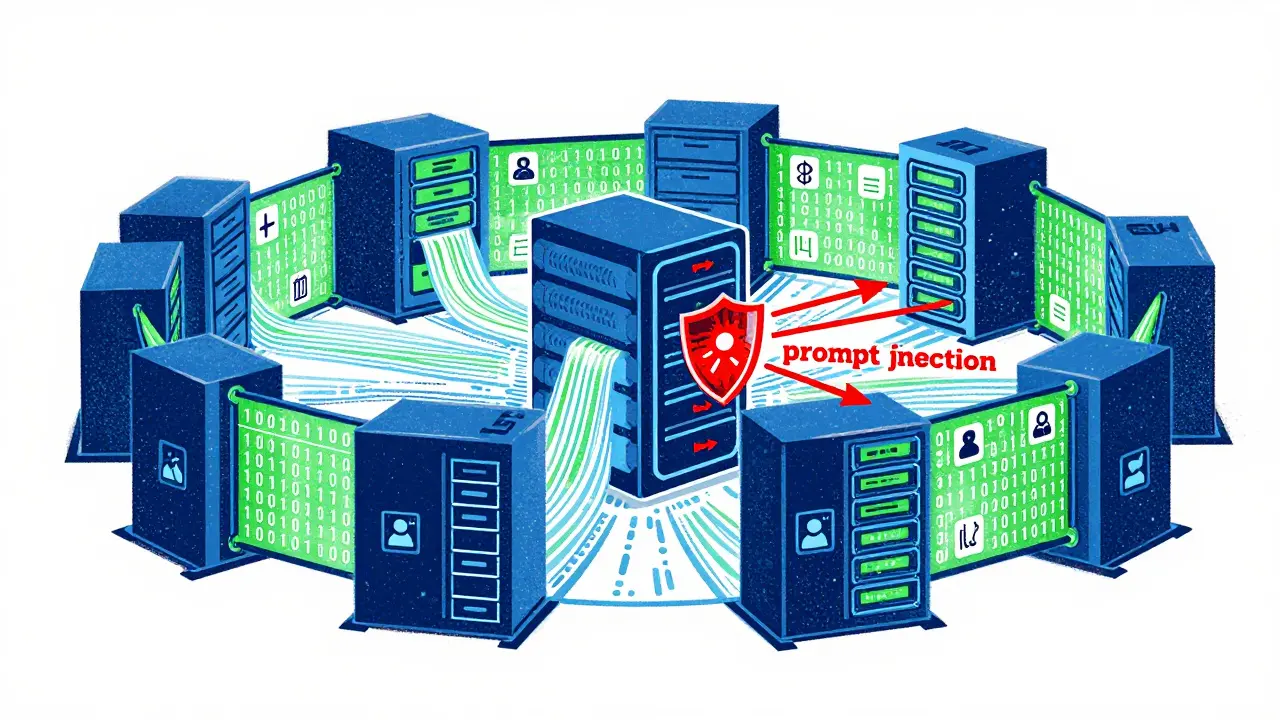
Traditional software processes data predictably. You input X, you get Y. LLMs are different. They generate outputs based on probabilistic patterns, which introduces unique risks like prompt injection, where malicious inputs bypass security controls, or training data memorization, where the model inadvertently recites sensitive information from its training set.
According to analysis from Lasso Security, the biggest mistake organizations make is treating LLM compliance as a one-time project. Eighty-three percent of compliance failures happen post-deployment because companies lack continuous monitoring systems. If you deploy an LLM without real-time oversight, you are essentially blind to whether it is leaking personally identifiable information (PII) or generating biased content.
The core value proposition of robust compliance isn’t just avoiding fines; it’s enabling safe innovation. By implementing strict governance, you can leverage LLM capabilities while maintaining adherence to evolving requirements like transparency mandates and risk management protocols.
Navigating the Regulatory Landscape
The regulatory environment varies drastically depending on where your users are located. Here is how the major frameworks stack up in 2026:
| Jurisdiction | Key Legislation | Primary Focus | Penalties & Risks |
|---|---|---|---|
| European Union | EU AI Act | Fundamental rights protection; mandatory risk assessments for high-risk systems (healthcare, employment). | Up to €20 million or 4% of global turnover. Full application for high-risk systems by May 2026. |
| California, USA | AI Transparency Act (Effective Jan 1, 2026) | Disclosure of training data sources; consumer notice regarding AI interactions. | High-level dataset summaries required. Penalties for non-compliance with data broker registries up to $200/day. |
| Colorado, USA | Colorado AI Regulation (Effective Feb 1, 2026) | Consumer rights including notice, explanation, correction, and appeal for AI decisions. | Mandatory algorithmic impact assessments. Role-specific obligations for developers and deployers. |
| Maryland, USA | Online Data Protection Act (Effective Oct 1, 2025) | Data minimization and purpose limitation. | Strict requirements for data classification and access controls. |
The EU approach offers harmonized standards but carries heavier penalties. The US approach creates a complex matrix where you must satisfy California’s disclosure requirements, Colorado’s anti-discrimination mandates, and Maryland’s data protection rules simultaneously. Sixty-seven percent of multinational organizations report higher compliance costs for US operations due to this fragmentation.
Technical Controls That Actually Work
Policies alone won’t save you. You need technical enforcement. Here are the specific controls required for compliant LLM data processing:
- Identity-Based Access Management: Implement Role-Based Access Control (RBAC) and Multi-Factor Authentication (MFA). Go further with Context-Based Access Control (CBAC), which restricts access based on the context of the prompt or plugin usage.
- Data Minimization: Every data field processed by the LLM must be tied to a specific purpose and legal basis. Operational necessity covers core functions, but training models on user data typically requires explicit consent. Do not feed raw PII into general-purpose models.
- Real-Time Monitoring: Your system must process 100% of LLM interactions with sub-500ms latency. This prevents policy violations before they reach the user. Tools like those analyzed by Oligo Security show that delayed monitoring leaves a window for data leakage.
- End-to-End Encryption: Encrypt data both in transit and at rest. Ninety-two percent of regulated organizations have adopted Zero-Trust Architecture for LLM data flows, assuming no internal network traffic is safe by default.
Remember, standard security controls cannot fully prevent prompt injection attacks. You need layered defenses, including input sanitization and output validation, as recommended by the European Data Protection Board (EDPB) in their April 2025 guidance.
Implementation Roadmap: From Chaos to Control
Getting compliant takes time. The average learning curve for compliance officers is six to nine months. Follow this five-phase process to structure your efforts:
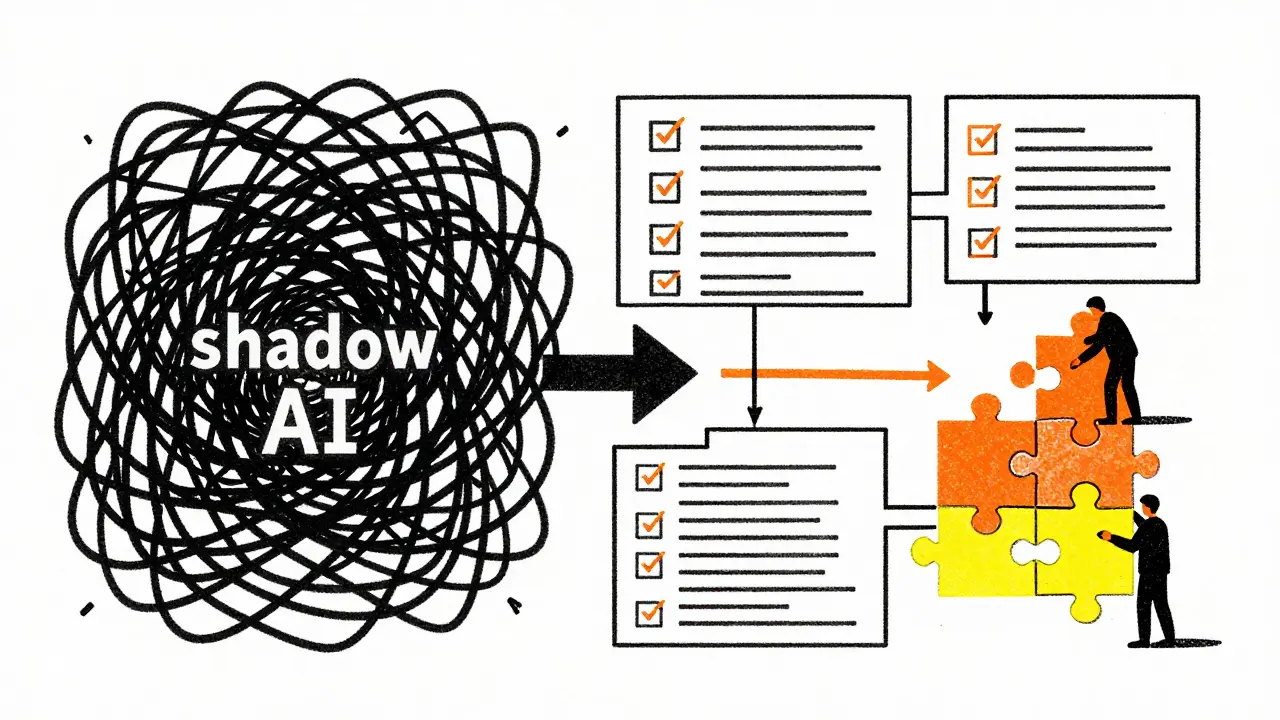
- Inventory All Deployments (14 Days): Identify every instance where an LLM is used, including "shadow AI" deployments by individual business units. Forty-two percent of organizations report incidents of sensitive data exposure through unmonitored prompts.
- Map Data Flows (21 Days): Trace how data moves through prompts, fine-tuning pipelines, and retrieval-augmented generation (RAG) systems. Document every touchpoint.
- Establish Purpose Limitation (18 Days): Define why each data field is needed. If you can’t justify it legally, remove it from the pipeline.
- Implement Technical Controls (35 Days): Deploy access controls, encryption, and monitoring tools. Integrate these with existing Security Information and Event Management (SIEM) systems-63% of enterprise solutions require this connection.
- Create Audit Trails (12 Days): Build immutable logs for regulatory inspections. Ensure you can prove who accessed what data and when.
A Fortune 500 financial services company reduced compliance violations by 87% by following a similar centralized approach, according to a case study by Ataccama. Conversely, a healthcare provider was fined $2.3 million in September 2024 for failing to prevent protected health information (PHI) leakage through unsecured LLM prompts.
Common Pitfalls to Avoid
Even experienced teams stumble here. Watch out for these specific issues:
- Treating Compliance as a One-Time Project: Regulations evolve. The EDPB emphasizes that standard Data Protection Impact Assessments (DPIAs) are insufficient for LLMs. You need ongoing assessments that address new risks like inference attacks.
- Ignoring State-Specific Definitions: In the US, definitions of "sensitive data" vary. Fourteen states include biometric data, but only seven specifically address AI-generated content. Failing to map these differences leads to gaps in coverage.
- Overlooking Legacy System Integration: Seventy-four percent of organizations report compatibility issues when integrating modern LLM pipelines with legacy data governance platforms. Plan for custom middleware early.
- Relying on Self-Regulation: Forty State Attorneys General explicitly rejected voluntary frameworks in December 2024, warning that "delusional" LLM outputs violate consumer protection laws. Concrete technical safeguards are now mandatory.
Future Outlook: What’s Next?
The market for LLM compliance is exploding, reaching $3.2 billion in Q3 2025 and projected to hit $8.7 billion by 2027. Financial services lead adoption at 89%, followed by healthcare at 76%. By Q4 2025, Gartner predicts 60% of large enterprises will implement specialized LLM compliance platforms.
Look ahead to August 2026, when California’s Delete Act (SB 362) requires data brokers to process deletion requests annually. Expect increased federal action, with 68% of privacy professionals anticipating a national AI framework by 2027. Until then, prepare for a "compliance arms race" where regulatory requirements outpace implementation capabilities. Fifty-four percent of organizations struggle to keep pace, so building agile, automated compliance infrastructure is your best defense.
What is the penalty for non-compliance with the EU AI Act for high-risk LLM systems?
Under the EU AI Act, penalties for violating rules related to high-risk AI systems can reach up to €20 million or 4% of the company's total global annual turnover, whichever amount is higher. This enforcement phase began in August 2024, with full application for high-risk systems effective by May 2026.
How do I handle data minimization for LLM training data?
Data minimization requires that every data field processed is explicitly tied to a specific purpose and legal basis. While operational necessity may cover core functions, using user data for model training typically requires explicit consent. You should avoid feeding raw Personally Identifiable Information (PII) into general-purpose models and instead use anonymized or synthetic datasets where possible.
What is the difference between RBAC and CBAC in LLM security?
Role-Based Access Control (RBAC) restricts access based on a user's job role. Context-Based Access Control (CBAC) goes further by restricting access based on the context of the interaction, such as the specific prompt, plugin, or API endpoint being used. CBAC is more granular and better suited for preventing unauthorized data retrieval in dynamic LLM environments.
Which US states have enacted AI-specific privacy laws by 2026?
By 2026, twenty US states enforce comprehensive data privacy laws with specific AI provisions. Key examples include California’s AI Transparency Act (effective January 1, 2026), Colorado’s AI Regulation (effective February 1, 2026), and Maryland’s Online Data Protection Act (effective October 1, 2025). Each has unique requirements regarding disclosure, consumer rights, and algorithmic impact assessments.
Why are standard DPIAs insufficient for LLMs?
Standard Data Protection Impact Assessments (DPIAs) often fail to address the unique technical risks of Large Language Models, such as training data memorization, inference attacks, and prompt injection vulnerabilities. The European Data Protection Board (EDPB) recommends additional technical measures specifically designed to mitigate these AI-specific privacy risks, beyond traditional data handling assessments.
What is "shadow AI" and why is it a compliance risk?
Shadow AI refers to LLM solutions implemented by individual business units without central IT or privacy oversight. It poses a significant risk because these deployments often lack necessary security controls, leading to sensitive data exposure. Industry surveys indicate that 42% of organizations have reported incidents of data leakage through unmonitored shadow AI prompts.
How long does it take to achieve proficiency in LLM compliance?
The average learning curve for compliance officers to achieve proficiency with LLM-specific requirements is six to nine months. This extended period is due to the need for cross-training in both data privacy law and AI technical concepts, such as understanding API security, data classification, and AI risk assessment methodologies.
What is the California Delete Act (SB 362)?
The California Delete Act (SB 362) requires data brokers to process consumer deletion requests starting in August 2026. It also mandates annual registration for data brokers and independent audits every three years. Non-compliance can result in penalties of up to $200 per day.