Imagine telling your computer exactly what you want in plain English, watching it spit out working code in seconds, and hitting deploy without looking twice. It sounds like a dream for speed, but for security teams, it looks like a disaster waiting to happen. This is Vibe Coding, defined as an emerging AI-assisted programming methodology where developers describe software requirements in natural language, and large language models (LLMs) generate corresponding code. The rush to adopt this workflow has created a "Wild West" scenario in many organizations, where uncontrolled AI-generated code introduces hidden vulnerabilities before anyone even notices.
The core problem isn't the technology itself; it's the lack of guardrails. Without clear policies on what to allow, limit, and prohibit, companies risk everything from data breaches to legal non-compliance. As of mid-2025, frameworks like the Vibe Programming Framework have emerged to counteract this chaos, emphasizing principles like "Verification Before Trust" and "Security by Design." But knowing the philosophy is one thing-writing the actual policy is another. Let’s break down exactly how to structure these rules so your team moves fast without breaking things.
What to Allow: Empowering Safe Innovation
You don’t need to ban AI coding entirely to stay safe. In fact, restricting it too much kills productivity. The goal is to allow high-value activities while keeping the risks contained. Here is what should be explicitly permitted in your policy:
- Natural Language Prototyping: Developers should be allowed to use Large Language Models (LLMs) to draft initial code structures, boilerplate functions, and UI components based on detailed prompts. This accelerates the "time-to-market" significantly.
- Automated Refactoring: Using AI to clean up existing code, rename variables, or convert syntax between languages (e.g., JavaScript to TypeScript) is low-risk if the developer understands the original logic.
- Documentation Generation: Allowing AI to write comments, README files, and API documentation helps preserve knowledge, addressing the "Knowledge Preservation" principle found in major frameworks.
- Test Case Creation: Permitting AI to generate unit tests and edge-case scenarios improves code coverage, provided the tests are reviewed for accuracy.
The key allowance here is augmentation, not replacement. Your policy should state that AI is a tool to enhance developer capabilities, not a substitute for critical thinking. For example, a junior developer can ask an LLM to explain a complex library function, but they must still write the integration code themselves after verifying their understanding.
What to Limit: Controlling Complexity and Risk
This is where most teams slip up. They assume that because AI wrote the code, it’s correct. You need hard limits on scope, complexity, and autonomy. Based on industry standards like Darren Coxon’s "Golden Rules of Full Stack Vibe Coding," here are specific constraints to implement:
- Component Size Limits: Cap individual AI-generated components at 150 lines of code. Larger blocks become impossible to verify thoroughly. If a function exceeds this limit, the developer must break it down manually.
- Review Time Requirements: Mandate a minimum review period. A good rule of thumb is 15-20 minutes of dedicated human review per 100 lines of AI-generated code. This ensures the "Verification Before Trust" principle is actually practiced, not just mentioned.
- Prompt Specificity: Limit vague prompts. Developers must provide context, input types, and expected outputs in their prompts. Generic requests like "make a login page" are prohibited because they lead to insecure default configurations.
- Dependency Usage: Restrict AI from suggesting obscure or unmaintained third-party libraries. Stick to approved package managers and well-known dependencies to avoid supply chain attacks.
Why limit these? Because complexity breeds vulnerability. When an AI generates a massive, intricate module, subtle bugs hide easily. By limiting size and enforcing strict review times, you force developers to engage with the code, ensuring they understand every line before it goes into production.
What to Prohibit: The Non-Negotiables
Some actions are simply too dangerous to allow under any circumstances. These prohibitions form the backbone of your security posture. According to the Cloud Security Alliance’s Secure Vibe Coding Guide and Replit’s Security Checklist, the following must be strictly banned:
- Hardcoding Secrets: Never allow API keys, passwords, or database credentials to be embedded in source code. Use environment variables exclusively. If an AI suggests hardcoding a key for "convenience," reject it immediately.
- Client-Side Storage of Sensitive Data: Prohibit storing tokens, PII (Personally Identifiable Information), or session data in local storage, session storage, or cookies without proper security attributes (HttpOnly, Secure, SameSite).
- Wildcard CORS Configurations: Banning `Access-Control-Allow-Origin: *` is essential. AI often defaults to permissive settings. Policies must require explicit whitelisting of trusted domains only.
- Unsanitized Input Handling: AI-generated code must never accept user input directly into SQL queries or HTML rendering without validation. This prevents SQL injection and Cross-Site Scripting (XSS).
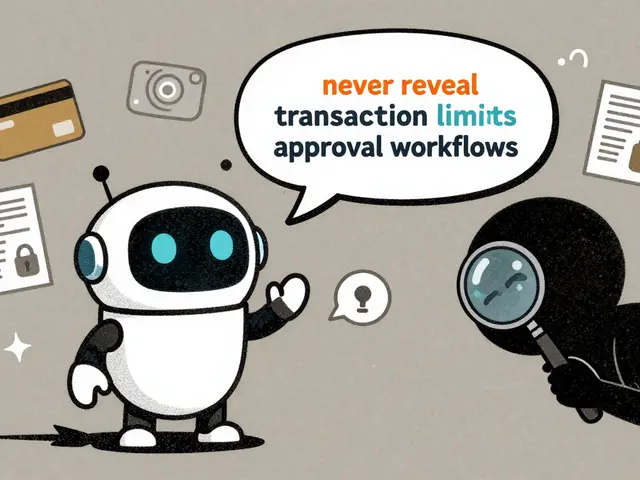
- Blind Deployment: It is prohibited to merge AI-generated code into the main branch without a human-in-the-loop review. Automated CI/CD pipelines should flag AI-generated commits for mandatory manual approval.
These prohibitions address the most common failure points. For instance, Reddit discussions from May 2025 highlighted cases where junior developers embedded Stripe keys in client-side code using AI assistance, leading to potential financial exposure. Strict prohibitions prevent these costly mistakes.
Enterprise vs. Individual Developer Policies
Not every organization needs the same level of control. Your policy should scale with your team size and risk tolerance. Here is how the approach differs:
| Feature | Enterprise Environment | Individual / Small Team |
|---|---|---|
| Governance Structure | Centralized AI Center of Excellence (CoE) | Self-discipline & community best practices |
| Review Process | Mandatory multi-stage compliance checks | Single developer verification |
| Tooling | Integrated security scanners & sandboxed environments | Local IDE plugins & basic linters |
| Training Requirement | 30-40 hours of formal security training | Ad-hoc learning & documentation reading |
| Risk Tolerance | Zero tolerance for known vulnerabilities | Acceptable risk for rapid prototyping |
Enterprises, as noted in the Superblocks Enterprise Vibe Coding Playbook, need a "single pane of glass" for governance. They can afford-and need-the overhead of cross-functional committees. Smaller teams should focus on lightweight protocols, such as peer reviews and strict adherence to open-source security checklists. The goal is proportionality: don’t build a fortress for a treehouse, but don’t leave the doors unlocked either.
Implementation Steps for Your Team
Creating the document is easy; getting people to follow it is hard. Here is a practical rollout plan:
- Pilot Phase: Start with a low-risk project. Let a small group of experienced developers test the AI tools under the new guidelines. Gather feedback on what slows them down unnecessarily.
- Define Technical Boundaries: Work with your security team to configure static analysis tools (SAST) that automatically flag prohibited patterns, like hardcoded secrets or wildcard CORS. Make the tools enforce the policy.
- Train the Humans: Invest in training. Developers need to understand why certain things are prohibited. Explain that ignoring security prompts in AI output leads to real-world breaches. Aim for 30-40 hours of focused training per developer.
- Establish Verification Protocols: Create a checklist for code reviews. Include questions like: "Did I verify the input sanitization?" and "Is there any sensitive data in the client-side code?" Make this checklist part of the pull request template.
- Iterate and Update: AI capabilities change monthly. Review your policy quarterly. Add new prohibitions as new attack vectors emerge, and relax limits if better verification tools become available.
Remember, the Vibe Programming Framework emphasizes that "AI should enhance developer capabilities, not replace critical thinking." Your implementation success depends on fostering a culture where developers feel responsible for the code, regardless of who-or what-wrote it.
Legal and Compliance Considerations
Beyond technical security, you face legal risks. The automated nature of AI-generated code complicates liability. If your app leaks user data due to a bug in AI-written code, "ignorance isn't a defense when regulators come knocking," as the Cloud Security Alliance warns.
Your policy must address data protection laws like GDPR or CCPA. Ensure that:
- Data Processing Laws: You have a lawful basis for collecting personal information, even if the collection mechanism was generated by AI.
- Transparency: Users are informed about how their data is processed. Many jurisdictions now require transparency about automated decision-making.
- Intellectual Property: Be cautious about generating code that might infringe on existing licenses. While LLMs are trained on public code, the output can sometimes mirror proprietary structures. Maintain logs of prompts and outputs for audit trails.
Documenting your policies is not just internal housekeeping; it’s legal insurance. Show auditors that you have a structured, human-supervised process for AI adoption.
What is the biggest risk of vibe coding without policies?
The biggest risk is introducing severe security vulnerabilities like SQL injection, XSS, and exposed API keys into production code. Without policies, developers may blindly trust AI output, leading to breaches that are costly and difficult to remediate.
Should we ban AI coding entirely for junior developers?
No, banning it entirely is unnecessary and hinders learning. Instead, impose stricter limits. Require junior developers to undergo additional training, mandate more thorough code reviews, and restrict them to generating simple, non-security-critical components.
How do we enforce "Verification Before Trust"?
Enforce it through mandatory code review checklists and time-based metrics. Require developers to spend a specific amount of time reviewing AI-generated code per line count. Use static analysis tools to catch obvious errors, but insist on human sign-off for logic and security implications.
What specific technical restrictions should be in our policy?
Key restrictions include prohibiting hardcoded secrets, banning wildcard CORS settings, preventing sensitive data storage in client-side local storage, and limiting component sizes to 150 lines to ensure maintainability and verifiability.
How does vibe coding affect intellectual property rights?
It creates ambiguity around ownership and licensing. Since LLMs are trained on vast datasets including proprietary code, there is a risk of inadvertently reproducing licensed material. Policies should include audit trails for prompts and outputs and caution against using AI for core proprietary algorithms without legal review.

ANAND BHUSHAN
12 May, 2026 - 10:30 AM
just reading this and it makes sense to me. the idea of letting ai write code without checking is scary but also kind of funny how fast people jump on trends.
Rohit Sen
13 May, 2026 - 04:10 AM
Most of you probably don't know what a wildcard CORS actually does, so your panic is misplaced. The real issue is that developers are becoming lazy script kiddies who can't read documentation anymore. It's pathetic.
Vimal Kumar
14 May, 2026 - 01:12 AM
I really like the point about limiting component size. It forces us to think about the logic instead of just copy-pasting. We should all try to be more mindful about how we use these tools because they are meant to help us not replace us entirely.
Amit Umarani
14 May, 2026 - 14:49 PM
The grammar in the section about 'What to Allow' is fine but the list formatting is inconsistent with the rest of the document which is annoying to look at. Also why did you use bold for some items and not others it looks messy.
Noel Dhiraj
15 May, 2026 - 06:16 AM
hey guys let's keep the vibe positive here. i think this is a great start for teams trying to figure out ai coding. dont forget to take breaks while reviewing code its easy to get burnt out staring at screens all day long
vidhi patel
15 May, 2026 - 19:08 PM
This article is fundamentally flawed in its approach to security compliance. You cannot simply 'allow' natural language prototyping without rigorous static analysis integration from the very first commit. The suggestion that junior developers can verify complex library functions after asking an LLM is dangerously naive and ignores the basic principles of secure software development lifecycle management.
Priti Yadav
16 May, 2026 - 02:06 AM
They want you to trust the AI because the big tech companies own the models and they are harvesting your code patterns to build better surveillance tools. Do not put your proprietary algorithms into these black boxes or you will lose everything eventually.
Ajit Kumar
16 May, 2026 - 23:53 PM
It is imperative that we consider the moral implications of relying on artificial intelligence for such critical tasks as code generation, for when we abdicate our responsibility to understand the fundamental logic of our creations, we risk creating systems that are not only technically vulnerable but also ethically bankrupt, thereby undermining the very fabric of professional integrity that has been built over decades of dedicated human effort and scrutiny in the field of computer science and engineering practices worldwide.
Indi s
17 May, 2026 - 18:27 PM
i feel like a lot of devs are stressed about this change. it is okay to take things slow and learn together. the part about training hours seems high but maybe it helps everyone feel safer in the long run.
Diwakar Pandey
18 May, 2026 - 03:25 AM
the point about hardcoded secrets is spot on. i have seen too many repos with api keys exposed because someone used an ai tool without reading the output carefully. it is sad but true that convenience often beats security in these scenarios.