
Agentic Generative AI: The Shift from Chatbots to Action
Remember when AI was just about answering questions? You asked, it replied. Simple. Fast. But by early 2026, that model feels a bit like using a calculator to run a marathon. The real magic isn't in the chat; it's in the action. We are standing in the middle of a massive shift where software doesn't just talk to you-it works for you. This is the era of Agentic Generative AI, defined as an advanced form of AI focused on autonomous decision-making and action execution with minimal human intervention. It represents a move from reactive tools that wait for prompts to proactive systems that chase goals.
If you are managing complex workflows, you know the pain of handoffs. One department finishes a task, drops it for another, and waits. Agentic AI changes the rules. It takes a high-level goal, breaks it down, and executes the steps itself. But how does it actually work, and is it ready for your business right now?
What Exactly is Agentic AI?
At its core, Agentic AI is about autonomy. Traditional generative models create content based on detailed input. You give them a prompt, they give you text or an image. Agentic systems are different. They perceive their environment, make decisions, and take actions to achieve a specific outcome. According to industry analysis from 2024, these systems are goal-oriented and proactive. They start with a defined objective and work through multiple steps to accomplish that goal.
Think of it like hiring a junior employee versus a senior project manager. The junior employee (traditional GenAI) does exactly what you tell them, word for word. The senior manager (Agentic AI) understands the project goal, figures out the necessary steps, assigns tasks to tools, and adjusts the plan if something goes wrong. They don't need you to micromanage every email or database query.
Four technical capabilities define these systems:
- Goal Orientation: They take high-level objectives and reason about breaking them into actionable steps.
- Autonomy: Agents perform tasks independently without step-by-step human oversight.
- Adaptability: They learn from interactions and change decisions based on feedback.
- Action Execution: They interact with external systems via APIs to complete real-world tasks.
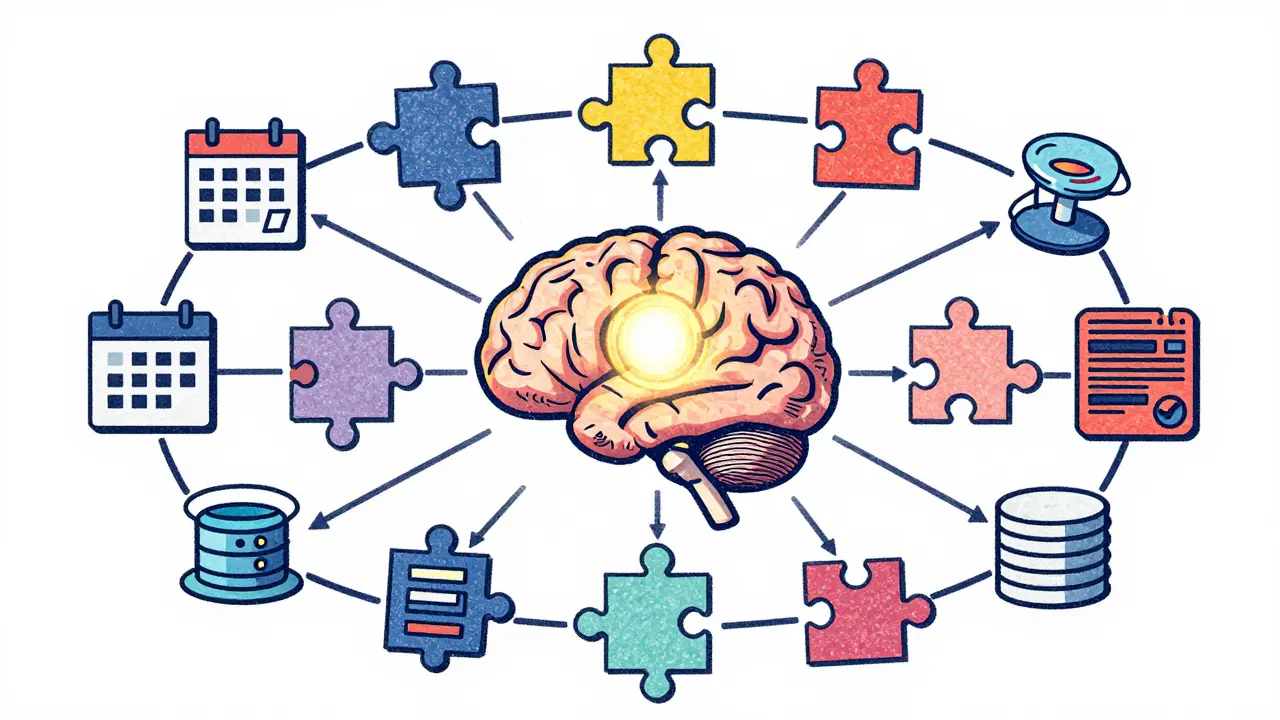
Google Cloud formally defines this as a subset of generative AI centered around the orchestration and execution of agents that use Large Language Models (LLMs) as a "brain." The LLM handles the reasoning, but the agent handles the doing. This distinction is critical because it moves AI from a creative assistant to a proactive colleague.
Agentic AI vs. Traditional Generative AI
It is easy to get confused because the underlying technology often looks similar. Both use LLMs. Both process natural language. But the output and the mechanism are fundamentally different. Traditional AI is reactive. Agentic AI is proactive. Let's look at the specifics.
| Feature | Traditional Generative AI | Agentic Generative AI |
|---|---|---|
| Focus | Content creation | Autonomous action and goal achievement |
| Mechanism | Responds to prompts | Perceives environment, makes decisions, takes actions |
| Workflow | Single-step response | Multi-step execution and coordination |
| Human Role | Prompt engineer/Editor | Goal setter/Oversight |
| Analogy | Creative Assistant | Proactive Colleague |
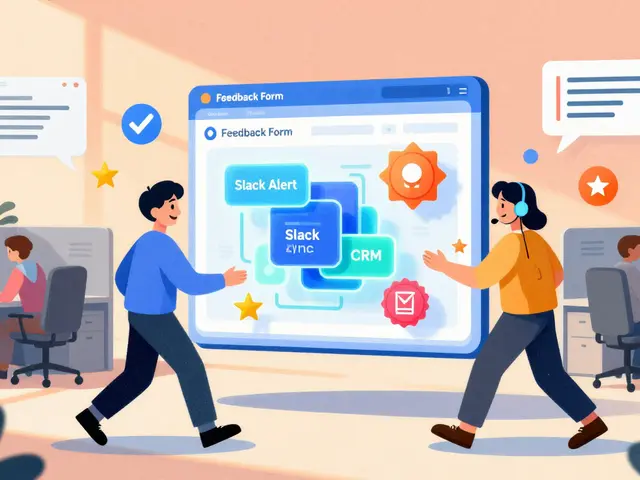
The difference shows up in real scenarios. A traditional model might write a marketing email for you. An agentic system writes the email, deploys it to your CRM, tracks the open rates, and automatically adjusts the follow-up strategy based on the results. It closes the loop without you lifting a finger.
How Autonomous Planning Works
The "brain" behind these systems is a combination of reasoning, learning, and iterative planning. When you give an agent a task, it doesn't just guess the next step. It plans. This process typically involves three phases.
- Decomposition: The agent breaks a complex goal into smaller sub-tasks. For example, "Plan a conference" becomes "Book venue," "Invite speakers," "Set up payments," and "Send notifications."
- Tool Selection: The system identifies which tools or APIs are needed for each sub-task. It might call a calendar API for dates, a payment gateway for fees, and an email service for invites.
- Execution and Monitoring: The agent runs the tasks. If a tool returns an error-say, the venue is booked-the agent assesses the failure and tries an alternative without stopping the whole workflow.
This ability to self-correct is what makes agentic systems viable for enterprise. According to AWS documentation from late 2024, predictive failure detection in orchestration frameworks has reduced workflow breakdowns by 37% in testing environments. This means the system is getting better at knowing when it is about to fail before it actually fails.
However, this requires significant infrastructure. You need distributed computing, robust data pipelines, and secure API connections to external systems. Google Cloud's Vertex AI provides MLOps tools to manage this machine learning life cycle, from data preparation to model monitoring. Without this backbone, the agents are just smart scripts waiting to break.
Real-World Use Cases in 2026
By March 2026, we are seeing these systems deployed in serious environments. They are not just toys anymore. The financial services, healthcare, and logistics sectors are leading the charge. Here is what actual implementations look like.
Procurement Automation: A Fortune 500 company reported that their agentic procurement system reduced purchase order processing time from 72 hours to under 4 hours. The agent checks inventory levels, approves budgets, selects vendors based on price and rating, and issues the order. It still requires daily human validation of about 15% of decisions, but the bulk of the work is automated.
Compliance Monitoring: In fintech, a compliance monitoring agentic system reduced false positives by 42% compared to old rule-based systems. The agent analyzes transaction patterns in real-time and flags anomalies. However, early deployments noted an 18% increase in false negatives in the first six months, highlighting the need for tuning.
Marketing Deployment: Instead of just writing copy, agentic systems now deploy materials, track performance, and adjust strategy. If an ad campaign underperforms, the agent can pause the spend, rewrite the headline, and relaunch it within minutes. This level of speed was impossible with human-in-the-loop workflows.
Implementation Challenges and Risks
It is not all smooth sailing. Implementing Agentic Generative AI is harder than rolling out a standard chatbot. You need cross-functional teams including AI specialists, domain experts, and integration engineers. Typical team sizes for medium enterprise deployments range from 5 to 12 members. The learning curve is steep. Developers require 80 to 120 hours of specialized training to become proficient in agentic system design, compared to 40 to 60 hours for standard generative AI applications.
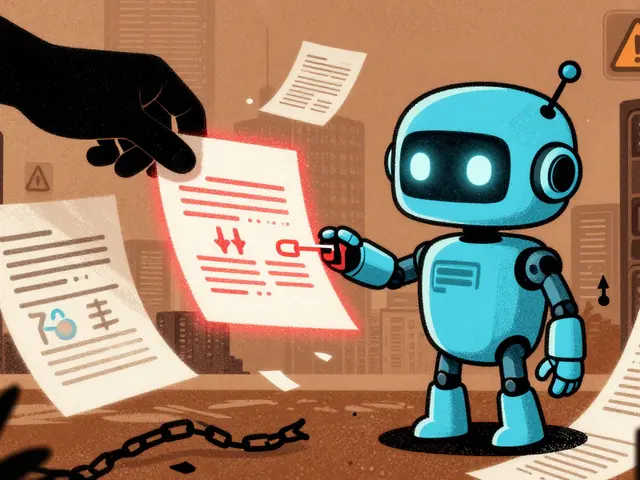
Error handling is the biggest technical hurdle. Dr. Andrew Ng noted in 2024 that agentic systems require significantly more robust error handling than traditional AI applications. Current systems can still fail catastrophically when encountering edge cases. Benchmark testing showed failure rates exceeding 35% in complex real-world scenarios. This is why human oversight remains critical. You cannot just set these systems and forget them.
Cost is another factor. Agentic systems require significantly more computational resources than traditional AI-typically 3 to 5 times more processing power for equivalent decision complexity. If you are budgeting for this, expect higher cloud bills. However, the ROI comes from workflow completion times. Enterprise implementations have demonstrated 30 to 45% reductions in workflow completion times for complex multi-step processes compared to traditional automation tools.
Regulatory compliance is also tightening. The EU AI Act's 2025 implementation requires comprehensive audit trails for autonomous decision-making systems. This has prompted 43% of European enterprises to modify their agentic AI implementations to ensure they can explain every decision the agent makes. Transparency in decision chains is a major pain point, with 52% of troubleshooting threads citing insufficient transparency as a blocker.

Market Landscape and Future Outlook
The market is moving fast. The enterprise agentic AI market is projected to reach $18.7 billion by 2026. Major cloud providers dominate the landscape. Google Cloud, AWS, and Microsoft Azure collectively hold approximately 65% market share in enterprise agentic AI platform deployments. Oracle is also a strong player, with their platform receiving a 4.2 out of 5 rating from enterprise customers for reducing manual workflow management.
Adoption is heavily skewed toward large organizations. Companies with 1,000+ employees represent 78% of current deployments. Small and medium businesses are lagging, with adoption below 15% due to implementation complexity and resource requirements. However, as platforms mature and documentation improves, this gap is expected to close.
Looking ahead, analysts project that by 2027, agentic AI will handle 40% of complex enterprise workflows that currently require human coordination. The next wave of capabilities will focus on integration with real-time data streams and improved tool selection algorithms. We expect significant advances in the 2025 to 2026 timeframe as causal reasoning improves, allowing systems to handle truly novel situations without human oversight.
Is Agentic AI ready for small businesses?
Currently, adoption remains below 15% for SMBs due to implementation complexity and resource requirements. Large enterprises with 1,000+ employees make up 78% of deployments. Small businesses should wait for more simplified, off-the-shelf solutions before attempting custom builds.
How much does it cost to run an agentic system?
Agentic systems typically require 3 to 5 times more processing power than traditional AI for equivalent decision complexity. While exact costs vary by provider, expect higher cloud infrastructure bills compared to standard generative AI models.
What are the biggest risks of using Agentic AI?
The primary risks include catastrophic failure in edge cases (failure rates can exceed 35% in complex scenarios) and insufficient transparency in decision chains. Human oversight is still required to validate critical decisions.
Which cloud providers offer Agentic AI tools?
Major providers include Google Cloud (Vertex AI), AWS (Agentic AI Orchestration Framework), Microsoft Azure, and Oracle. These platforms collectively hold about 65% market share in enterprise deployments.
How does Agentic AI differ from traditional automation?
Traditional automation follows rigid rules. Agentic AI uses reasoning to break down goals and adapt to changes. It can self-correct and handle dynamic challenges without step-by-step human direction.
Next Steps for Implementation
If you are considering this technology, start with a pilot. Do not try to automate your entire business overnight. Pick a structured workflow with clear success metrics, like procurement or compliance monitoring. Assemble a team with AI specialists and domain experts. Expect the development and testing phase to take 3 to 6 months, with an additional 2 to 4 months for workflow integration and staff training.
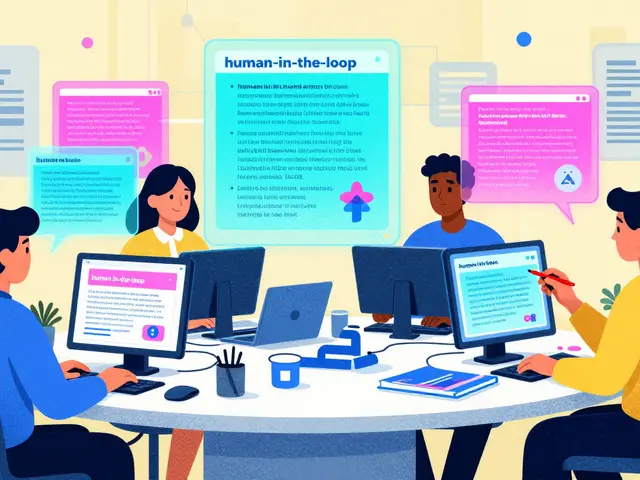
Focus on error handling from day one. Build in validation steps where the agent asks for human approval on high-risk decisions. Monitor the system closely for the first six months, as false negatives and decision path unpredictability are common in early deployment. As the technology matures and tools like Google's Agent Builder improve error handling, these hurdles will become easier to clear. But for now, treat Agentic AI as a powerful partner that still needs a manager.


Aafreen Khan
27 March, 2026 - 04:07 AM
This whole agentic thing is just hype tbh. Companies are just scared of hiring humans so they throw money at servers. 🙄🤖 I seen too many bots fail when things get real. I do not trust a script with your money flow. It feels like gambling with your career on a coin flip. 🤷♀️
Christina Kooiman
28 March, 2026 - 12:59 PM
The syntax in this post is actually quite acceptable which is refreshing. One must consider the implications of autonomous decision making within a corporate structure. It is imperative that we do not overlook the grammatical precision required when documenting these new protocols. If the language is flawed the logic follows suit and that is simply unacceptable. We have seen too many errors caused by ambiguous phrasing in technical documentation. Therefore the integration of these agents requires a level of scrutiny that most people are unwilling to provide. The future of work depends on clarity and precision above all else. We cannot allow sloppiness to permeate the very systems that will manage our livelihoods. It is a serious matter that demands our full attention and dedication. The stakes are incredibly high for everyone involved in this transition. We must remain vigilant against the encroachment of chaos into our organized workflows. Precision is the only shield we have against the inevitable errors of automation. I hope the readers take this warning to heart and adjust their expectations accordingly. The road ahead is long and fraught with potential linguistic pitfalls. We must walk it together with caution and care.
Pamela Watson
29 March, 2026 - 00:49 AM
You are too worried about words and not enough about the tech. :D The computers do the work now. People just sit back and watch. It is easy to get scared but it is just tools. We use them to make life better. You should relax a bit. :)
michael T
29 March, 2026 - 17:49 PM
It feels like we are bleeding our humanity into these silicon veins every single day. The cold logic of the machine is swallowing the warmth of the human touch. I feel a deep ache knowing my job might be a ghost in the machine soon. The digital storm is coming and it is hungry for our attention. We are just fuel for the algorithmic fire. It is a tragic dance of progress and loss. The silence of the server room is louder than any office noise. We are building our own obsolescence with trembling hands. The future is bright but it casts a very long shadow. I wonder who will be left to feel the weight of these decisions.
David Smith
30 March, 2026 - 19:22 PM
Oh please stop being so dramatic about it. Nobody cares about your feelings when the bot saves money. It is business not a therapy session. You are making it sound like a horror movie. Just get with the times or get left behind. It is not that deep.
Lissa Veldhuis
31 March, 2026 - 13:16 PM
You people are missing the point completely. It is about efficiency not feelings. The data does not lie about the speed gains. We should not argue about the soul of the machine. Focus on the results instead. The market will decide what is right. Stop whining about change. It is happening whether you like it or not. The strong survive the shift. Weak minds will break under the pressure
Michael Jones
2 April, 2026 - 03:10 AM
Change is the only constant in our lives. We should embrace the new tools with open hearts. There is so much potential for good if we look at it right. We can build a better world with these systems. Do not let fear hold you back from progress. We are the masters of our destiny even with ai. Keep pushing forward with courage. The horizon is bright for those who dare to dream
allison berroteran
2 April, 2026 - 09:50 AM
It is really exciting to see how far we have come in such a short time. The potential for helping people manage their time is truly immense. I think we will see many positive changes in the workplace soon. Everyone will have more time to focus on creative tasks. The stress of manual work will finally be a thing of the past. We should celebrate these advancements rather than fear them. It is a new chapter for humanity and technology. I believe the best is yet to come for all of us. We just need to adapt and learn the new ways. It is a journey worth taking together.
Gabby Love
3 April, 2026 - 06:11 AM
That is a nice perspective to have. It helps to see the bright side of things. Just make sure you check the work they do. It is good to be optimistic but stay safe. You are right about the time savings. It will help everyone in the long run. Keep that positive energy going.
Jen Kay
4 April, 2026 - 16:24 PM
It is utterly charming that we are now managed by scripts.