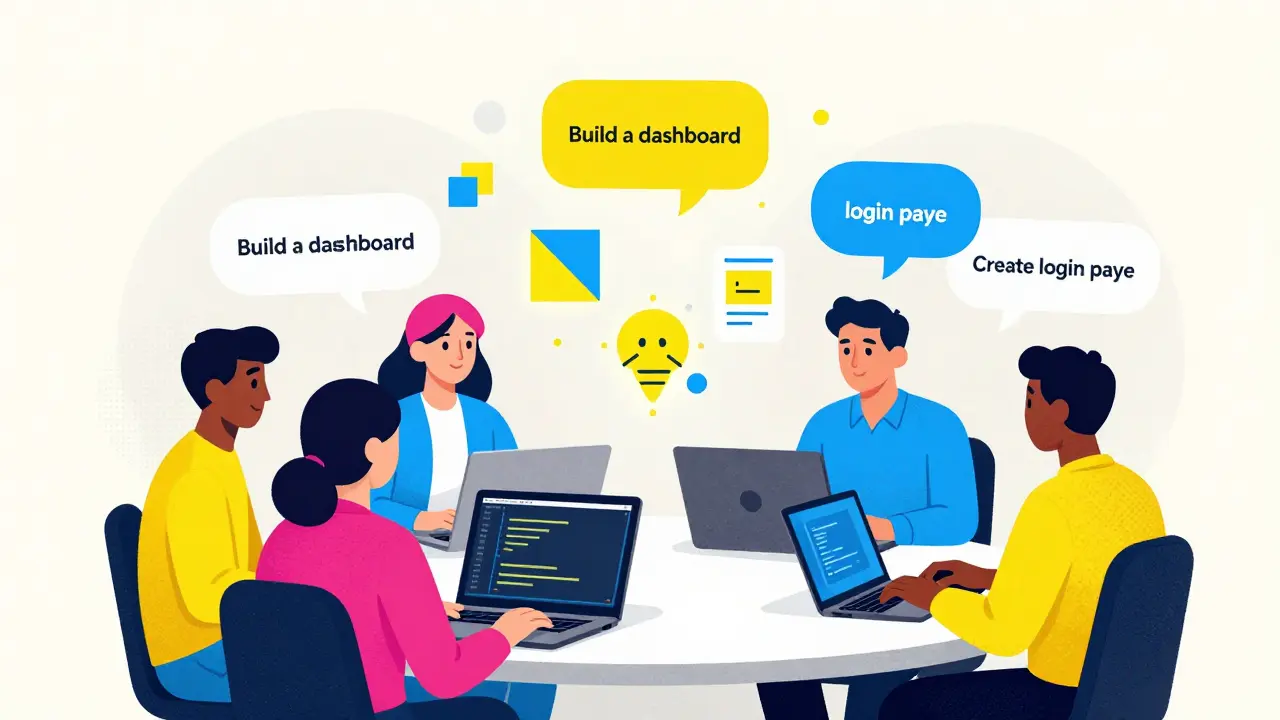
Remember when building an app meant staring at a blank screen, wrestling with syntax errors, and spending weeks just to get a login page working? That era is fading fast. Today, you can describe what you want in plain English, and vibe coding is a style of programming that uses natural language prompts to assist with the coding process, eliminating common stressors like feature creep and tight deadlines by translating your ideas into functioning code. It’s not magic, but it feels close. The real challenge isn’t learning how to prompt an AI-it’s figuring out how to take this powerful tool from a fun experiment in your garage to a reliable engine driving your entire organization.
If you’re leading a team or managing tech strategy in 2026, you’ve probably seen the hype. But hype doesn’t pay the bills; scalable processes do. Moving from a few enthusiastic pilots to a company-wide rollout requires more than just buying licenses. It demands a structured roadmap that balances speed with governance. This guide breaks down exactly how to bridge that gap, ensuring your vibe coding initiatives deliver value without creating a maintenance nightmare.
The Reality Check: What Vibe Coding Actually Does
Before we map the journey, let’s clear up what vibe coding is-and isn’t. It’s not about replacing developers. It’s about augmenting them and empowering non-technical staff to build functional prototypes rapidly. According to research from Replit, organizations embracing these citizen development approaches achieve up to 5.8x faster application development times compared to traditional methods. That’s a massive efficiency jump for internal tools, dashboards, and simple CRUD (Create, Read, Update, Delete) applications.
However, there are limits. Wasp’s technical analysis shows that while vibe coding achieves 95% effectiveness for basic UIs and standard data operations, its effectiveness drops to around 65% for complex algorithms or performance-critical systems. You wouldn’t use vibe coding to build the flight control software for a Boeing 747, but you might use it to build the booking system for the airline’s website. Understanding this boundary is the first step in any successful adoption plan.
| Factor | Vibe Coding | Traditional Development |
|---|---|---|
| Time to Prototype | Under 2 hours | 40-60 hours |
| Primary Users | Citizen Developers, Product Managers | Professional Engineers |
| Best For | Internal Tools, MVPs, Simple Apps | Complex Systems, High-Security Apps |
| Maintenance Risk | High (if ungoverned) | Low (with standard practices) |
Phase 1: The Pilot Project (Weeks 1-8)
Your first move should be small, contained, and low-risk. Don’t try to rebuild your core ERP system on day one. Instead, pick a departmental pain point-like HR’s leave tracking form or Marketing’s campaign dashboard-that is annoying to maintain but not critical to revenue if it fails. This is your sandbox.
During the pilot phase, focus on establishing shared artifacts. As recommended by workflow experts, you need a Product Requirements Document (PRD) and a step-by-step plan developed collaboratively with the AI. This aligns human intent with machine execution before a single line of code is generated. Start with rapid prototyping to "feel" the flow. Build functional versions quickly to assess user experience, then iterate.
Training is crucial here. Business analysts need approximately 8-10 hours of training to effectively use vibe coding for prototyping. They don’t need to know Python; they need to know how to structure their thoughts clearly for the AI. Meanwhile, developers require 20-30 hours to master effective prompt engineering and AI-assisted debugging techniques. Their role shifts from writing code to reviewing and refining AI-generated output.
Phase 2: Scaling with Structure (Months 3-6)
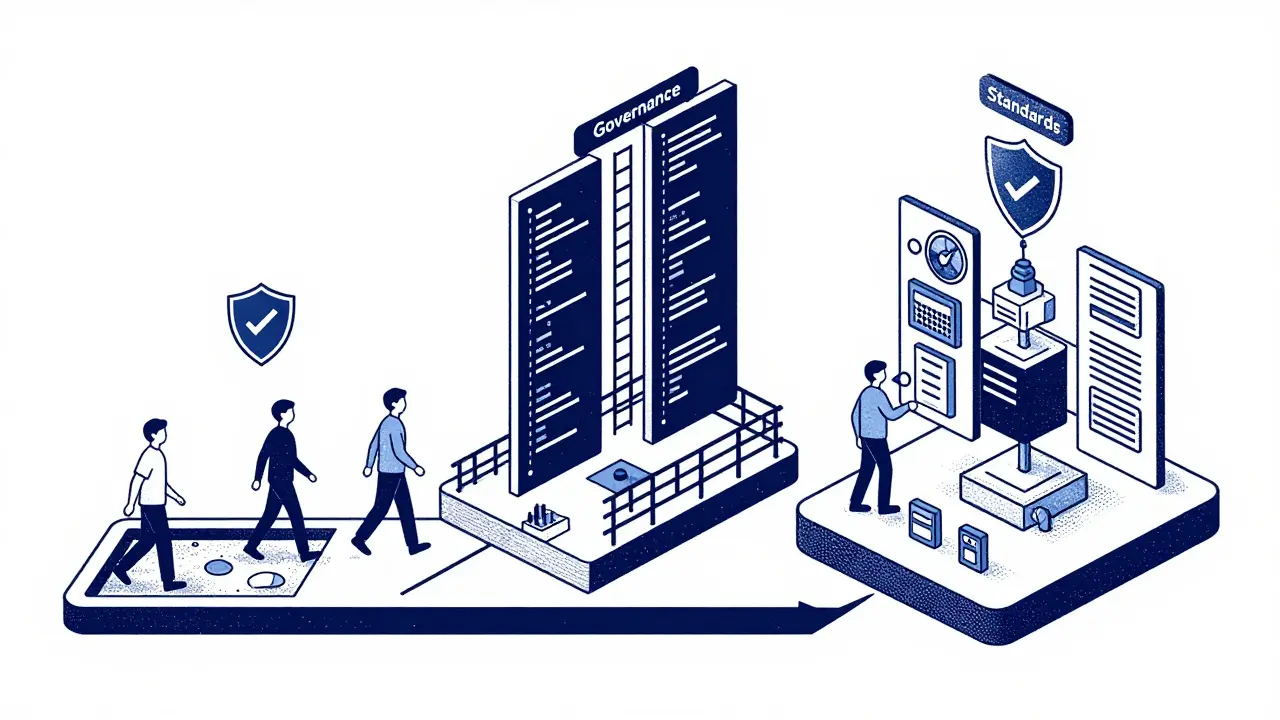
Once the pilot proves its worth, you’ll face the scaling trap. Too many teams start building apps everywhere, leading to inconsistent code patterns and security gaps. To avoid this, implement "vertical slicing." Instead of building entire layers (all the databases, then all the interfaces), implement end-to-end functionality for small feature sets. This keeps coherence high and makes debugging easier.
Governance becomes your new best friend. IBM’s research warns that organizations adopting vibe coding without proper governance risk creating a maintenance nightmare. You need standards. Define which platforms are approved (e.g., Google Firebase Studio, Replit, Knack). Establish rules for data handling: no sensitive customer data in public AI models. Implement continuous documentation with AI assistance to maintain project knowledge. If the AI builds it, the AI should also help document it.
At this stage, introduce quality metrics. Replit’s introduction of "vibe score" metrics provides a quantitative assessment of AI-generated code quality. Use these scores to guide refinement efforts. If a module has a low vibe score, flag it for manual review by a senior developer. This hybrid approach ensures speed without sacrificing reliability.
Phase 3: Broad Rollout and Governance (Months 6-18)
Only after you have proven scalability and robust governance should you aim for a company-wide rollout. By now, you likely have cross-functional applications running smoothly. The goal is to integrate vibe coding into your standard software development lifecycle (SDLC).
Regulatory considerations come into play here, especially if you operate in the EU. The 2024 AI Act draft requires human oversight of AI-generated code in critical systems. Ensure your compliance toolkit addresses this. For regulated industries like finance or healthcare, you may need specialized toolkits, such as the ones announced by IBM, to ensure auditability.
Expect a cultural shift. Professional developers will begin incorporating vibe coding techniques for 30-50% of their work, primarily for prototyping and boilerplate code generation, as predicted by Forrester. Embrace this. Train your engineers to see themselves as architects and reviewers rather than just coders. This reduces burnout and accelerates delivery.

Common Pitfalls to Avoid
Even with a solid roadmap, things can go wrong. Here are the most frequent stumbling blocks:
- Feature Creep: 63% of early adopters report struggling with scope expansion during iterative refinement. Keep your PRDs strict. If it’s not in the plan, it doesn’t get built in the current sprint.
- Context Window Limitations: When app logic exceeds what the AI can hold in context, quality drops dramatically. Break large problems into smaller, manageable chunks. Vertical slicing helps here too.
- Hallucinated Functionality: 31% of negative reviews cite logical errors that appear to work but fail under edge cases. Rigorous testing is non-negotiable. Never deploy AI-generated code without automated test suites.
- Lack of Human Oversight: Treating AI as a black box leads to technical debt. Always maintain a human-in-the-loop for critical decisions and code reviews.
Conclusion: The Future is Hybrid
Vibe coding isn’t a fad; it’s a fundamental shift in how we create software. By 2026, 65% of application development activity is expected to be low-code or no-code, directly encompassing vibe coding approaches. The key to success lies in starting small, governing strictly, and scaling deliberately. Your pilot projects are the proof of concept; your broad rollout is the business transformation. Treat vibe coding not as a replacement for engineering, but as a superpower that amplifies it. With the right roadmap, you can turn days of development into minutes of innovation, all while keeping your systems secure, stable, and scalable.
What is vibe coding?
Vibe coding is a style of programming that uses natural language prompts to generate executable code through artificial intelligence. It allows users to build applications by describing their needs in plain English, significantly reducing development time and lowering the barrier to entry for non-technical staff.
Is vibe coding suitable for production environments?
Yes, but with caveats. Vibe coding is highly effective for internal tools, prototypes, and simple CRUD applications. However, for complex algorithms, performance-critical systems, or high-security applications, traditional development practices or heavy human oversight are required to ensure reliability and security.
How long does it take to train employees in vibe coding?
Business analysts typically need 8-10 hours of training to effectively use vibe coding for prototyping. Developers require 20-30 hours to master advanced prompt engineering and AI-assisted debugging techniques. Training focuses on structuring requirements and reviewing AI output rather than learning traditional syntax.
What are the main risks of adopting vibe coding?
The main risks include technical debt accumulation due to inconsistent code patterns, security vulnerabilities if sensitive data is exposed to public AI models, and "hallucinated" functionality that contains logical errors. These risks are mitigated through strong governance, rigorous testing, and human oversight.
Which industries are adopting vibe coding fastest?
Professional services, financial services, and healthcare are leading in adoption. These sectors benefit from the ability to rapidly build internal tools and dashboards, improving operational efficiency without requiring extensive engineering resources.