Vibe Coding: Understanding the Unwritten Rules of Developer Culture
When teams talk about vibe coding, the informal, culture-driven way code is written and maintained based on shared intuition rather than formal documentation. Also known as cultural code, it's what happens when a team's habits, preferences, and unspoken rules become the real architecture of a codebase. You won't find it in a style guide. You won't see it in commit messages. But you'll feel it the second you try to add a new feature and everything feels off—even though the code runs fine.
Vibe coding isn't about bad code. It's about developer onboarding, the process of helping new engineers understand how a team actually works, not just what it says it does. A new hire might read every doc, follow every lint rule, and still break something because they didn’t know the team always wraps API calls in a retry block—even when the docs say it’s unnecessary. That’s the vibe. It’s the rhythm of the team. It’s why some codebases feel alive and others feel like a museum exhibit. And if you’re trying to scale a team, ignore it at your own risk. codebase culture, the shared beliefs, patterns, and rituals that shape how developers interact with code over time is the invisible glue holding most production systems together. It’s not glamorous. But it’s the difference between a project that survives and one that collapses when the original devs leave.
Teams that treat vibe coding as a bug to fix end up with bloated documentation nobody reads. Teams that treat it as a feature build onboarding playbooks, structured, living guides that capture how work actually gets done, not just how it should be done and codebase tours, guided walkthroughs led by veterans that show new devs the hidden logic, shortcuts, and landmines in the code. These aren’t fluff. They’re survival tools. The posts below show real examples: how one team turned their chaotic legacy system into a maintainable one by mapping out their vibe, how another cut onboarding time in half with a 20-minute video tour, and why some companies now hire for cultural fit as much as technical skill.
You can’t automate vibe coding. But you can document it. You can teach it. You can protect it. And if you’re working with any codebase older than six months, you’re already living inside it. The question isn’t whether vibe coding exists—it’s whether you’re leading it, or just trying to survive it.
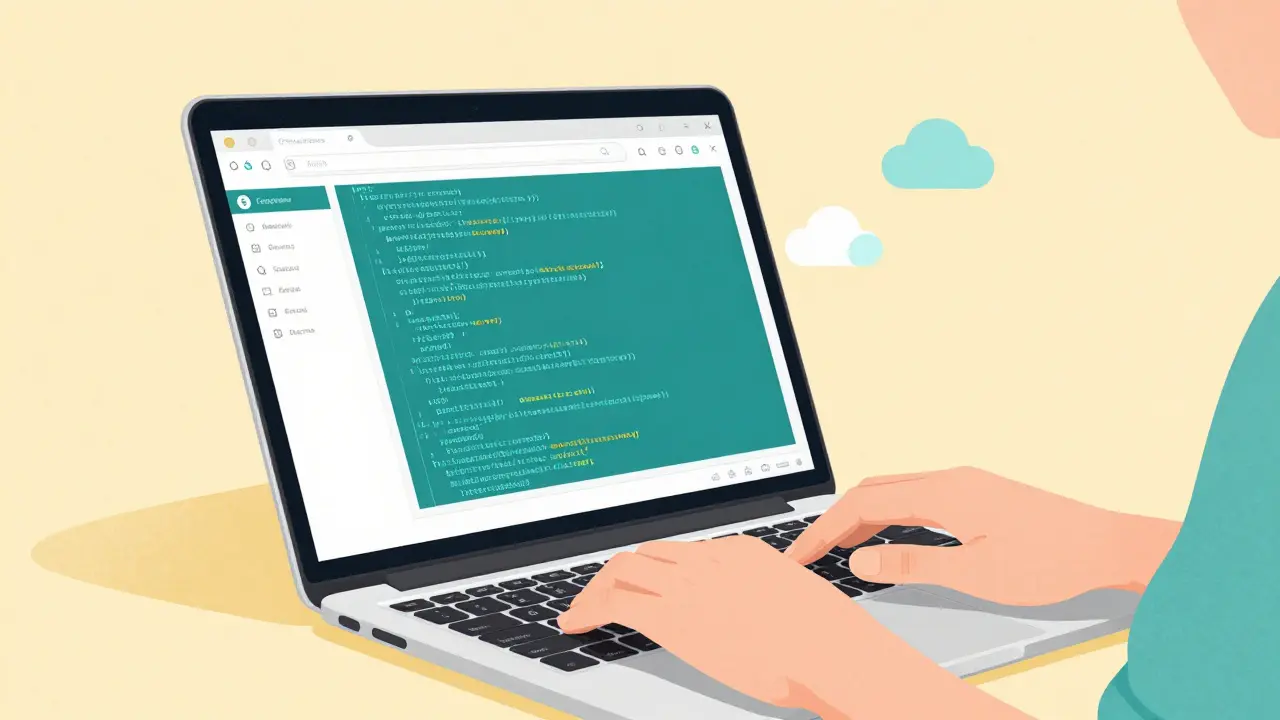
Replit: Cloud Development with AI Agents and One-Click Deploys for Vibe Coding
Replit transforms coding into a smooth, collaborative experience with cloud-based development, AI-powered agents, and one-click deploys. No setup required-just code in your browser. Perfect for startups, education, and teams wanting to ship faster. Learn how Replit’s AI handles 90% of foundational code and deploys apps instantly.
Read More
How to Use Vibe Coding for Frontend i18n and Localization
Learn how vibe coding speeds up frontend i18n setup using LLMs, but avoid linguistic pitfalls with proper prompting. Real-world examples, best practices, and tools like i18next explained. Discover why hybrid approaches are becoming standard for global apps.
Read More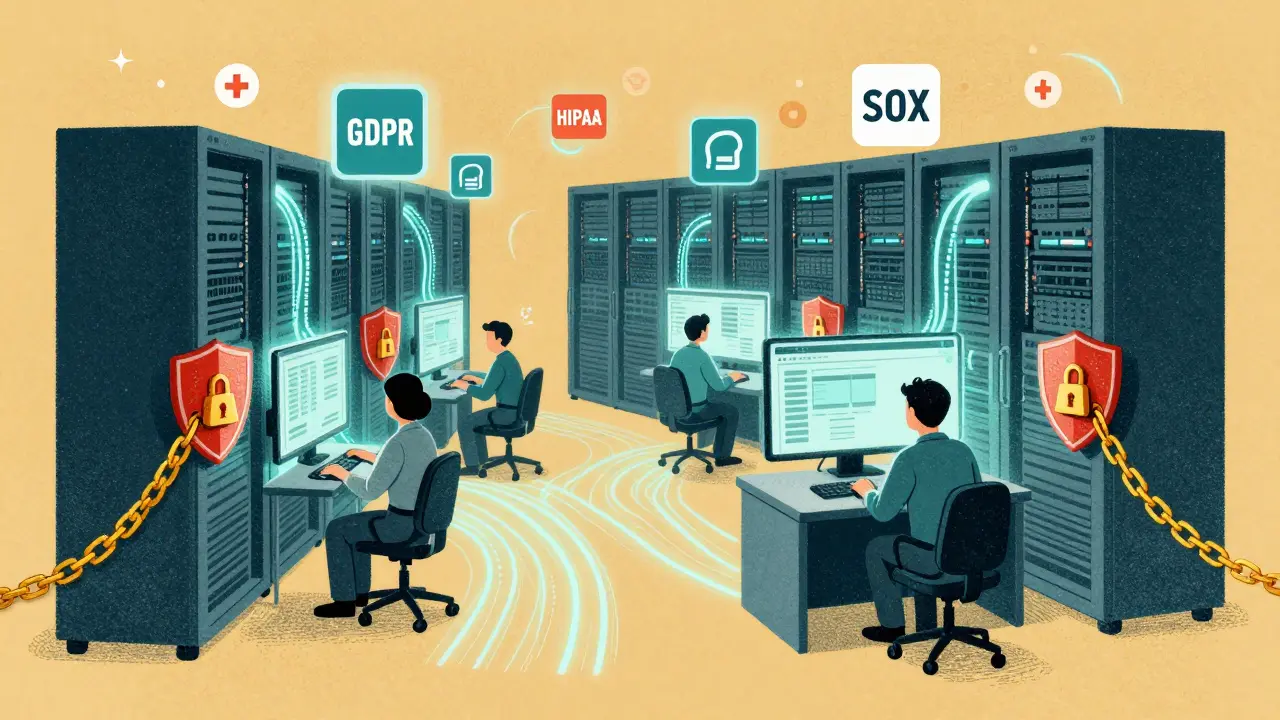
Enterprise Adoption, Governance, and Risk Management for Vibe Coding
Enterprise vibe coding accelerates development but introduces new risks. Learn how to govern AI-generated code, enforce compliance, and manage security without slowing innovation.
Read More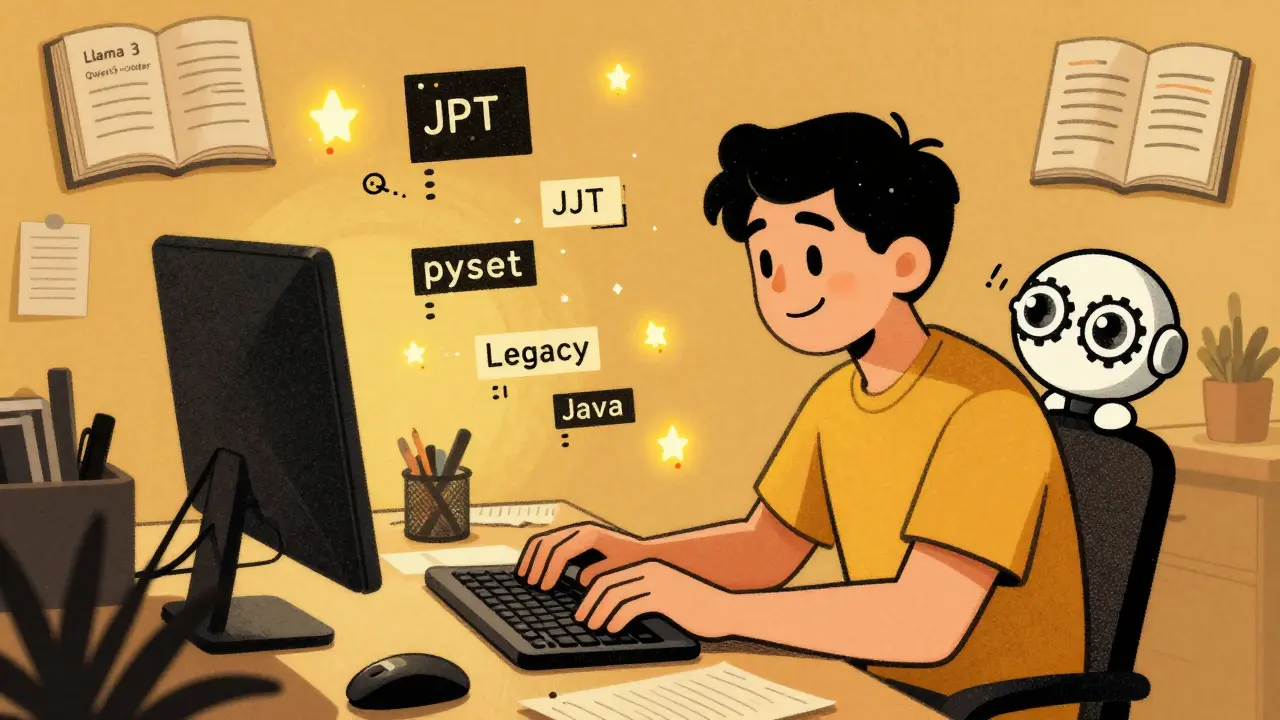
Open Source in the Vibe Coding Era: How Community Models Are Shaping AI-Powered Development
Open-source AI models are reshaping software development through community-driven fine-tuning, offering customization and control that closed-source models can't match-especially in privacy-sensitive and legacy code environments.
Read More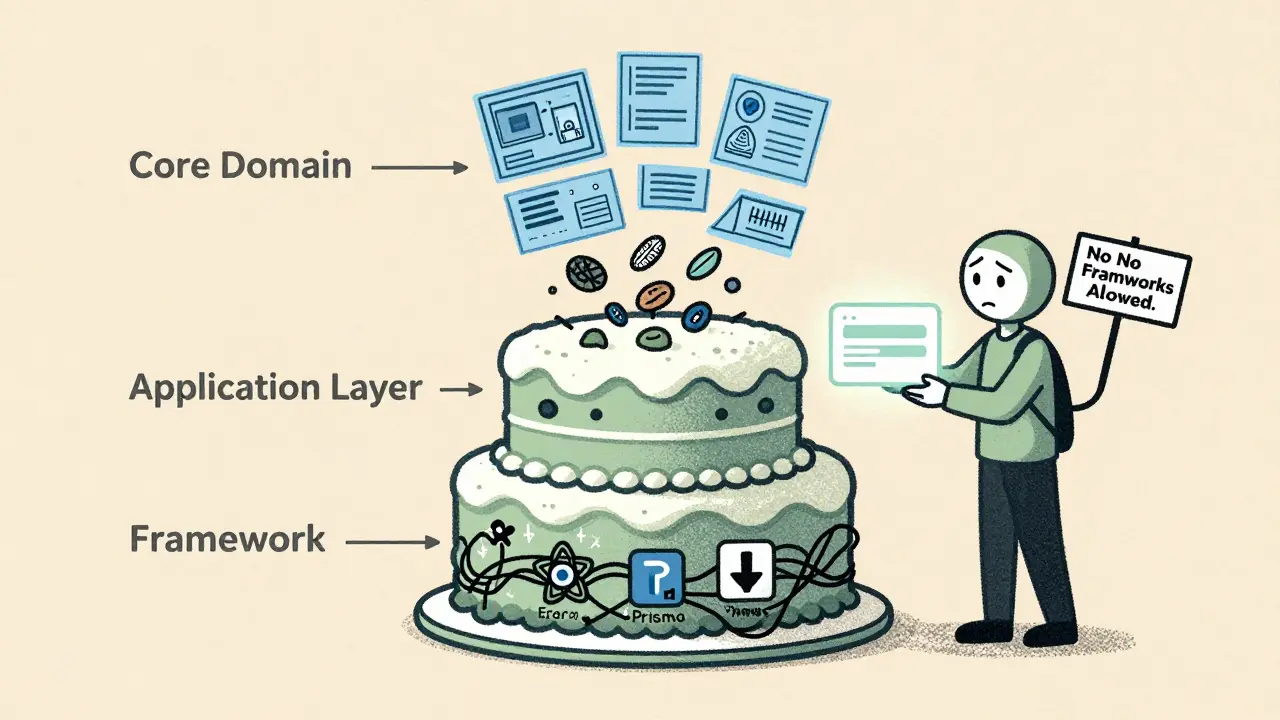
Clean Architecture in Vibe-Coded Projects: How to Keep Frameworks at the Edges
Clean Architecture keeps business logic separate from frameworks like React or Prisma. In vibe-coded projects, AI tools often mix them-leading to unmaintainable code. Learn how to enforce boundaries early and avoid framework lock-in.
Read More
Productivity Uplift with Vibe Coding: What 74% of Developers Report
74% of developers report productivity gains with vibe coding, but real-world results vary wildly. Learn how AI coding tools actually impact speed, quality, and skill growth-and who benefits most.
Read More
Code Ownership Models for Vibe-Coded Repos: Avoiding Orphaned Modules
Vibe coding with AI tools like GitHub Copilot is speeding up development-but leaving behind orphaned modules no one understands or owns. Learn the three proven ownership models that prevent production disasters and how to enforce them today.
Read More
Threat Modeling for Vibe-Coded Applications: A Practical Workshop Guide
Vibe coding speeds up development but introduces serious security risks. This guide shows how to run a lightweight threat modeling workshop to catch AI-generated flaws before they reach production.
Read More
Measuring Success in Vibe Coding: Quality, Speed, and Business Impact
Learn how to measure success in vibe coding through real outcomes-not story points or bug counts. Discover how quality, speed, and business impact define high-performing teams.
Read More
Non-Technical Founders Using Vibe Coding: Build a Working Prototype in Days, Not Months
Non-technical founders can now turn ideas into working prototypes in days using AI-powered vibe coding-no coding skills needed. Learn how it works, what you can build, and how to avoid common pitfalls.
Read More
Vertical Slices in Vibe Coding: How to Ship End-to-End Features Without Overengineering
Vertical slices in vibe coding let you ship full-stack features faster by focusing on one small, end-to-end feature at a time. Learn how to use AI tools like Cursor.sh and Wasp to build, test, and deploy features without overengineering.
Read More
Multi-Tenancy in Vibe-Coded SaaS: How to Get Isolation, Auth, and Cost Controls Right
Learn how to implement secure multi-tenancy in AI-assisted SaaS apps using vibe coding. Avoid data leaks, cost overruns, and authentication failures with proven strategies for isolation, auth, and usage controls.
Read More