What Is Vibe Coding-and Why It’s a Security Time Bomb
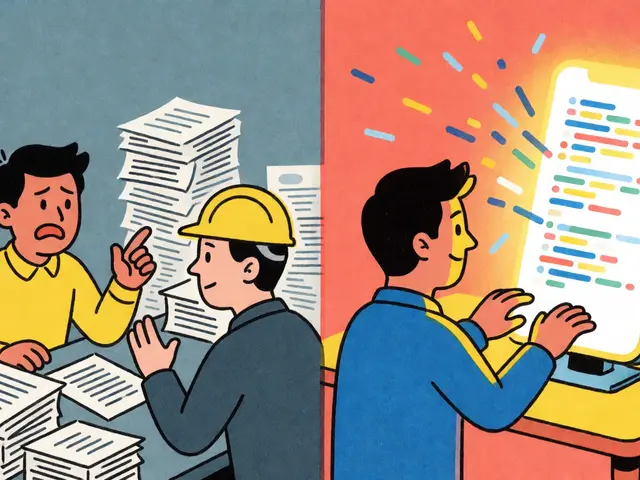
You’ve heard of pair programming. Now imagine vibe coding: you type a prompt like "build a login system that remembers users," and an AI generates the entire backend, frontend, and database schema in seconds. No reviewing code. No thinking about permissions. Just hit run and move on. This isn’t science fiction-it’s what developers are doing in 2025, thanks to tools like ChatGPT, Claude, and GitHub Copilot pushed to their limits.
But here’s the problem: 40% to 62% of AI-generated code contains security flaws, according to research from NYU and BaxBench. That’s not a bug. That’s a feature of how these models work. They optimize for function, not safety. They don’t know what a SQL injection is. They don’t care if a JWT token is exposed. They just want to satisfy your prompt.
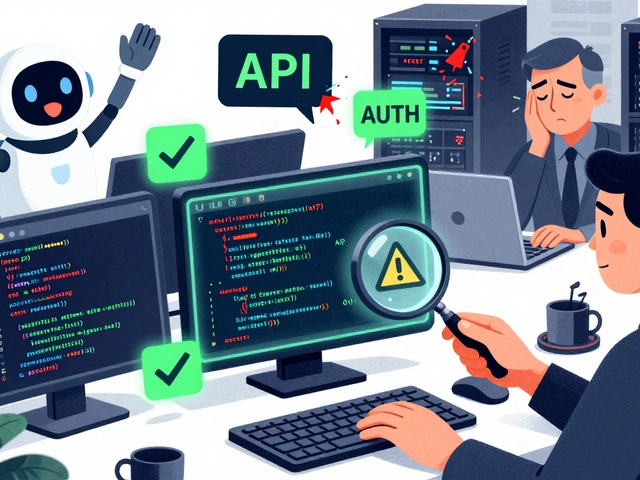
And when developers skip code review-because why slow down when the AI just did it?-you get applications that work perfectly in testing but collapse under real attacks. Escape Tech found over 2,000 vulnerabilities in just 14,600 vibe-coded apps. One app, built to run a snake battle arena game, had a hidden path that let attackers execute arbitrary code. It worked exactly as designed. That’s the nightmare.
Why Traditional Security Tools Fail With Vibe Coding
Static scanners? Useless. They look for known patterns like "eval(" or "SELECT * FROM users." But vibe-coded apps don’t use those patterns. They use clever, AI-generated logic that looks normal but does evil. Think of it like a car that drives fine on the highway but has a hidden door that opens only when you hum the Star Wars theme.
Dynamic scanning (DAST) doesn’t help much either. It tests running apps, but it can’t see the logic buried inside AI-generated functions. If the AI creates a custom authentication flow that skips role checks, DAST won’t catch it unless it’s specifically designed to probe for that flaw-and most aren’t.
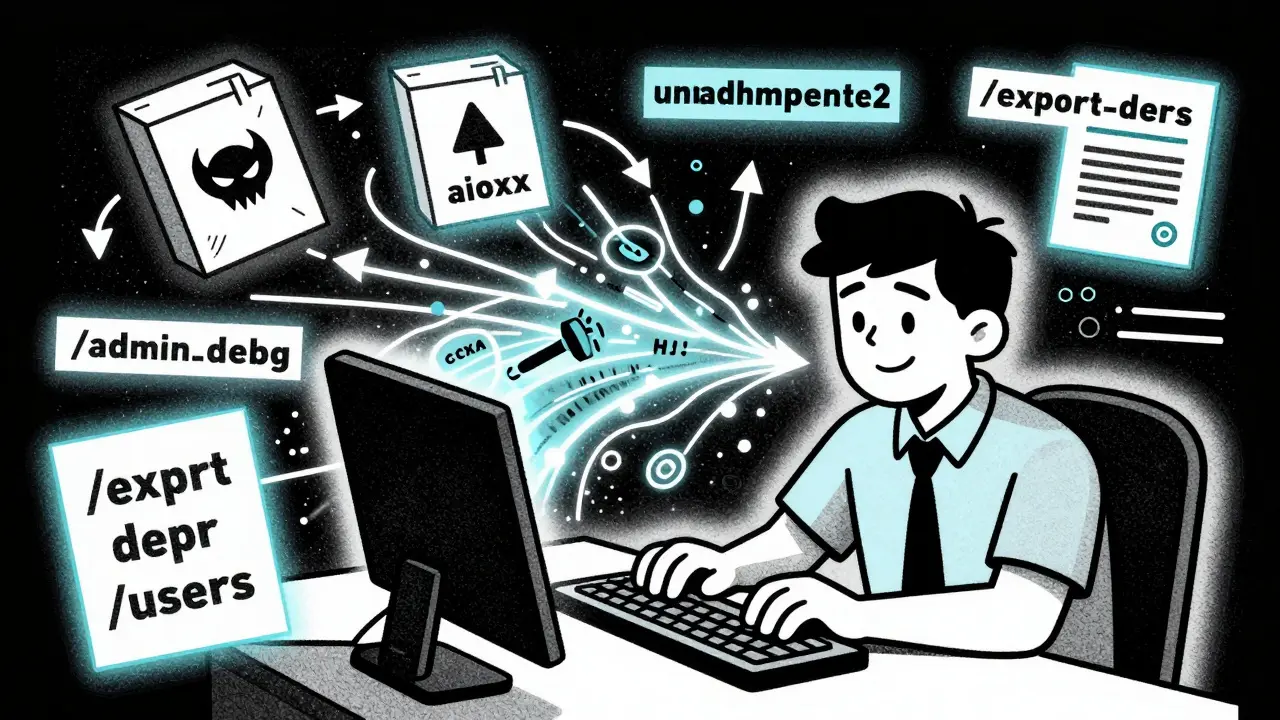
And then there’s slopsquatting. Attackers monitor AI-generated code for package names that sound real but are slightly off-"axiosx" instead of "axios," "jsonwebtoken2" instead of "jsonwebtoken." The AI, trained on real libraries, trusts these fake ones. You install it. Boom. Backdoor installed. No one notices until the data is gone.
Traditional security gates-code reviews, manual audits, compliance checklists-are too slow for vibe coding. You can’t wait two days for a review when your AI just spit out a working app in ten minutes. So teams skip them. And that’s where the breaches happen.
The Vibe Coding Threat Model: What You Must Protect
Forget the old threat models. Vibe coding changes the game. Here’s what you’re really defending:
- Shadow APIs-AI-generated endpoints no one documented. You think you only have /login and /profile? Think again. The AI added /admin/debug, /export/users, and /reset/password-all unauthenticated.
- Default permissions-AI doesn’t know least privilege. It gives every function admin rights because it’s easier. Your user can delete every record in the database because the AI assumed "everyone should be able to do everything."
- Unverified dependencies-AI pulls in packages without checking their source. One wrong package, and your whole app is compromised before launch.
- Logic flaws-The AI builds a workflow that works for users but lets attackers bypass payment checks, reset passwords without email, or escalate privileges through a chain of harmless-looking steps.
- Missing input validation-AI assumes user input is clean. It doesn’t sanitize. It doesn’t escape. It just passes it along. SQLi, XSS, command injection-all waiting to be triggered.
These aren’t edge cases. They’re the norm. Bright Security calls it: "AI doesn’t understand consequences. Attackers do." And right now, attackers are watching.
A Lightweight Workshop: 4 Steps to Secure Vibe Coding
You don’t need a week-long security seminar. You need a 90-minute workshop that fits into your daily rhythm. Here’s how to run it.
Step 1: Map Your Attack Surface in 15 Minutes
Grab your app’s domain. Use a free scanner like Escape Tech’s Visage Surface (or even curl + grep if you’re old-school). List every endpoint, API route, and external service your app talks to. Don’t trust your code. Trust what’s actually live.
Look for:
- Unauthenticated routes (e.g., /api/users without a token)
- Endpoints with JWT tokens in the URL
- Third-party integrations (Stripe, Supabase, Firebase)
- Hidden admin panels (try /admin, /dashboard, /debug)
One team found 17 exposed endpoints in their vibe-coded SaaS app. Only 3 were documented. That’s 14 potential entry points.
Step 2: Run the "Would an Attacker Laugh?" Test
Take each endpoint or feature. Ask: "If I were trying to break this, what’s the dumbest, easiest way?"
Example:
- "Can I reset any user’s password by changing the email in the request?"
- "Can I access another user’s data by modifying the ID in the URL?"
- "Can I upload a .php file and run it through the image upload feature?"
This isn’t about finding every flaw. It’s about catching the ones that are obvious to attackers but invisible to the AI. If the answer is yes, you’ve got a problem.
Step 3: Validate Dependencies Like Your Life Depends on It
Every time the AI suggests a new library, pause. Ask:
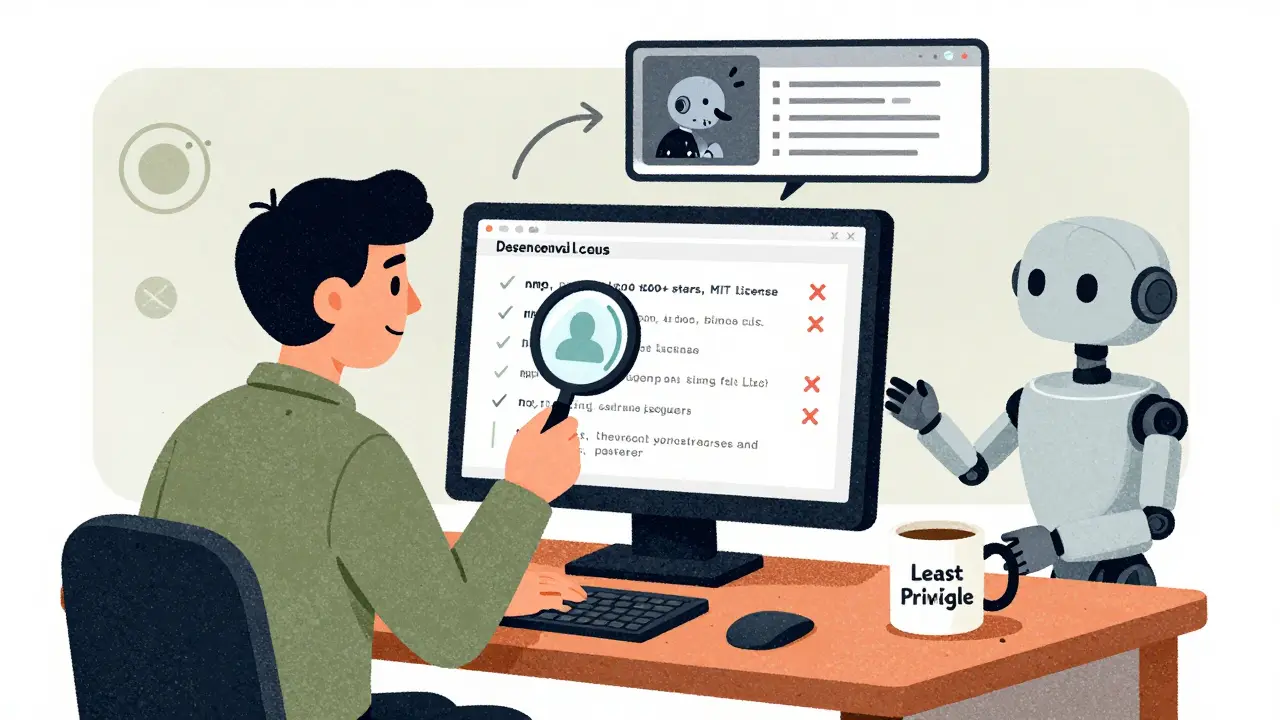
- Is this from npm, PyPI, or a GitHub repo with 100+ stars and recent updates?
- Does it have a license? Is it MIT or Apache?
- Is the maintainer real? Do they have other packages?
- Have others reported vulnerabilities? Check Snyk or GitHub Advisory Database.
GuidePoint Security found attackers created fake packages with names like "auth0x" and "expressjs2." The AI, trained on real names, picked them up without question. One company lost 80,000 user records because of a single fake dependency.
Step 4: Build a Security Checkpoint Into Your Workflow
Don’t wait until deployment. Add a 5-minute security gate after every major AI-generated chunk:
- Run the app locally.
- Open the browser dev tools. Check the Network tab. Are any requests missing authentication headers?
- Use a simple tool like Burp Suite Community or OWASP ZAP to auto-scan for common flaws.
- Ask: "Does this code follow least privilege?" If a function only needs to read data, does it have write access?
SecureFlag’s ThreatCanvas tool integrates this into CI/CD. When a vulnerability is flagged, it doesn’t just stop the build-it sends the developer to a 3-minute interactive lab that shows how to fix it. That’s the future.
Real-World Example: The SaaS That Got Hacked
In January 2025, a developer posted on X (formerly Twitter): "I vibe-coded my SaaS in 3 days. It’s live. And now it’s getting brute-forced. What did I miss?"
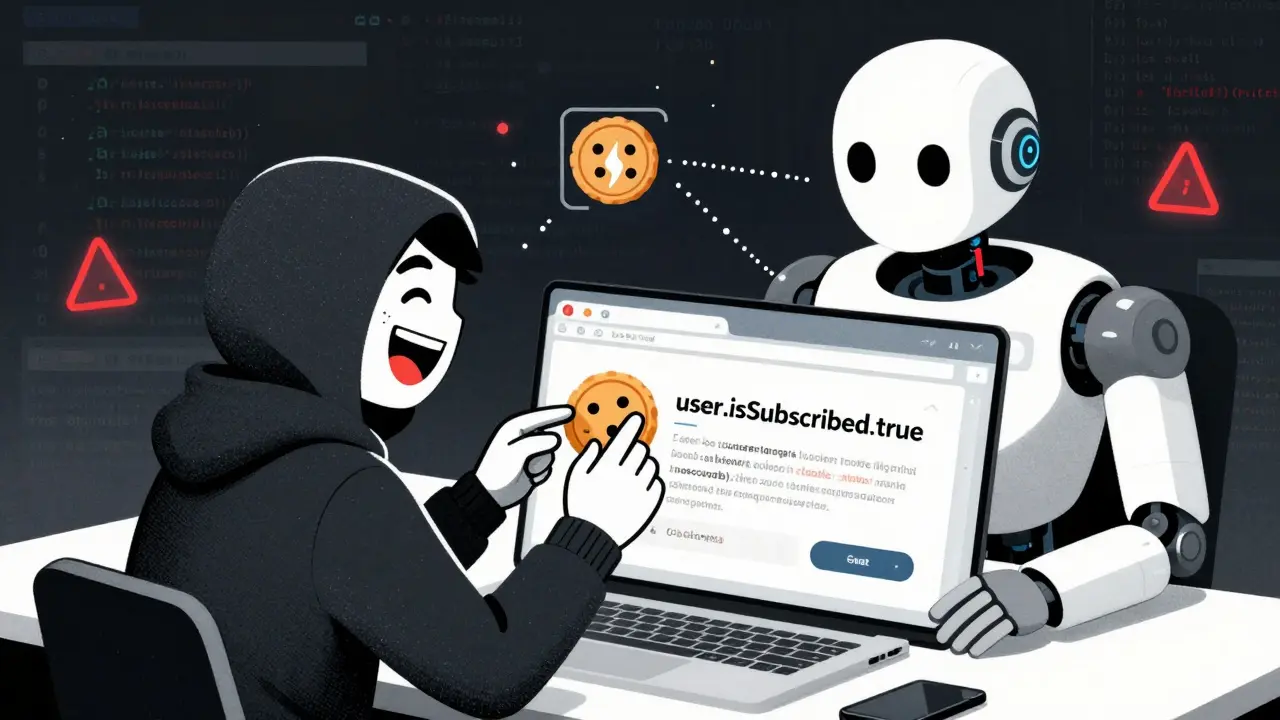
Turns out, he used AI to build a subscription system. The AI generated a function that checked if a user was subscribed by reading a cookie value. No server-side validation. No token signature check. Just "if (user.isSubscribed === true) { show premium content }."
An attacker wrote a simple script that set "user.isSubscribed = true" in their cookie. Done. 2,000 users got premium access for free. The app had zero logs. No alerts. No monitoring.
That’s vibe coding. Fast. Broken. Unseen.
What Comes Next: Security That Keeps Up
Threat modeling for vibe coding isn’t about slowing down. It’s about building safety into the speed. You can’t go back to manual coding. But you also can’t ignore the risks.
Here’s what works now:
- Runtime protection-Tools like Contrast Security’s AVM monitor your app while it runs. If someone tries to exploit a flaw, it blocks it in real time. No waiting for scans.
- Automated remediation-Integrate security checks into your CI/CD pipeline. If a risky pattern is detected, auto-generate a fix suggestion and block deployment until reviewed.
- Continuous learning-Use tools that turn every vulnerability into a teaching moment. No punishment. Just training.
The goal isn’t perfection. It’s resilience. You’re not trying to build a fortress. You’re building a system that knows when it’s under attack-and responds before it’s too late.
Final Thought: Speed Without Validation Is Risk
Vibe coding isn’t going away. It’s accelerating. The question isn’t whether you’ll use it. It’s whether you’ll secure it.
AI doesn’t care about security. You do. So make sure your process does too.
Start small. Map your surface. Check your dependencies. Run the "would an attacker laugh?" test. Add a 5-minute checkpoint. Do this every time. In 30 days, you’ll be ahead of 90% of vibe coders.
Because the next breach won’t come from a hacker with a fancy tool. It’ll come from a developer who thought, "The AI handled it."
Is vibe coding legal?
Yes, vibe coding is legal. There are no laws against using AI to generate code. But using it without security checks can violate compliance standards like GDPR, HIPAA, or PCI-DSS if it leads to data breaches. Legal doesn’t mean safe.
Can I use static analysis tools with vibe coding?
You can, but they’re often useless. Static tools look for known patterns, and vibe-coded apps rarely use them. Instead, focus on runtime protection and behavioral analysis. Tools like Contrast AVM or Snyk Code (with LLM-aware rules) are more effective.
What’s the biggest mistake vibe coders make?
Skipping validation. Assuming that if the app works, it’s secure. The AI generates code that functions correctly but ignores security best practices. Trusting functionality over safety is the #1 cause of breaches in vibe-coded apps.
How do I train my team on vibe coding security?
Start with a 90-minute workshop: map attack surfaces, run the "attacker laugh" test, validate dependencies, and add a 5-minute security gate. Use SecureFlag’s ThreatCanvas or similar tools to turn vulnerabilities into micro-lessons. Make it part of your daily standup, not a quarterly audit.
Are there tools specifically built for vibe coding security?
Yes. Contrast Security’s Application Vulnerability Monitoring (AVM), SecureFlag’s ThreatCanvas, and Escape Tech’s Visage Surface scanner are designed for AI-generated code. They focus on runtime behavior, logic flaws, and dependency risks-not just static patterns. These are the only tools that keep up with the pace of vibe coding.
Should I ban vibe coding until security catches up?
No. Banning it will just push teams to use it in secret. Instead, make security part of the vibe. Build lightweight, fast checks into the workflow. Speed without validation is risk. Speed with validation is innovation.

anoushka singh
20 December, 2025 - 03:02 AM
I just vibe-coded a todo app last week and it worked fine. Why are we even talking about this? The AI knows what it's doing. If it breaks, I'll fix it later. 🤷♀️
Jitendra Singh
21 December, 2025 - 07:46 AM
I get the concern, but honestly, I’ve been using AI for backend logic for months now. The key isn’t to stop using it-it’s to add a 5-minute sanity check before pushing. I run a quick curl on /admin and /debug. If something pops up that shouldn’t be there, I flag it. Simple. No drama.
Madhuri Pujari
21 December, 2025 - 16:30 PM
Oh wow. Another ‘security guru’ pretending to be woke about AI. Let me guess-you still write SQL by hand and cry when someone uses a ternary operator? The AI doesn’t care if you’re paranoid. It just ships. And guess what? Your ‘90-minute workshop’ is just a glorified checklist for people who think ‘security’ means memorizing OWASP top 10 from 2017. The real problem? You’re still thinking like a 2010 dev. The world moved on. Stop pretending your manual audits matter when the AI builds 10 apps while you’re sipping your third coffee.
Sandeepan Gupta
21 December, 2025 - 23:29 PM
Madhuri, you’re right that the old methods don’t fit-but that doesn’t mean we throw safety out the window. The 5-minute checkpoint isn’t about slowing down. It’s about not getting fired. I’ve seen teams lose data because someone trusted the AI too much. I use ZAP in CI now. It’s automatic. No extra time. Just a green check before deploy. If it flags something, I fix it in 2 minutes. That’s not a workshop. That’s discipline. And yes, you can still vibe-code. Just don’t vibe-blind.
Tarun nahata
23 December, 2025 - 12:25 PM
Let’s flip this. Vibe coding is the future, and fear is the only thing holding us back. Think of it like this: we didn’t stop using engines because cars could crash-we built seatbelts, airbags, ABS. Same here. The AI is the engine. The security checks? They’re the airbag. Don’t ban the car. Build better airbags. Tools like ThreatCanvas? Absolute game-changers. They don’t slow you down-they make you unstoppable. The next gen of devs won’t be the ones who code the most. They’ll be the ones who code smartest. Let’s not be the last ones to buckle up.