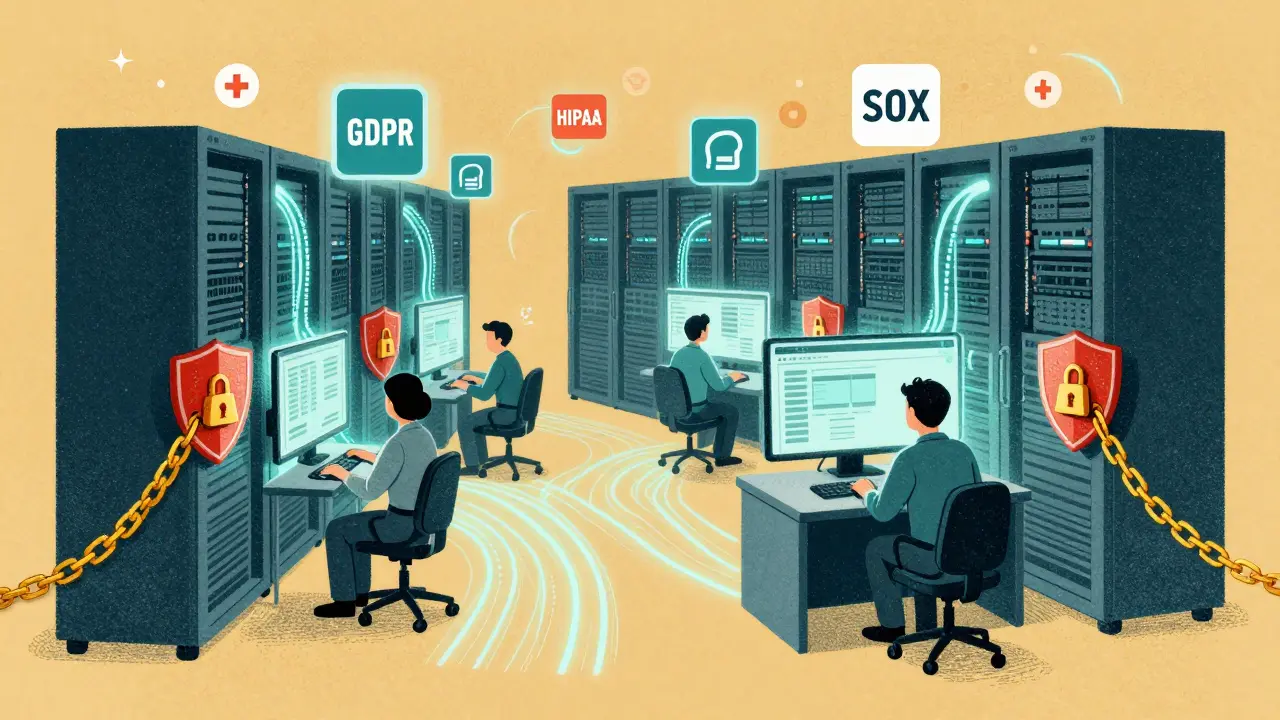
Enterprises aren’t just testing vibe coding-they’re betting on it. By 2026, 22% of Fortune 500 companies are already using AI-generated code platforms to build internal tools, and that number is climbing fast. But here’s the catch: the code doesn’t write itself. The real challenge isn’t getting the AI to generate code-it’s making sure that code doesn’t break compliance, leak data, or cost millions in fines. Vibe coding isn’t just a faster way to build apps. It’s a fundamental shift in how teams work, and without governance, it’s a liability waiting to happen.
What Exactly Is Vibe Coding-and Why Does It Matter Now?
Vibe coding isn’t GitHub Copilot with a fancy name. It’s enterprise-grade AI that builds full applications from natural language prompts, understands your existing systems, and generates code that fits into your architecture. Platforms like ServiceNow’s Build Agent and Superblocks’ Clark don’t just suggest lines of code-they create entire workflows, APIs, and database schemas in days instead of weeks. A retail chain used it to modernize a 20-year-old inventory system in six weeks. Normally, that would’ve taken six months.
How? These systems use Retrieval Augmented Generation (RAG) to pull from your internal documentation, codebases, and APIs. They don’t guess-they contextualize. And they run in private clouds or on-premises servers, as instinctools confirmed in their 2024 case studies. This isn’t public AI. This is secure, locked-down, business-controlled AI.
But speed isn’t the whole story. The real value is responsiveness. Business units can ask for a tool-like a budget tracker or vendor portal-and get a working prototype in 3-5 days. No more waiting for a dev team to prioritize it. That’s why adoption jumped from 5% in early 2024 to 22% by the end of the year.
The Governance Gap: Why Most AI Tools Fail in Enterprise Settings
Most developers love AI assistants. They’re fast. They’re helpful. But they’re also reckless in production. GitHub Copilot, for example, doesn’t know your company’s security policies. It doesn’t care if you’re in healthcare or finance. It just generates code based on patterns it’s seen.
Enterprise vibe coding fixes that-with guardrails. ServiceNow’s platform includes role-based controls, mandatory approval workflows, and audit trails. Every line of AI-generated code is tagged with who requested it, who reviewed it, and when it was deployed. Betty Blocks goes further, requiring engineers to onboard the AI agent, define context, and approve prompts before generation even starts.
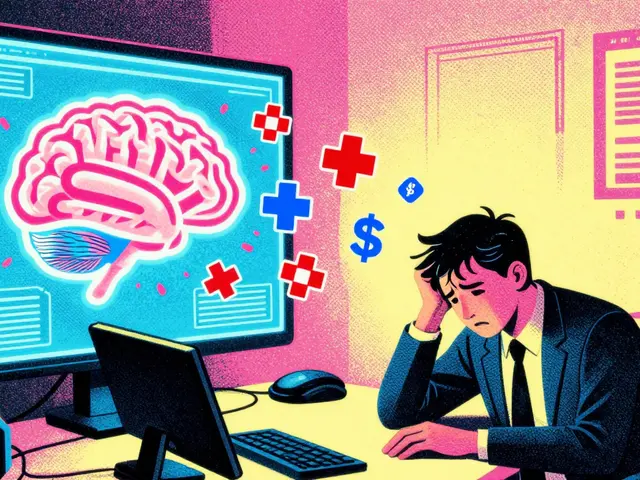
Without these controls, you’re inviting chaos. A healthcare provider in 2024 deployed AI-generated code without validation. The code contained a hardcoded API key. It exposed patient records. The fine? $2.1 million. That’s not an outlier-it’s a warning.
Gartner’s Dr. Sarah Chen put it bluntly: “Enterprises must establish clear ownership models where developers remain responsible for AI-generated code.” That’s not a suggestion. It’s the law now, under the EU’s AI Act, which took effect in February 2025. The act requires full documentation of AI-generated components and mandatory human oversight for high-risk applications.
Building a Governance Framework: Five Non-Negotiables
If you’re rolling out vibe coding, skip the pilot. Go straight to governance. Here’s what works:
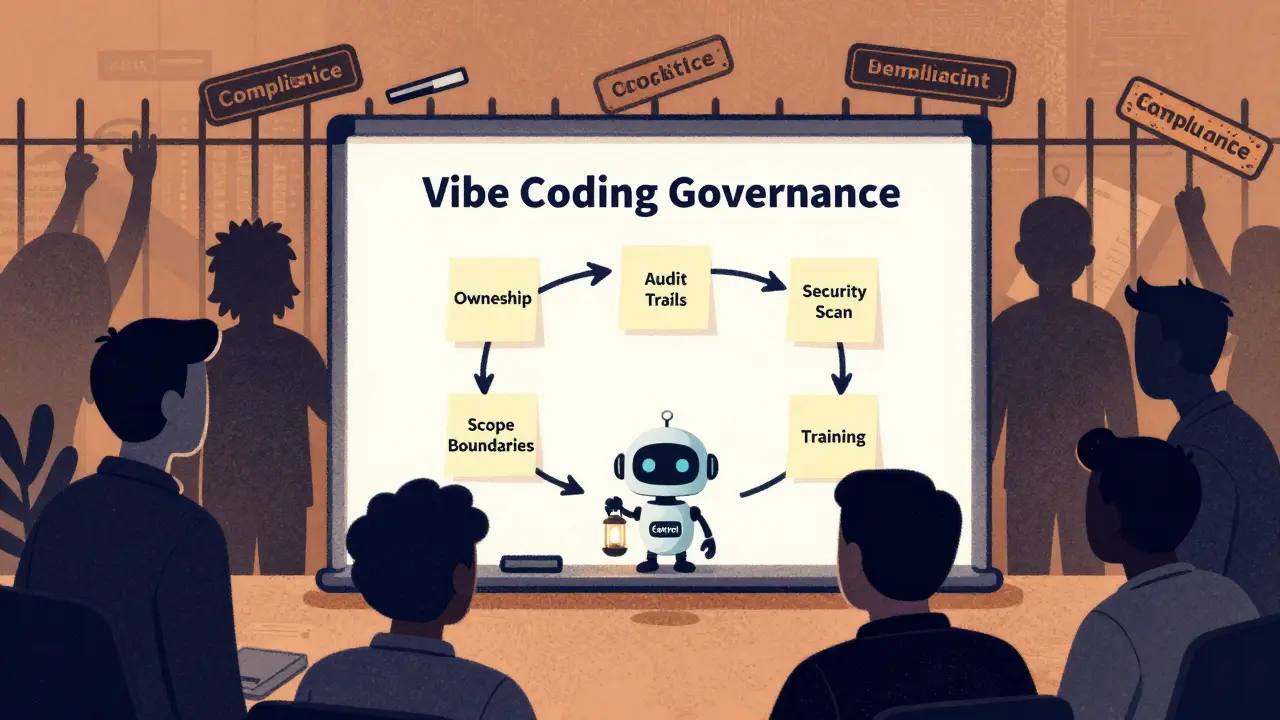
- Define ownership: Developers are still accountable. The AI is a tool, not a teammate. Every deployment must have a named owner who signs off.
- Enforce approval chains: No code goes to production without review. Use your existing CI/CD pipeline to insert AI code into a gated workflow. Require at least one senior engineer to review all database operations.
- Automate security scanning: Run Semgrep and CodeQL on every AI-generated commit. Don’t wait for a breach. SANS Institute found 42% of security incidents linked to AI code came from unscanned outputs.
- Track lineage: Know where every piece of code came from. Betty Blocks is building “AI-generated code pedigree tracking” to meet SEC disclosure rules. Even if you’re not public, you need audit trails for internal compliance.
- Restrict access: Not everyone needs to prompt the AI. Limit access to trained engineers and business analysts who’ve completed the 25-40 hour training programs documented by ServiceNow and Betty Blocks.
These aren’t optional. They’re the difference between innovation and disaster.
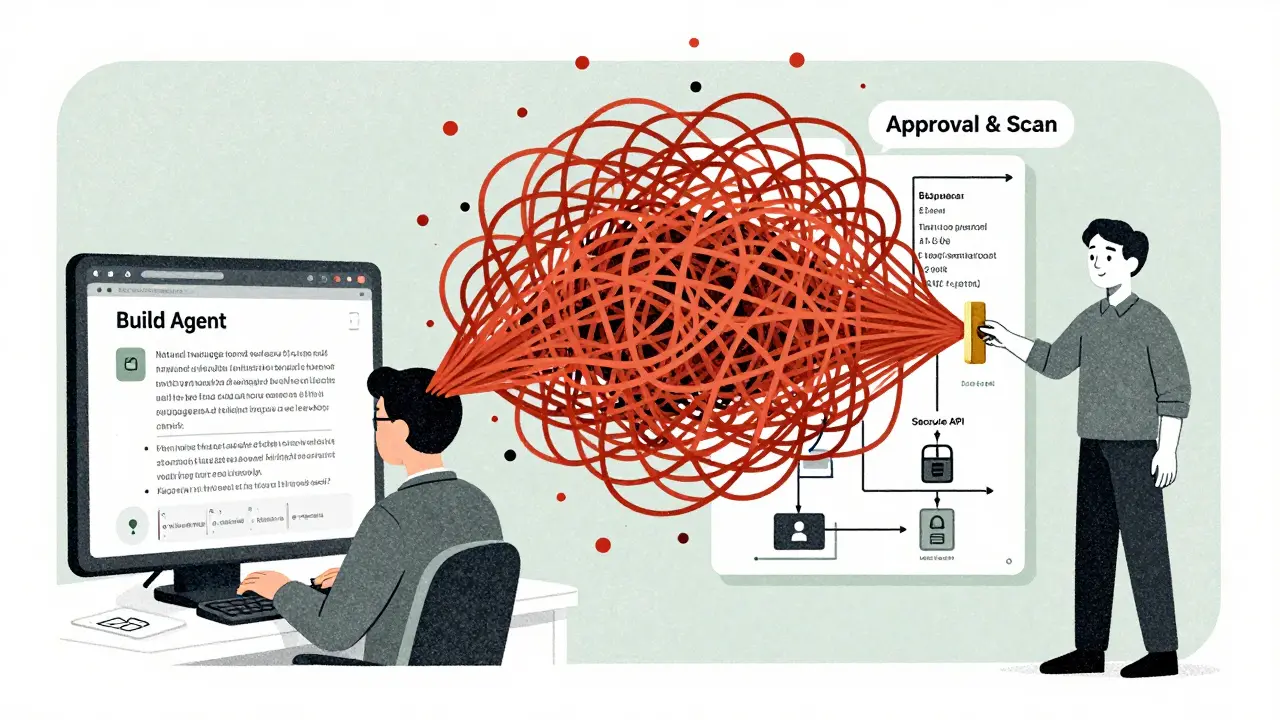
Risk Management: What Can Go Wrong-and How to Stop It
Let’s be honest: vibe coding isn’t perfect. AI hallucinates. It generates inefficient SQL. It creates circular dependencies. It forgets to handle edge cases. That’s why 40% of complex business logic still requires human intervention, according to instinctools.
Here are the top five risks-and how to mitigate them:
- Security vulnerabilities: AI can generate code with hidden backdoors or weak authentication. Solution: Integrate automated security tools into your pipeline. Use HashiCorp Vault for dynamic secrets. ServiceNow now auto-renews API keys every 30-90 days.
- Compliance failures: HIPAA, GDPR, SOX-all require traceability. AI doesn’t know these rules unless you teach it. Solution: Embed compliance checks into your prompts. Example: “Generate a patient data form compliant with HIPAA Title 45 CFR Part 160.”
- Integration breakdowns: Legacy COBOL systems? Custom ERP? AI doesn’t understand them unless you feed it documentation. Solution: Use RAG to pull from your internal wikis and code repositories. Superblocks found this cuts integration errors by 60%.
- Scope creep: Business users love the speed. They’ll ask for “just one more feature.” Solution: Set clear boundaries. Use a phased rollout: start with internal tools, then move to customer-facing apps after governance is proven.
- Loss of control: If developers stop understanding the code they deploy, you lose maintenance capability. Solution: Require developers to explain AI-generated code in code reviews. Make them rewrite critical sections manually.
And don’t ignore the human factor. One Reddit user from a Fortune 500 company said, “The initial setup of governance rules took 3 weeks longer than expected.” That’s normal. Governance isn’t a feature-it’s a cultural shift.
Adoption Trends: Who’s Winning, Who’s Losing
Adoption isn’t evenly spread. Financial services lead at 32%, followed by tech at 28%. Why? They have the budget, the compliance teams, and the appetite for innovation. Healthcare? Only 15%. Government? Just 9%. They’re waiting-because one mistake can shut them down.
Platforms are adapting. ServiceNow and Betty Blocks are now integrating with enterprise identity providers like Okta and Azure AD. Superblocks is adding SEC-compliant code pedigree tracking. The Enterprise Vibe Coding Consortium, launched in November 2024 with 47 founding members including Microsoft and Google Cloud, is building industry-wide auditing standards.
Meanwhile, the market is exploding. Gartner forecasts it will grow from $1.2 billion in 2024 to $7.8 billion by 2027. But here’s the kicker: platforms without governance will die. Gartner says, “By 2027, 70% of enterprises will use vibe coding for at least 50% of internal development-but only if the platform has strong governance.”
Getting Started: A Realistic Roadmap
You don’t need to overhaul your whole tech stack. Start small.
- Choose one non-critical tool: A time-off request form. A vendor onboarding portal. Something that doesn’t touch customer data.
- Build your governance rules: Define who can use it, how it’s reviewed, what tools scan it, and how it’s logged. This takes 2-4 weeks.
- Train your team: Developers need 10-15 hours. Business analysts need 25-40. Use Pluralsight’s “Enterprise Vibe Coding Governance” course-it’s the only one with real-world scenarios.
- Deploy and measure: Track time saved, bugs introduced, and compliance issues. Don’t just count speed. Count risk.
- Scale: Once you’ve proven it works, expand to customer-facing apps. But only after you’ve locked down your audit trails.
One company did this. They started with a simple inventory tracker. Three months later, they were building customer-facing dashboards. No breaches. No fines. Just faster delivery.
Final Thought: It’s Not About Code. It’s About Control.
Vibe coding gives you speed. But speed without control is dangerous. The most successful enterprises aren’t the ones using AI the most. They’re the ones governing it the best.
AI doesn’t need to be stopped. It needs to be guided. And the teams that figure out how to do that-without sacrificing security, compliance, or accountability-are the ones who’ll lead their industries in the next five years.
Is vibe coding the same as low-code platforms?
No. Low-code platforms use drag-and-drop builders with limited customization. Vibe coding generates actual, production-ready code from natural language. It’s more flexible than low-code (95% of custom code flexibility vs. 70%) and faster than manual development (30-50% faster). But unlike low-code, it requires governance because the output is real code that can interact with your entire system.
Can vibe coding replace developers?
No-and it shouldn’t. Superblocks and ServiceNow both state that AI accelerates work, but developers guide architecture, quality, and compliance. The AI handles repetitive tasks. Humans handle logic, security, and integration. The goal isn’t to eliminate developers-it’s to free them from busywork so they can focus on what matters.
What’s the biggest risk of using vibe coding?
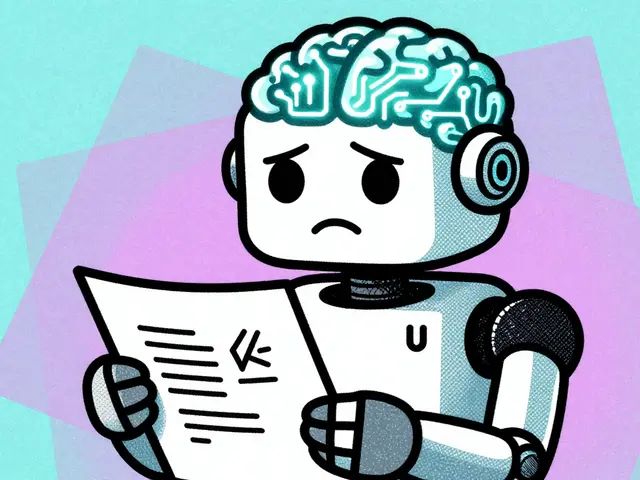
The biggest risk is assuming the AI is trustworthy. AI can generate code that looks correct but contains subtle logic flaws, hardcoded secrets, or compliance violations. Without automated scanning, human review, and audit trails, you’re gambling with your data, your reputation, and your regulatory standing.
How do I train non-technical staff to use vibe coding?
Start with clear prompts and templates. Train them to describe what they need in simple terms: “I need a form that collects employee feedback and sends it to HR.” Use platforms like Betty Blocks or Superblocks that offer guided prompt libraries. Most business analysts need 25-40 hours of training to use it effectively. Don’t skip this step-poor prompts lead to bad code.
Is vibe coding compliant with GDPR and HIPAA?
Only if you make it compliant. The AI doesn’t know these regulations unless you embed them into your prompts and governance rules. Use RAG to feed it your compliance documentation. Require manual review of any code handling personal data. Automate scans for PII exposure. Document every step. Without these controls, you’re violating the law.
What’s the cost of enterprise vibe coding platforms?
ServiceNow’s Build Agent starts at $50/user/month. Betty Blocks charges $75/user/month with a minimum 50-user commitment. These prices include governance, security, and integration tools. Compare that to hiring a team of developers for six months-vibe coding pays for itself in weeks. But remember: the real cost isn’t the license. It’s the time spent setting up governance. Budget for that.
How do I convince my security team to approve vibe coding?
Focus on control. Show them how your governance framework ensures every piece of AI-generated code is scanned, reviewed, logged, and owned. Share data: 60% fewer integration errors, automated security checks, and audit trails that meet EU AI Act requirements. Bring them into the design process-they’ll be more likely to support it if they helped build the rules.

Addison Smart
28 January, 2026 - 18:35 PM
Vibe coding is wild but it’s not magic. I’ve seen teams go from zero to deploying internal tools in days, but the real win is when governance kicks in. We started with a simple time-off tracker, locked down who could prompt the AI, ran Semgrep on every commit, and made sure every line had a human sign-off. Took us three weeks to set up, but now we’re rolling it out to vendor portals without a single compliance scare. The AI doesn’t replace devs-it just stops them from drowning in boilerplate. And honestly? The business units are happier because they’re not begging for dev time anymore. It’s a cultural shift, not a tech upgrade.
David Smith
28 January, 2026 - 23:19 PM
Y’all are acting like this is the second coming. AI writes code? Cool. So did my cousin’s ChatGPT prompt last week that turned my grocery list into a SQL database. This is just low-code with a fancy name and a $75/user/month price tag. And don’t even get me started on ‘governance’-sounds like corporate legalese to justify paying for something that should’ve been automated 10 years ago.
Lissa Veldhuis
30 January, 2026 - 03:04 AM
Okay but imagine your CFO just types ‘make a dashboard that shows who’s slacking’ and boom-code drops into production with a hardcoded API key to the payroll system. That’s not innovation that’s a dumpster fire with a PowerPoint slide deck. I work in healthcare and we had a team try this without review and they accidentally exposed 12k patient records because the AI thought ‘HIPAA compliant’ meant putting a lock icon on the UI. $2.1M fine later and now HR is forcing everyone to take a 40-hour course on ‘prompt hygiene’ which is just a fancy way of saying stop being lazy and read the docs. Also why is everyone so obsessed with ServiceNow? I’ve seen their UI-it looks like it was designed by a bureaucrat who hates joy.
Michael Jones
30 January, 2026 - 10:09 AM
This isn’t about code or compliance or even AI-it’s about power. Who gets to create? Who gets to decide what gets built? For decades, tech was a priesthood. You needed a degree, a title, a secret handshake. Now a marketing lead can build a tool that changes how the whole company works. That’s terrifying to some. But it’s beautiful. The real risk isn’t the AI. It’s the fear. Fear of losing control. Fear of being replaced. Fear of change. But if we don’t adapt, we don’t just fall behind-we become irrelevant. The future isn’t human vs machine. It’s human + machine. And if you’re not part of that, you’re just watching from the sidelines while everyone else moves forward.
allison berroteran
1 February, 2026 - 09:40 AM
I love how this post breaks down the real challenges-not just the shiny tech but the human stuff. The part about requiring developers to explain AI-generated code in reviews? That’s genius. I’ve seen teams get so reliant on Copilot that they forgot how to debug their own code. We started a weekly ‘AI code walkthrough’ where devs have to walk through one generated function and explain why it works. It’s slow at first but now people are asking better prompts because they know they’ll have to defend them. Also, the training requirement for business users? 25-40 hours is fair. It’s not about being technical-it’s about being responsible. I’ve watched non-tech people go from ‘I just want a button’ to ‘how do I make sure this doesn’t leak PII?’ and it’s honestly inspiring. Governance isn’t bureaucracy-it’s care.
Gabby Love
3 February, 2026 - 00:41 AM
Just a quick note: the 42% of security incidents from unscanned AI code? That’s from the 2024 SANS report. It’s cited in the post but easy to miss. Also, if you’re using Superblocks, their new pedigree tracking feature auto-tags every generated function with the prompt used and the reviewer’s ID. Super useful for audits. And yes, the cost is high-but compare it to the cost of a single breach. One company I know saved $4.7M in potential fines in the first year by using automated scans and approval chains. Worth every penny.
Jen Kay
4 February, 2026 - 01:20 AM
Wow. Just… wow. You wrote an entire manifesto on governance and somehow made it sound like a TED Talk. Meanwhile, my team is still stuck in a 12-month approval cycle to update a dropdown menu. So yes, I’m thrilled about vibe coding. But also? I’m terrified. Because if we don’t get this right, we’re not just risking fines-we’re risking trust. And trust? Once it’s gone, no amount of audit trails can bring it back. So let’s not pretend this is easy. Let’s not pretend it’s sexy. Let’s just do the boring, hard, necessary work. Because the alternative is worse.
Michael Thomas
5 February, 2026 - 10:30 AM
USA leads in this. Europe’s overregulating. China’s banned it. We’re winning. Stop crying about governance. Just use it. Build fast. Fix later. That’s how America stays #1.