Best PHP AI Scripts for 2025/10: Chatbots, NLP, and Automation Tools
When working with PHP AI scripts, code templates and packages designed to add artificial intelligence capabilities to PHP applications. Also known as AI-ready PHP code, it lets developers skip building AI from scratch and instead plug in ready-made tools for chatbots, text analysis, and automated workflows. These scripts aren’t just snippets—they’re complete, tested solutions that connect PHP to services like OpenAI, Hugging Face, and Google’s AI APIs, so you can add smart features without learning Python or TensorFlow.
Most of the scripts published this month focused on AI chatbots, automated conversational agents powered by large language models and hosted on PHP backends. These aren’t simple rule-based bots—they use real AI to understand context, remember past messages, and handle messy user input. You’ll find examples that run on Laravel, Symfony, and even plain PHP with Composer dependencies. One popular script lets you build a support bot that pulls answers from your knowledge base using embeddings and vector search, all without leaving PHP.
Another big theme was NLP with PHP, natural language processing tools that let PHP apps read, analyze, and respond to human text. This includes sentiment analysis for customer reviews, keyword extraction from support tickets, and even auto-tagging content. Unlike Python-heavy NLP stacks, these PHP solutions are lightweight and deployable on shared hosting. One guide showed how to detect spam comments using a 2MB model that runs locally—no API calls needed, no monthly bills.
And then there’s OpenAI PHP integration, the direct connection between PHP applications and OpenAI’s GPT models via official and unofficial APIs. The top scripts this month fixed common issues like slow responses, token limits, and error handling. One package auto-retries failed requests, caches responses to cut costs, and logs every AI call for debugging. It’s not magic—it’s just smart error handling wrapped in clean, reusable code.
What ties all these together? PHP AI scripts are about making AI practical for real developers who run PHP apps. You don’t need a data science degree. You just need working code that runs on your server, plays nice with your database, and doesn’t crash when traffic spikes. The scripts from October 2025 reflect this: they’re lean, secure, and built for production. Some are free. Some cost a few bucks. All of them save hours of trial and error.
Below, you’ll find every script, tutorial, and benchmark published this month. No fluff. No hype. Just the code that actually works—whether you’re adding a chatbot to a WordPress site, automating email replies, or building a custom AI assistant for your business.

Onboarding Developers to Vibe-Coded Codebases: Playbooks and Tours
Onboarding developers to vibe-coded codebases requires more than documentation-it needs guided tours and living playbooks that capture unwritten patterns. Learn how to turn cultural code habits into maintainable systems.
Read More
Community and Ethics for Generative AI: How to Build Transparency and Trust in AI Programs
Learn how to build ethical generative AI programs through stakeholder engagement and transparency. Real policies from Harvard, Columbia, UNESCO, and NIH show what works-and what doesn’t.
Read More
Supply Chain Security for LLM Deployments: Securing Containers, Weights, and Dependencies
LLM supply chain security protects containers, model weights, and dependencies from compromise. Learn how to secure your AI deployments with SBOMs, signed models, and automated scanning to prevent breaches before they happen.
Read More
Measuring Success in Vibe Coding: Quality, Speed, and Business Impact
Learn how to measure success in vibe coding through real outcomes-not story points or bug counts. Discover how quality, speed, and business impact define high-performing teams.
Read More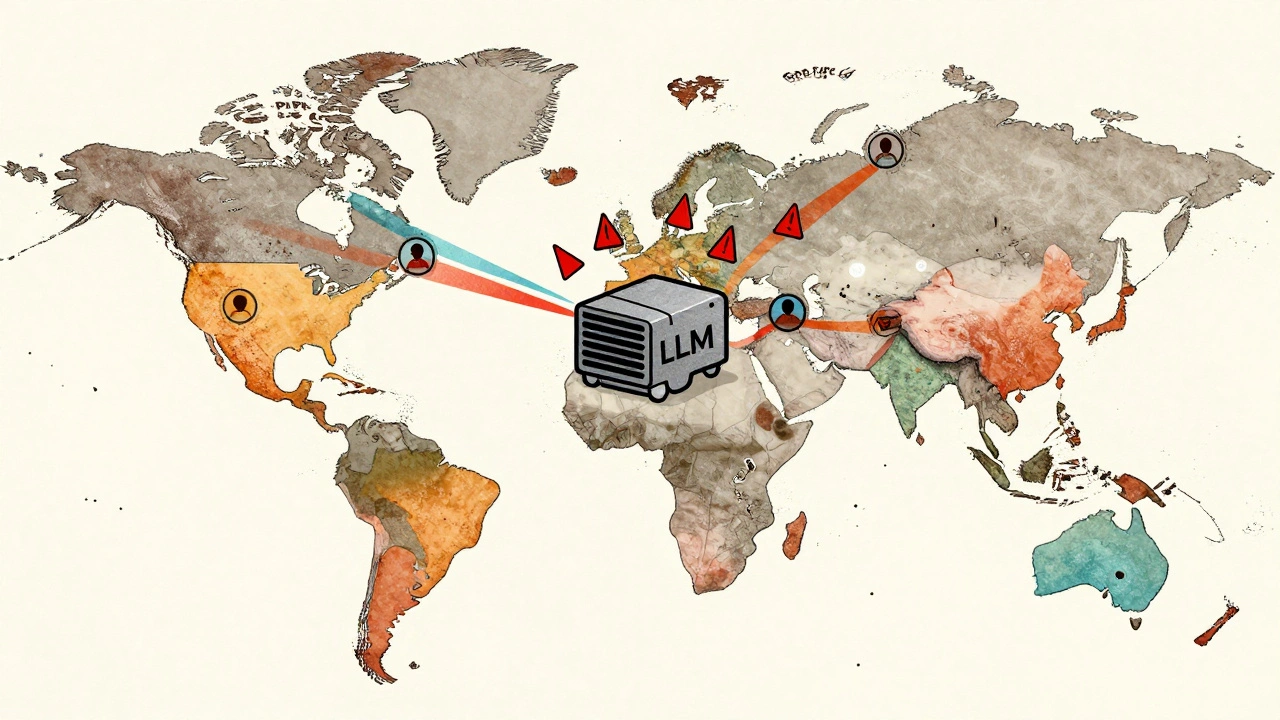
Data Residency Considerations for Global LLM Deployments
Data residency rules for global LLM deployments vary by country and can lead to heavy fines if ignored. Learn how to legally deploy AI models across borders without violating privacy laws like GDPR, PIPL, or LGPD.
Read More
Non-Technical Founders Using Vibe Coding: Build a Working Prototype in Days, Not Months
Non-technical founders can now turn ideas into working prototypes in days using AI-powered vibe coding-no coding skills needed. Learn how it works, what you can build, and how to avoid common pitfalls.
Read More
Enterprise Data Governance for Large Language Model Deployments: A Practical Guide
Enterprise data governance for large language models ensures legal compliance, data privacy, and ethical AI use. Learn how to track training data, prevent bias, and use tools like Microsoft Purview and Databricks to govern LLMs effectively.
Read More