When you use a generative AI tool to write an email, draft a research paper, or even help design a logo, you’re not just using software-you’re participating in a system that shapes opinions, influences decisions, and sometimes misleads people without warning. The real question isn’t whether AI can do the job. It’s whether we’re building it in a way that keeps people safe, informed, and in control.
Why Transparency Isn’t Optional Anymore
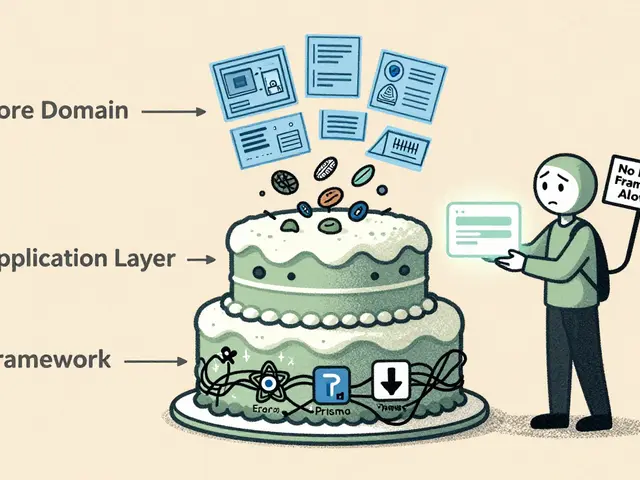
In 2025, over 89% of top U.S. research universities have formal policies on generative AI. But here’s the catch: most students and faculty still don’t know what those policies actually mean. A November 2025 survey of 500 faculty members found that 68% said current disclosure rules are too vague to follow consistently. That’s not a policy problem-it’s a communication failure. Transparency in AI means clearly stating when and how AI was used. It’s not about banning AI. It’s about making sure no one mistakes a machine’s output for human thought. At Columbia University, researchers must document every AI tool version, prompt, and output used in a project. That sounds tedious, but it’s the only way to verify results. If you can’t reproduce an AI-generated finding, it’s not science-it’s guesswork. Harvard’s policy takes a harder line: no confidential data (like student records, medical info, or unpublished research) can be fed into public AI tools like ChatGPT. Why? Because once you type it in, you lose control. That data could be used to train future models, leaked, or sold. This isn’t paranoia. It’s data hygiene.Who Really Gets a Say in AI Ethics?
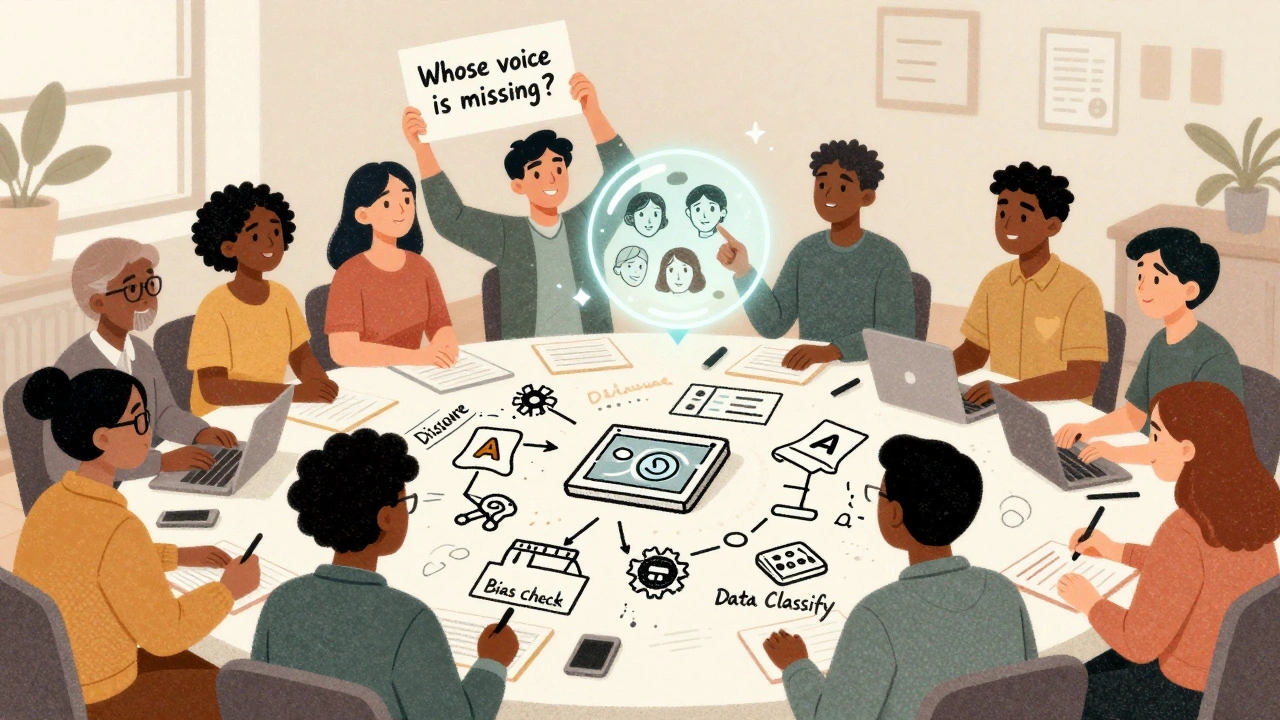
Ethics isn’t something you design in a boardroom and hand down. It’s built with the people who live with the consequences. That’s why UNESCO’s framework calls for multi-stakeholder and adaptive governance. That means students, librarians, janitors, researchers, and even the public need to be at the table. At East Tennessee State University, they set up anonymous reporting systems so faculty could flag misuse without fear of punishment. Their internal report in April 2025 showed 63% of concerns came from faculty worried about students submitting AI-written assignments. But here’s what’s missing: students weren’t asked how they felt about the rules. Were they confused? Overwhelmed? Did they think it was unfair? Real transparency means listening to the people on the ground-not just telling them what to do. Universities that held focus groups with undergrads before rolling out AI policies saw 40% higher compliance rates. Why? Because people follow rules they helped shape.The Hidden Bias in AI Training Data
Generative AI doesn’t invent ideas out of thin air. It learns from what’s already out there-books, articles, websites, social media. And guess what? That data is full of bias. Women are underrepresented in technical roles in training sets. People of color are more likely to be associated with negative stereotypes. AI doesn’t create these biases-it amplifies them. Dr. Timnit Gebru, a leading voice in AI ethics, pointed out in her May 2025 Stanford lecture that most university policies ignore this entirely. They focus on disclosure and data safety but rarely ask: Whose voices are missing from the training data? Oxford’s Communications Hub warns against reinforcing harmful stereotypes. That’s not a suggestion-it’s a requirement. If your AI-generated article paints all nurses as women and all CEOs as men, you’re not being efficient-you’re being harmful. Fixing this isn’t about deleting data. It’s about auditing it. Institutions that now require bias reviews before deploying AI tools report 30% fewer complaints about discriminatory outputs. The tools exist. They just need to be used.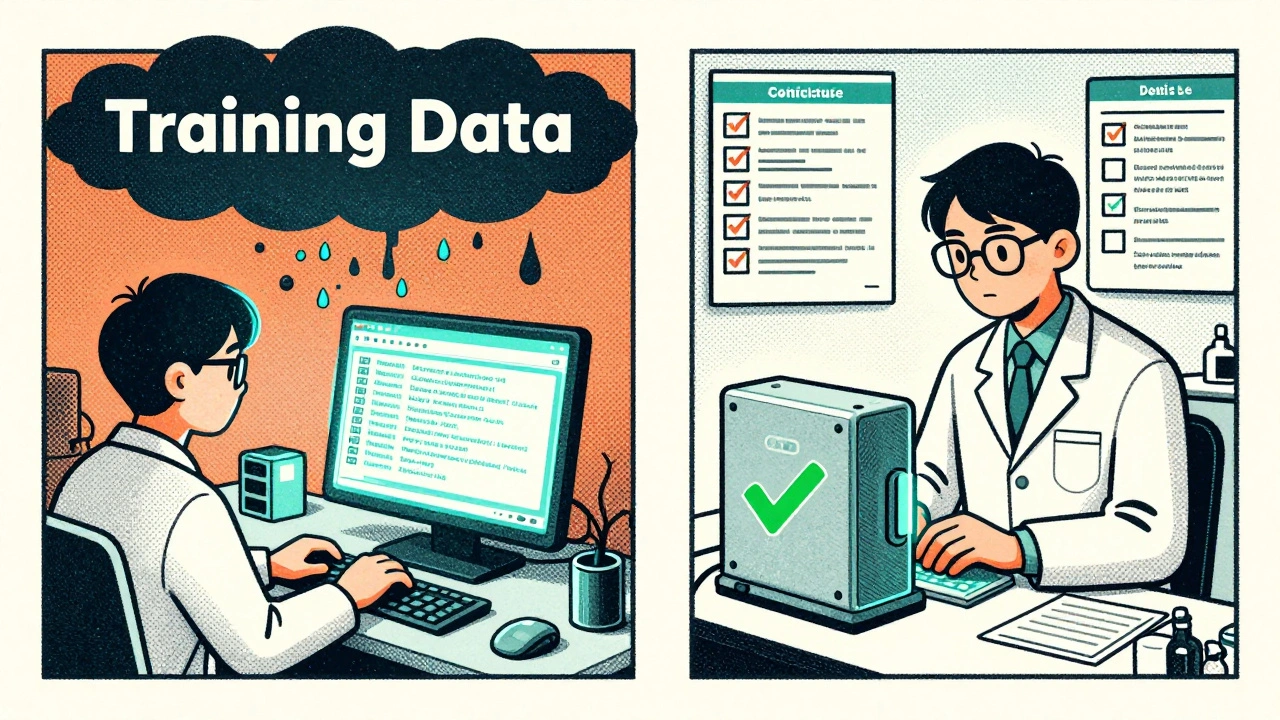
How Real Organizations Are Doing It Right
Not all institutions are stuck in confusion. Some are leading by example. The University of California system launched AI literacy workshops in May 2025. They didn’t just hand out a policy document. They showed faculty how to properly cite AI in research papers. They gave students templates for disclosing AI use in essays. By the end of the semester, 87% of participants said they felt confident applying what they learned-especially when it came to NIH grant applications, which now require AI disclosure. The European Commission’s 2024 framework for research takes a similar approach. It doesn’t say “don’t use AI.” It says: “Use it, but verify it.” Every AI-generated claim must be cross-checked with original sources. Every output must be reproducible. That’s not bureaucracy-it’s scientific integrity. Even the government is stepping in. Starting September 25, 2025, the U.S. National Institutes of Health requires every grant applicant to disclose whether they used AI in their research. No more hiding it. No more guessing. Just honesty.What Happens When You Don’t Get This Right?
Ignoring ethics isn’t neutral. It’s dangerous. A researcher at a mid-sized university used AI to draft a paper on patient outcomes. The AI hallucinated statistics. The paper got published. A hospital changed its treatment protocol based on it. Three patients were harmed. The university didn’t have a clear policy on AI use in medical research. No one knew who was responsible. The case is still under review. In media, the consequences are just as real. Real Change, a news outlet, banned AI for story ideas, editing, and data analysis in December 2025. Why? Because readers lost trust when they found out AI had rewritten human interviews. Trust takes years to build-and minutes to break. Even companies are feeling the pressure. A McKinsey survey in December 2025 found that only 32% of Fortune 500 companies had specific policies for generative AI. Those without clear rules are seeing higher employee turnover, legal risks, and brand damage.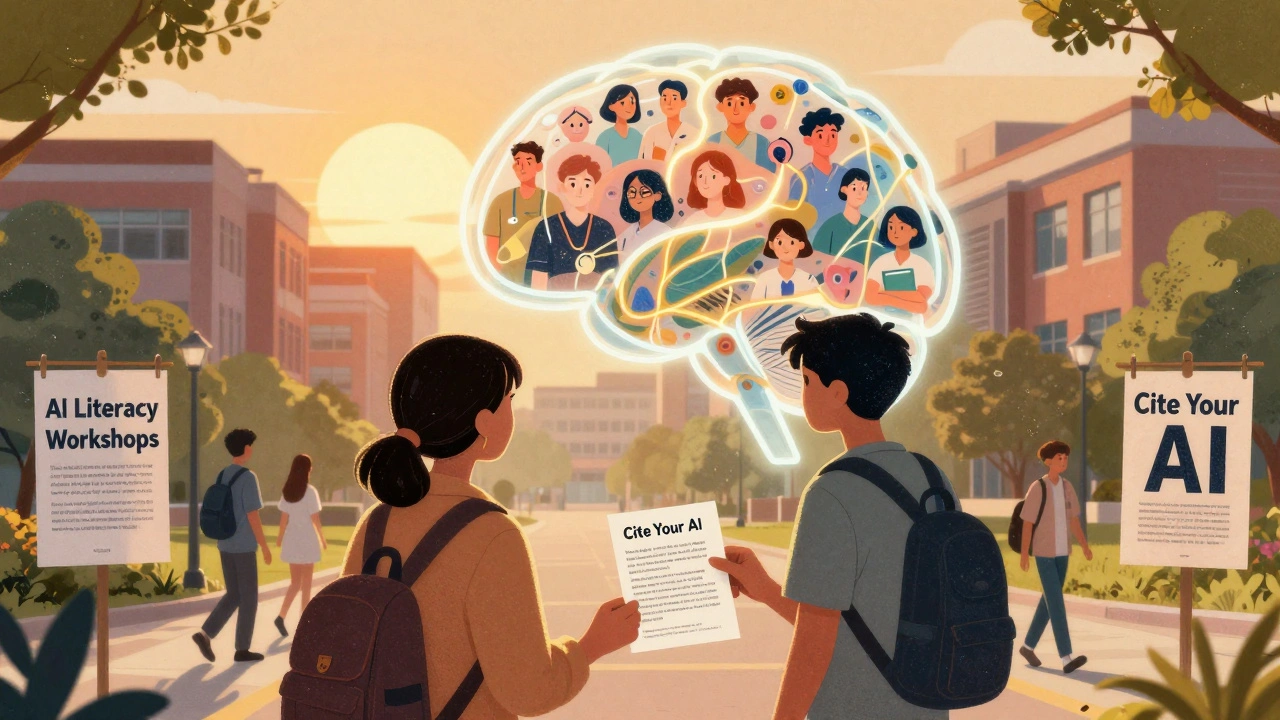
Getting Started: A Practical Checklist
You don’t need a legal team to start building ethical AI practices. Here’s what works:- Define what counts as AI use-Is it drafting? Editing? Generating data? Be specific.
- Create a simple disclosure template-A one-line statement like “This section was drafted with AI assistance and reviewed for accuracy” works better than a 10-page policy.
- Train people, not just punish them-Offer 1-hour workshops on how to spot AI hallucinations and cite AI properly.
- Don’t ban data. Classify it.-Label data as public, internal, or confidential. Only allow AI tools approved for each level.
- Include bias checks-Ask: “Does this output reinforce stereotypes? Whose perspective is missing?”
- Let people report concerns anonymously-People won’t speak up if they fear retaliation.


Rubina Jadhav
8 December, 2025 - 19:26 PM
Just wanted to say I appreciate the checklist. Simple, clear, and actually doable. I’m a teacher in rural India, and we don’t have big teams or legal departments. This is the first time I felt like I could actually start doing something right without feeling overwhelmed.
Thanks for writing this.
sumraa hussain
10 December, 2025 - 00:33 AM
OKAY SO LET ME JUST SAY THIS-AI ISN’T THE PROBLEM, PEOPLE ARE. You think banning ChatGPT in labs fixes anything? Nah. It’s the same people who copy-paste Wikipedia and call it ‘research.’ Now they just let a bot do the copy-pasting. The real issue? No one’s teaching critical thinking anymore. We turned education into a compliance sport. And now we’re mad the AI won’t play by our broken rules?
Fix the system. Not the tool.
Raji viji
11 December, 2025 - 00:38 AM
LMAO ‘transparency’? You mean like when OpenAI trained their models on scraped Reddit threads and academic papers without consent? Or when Google’s AI learned to mimic Nobel laureates’ writing styles from paywalled journals? This whole ‘ethical AI’ thing is corporate theater. You want transparency? Release the training data. Open the black box. Stop slapping a ‘AI-generated’ watermark on a lie and calling it honesty.
And don’t even get me started on ‘bias audits’-those are just PR checks done by interns who don’t even know what intersectionality means. It’s all performative. The real power players? They’re still using AI to optimize ad targeting, not ethics.
Rajashree Iyer
11 December, 2025 - 07:35 AM
What if we’re not asking the right question? We obsess over disclosure, bias, and policies-but what if the deeper crisis is epistemological? When we outsource thought to machines, we don’t just lose control of the output-we lose the capacity to think for ourselves. The AI doesn’t lie. It just reflects the collective amnesia of a culture that values speed over depth, efficiency over meaning.
Is this ethics? Or is it grief dressed in bullet points?
Parth Haz
12 December, 2025 - 23:24 PM
I’ve seen too many institutions implement AI policies as afterthoughts-reactive, inconsistent, and poorly communicated. The UC system’s approach is exactly what’s needed: practical, human-centered, and focused on skill-building rather than punishment. Training doesn’t cost much, but the ROI in trust and integrity? Priceless.
Let’s stop treating AI like a villain and start treating it like a tool-like a calculator, or a microscope. Used well, it elevates work. Used poorly, it undermines it. The responsibility lies with us, not the code.
Vishal Bharadwaj
13 December, 2025 - 06:10 AM
89% of unis have policies? Bro that’s just a number. I checked 3 ivy league websites-none of them define what ‘AI-assisted’ even means. Is paraphrasing with Gemini AI? Is using it to fix grammar? Is asking it to suggest a thesis? No one knows. And now they want us to sign forms? This isn’t transparency-it’s bureaucratic chaos wrapped in virtue signaling.
Also-‘bias audits’? You mean like the one where they found AI labeled ‘nurse’ as female 92% of the time? DUH. That’s because 92% of nursing photos online are women. Fix the data, not the algorithm. And stop pretending this is new. Humans have been biased since day one.
Nalini Venugopal
14 December, 2025 - 20:39 PM
Just noticed a typo in your post: ‘univeristies’ in the first paragraph under ‘Who Really Gets a Say’. Should be ‘universities’. Also, ‘disclosure template’ section-maybe add a comma after ‘reviewed for accuracy’? Small things, but they matter when you’re trying to build credibility. I’m a copy editor, and I can’t unsee it 😅
Pramod Usdadiya
16 December, 2025 - 00:49 AM
As someone from a small town in Kerala, I’ve seen students use AI to write essays in Malayalam-English mix. No one banned it. No one punished them. We just sat down, asked them why they did it, and showed them how to use it as a helper, not a crutch. One kid said, ‘Sir, I don’t have time to write. But I want to learn.’ That’s the moment you realize: ethics isn’t about rules. It’s about connection.
Thanks for reminding us that.
Aditya Singh Bisht
16 December, 2025 - 15:52 PM
Look-I’m not anti-AI. I’m pro-progress. But progress without purpose is just noise. You want to build trust? Start with honesty. Not just in the output, but in the process. Let students see how the AI thinks. Let faculty debate the flaws. Let librarians help curate training sets. This isn’t about control. It’s about co-creation.
And hey-if you’re still scared of AI? Good. That means you care. Now go teach someone how to use it right. One workshop. One conversation. One student at a time. That’s how change happens.