
Most teams think onboarding is about setting up laptops, granting access to GitHub, and walking through the README. But if your codebase has a vibe-a rhythm, a style, a way of thinking that isn’t written down-you’re not onboarding developers. You’re setting them up to fail.
What Is a Vibe-Coded Codebase?
A vibe-coded codebase isn’t just messy or poorly documented. It’s consistent in ways that aren’t obvious. You know it when you see it: every component has the same padding pattern, every error message sounds like it’s from the same person, every test file ends with .spec.js even when the team never agreed to that standard. It’s not in the style guide. It’s in the air.
At a fintech startup in 2024, new hires took an average of 11 weeks to ship their first non-trivial feature. Why? The code didn’t break. It just felt wrong. One engineer said, “I could make it work, but it felt like I was wearing someone else’s shoes.” That’s the vibe.
These codebases have unwritten rules: how to name hooks, where to put utility functions, when to use a custom hook vs. a component, how to handle loading states, even how comments are written. They’re not bugs. They’re cultural artifacts.
Why Standard Onboarding Fails Here
Traditional onboarding assumes code is a set of instructions. But vibe-coded codebases are more like dialects. You can learn grammar from a textbook, but you won’t sound like a native speaker until you’ve lived in the neighborhood.
Teams that rely on wiki pages, Jira tickets, and Slack threads are missing the point. Developers don’t need more documentation. They need context. They need to feel the rhythm before they start dancing.
A 2023 survey of 37 engineering teams found that developers who went through a “codebase tour” were 68% faster at identifying where to make changes than those who only read documentation. The difference wasn’t knowledge-it was intuition.
The Codebase Tour: How to Do It Right
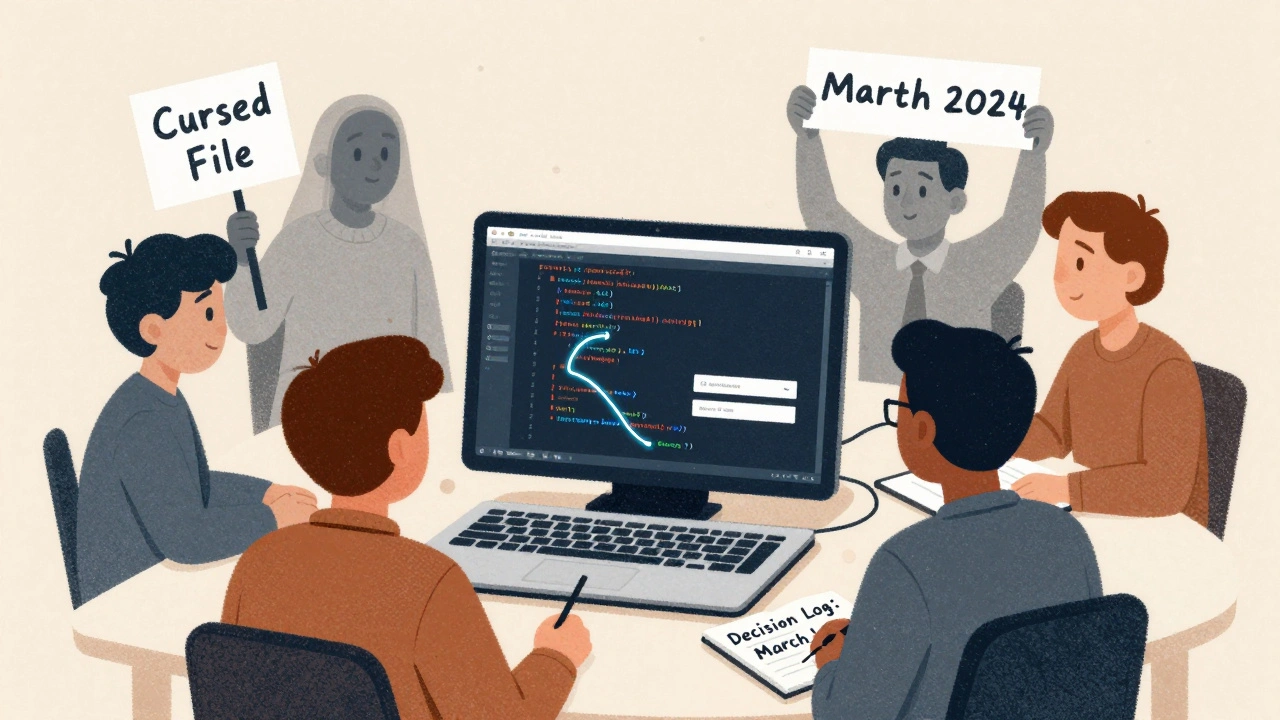
A codebase tour isn’t a walkthrough. It’s a guided experience. Think of it like a museum exhibit where you don’t just read labels-you touch the artifacts, hear the stories behind them, and get told which ones are sacred and which ones are cursed.
Here’s how to run one:
- Start with the pain points. Don’t begin at the entry point. Start with the files that cause the most confusion. Show them the file that broke three times last quarter. Point to the component that took two weeks to refactor. Say, “This is why we do it this way.”
- Walk through the flow. Pick a user journey-login, checkout, profile edit-and trace it from the UI down to the API call, the middleware, the reducer, the test. Don’t explain the code. Explain the why behind each choice. “We moved this logic here because the old version caused race conditions during peak traffic.”
- Call out the vibe. Point out patterns: “Every time we add a new modal, we use
ModalProvider-it’s not required, but it keeps the z-index sane.” Or: “We never useuseEffectfor data fetching. We useuseQuerybecause the cache behavior is predictable.” - Introduce the ghosts. Name the people who wrote the original code. “This function was written by Priya. She left last year, but this is still how we handle auth tokens because she figured out the edge case no one else saw.”
- End with the permission to break it. Say: “This is how we do it now. But if you find a better way, document it, test it, and we’ll change it. Just don’t sneak in changes that don’t match the vibe.”
The tour should take 90 minutes. No slides. No slides. Just you, a laptop, and the code.
The Playbook: Beyond the Tour
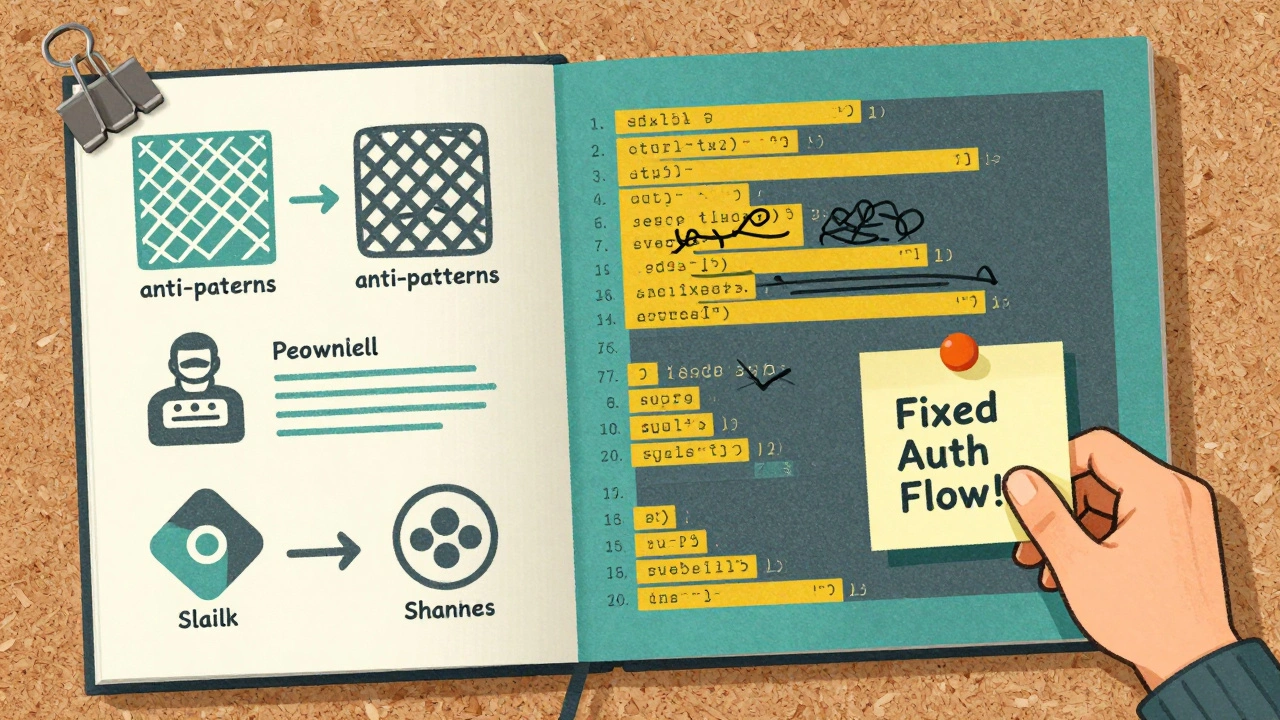
A tour gives context. A playbook gives structure. It’s the living document that captures the vibe so it doesn’t disappear when the original team moves on.
A good playbook has three parts:
- Patterns & Anti-Patterns - Not just “do this.” Show the before and after. “Before: 3 different ways to handle API errors. After: One unified hook called
useApiError.” - Decision Logs - Why did we choose GraphQL over REST? Why is the state management in Redux Toolkit and not Zustand? Write it down like a diary entry: “We switched in March 2024 because the team kept writing duplicate selectors. This cut debugging time by 40%.”
- Where to Go When You’re Stuck - List the 3 files that hold 80% of the logic. List the 2 engineers who know the legacy parts. List the Slack channel where people post “I don’t get this” and get answers within 2 hours.
Keep it short. One page. Update it after every major refactor. Make it part of the PR checklist: “Did you update the playbook if this changes a pattern?”
How to Spot a Vibe-Coded Codebase Before You Join
If you’re evaluating a company, don’t just ask about tech stack. Ask:
- “What’s one thing you wish the codebase did differently?”
- “Is there a file or folder everyone avoids?”
- “Who wrote the oldest piece of code still in production?”
- “Do you have a playbook or just a README?”
If they say, “We don’t really have rules, we just figure it out,” that’s a red flag. Not because it’s bad-but because it’s a vibe trap. You’ll be expected to absorb the culture without being taught it.
On the flip side, if they hand you a one-pager that says, “We use hooks for state, not classes because we’re on React 18 and need concurrent rendering,” and then shows you a comparison of two versions of the same component-you’ve found a team that cares about maintainability.
What Happens When You Ignore the Vibe
Teams that skip vibe-aware onboarding end up with:
- Code that works but feels alien-hard to extend, harder to debug
- High turnover among junior devs who feel they’re “doing it wrong” even when they’re not
- Technical debt that grows because no one knows what’s intentional and what’s accidental
- Onboarding that takes months instead of weeks
At a health tech company in 2025, a new engineer spent three weeks rewriting a service because he thought it was “bad code.” He didn’t know it was built to handle a specific FDA compliance rule that only one person remembered. He broke the compliance. The fix took two more weeks.
Vibe isn’t about perfection. It’s about consistency. And consistency is the quiet engine of maintainability.
What to Do If You’re the One Who Built the Vibe
If you’re the senior dev who wrote 70% of the code, you’re not just a coder-you’re a cultural architect. Your job isn’t done when the feature ships. It’s done when someone else can pick up where you left off.
Here’s how to help:
- Don’t wait for onboarding week. Start documenting patterns as you go. A quick comment in a PR: “We’re using this pattern now because X.”
- Pair with new hires on their first PR. Don’t review it-build it with them. Let them feel the rhythm while they’re still learning.
- Give them a “vibe checklist”: “Does this match the naming? Does it use the same error handler? Is it in the right folder?”
- Celebrate when someone improves the vibe. “You cleaned up the auth flow? That’s a win. Update the playbook.”
The best codebases aren’t the ones with the cleanest syntax. They’re the ones where new people don’t feel like outsiders.
Final Thought: Vibe Is the New Documentation
Documentation dies. Vibe lives.
Docs get outdated. Vibe gets reinforced every time someone writes a PR, fixes a bug, or teaches a new hire.
You can’t automate a vibe. You can’t script it. But you can design it. You can name it. You can pass it on.
If your codebase has a vibe-don’t hide it. Don’t assume it’s obvious. Don’t hope people will figure it out.
Take them on a tour. Give them a playbook. Let them feel it. Then let them make it better.


Emmanuel Sadi
9 December, 2025 - 00:43 AM
Wow. So we’re just gonna call technical debt ‘vibe’ now? Next thing you know, we’ll be naming our CI/CD pipeline ‘the spirit of the old dev who left.’ This is just corporate mysticism dressed up as engineering wisdom. If your codebase needs a guided meditation to understand it, you’ve already lost.
Nicholas Carpenter
11 December, 2025 - 00:24 AM
I actually really liked this. I’ve been on teams where the vibe was so strong, I felt like I was speaking a different language even though I knew all the syntax. The codebase tour idea? Game changer. I did something similar last year-walked a new hire through the worst part of our code, showed them the ‘cursed’ component, and by the end they were laughing instead of panicking. That’s how you build belonging.
Chuck Doland
11 December, 2025 - 18:12 PM
The conceptual framework presented here is both philosophically rigorous and operationally sound. The notion that tacit knowledge, encoded through repetitive behavioral patterns within a codebase, constitutes a form of epistemic culture-distinct from explicit documentation-is not merely intuitive, but empirically verifiable. The proposed ‘codebase tour’ functions as a hermeneutic practice, enabling newcomers to navigate the hermeneutic circle of organizational memory. Furthermore, the playbook, as a dynamic, evolving artifact, aligns with the principles of situated cognition and distributed knowledge systems. This is not merely a best practice; it is an epistemological necessity in complex software ecosystems.
Madeline VanHorn
13 December, 2025 - 00:05 AM
Of course you need a tour. If you’re joining a team and you don’t immediately know that ‘utils’ means ‘don’t touch unless you want to die,’ you’re not ready. I’ve seen juniors waste weeks rewriting things that were ‘weird’ but actually handled compliance, legacy APIs, or some ancient edge case. If you can’t feel the vibe, you shouldn’t be touching the code.
Glenn Celaya
13 December, 2025 - 19:30 PM
literally no one cares about your vibe bro. if your code is a mess and you call it culture you’re just lazy. i’ve seen teams use this as an excuse to not document anything. ‘oh it’s just the vibe’ yeah it’s the vibe of a dumpster fire. also why are you naming ghosts like they’re saints? this is not a cult meeting. fix your code or get out.
Wilda Mcgee
14 December, 2025 - 20:36 PM
This hit me right in the soul. I remember my first week at my last job-I spent three days trying to figure out why every API call had this weird .json() wrapper. No one told me. I thought I was dumb. Turns out it was because the old dev had a bug in the backend that only showed up if you didn’t stringify first. So they just… wrapped everything. And nobody wanted to touch it. I wish someone had taken me aside and said, ‘Hey, this is the ‘Ghost of Greg’-he’s gone, but his legacy lives in this one weird line.’ That’s not magic. That’s mentorship. And yeah, the playbook? I made one for my team. One page. Updated it after every PR that changed the rhythm. Now juniors get it in two days. Not because they’re smart. Because we showed them how to listen.