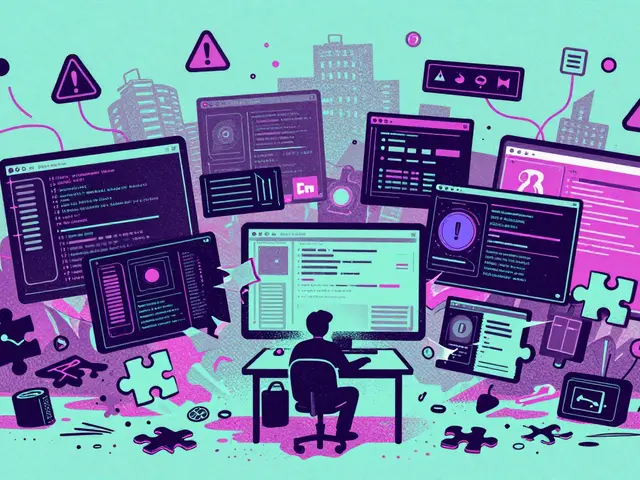
You just told an AI to build a customer portal. It spit out 5,000 lines of code in ten seconds. Looks great, right? But who owns that code? What happens when the underlying large language model updates next month and breaks your payment gateway? And can you actually audit what the AI did before it shipped to production?
If these questions keep you up at night, you’re not alone. Vibe coding has moved from a developer novelty to a core enterprise strategy. By late 2025, a paradigm where natural language prompts generate functional application logic, was evaluated by 68% of enterprises selecting new low-code platforms, according to Gartner. But here is the catch: traditional software procurement rules don’t apply here. You aren’t just buying a license; you are renting intelligence that changes its mind.
Why Traditional Vendor Management Fails Here
Most IT procurement teams treat software vendors like static utilities. You buy it, install it, and maybe patch it once a year. Vibe coding platforms break this model because they rely on dynamic Large Language Models (LLMs). These models are living entities. They get retrained, fine-tuned, or swapped out by providers like OpenAI, Anthropic, or proprietary internal engines without much warning.
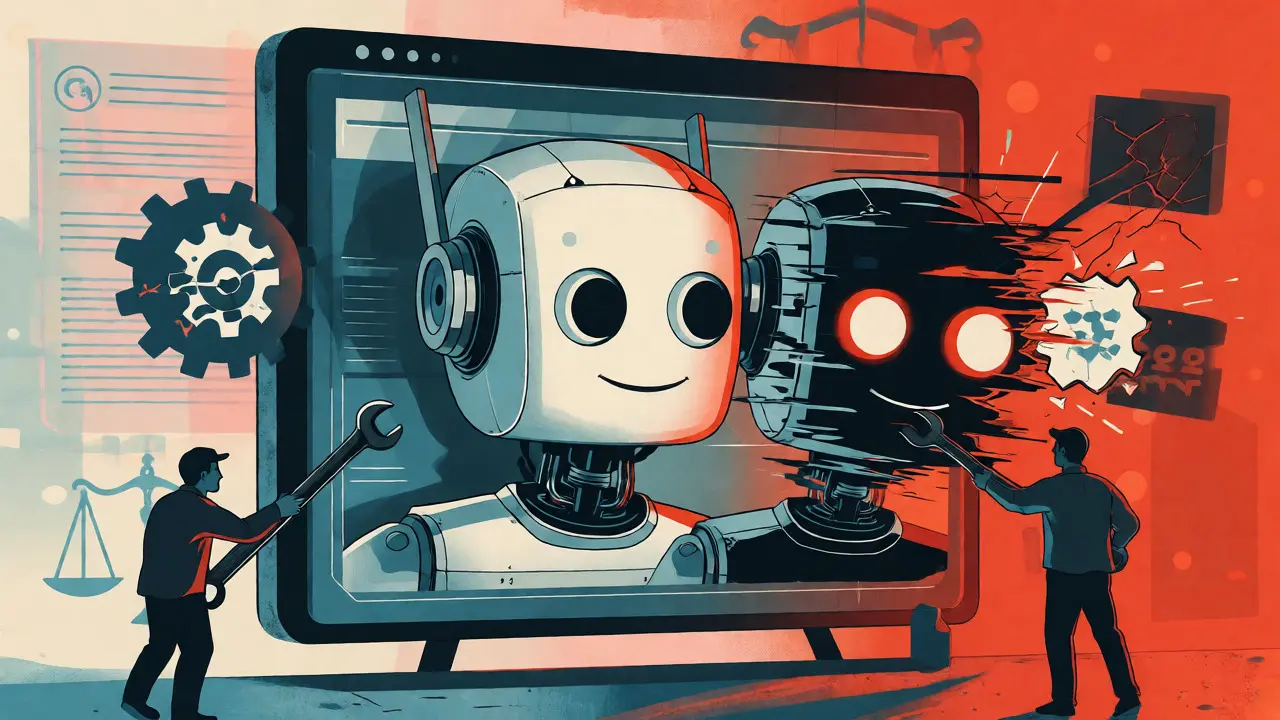
When a provider updates their base model, the output quality of your vibe coding tool can shift overnight. A fintech startup documented a case where a silent model update broke compliance functionality, leading to $450,000 in remediation costs. That isn’t a bug; it’s a business risk. Your vendor contract needs to address Model Versioning as a critical service level agreement (SLA) metric, not just uptime.
| Platform | Governance Rating | Key Strength | Primary Risk | Pricing Model |
|---|---|---|---|---|
| ServiceNow | High (Gartner Leader) | Built-in workflow governance | High entry cost ($100/user/mo min) | Subscription + Now Assist fee |
| Salesforce | Medium-High | MCP integration & IDE support | Lock-in within Salesforce ecosystem | $125/user/mo (min 50 users) |
| OutSystems | Very High (5/5) | Full SDLC pipeline control | Complex deployment requires experts | $1,200/app/mo + 22% support |
| Betty Blocks | High (4.5/5) | Code exportability (no lock-in) | Smaller ecosystem than giants | Variable per app/user |
| Retool | Medium (3/5) | Flexibility for internal tools | Weaker for regulated industries | Per user/per app hybrid |
The New Contract Clauses You Need
Stop signing standard MSA templates. If you are dealing with a vibe coding vendor or a model provider, you need specific protections. First, demand Model Change Notification Lead Time. The industry average is currently around 14 days. You should aim for 30 days minimum. This gives your QA team time to regression test against the new model behavior before it hits production.
Second, look for Emergency Rollback Capabilities. Can you revert to the previous model version if the new one hallucinates security flaws? Best practice dictates this capability must exist and be executable in under four hours. If the vendor says "we handle it automatically," ask for the logs. Automatic handling often means "we fixed it three weeks later."
Third, clarify Code Ownership and Exportability. Some vendors claim you own the code but make exporting it painful or limited. Betty Blocks, for instance, scores high here because they allow fully exportable code. Others trap you in their runtime environment. If you plan to move away in two years, can you take your generated assets with you? Test this during the proof-of-concept phase, not after renewal.
Governance: Audit Trails and Security Scanning
Speed is the selling point of vibe coding. Developers describe intent, and the AI writes the logic. But speed without visibility is chaos. You need Audit Trails that capture not just who clicked "generate," but what prompt was used, which model version processed it, and what intermediate steps were taken.
Security scanning cannot be an afterthought. Tools like Legit Security warn that vibe coding introduces new attack surfaces because AI might suggest insecure libraries or outdated patterns. Your vendor must demonstrate automated security scanning integrated directly into the generation pipeline. If the platform doesn’t flag a SQL injection vulnerability in real-time, you are shipping bugs at scale.
Consider the experience of J.P. Morgan. They reduced third-party risk assessments from 45 days to 7 days by pre-negotiating governance evidence requirements. They didn’t wait for audits; they demanded continuous compliance data feeds from their vendors. You should do the same. Require access to raw telemetry on how often the AI overrides your coding standards versus adhering to them.
Managing Model Providers vs. Platform Vendors
A common confusion is treating the platform vendor (like ServiceNow) and the model provider (like OpenAI) as the same entity. They are distinct layers. The platform vendor manages the interface and workflow; the model provider manages the brain. Your risk profile differs for each.
- Platform Vendor Risk: Focuses on UI stability, integration connectors, and user management. Look for SOC 2 Type II reports and clear SLAs on API latency.
- Model Provider Risk: Focuses on data privacy, training data provenance, and bias mitigation. Under the EU AI Act, you need detailed documentation on training data sources. In Q3 2025, 72% of vibe coding vendors failed to provide this during audits.
You need a dual-track management strategy. For the platform, negotiate for multi-model support. Don’t let them hardcode you to one LLM. If they use Model X and it gets deprecated, you want the option to switch to Model Y without rewriting your entire app. For the model provider, insist on contractual guarantees about data retention. Does your prompt history stay in their servers forever? Can you request deletion? These are GDPR and CCPA landmines waiting to explode.

Building a Vibe Coding Vendor Scorecard
How do you compare vendors objectively? Create a scorecard. Forget marketing fluff about "magic" and focus on operational metrics. Here is a template based on 2026 best practices:
- Transparency Score: Do they disclose model versions? Rate 1-5. (Target: 5)
- Rollback Speed: How fast can you revert a bad model update? (Target: <4 hours)
- Governance Evidence: % of compliance checks automated. (Target: >95%)
- Support Response: Median time for Priority 1 issues. (Industry avg: 18.7 hours; Target: <8 hours)
- Cost Predictability: Is pricing based on tokens, users, or apps? Token-based pricing can spike unpredictably with heavy usage.
Use this scorecard quarterly. Constellation Research notes that many vendors engage in "governance theater"-marketing claims that don’t match reality. Regular scoring keeps them honest. If a vendor’s transparency score drops because they stopped publishing model changelogs, trigger a review immediately.
Future-Proofing Against Consolidation
The market is consolidating. The top five vendors now hold 68% of the market share. Gartner predicts only 3-4 dominant players will remain by 2027. This creates a classic vendor lock-in scenario. If your chosen platform disappears or gets acquired, what happens to your code?
Mitigate this by avoiding proprietary syntax where possible. Favor platforms that generate standard languages (Python, JavaScript, Java) rather than unique DSLs (Domain Specific Languages). While low-code platforms offer convenience, standard code is portable. If your vendor goes bust, you can hire any developer to maintain Python code. You can’t easily find developers fluent in "VibeScript v2."
Also, consider joining industry consortia. The Financial Services Vibe Coding Consortium reported a 35% reduction in vendor management costs by sharing assessment frameworks. You don’t have to do this alone. Leverage collective bargaining power to demand better terms on model updates and data rights.
What is the biggest hidden cost in vibe coding platforms?
The biggest hidden cost is usually remediation due to model drift. When a provider updates their underlying LLM, previously stable applications may behave differently. Without proper testing infrastructure, this leads to unexpected bugs and compliance failures. Additionally, token-based pricing models can lead to bill shocks if development velocity increases unexpectedly.
Do I own the code generated by vibe coding tools?
It depends entirely on the contract. Some vendors claim ownership of the generated artifacts or restrict export capabilities. Platforms like Betty Blocks emphasize full code exportability, while others lock you into their runtime environment. Always verify the intellectual property clause regarding AI-generated outputs before signing.
How often do model providers update their LLMs?
Major providers like OpenAI and Anthropic update their models frequently, sometimes monthly or even weekly for minor patches. Enterprise platforms may batch these updates, releasing them quarterly. However, the frequency varies by vendor. You must contractually define notification periods for these changes to manage risk effectively.
Is vibe coding secure enough for regulated industries?
Yes, but only with strict governance. Regulated industries require audit trails, role-based access controls, and automated security scanning. Platforms like OutSystems and ServiceNow offer higher governance ratings suitable for finance and healthcare. Simpler tools may lack the necessary depth for strict regulatory compliance.
What is the average response time for critical vendor support?
According to TrustRadius data from Q3 2025, the median response time for Priority 1 issues across major vibe coding vendors is 18.7 hours. This is significantly slower than traditional software support. Enterprises should negotiate for faster SLAs or implement internal triage processes to handle initial diagnostics.
Sherri Jones
23 October, 2026 - 08:45 AM
This is spot on! 🌟 I've seen so many teams get burned by silent model updates. The point about Model Change Notification Lead Time is crucial. We pushed for 30 days in our last contract and it saved us during a major Anthropic update. 💡 Also, don't underestimate the importance of code exportability. If you can't get your code out easily, you're just renting intelligence forever. Great guide! 👏