You have built an app in an afternoon using vibe coding is a methodology for developing software applications through AI-assisted prompting without writing traditional code. It relies on natural language instructions to generate functional applications. It works. The buttons click, the data saves, and your boss is impressed. But then comes the Tuesday morning panic: a security hole you didn’t see, or a logic error that breaks the whole workflow when the dataset grows from ten rows to ten thousand. You are not alone. As vibe coding adoption explodes in 2026, we are facing a massive gap in quality control. We have the tools, but we lack the tribe.
The current landscape is fragmented. You might find a bootcamp like the Vibe Coding Weekend Bootcamp or a structured cohort like the Claude Cowork BootCamp, but these are classrooms, not communities. They teach you how to prompt; they do not help you maintain what you built. There is no established infrastructure for systematic peer reviews or regular office hours dedicated specifically to vibe coders. This silence is dangerous. Without a Community of Practice (CoP), vibe coding remains a hobbyist activity rather than a professional engineering discipline. If you want to move from "it works on my machine" to "it scales for our business," you need to build this structure yourself. Here is how you create a CoP that actually functions, focusing on peer reviews and office hours.
Why Your Current Workflow Is Broken
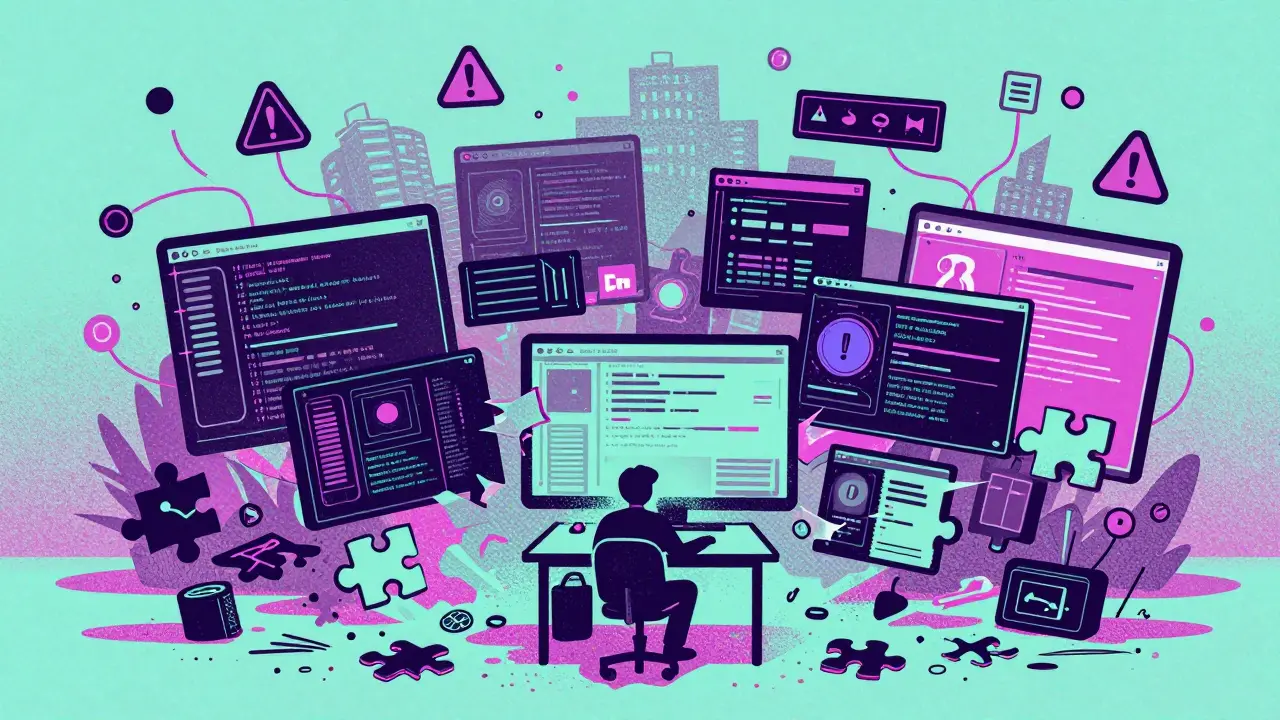
Let’s be honest about why solo vibe coding fails at scale. When you rely entirely on Large Language Models (LLMs) to generate code, you inherit their biases and blind spots. AI-generated code exhibits higher rates of security flaws and missing validation logic when reviews are skipped, according to guides from AlmCorp and Softr. You might think you are saving time by skipping the review process, but you are actually accruing technical debt at a terrifying speed.
Consider the typical vibe coder’s day. You prompt, you copy-paste, you deploy. Where is the friction? There isn’t any. And that is the problem. Friction is where learning happens. In traditional software development, code reviews force developers to slow down, explain their logic, and catch edge cases. In vibe coding, the AI does the heavy lifting, so the human oversight often becomes superficial. You glance at the output, see it looks right, and move on. But as Teresa Torres notes in her work documented by Age of Product, non-engineers approaching vibe coding must embrace best practices like upfront Markdown planning and structured review processes. Without a community to enforce these standards, everyone cuts corners.
The result is a graveyard of half-finished apps that look great in demos but crumble under real-world usage. To fix this, you need two pillars: Peer Reviews for quality assurance and Office Hours for skill evolution. These are not optional add-ons; they are the operating system for a mature vibe coding team.
Designing the Peer Review Protocol
Peer reviews in vibe coding are different from traditional code reviews. You are not just checking syntax; you are auditing the prompt chain and the resulting architecture. Since most vibe coders are not professional engineers, the review process must be accessible, rigorous, and focused on outcomes rather than implementation details.
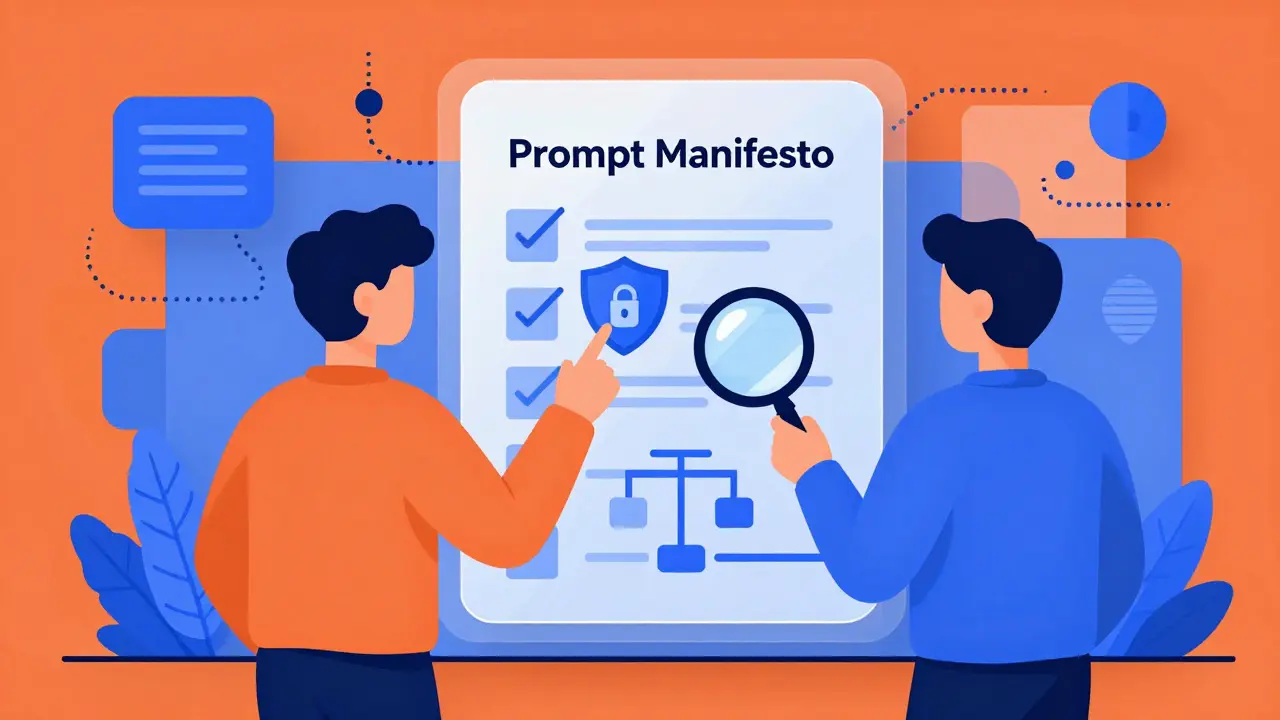
Start by defining what a "reviewable unit" looks like. In traditional dev, it’s a pull request. In vibe coding, it should be a shared workspace link (like a Softr project or a Cursor branch) accompanied by a "Prompt Manifesto." This manifesto documents:
- The Goal: What specific user problem is this feature solving?
- The Prompt Strategy: Which models were used? Did you use iterative refinement or one-shot generation?
- Known Limitations: What did the AI struggle with? Where did you manually intervene?
- Security Checks: Have you verified input validation and authentication flows?
When you bring another person into this process, you are not asking them to rewrite the code. You are asking them to stress-test the logic. A good peer review question in vibe coding is not "Is this Pythonic?" but "What happens if a user inputs a SQL injection string here?" or "Does this agent loop infinitely if the API times out?"
To make this scalable, implement a "Buddy System." Pair each vibe coder with a reviewer who has a slightly different perspective. If you are building a marketing tool, pair with someone who understands sales workflows. If you are building an internal dashboard, pair with someone who handles data entry. This cross-functional review catches usability issues that pure technical reviews miss. Remember, the goal is not perfection; it is risk mitigation. As Softr’s 2026 guide identifies, reviewing changes is one of eight essential vibe coding best practices. Make it mandatory before any deployment.
Structuring Effective Office Hours
If peer reviews are the shield, office hours are the sword. They are where you sharpen your skills. The current vibe coding education model is static. You attend a workshop like the PromptingBirds Vibe Coding Workshop, learn the basics, and then you are on your own. This leaves a huge gap in ongoing support. Office hours fill that gap by providing real-time, contextual help.
Do not schedule office hours as lectures. That is boring and ineffective. Schedule them as "Debugging Sessions." Pick a recurring time-say, every Thursday at 10 AM UTC-and invite anyone in your community to join. The agenda is simple: bring your stuck projects. The host (who could rotate weekly among senior members) facilitates the session, helping participants troubleshoot specific prompt failures, architecture bottlenecks, or integration errors.
Here is why this works: Vibe coding has a steep learning curve in prompting style. As DEV Community contributors note, practitioners require ongoing evolution of their prompting techniques through iterative work. Watching someone else solve a complex problem in real-time is far more valuable than reading a blog post about it. You see the mistakes, the backtracking, and the eventual breakthrough. This creates a living library of solutions that belongs to your community.
Keep these sessions recorded. Create a searchable archive of past office hours. Tag them by topic: "Authentication Issues," "Agent Loops," "UI Glitches." Over time, this archive becomes your community’s knowledge base, reducing the need for repetitive questions and allowing new members to onboard faster.
Building the Infrastructure: From Scattered to Structured
You cannot build a Community of Practice on Slack DMs. You need a dedicated space that supports both asynchronous review and synchronous collaboration. While formalized communities of practice specifically dedicated to vibe coding remain nascent as of mid-2026, you can repurpose existing tools to create this infrastructure.
Choose a platform that allows for code sharing, commenting, and video conferencing. GitHub Discussions paired with Zoom or Discord voice channels can work well for technical teams. For non-technical vibe coders, platforms like Notion or Coda combined with Loom for async video feedback might be more approachable. The key is consistency. Define clear norms:
- Response Time: Peer reviews should be completed within 48 hours.
- Attendance: Office hours are open floor, but presenters must sign up in advance.
- Code of Conduct: Feedback is constructive, not critical. Focus on the code, not the coder.
Start small. Invite five trusted colleagues to form the founding cohort. Run a pilot program for four weeks. During this time, track metrics: How many bugs were caught in peer review? How many hours were saved during office hours compared to solo debugging? Use this data to refine your process and recruit more members.
Comparison: Traditional Dev vs. Vibe Coding CoP
| Feature | Traditional Software Development | Vibe Coding Community of Practice |
|---|---|---|
| Primary Artifact | Source Code (Git) | Prompt Chains + Generated App Links |
| Review Focus | Syntax, Efficiency, Standards | Logic, Security, User Experience |
| Skill Gap | Language-specific nuances | Prompt engineering & AI hallucination detection |
| Office Hours Purpose | Architecture decisions, legacy code fixes | Real-time debugging, prompt iteration strategies |
| Barriers to Entry | High (Years of study) | Low (Weeks of practice) |
This table highlights why you cannot simply copy-paste traditional engineering practices into vibe coding. The artifacts are different. The risks are different. Your CoP must be designed around the unique characteristics of AI-assisted development. Specifically, you need to emphasize security validation and logical integrity over syntactic correctness.

Overcoming Resistance and Scaling Adoption
Expect pushback. Some vibe coders will feel that peer reviews slow them down. They value speed above all else. Your job is to reframe the narrative. Speed is not just about how fast you can build; it is about how fast you can iterate without breaking things. A broken app takes longer to fix than a reviewed app takes to build. Show them the data. Track the number of post-deployment incidents before and after implementing peer reviews. Usually, the drop in incidents is dramatic.
Also, address the imposter syndrome. Many vibe coders feel they are "cheating" because they don’t write code line-by-line. Emphasize that vibe coding is a legitimate engineering discipline that requires architectural thinking, security awareness, and user empathy. By participating in a CoP, they are validating their role as serious builders, not just prompt tourists.
As you grow, consider inviting external experts. Bring in a security specialist for a monthly office hour focused solely on vulnerability scanning. Invite a UX designer to review the interface generated by your prompts. This diversifies the expertise within your CoP and raises the bar for everyone.
Next Steps for Founding Your CoP
Ready to start? Here is your checklist for the first month:
- Recruit Core Members: Find 5-10 people who are actively building with vibe coding.
- Define the Scope: Agree on the types of projects you will review (e.g., internal tools, customer-facing apps).
- Set Up the Platform: Create a dedicated channel or workspace for reviews and scheduling.
- Draft the Review Template: Create the "Prompt Manifesto" template mentioned earlier.
- Schedule First Office Hour: Pick a date, send invites, and prepare a sample problem to demonstrate the format.
- Launch: Start with low-stakes projects to build trust and refine the process.
The vibe coding revolution is happening now. But revolutions without structure lead to chaos. By building a Community of Practice centered on peer reviews and office hours, you are laying the foundation for sustainable, high-quality AI-driven development. Don’t wait for someone else to build it. You have the tools. You have the motivation. Now, build the tribe.
What is a Community of Practice (CoP) in vibe coding?
A Community of Practice in vibe coding is a group of individuals who share a concern or a passion for building software using AI-assisted prompting. Unlike casual forums, a CoP has structured activities like peer reviews and office hours to improve collective competence, ensure quality, and share best practices systematically.
Why are peer reviews necessary for vibe coding?
Peer reviews are critical because AI-generated code often contains hidden security flaws, logical errors, and missing validation steps. Human oversight ensures that the generated application meets safety standards and functional requirements before deployment, mitigating the risks associated with relying solely on automated outputs.
How should I structure office hours for vibe coders?
Office hours should be structured as interactive debugging sessions rather than lectures. Participants bring specific problems or stuck projects, and the group collaboratively solves them in real-time. Recording these sessions creates a searchable knowledge base for future reference and onboarding.
What tools are best for managing a vibe coding CoP?
Effective tools include collaborative platforms like Notion or Coda for documentation, GitHub or GitLab for version control of prompts and code, and communication tools like Slack or Discord for real-time discussion. Video conferencing tools like Zoom are essential for synchronous office hours.
Can non-technical users participate in peer reviews?
Yes, non-technical users can play a vital role by focusing on user experience, logical flow, and requirement alignment. While they may not check syntax, they can identify usability issues and logical gaps that technical reviewers might overlook, ensuring the final product meets actual user needs.
How do I measure the success of my vibe coding CoP?
Success can be measured by tracking metrics such as the reduction in post-deployment bugs, the average time taken to resolve issues during office hours, member retention rates, and the number of successful projects deployed using the community’s review framework.
Are there existing formal vibe coding communities?
As of mid-2026, formalized communities of practice with systematic peer review frameworks and regular office hours remain nascent. Most existing structures are scattered bootcamps, workshops, or informal online groups, highlighting an opportunity for organizations to establish their own dedicated CoPs.
What is a "Prompt Manifesto"?
A Prompt Manifesto is a documentation template used in vibe coding peer reviews. It outlines the project goal, the prompting strategy used, known limitations, and security checks performed. It provides context for reviewers to understand the intent and constraints of the generated code.
How often should office hours be held?
Weekly office hours are recommended to maintain momentum and provide timely support. Consistency helps members plan their work around these sessions and ensures that issues are addressed promptly before they become major blockers.
What are the common pitfalls in vibe coding peer reviews?
Common pitfalls include superficial reviews that only check for obvious errors, lack of clear criteria for evaluation, and delayed feedback loops. To avoid these, establish clear review guidelines, use standardized templates, and set expectations for response times.