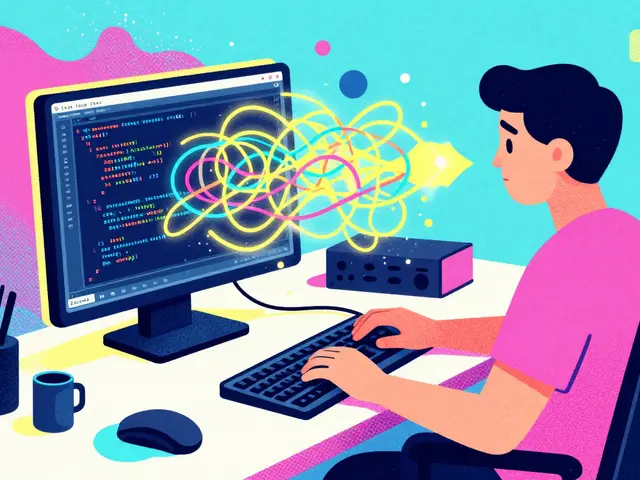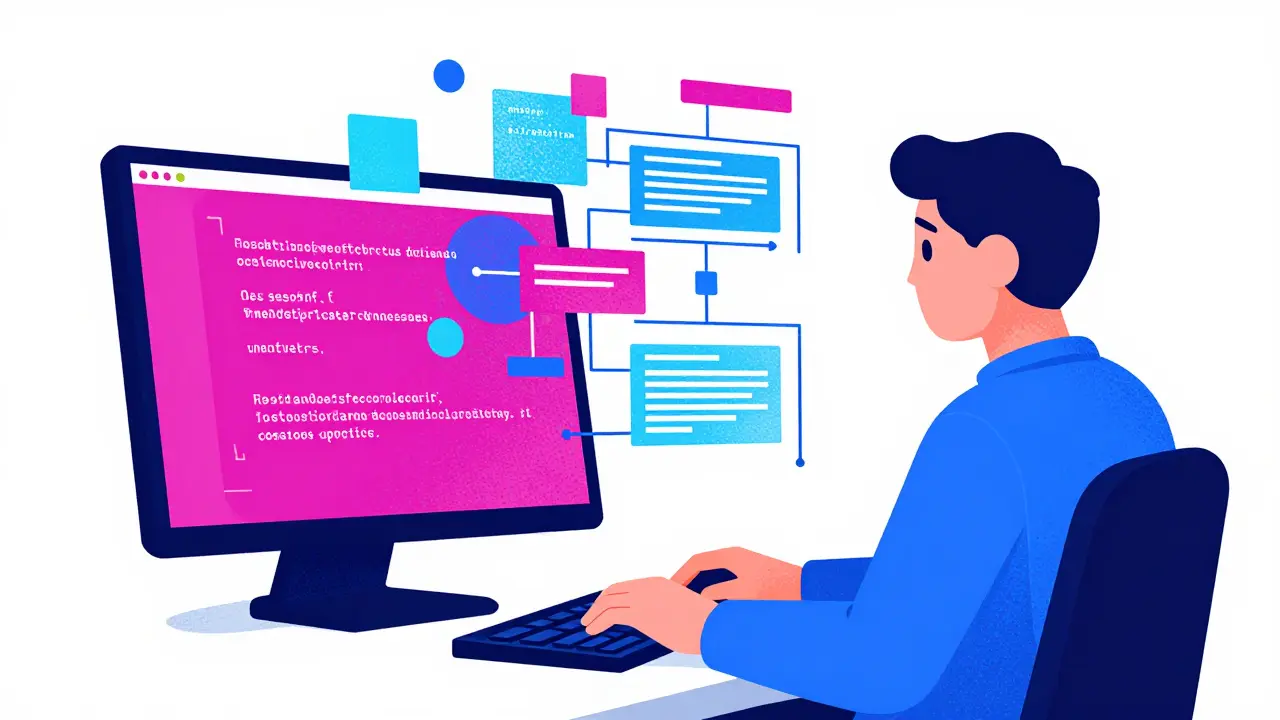
Imagine typing a single sentence into your terminal: "Set up a test environment for the new checkout flow using last week's production data, but anonymize user emails." In the past, this would have meant writing a Terraform script, configuring a database migration, setting up network rules, and manually verifying the output. Today, with the rise of vibe coding, a development approach where developers express intentions in plain language and AI systems transform those inputs into executable code, that entire process happens in seconds. You don't just get code; you get a working infrastructure component, tested and deployed.
This isn't science fiction anymore. It is the reality of a paradigm shift in software development where programmers rely on intuition and AI assistance to automate code generation without manual scripting. But vibe coding doesn't stop at writing application logic. It is spilling over into operations, fundamentally changing how we build pipelines, manage deployments, and handle on-call duties. This evolution is often called VibeOps.
The Shift from Scripting to Intent
For years, DevOps has been about automation through scripts. We wrote YAML files for Kubernetes, JSON for AWS CloudFormation, and Bash scripts for CI/CD pipelines. These tools were powerful, but they required deep technical knowledge and constant maintenance. A small syntax error in a Dockerfile could break an entire build pipeline.
Vibe coding changes the input method. Instead of fighting with syntax, developers describe what they want. The AI agent handles the syntax, the dependencies, and the configuration. This reduces cognitive load significantly. You are no longer thinking about how to format a JSON object; you are thinking about what the system needs to do.
Consider the difference between traditional ChatGPT usage and vibe coding. With standard LLMs, you might ask for a snippet of Python code to parse a CSV file. You then copy-paste that code into your project. With vibe coding tools like GitHub Copilot in agent mode or Windsurf, you can instruct the AI to create an entire microservice, complete with tests, documentation, and deployment configurations. The AI acts as an autonomous agent, not just a text generator.
| Aspect | Traditional DevOps | VibeOps (AI-Assisted) |
|---|---|---|
| Input Method | Manual scripting (YAML, JSON, Bash) | Natural language prompts |
| Error Handling | Reactive debugging after failure | Real-time feedback and prevention |
| Deployment Speed | Hours to days for complex setups | Minutes for most configurations |
| Security Checks | Scheduled static scans | Continuous, context-aware analysis |
| On-Call Role | Manual investigation and remediation | Monitoring AI-driven auto-healing |
Redefining CI/CD Pipelines with AI Agents
Continuous Integration and Continuous Deployment (CI/CD) pipelines are the backbone of modern software delivery. Traditionally, these pipelines are rigid. They follow a predefined sequence: build, test, deploy. If a step fails, the pipeline stops, and a human must intervene. This creates bottlenecks and delays.
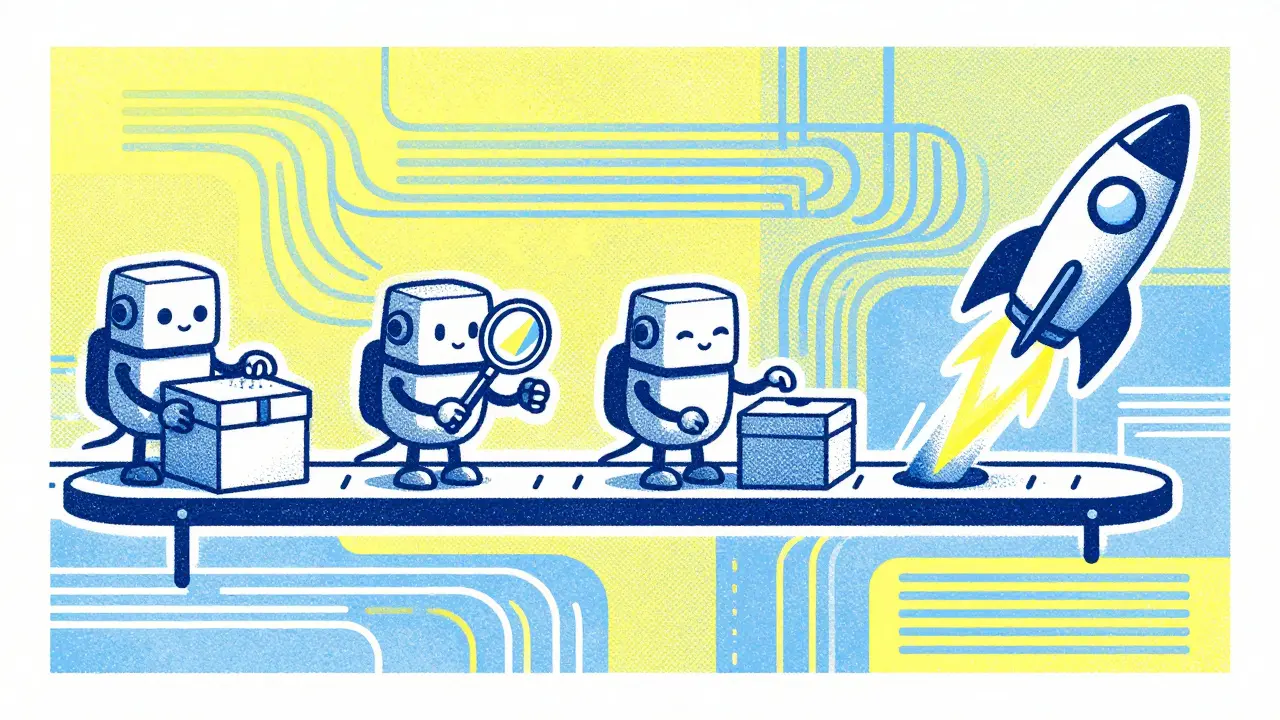
In a VibeOps environment, AI agents take over these roles. Think of them as specialized workers within your pipeline:
- Build Agents: These monitor code commits and trigger builds automatically. They validate outputs against expected standards before moving forward.
- Test Agents: Instead of running every test suite blindly, these agents analyze code changes to determine which tests are relevant. They can also identify edge cases that human testers might miss, improving coverage without slowing down the process.
- Deploy Agents: These manage rollouts intelligently. They can perform canary deployments or blue-green strategies based on real-time system health. If metrics indicate a problem, they automatically rollback the change.
- Monitor Agents: These watch production metrics continuously. Unlike traditional alerting systems that trigger on static thresholds, these agents detect anomalies predictively and initiate automated remediations.
Platforms like GitLab's Agentic AI Platform are already implementing this multi-agent orchestration. The result is a pipeline that is not just automated, but adaptive. It learns from previous deployments and optimizes itself over time.
The End of Traditional On-Call?
One of the most stressful parts of DevOps is being on call. When an incident occurs, engineers are woken up to investigate logs, trace errors, and apply fixes. This leads to burnout and slow resolution times. Vibe coding offers a different approach.
With AI-powered root cause analysis, the system can diagnose issues faster than any human. For example, if a database connection pool is exhausted, the AI agent can detect the pattern, identify the offending service, and scale the resources or restart the service automatically. This is known as autonomous healing.
However, this does not mean humans are obsolete. Instead, the role shifts from firefighter to supervisor. Engineers review the AI's actions, ensure they align with business goals, and refine the AI's decision-making parameters. This proactive collaboration reduces the frequency of alerts and allows teams to focus on innovation rather than maintenance.
Companies like Cloudflare are building tools that handle network configuration through conversational commands. This eliminates the need for complicated scripts and reduces the risk of human error during critical incidents. The goal is to make infrastructure management as intuitive as having a conversation with a colleague.
Security Risks and Governance in VibeOps
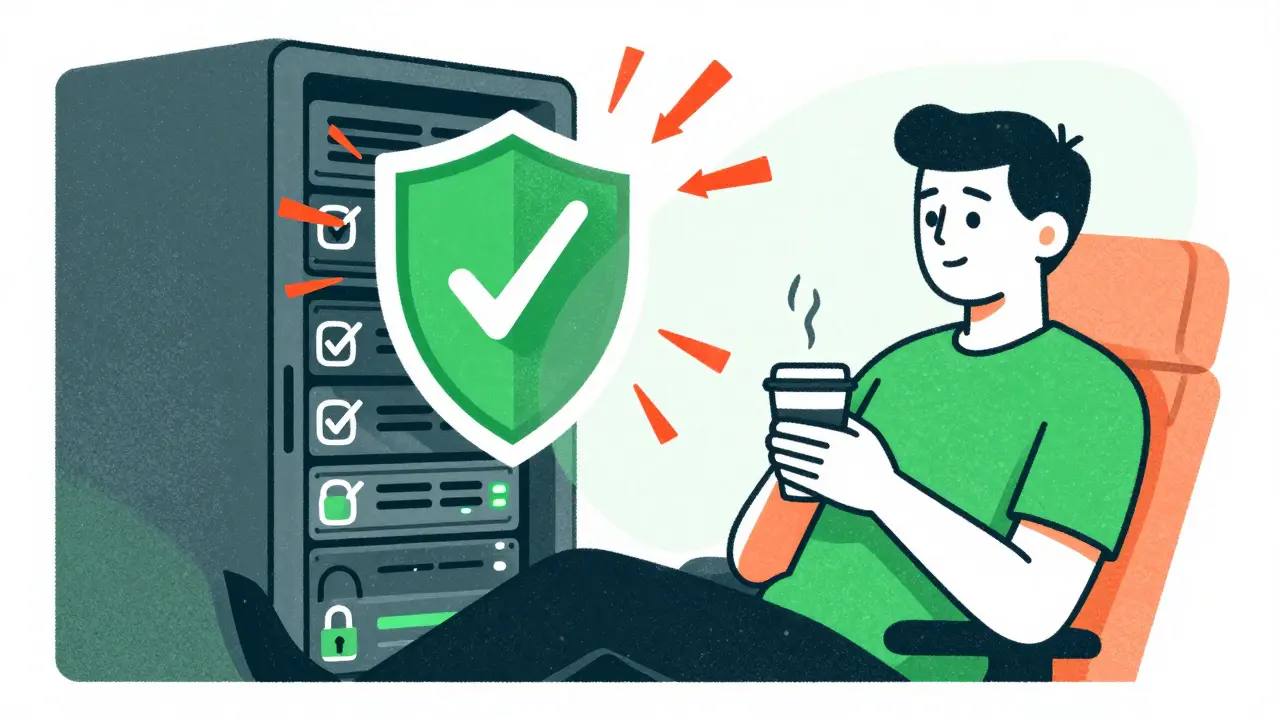
Speed and autonomy come with risks. When AI agents have the power to deploy code and configure infrastructure, security becomes paramount. A misconfigured prompt could lead to exposed databases or unauthorized access. This is the double-edged sword of vibe coding.
Organizations must establish robust governance frameworks. Here are some key practices:
- Least Privilege Access: Ensure AI agents only have the permissions necessary for their specific tasks. Do not give a build agent full admin rights to production environments.
- Human-in-the-Loop Approvals: For critical changes, such as deploying to production or modifying security groups, require human approval. This adds a safety net without sacrificing too much speed.
- Continuous Security Scanning: Integrate security checks directly into the AI workflow. Tools like AWS CodeGuru can analyze code for vulnerabilities in real-time.
- Audit Trails: Maintain detailed logs of all AI actions. This ensures accountability and helps in post-incident analysis.
Without these safeguards, the productivity gains of vibe coding can be undermined by security breaches. It is essential to balance speed with control.
Tools Driving the VibeOps Revolution
Several tools are leading the charge in vibe coding and VibeOps. Understanding these platforms can help teams adopt the right technology stack.
- GitHub Copilot: With its agent mode, Copilot allows developers to build entire frameworks and tools through natural language instructions. It integrates seamlessly with Visual Studio Code.
- Windsurf: An AI-native IDE that focuses on flow-state development. It provides contextual awareness and assists in generating complex infrastructure code.
- Spacelift Saturnhead AI: Specializes in infrastructure as code (IaC). It helps manage state and apply best practices to Terraform and other IaC tools.
- GitLab Agentic AI: Offers end-to-end support for CI/CD pipelines, including automated testing and deployment strategies.
These tools vary in their learning curves. Some require familiarity with cloud concepts, while others are more accessible to beginners. However, the common thread is that they lower the barrier to entry for complex infrastructure tasks.
Future Trends: Edge Computing and Distributed Systems
The next frontier for vibe coding is edge computing. As devices become smarter and more distributed, managing infrastructure across fog computing and cloud environments becomes complex. AI agents can optimize workload placement based on latency, cost, and performance requirements in real-time.
Imagine a scenario where an AI agent automatically migrates a workload from a central cloud server to an edge device closer to the user when network conditions change. This level of dynamic adaptation is difficult to achieve with traditional scripting but is natural for AI-driven systems.
Unified monitoring across these distributed environments will also benefit from vibe coding. AI agents can correlate data from various sources to provide a holistic view of system health, enabling faster decision-making.
Getting Started with VibeOps
If you are interested in adopting vibe coding, start small. Experiment with AI assistants in your local development environment. Use tools like GitHub Copilot to generate boilerplate code and configuration files. Gradually introduce AI agents into your CI/CD pipeline for non-critical tasks.
Focus on training your team to write effective prompts. Clear, concise instructions yield better results. Encourage a culture of experimentation and learning. As the technology matures, so will your proficiency.
Remember, vibe coding is not about replacing developers. It is about augmenting their capabilities. By handling the mundane tasks, AI frees up engineers to focus on creative problem-solving and strategic initiatives. This shift can lead to higher job satisfaction and better business outcomes.
What is vibe coding exactly?
Vibe coding is a development approach where developers use natural language prompts to instruct AI agents to generate code, configure infrastructure, and manage workflows. It emphasizes intuition and flow over manual scripting.
How does VibeOps differ from traditional DevOps?
Traditional DevOps relies on scripted automation and human approval gates. VibeOps uses AI agents for autonomous deployment, predictive anomaly detection, and self-healing operations, reducing the need for manual intervention.
Is vibe coding secure?
Vibe coding introduces security risks due to autonomous actions. Organizations must implement strict governance, least privilege access, and continuous security scanning to mitigate these risks.
Which tools support vibe coding?
Popular tools include GitHub Copilot (agent mode), Windsurf, GitLab's Agentic AI Platform, Spacelift Saturnhead AI, and AWS CodeGuru. These platforms integrate AI agents into development and operations workflows.
Will AI replace DevOps engineers?
No, AI augments DevOps engineers. It handles repetitive tasks and provides insights, allowing engineers to focus on strategy, architecture, and complex problem-solving. The role evolves from manual execution to oversight and optimization.