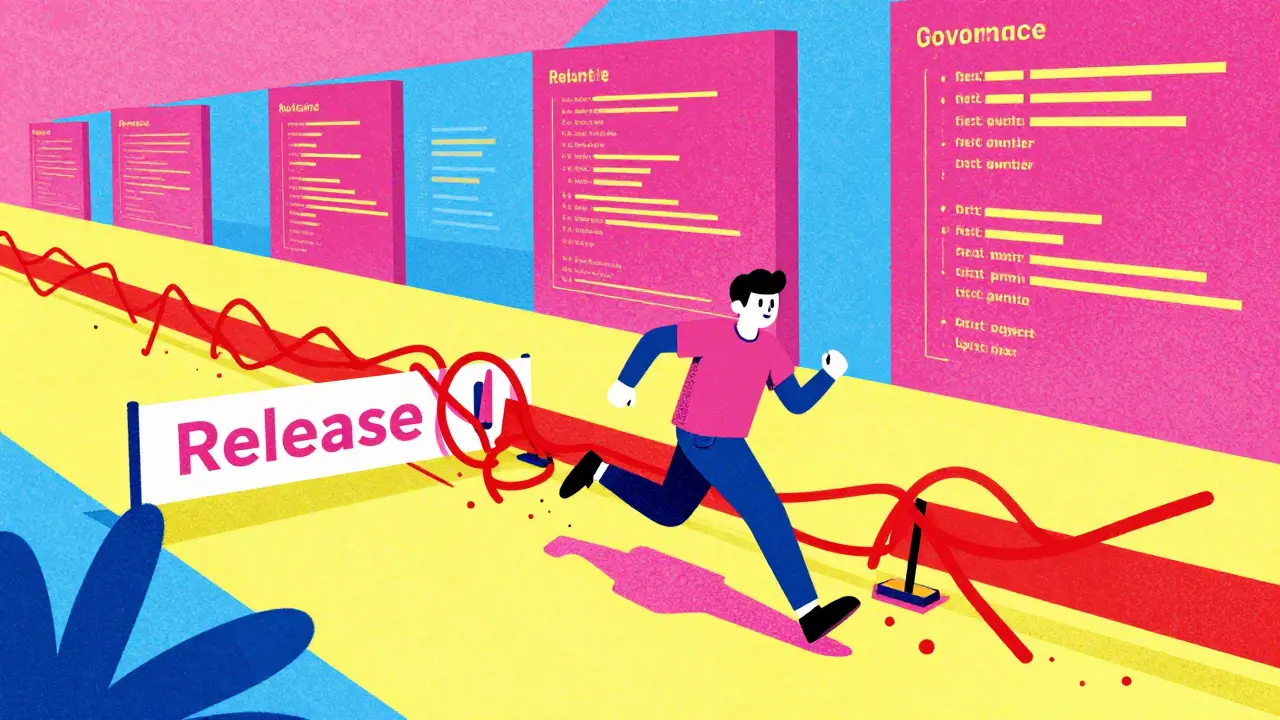
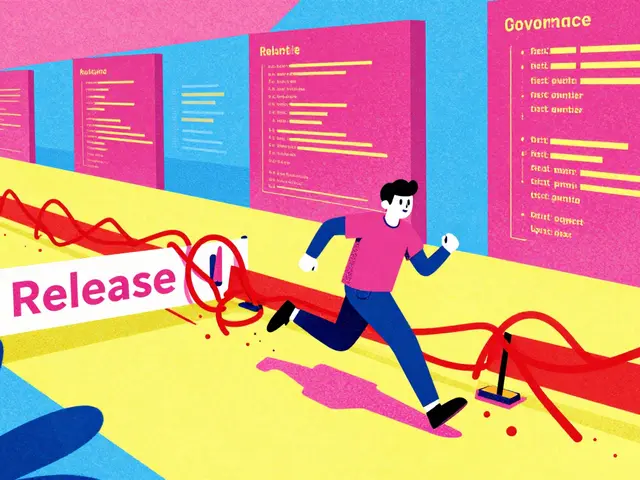
Picture this: your development team is sprinting toward a release deadline. The code is clean, the tests are passing, and the feature is ready to go live. Then, suddenly, a red flag pops up in the deployment pipeline. A security policy check fails because of a minor configuration oversight. Instead of a quick fix, the process grinds to a halt. The developers now have to file a ticket, wait for approval from the security team, explain their context, and then re-run the build. Hours turn into days. Momentum dies. This is the classic friction point between software governance, which ensures safety and compliance, and developer velocity, the speed at which teams deliver value.
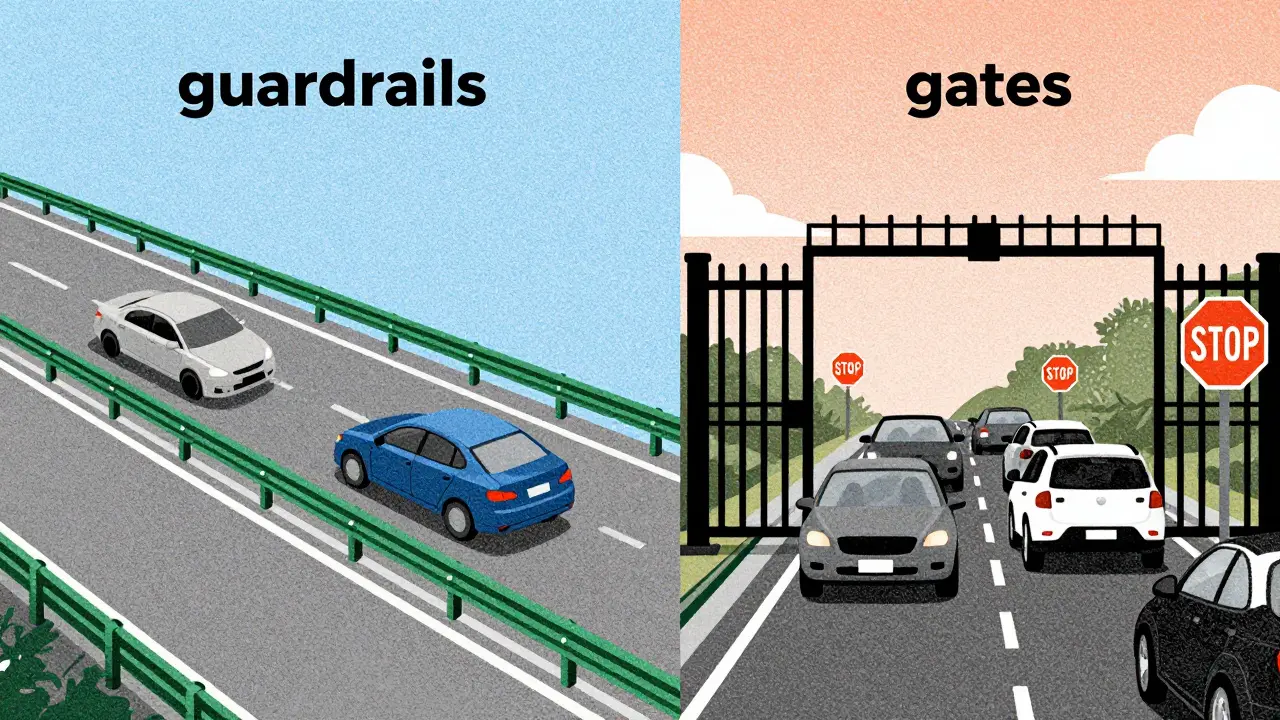
The goal isn't to choose one over the other. It’s to communicate governance in a way that supports speed rather than stifling it. When done right, governance acts like lane markers on a highway-keeping you safe without slowing you down. When done wrong, it feels like roadblocks everywhere. Here’s how to get it right.
The Core Problem: Why Governance Feels Like Friction
At its heart, the conflict arises from mismatched incentives. Security and compliance teams are measured by risk reduction. Engineering teams are measured by delivery speed. When these two groups operate in silos, governance becomes a series of manual checks that interrupt the flow state of developers. Research from the University of California Irvine shows it takes an average of 23 minutes to regain focus after an interruption. Multiply that by several interruptions per day, and you lose significant productive time.
Traditional waterfall methodologies made this worse by requiring sign-offs at every phase. A 2022 McKinsey study found this created 2-3 week delays per project. Modern organizations need a different approach-one where governance is embedded into the workflow so seamlessly that developers barely notice it until they benefit from it.
Do: Build "Guardrails," Not Gates
The most effective strategy is shifting from "gates" (stop-and-go checkpoints) to "guardrails" (safe boundaries within which teams can move freely). Companies like Airbnb and Spotify have adopted this mindset successfully. They provide clear boundaries but allow flexibility in implementation.
- Pre-approved configurations: Create "paved paths"-standardized templates that cover 80% of common use cases. CircleCI’s Platform Team Toolkit enables job-level policy enforcement that automatically applies security standards to every workflow. This reduces governance overhead by up to 70% according to enterprise case studies.
- Self-service portals: Allow developers to provision resources themselves while adhering to organizational standards. Netflix and Spotify use internal developer platforms that enable autonomy while maintaining consistency.
- Automated validation: Embed security scanners directly in IDEs or CI/CD pipelines so issues are caught before pull requests are created. Reddit’s r/devops community highlights this as top advice, with posts receiving hundreds of upvotes.
This approach results in 28% higher developer satisfaction scores and 22% faster feature delivery compared to centralized or decentralized models alone, according to Hatica’s 2024 industry report.
Don’t: Rely Solely on Documentation
If your primary method of communicating governance is a lengthy PDF document stored on a wiki, you’re likely failing. Stack Overflow’s 2024 Developer Survey reveals that 68% of developers prefer governance communicated through tooling and automation rather than documentation alone. People don’t read manuals; they follow workflows.
Instead of writing static policies, make them interactive and contextual. For example:
- Use CODEOWNERS files in GitHub repositories to clarify ownership rationale. Repositories using this practice see 32% faster review cycles.
- Implement real-time validation tools that give immediate feedback when someone tries to deploy non-compliant code.
- Create self-service exception workflows with automated risk assessment instead of requiring manual approvals for every deviation.
Documentation should support action, not replace it. Think of it as a reference guide, not the main interface.
Do: Explain the "Why" Behind Every Policy
Dr. Nicole Lazzaro warns that governance communicated purely as restrictions triggers psychological reactance, reducing compliance by up to 40%. To avoid this, always connect policies to business outcomes. Why does this encryption standard matter? How does this logging requirement help us respond to incidents faster?
Forrester’s Q2 2024 report emphasizes that organizations explaining the "why" behind each policy see 3.2x higher adherence rates. Make the connection explicit. If a new regulation requires data residency controls, show developers how violating those rules could lead to fines or reputational damage. Context builds buy-in.
Spotify’s internal platform presents governance policies as "suggested improvements" with links to impact data. Their 2024 engineering blog post reports 89% voluntary adoption using this method. Transparency fosters trust.
Don’t: Ignore Developer Feedback Loops
Governance isn’t set in stone. It evolves alongside technology and business needs. Ignoring feedback leads to resentment and workarounds. Cloudomation’s 2024 survey found that 57% of platform teams face resistance to new policies, often due to poor communication or lack of input during design phases.
To keep things aligned:
- Hold regular "governance office hours" where developers can discuss policy rationale. High-velocity organizations adopt this practice, reporting better alignment.
- Collect metrics on policy effectiveness. Are certain rules causing bottlenecks? Do some exceptions happen frequently enough to warrant rule changes?
- Involve engineers early in defining standards. Collaborative creation increases ownership and reduces pushback later.
Feedback loops ensure governance stays relevant and useful, not just bureaucratic.
Do: Use Data to Measure Impact
You can’t improve what you don’t measure. Track both velocity and compliance metrics to understand how governance affects delivery. Gartner predicts that by 2027, 50% of software engineering organizations will adopt intelligence platforms to measure productivity, up from just 5% in 2024.
Key metrics include:
| Metric | Description | Target Range |
|---|---|---|
| Deployment Frequency | How often releases occur | Daily or multiple times/day |
| Lead Time for Changes | Time from commit to production | <1 hour |
| Change Failure Rate | % of deployments causing failures | <5% |
| Policy Compliance Score | % of projects meeting all standards | >95% |
Organizations measuring velocity see 35% more predictable delivery timelines, according to Hatica.io’s 2024 analysis. Combine this with compliance tracking to identify areas where governance helps or hinders progress.
Don’t: Over-Automate Without Context
Automation is powerful, but blind enforcement creates frustration. Bunnyshell’s 2024 survey found that 32% of developers report annoyance with "governance overreach" when policies are too rigidly applied without considering context.
Example scenario: A developer working on a prototype experiment might temporarily bypass strict testing requirements to validate an idea quickly. An overly automated system blocks this entirely, killing creativity. Instead, offer tiered governance levels based on project type:
- Production services: Full compliance required.
- Internal tools: Reduced scrutiny allowed.
- Prototypes/experiments: Minimal constraints with opt-in reviews.
This balances safety with agility. Let teams decide their risk tolerance within defined limits.
Do: Invest in Platform Engineering Teams
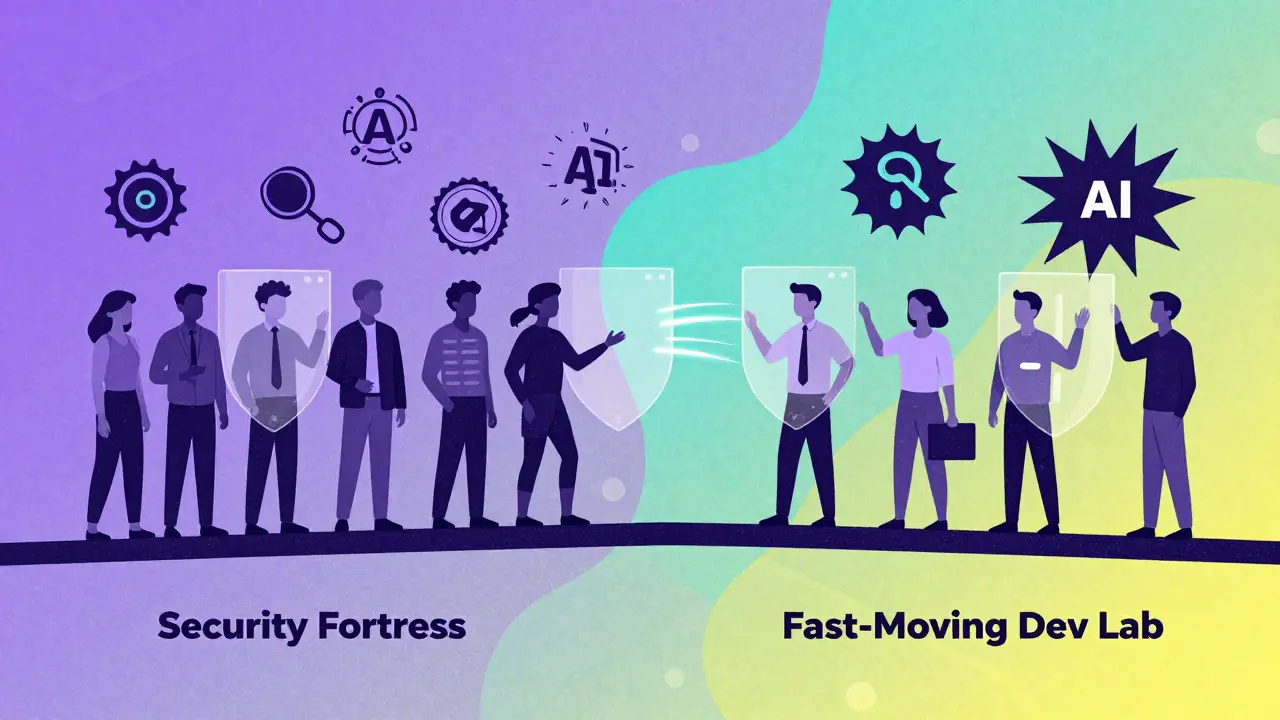
Dedicated platform teams bridge the gap between governance and velocity. According to McKinsey’s 2024 software excellence study, 83% of organizations with over 500 developers have such teams focused specifically on balancing these priorities. Mid-sized companies lag behind at only 29%, creating a velocity gap.
These teams allocate 15-20% of their time to governance communication, focusing on three critical phases:
- Policy definition: Work collaboratively with development teams to create realistic standards.
- Implementation: Build self-service tools that embed governance into workflows.
- Feedback: Continuously refine policies based on usage patterns and developer input.
Training platform engineers in empathy mapping, technical writing, and change management boosts governance adoption rates by 3.5x, per Forrester’s 2024 analysis of 200 enterprises.
Don’t: Neglect Cultural Shifts
Tools alone won’t solve cultural problems. Shanea Leven and Christian Gheorghiu from McKinsey identify four factors for successful governance communication: embedded tools, shared ownership culture, prioritized developer experience, and talent management removing friction points.
Culture shapes behavior. If leadership treats governance as optional or inconsistently enforces rules, teams will follow suit. Promote accountability across all levels. Celebrate examples where good governance enabled fast, safe delivery. Share stories internally to reinforce positive behaviors.
Future Trends: AI-Assisted Governance Communication
Looking ahead, AI will play a bigger role in making governance intuitive. GitHub’s 2025 roadmap includes "policy explainers" powered by Copilot that provide contextual rationale based on specific code changes. Imagine asking why a particular dependency version was flagged-and getting an instant explanation tied to known vulnerabilities.
CircleCI introduced "policy impact forecasting" in January 2025, showing developers how upcoming governance changes affect their workflows. Beta testing showed a 63% reduction in pushback. These innovations reduce cognitive load and increase transparency.
However, challenges remain. Adapting to AI-generated code governance concerns 72% of platform engineers, according to the 2025 State of Platform Engineering survey. As machines write more code, humans must define clearer ethical and quality boundaries.
Summary Table: Quick Reference Guide
| Action | Impact | Best Practice Example |
|---|---|---|
| Build guardrails | +28% satisfaction, +22% speed | Paved paths with pre-approved configs |
| Rely solely on docs | -40% compliance | Avoid unless supplemented by tooling |
| Explain the "why" | +3.2x adherence | Link policies to business outcomes |
| Ignore feedback | Workarounds & resentment | Hold governance office hours |
| Over-automate | Frustration & rigidity | Tiered governance by project type |
What is the difference between guardrails and gates in governance?
Gates stop progress until approval is granted, creating bottlenecks. Guardrails define safe boundaries within which teams can act autonomously, preserving speed while ensuring compliance.
How do I measure if my governance is helping or hurting velocity?
Track deployment frequency, lead time for changes, change failure rate, and policy compliance score. Compare trends before and after implementing new governance measures.
Should small teams invest in dedicated platform engineers?
Not necessarily full-time roles. Start by assigning part-time responsibilities to existing senior engineers who understand both development and operations. Scale up as complexity grows.
Can AI really improve governance communication?
Yes. Tools like GitHub Copilot’s policy explainers provide contextual reasons behind flags, reducing confusion and increasing trust. Early adopters report significantly less pushback.
What happens if we ignore developer feedback on governance?
Teams develop workarounds, leading to hidden risks and inconsistent enforcement. Engagement prevents shadow IT and keeps everyone aligned on goals.

Joe Walters
17 July, 2026 - 13:02 PM
oh look another corporate fluff piece trying to sell us the idea that security and speed can coexist without some middle manager breathing down our necks. i've been in this game for 15 years and let me tell you something, it's all about control. they want your data, they want your code, they want your soul. the 'guardrails' are just chains with better branding. but sure, keep telling yourself that circleci is saving you time when it's really just automating the bureaucracy so you don't have to fight the humans directly anymore.
and dont even get me started on the 'why'. the why is always money. its always about protecting the asset which is you, the worker bee, from making a mistake that costs the shareholders a quarter. hilarious how they frame it as empowerment. i laughed so hard i cried. or maybe i was crying because my deployment got blocked again by a script written by someone who has never touched production code.
Robert Barakat
19 July, 2026 - 02:12 AM
The dichotomy presented here is superficial. It assumes that velocity and governance are opposing forces in a zero-sum game, yet fails to examine the ontological nature of constraint itself. Is a river fast because it lacks banks, or does it flow precisely because the banks define its path? We must question whether the desire for 'speed' is merely a symptom of a deeper existential dread within the engineering psyche-a fear of stillness, of reflection, of the void that opens when the ticket queue empties. Governance, then, is not an obstacle but a mirror reflecting our own chaotic impulses back at us. To reject it is to reject structure, and to reject structure is to embrace entropy.
Michael Richards
20 July, 2026 - 15:36 PM
Listen up. If your team is complaining about governance slowing them down, you're doing it wrong. Stop whining and start fixing your processes. The article is correct but it's too soft. You need to enforce standards ruthlessly. If a developer can't follow a paved path, they aren't ready for production access. I've seen teams fail because leadership was too afraid to say no. Build the guardrails, lock them down, and if someone hits them, they bounce off. That's how you learn. Don't give me excuses about creativity. Creativity doesn't pay for downtime caused by misconfigured S3 buckets. Get your act together or get out of the way.
Laura Davis
21 July, 2026 - 09:37 AM
I am so tired of hearing devs complain about security checks like they are personal attacks on their intelligence! Let me be clear: governance exists to protect YOU from burning down the house while you sleep. If you think explaining the 'why' is annoying, try being the one who has to explain to the CEO why customer data leaked because you skipped a step.
We need more empathy here. Platform teams are working hard to make these tools seamless. Instead of ranting, engage in those office hours. Give feedback. Help build the solution. But stop acting like entitled children who want ice cream before dinner. We are building critical infrastructure. Act like professionals. Show respect for the rules that keep the lights on and the data safe. Your velocity means nothing if the platform is compromised.
Lisa Nally
21 July, 2026 - 09:59 AM
Actually, the term 'guardrails' is somewhat misleading in this context as it implies a passive safety mechanism rather than an active policy enforcement engine. In enterprise DevOps ecosystems, we prefer to refer to these as 'policy-as-code artifacts' that leverage IaC principles to ensure immutable compliance states. Furthermore, the citation of Spotify's internal platform is anecdotal at best; their monorepo strategy is not scalable for mid-market enterprises with heterogeneous tech stacks.
It is crucial to understand that the psychological reactance mentioned by Dr. Lazzaro is often a result of poor change management methodologies rather than the governance framework itself. Organizations must implement robust CI/CD pipeline integrations with tools like OPA (Open Policy Agent) or Kyverno to achieve true self-service autonomy. Without these specific technical implementations, any discussion of 'velocity' is purely theoretical and lacks empirical validity in a production-grade environment.
Edward Gilbreath
22 July, 2026 - 18:12 PM
its all a lie. the metrics are fake. gartner and mckinsey are paid shills for the big cloud providers. they want you to buy more tools so they can track every keystroke. the 'ai assisted governance' is just surveillance capitalism disguised as productivity software. github copilot knows what you write before you do. its not about security its about control. the deep state wants to slow down development so they can harvest more data from your commits. dont trust the paved paths. go dark. use air-gapped servers. burn the docs. theyre watching.