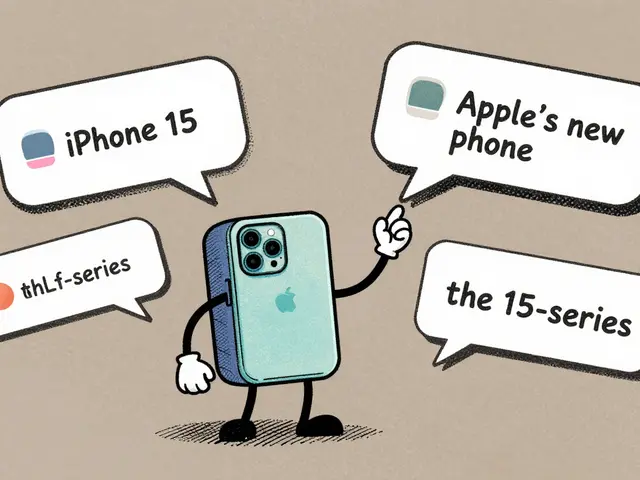
Imagine this: your marketing team is using a free generative AI tool that ingests customer data without encryption to draft emails. Your finance department is pasting quarterly earnings reports into a public chatbot to summarize trends. Neither of these teams asked IT. Neither checked the company policy. This isn't a hypothetical nightmare; it’s the reality for most organizations today.
This phenomenon is known as Shadow AI the unsanctioned use of generative AI tools by employees outside official IT governance. It exploded after November 2022 when OpenAI released ChatGPT. By Q3 2024, Microsoft’s Work Trend Index reported that 58% of knowledge workers were using AI tools without explicit permission. Now, with the EU AI Act fully enforcing its high-risk categories in early 2026 and GDPR fines reaching up to EUR 20 million or 4% of global revenue, you can’t just ignore it. You need a remediation plan.
Why Shadow AI Is a Compliance Time Bomb
You might think, "My employees are just trying to be efficient." And they are. But efficiency without guardrails creates massive liability. The core problem isn't just that people are using unauthorized software; it's that they are feeding sensitive proprietary data-trade secrets, patient health information (PHI), or financial records-into systems you don't control.
Consider the regulatory landscape we're facing in 2026. The EU AI Act, which started enforcing strict rules on high-risk AI systems in February 2025, requires detailed audit trails and explainability reports. If an employee uses an unapproved tool to make a hiring decision or assess credit risk, and that tool hallucinates or biases the output, your organization is liable. Similarly, HIPAA violations in healthcare can cost between $1,000 and $50,000 per incident if PHI leaks through an unsecured AI interface. Even in the US, where federal regulation is still piecing together, 48 states introduced AI-related bills in 2025. Ignorance is no longer a defense.
The Four Phases of Effective Remediation
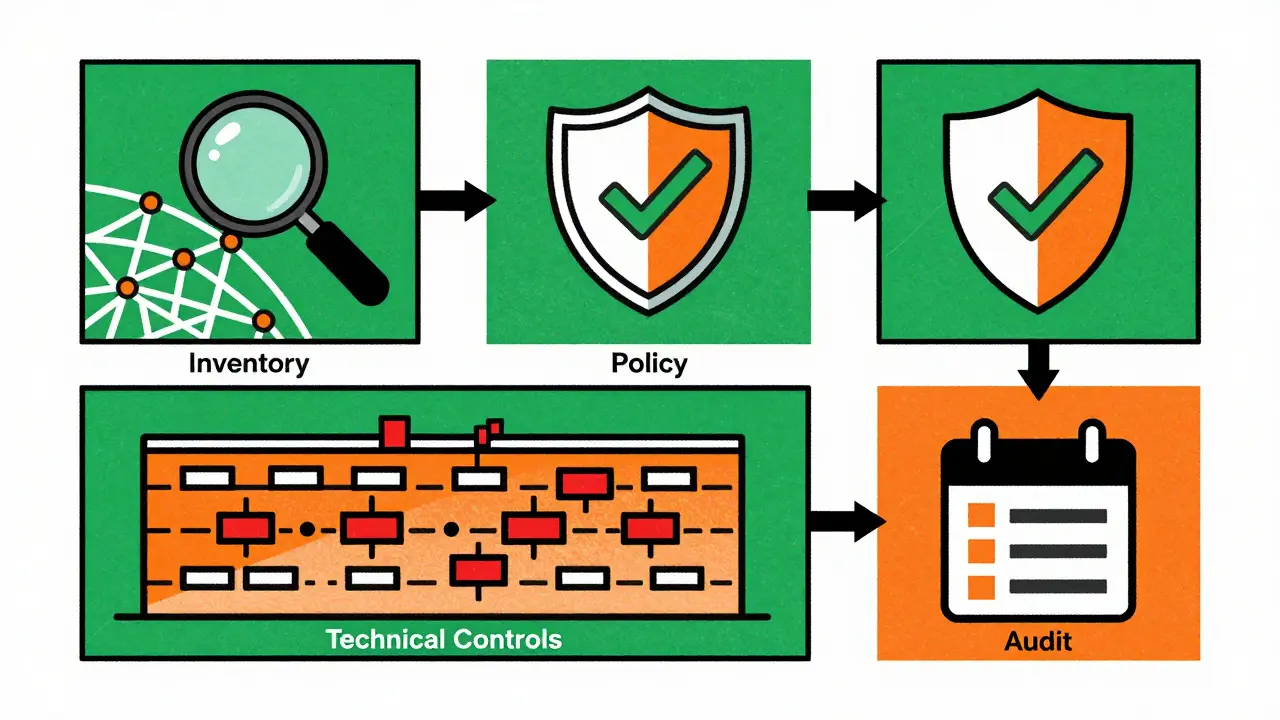
Fixing shadow AI isn't about banning every tool. That approach backfires. A 2024 Forrester study showed that 63% of remediation efforts failed because they lacked comprehensive training and relied solely on restrictive controls. Employees will find workarounds, often moving to personal devices that are even harder to monitor. Instead, follow a structured four-phase approach.
Phase 1: Conduct a Shadow AI Inventory Assessment
You can't fix what you can't see. Start by identifying where AI is being used. This takes 2-4 weeks. Use network activity monitoring and access log analysis to spot unapproved tools. Zscaler’s 2025 guidance suggests looking for unusual data egress patterns or frequent connections to known AI provider domains. Don't rely on self-reporting alone; employees may not realize their browser extension counts as an AI system.
Phase 2: Develop Clear Usage Policies
Once you know what's out there, define what's allowed. Create a policy that specifies prohibited activities. For example, SHI Corporation recommends language like: "Employees must only use AI tools approved by IT. All AI-generated outputs used in decision-making must be documented and reviewed." This phase requires 15-25 hours of legal review to ensure it aligns with SOX, HIPAA, or GDPR requirements depending on your industry.
Phase 3: Implement Technical Monitoring Controls
Policies mean nothing without enforcement. Deploy Data Loss Prevention (DLP) systems configured specifically for AI interactions. These tools block sensitive data from leaving your network via unapproved channels. IBM’s 2025 Think analysis highlights that DLP is critical for avoiding GDPR noncompliance fines. This step demands 60-100 hours of IT effort but pays off by automating the detection of risky behavior.
Phase 4: Establish Ongoing Audit Processes
Remediation isn't a one-time project. Set up monthly audits taking 5-10 hours to review logs and update your AI asset inventory. The Cloud Security Alliance (CSA) recommends using a RACI model here: IT and AI development teams are responsible for updating details, while CISOs are accountable for security. Business unit leaders must be consulted to ensure operational alignment.
Choosing the Right Governance Framework
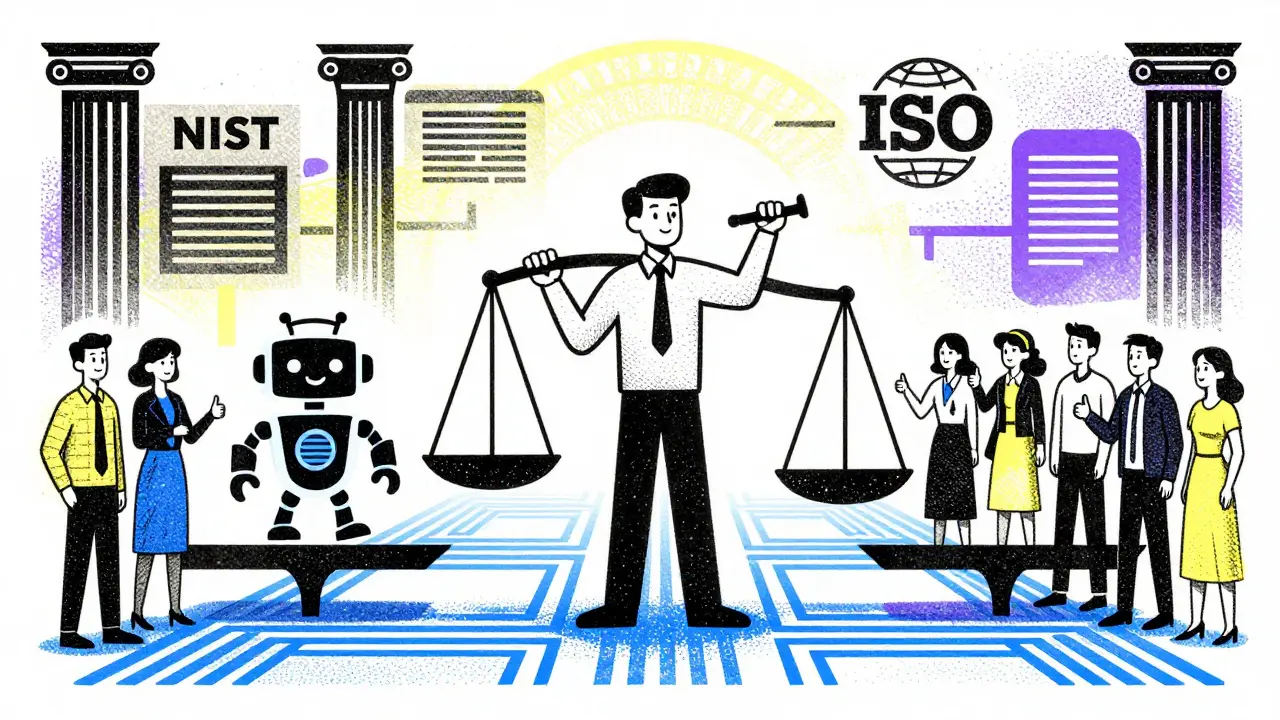
You don't have to build your framework from scratch. Leverage established standards. The NIST AI Risk Management Framework (RMF), updated in January 2025, emphasizes continuous monitoring. ISO/IEC 42001, published in February 2024, provides a management system standard for AI. For large enterprises, integrating these with commercial platforms can streamline the process.
| Organization Size | Recommended Approach | Estimated Cost | Implementation Effort |
|---|---|---|---|
| Large Enterprises (1,000+) | Comprehensive AI Governance Platforms (e.g., Vanta) | $15,000 annually | Automated evidence collection, cross-mapping controls |
| Mid-Sized (100-999) | Custom Framework (NIST AI RMF + Internal Policy) | $45,000 (consulting) | ~200 hours implementation |
| Small Business (<100) | Simplified Policy Enforcement + Basic Monitoring | $5,000 annually | Low tech, high manual oversight |
Note that small businesses often achieve 37% lower compliance effectiveness with simplified approaches. If you handle sensitive data, invest more heavily regardless of size.
Tools That Help Bring Shadow AI Under Control
Several vendors specialize in AI compliance. Vanta automated compliance platform offering AI-specific controls, for instance, integrates with over 400 business tools to collect evidence automatically. Users rate it 4.6/5 stars on G2 as of December 2025, praising its automation but noting a steep learning curve of 40-60 hours. Another option is Pruvent AI assessment service focusing on vendor contract reviews, which averages 4.3/5 stars but has longer implementation timelines of 8-12 weeks.
If you're deep in the Microsoft ecosystem, look at the Copilot Governance Center, released in November 2025. It centralizes management for AI tool usage across Microsoft 365 environments, making it easier to enforce policies without deploying third-party agents on every endpoint.
Overcoming Employee Resistance
Here’s the hard truth: 52% of organizations report significant pushback during initial implementation, according to Microsoft’s 2025 Workplace Analytics report. Employees feel micromanaged. To counter this, focus on education, not punishment. Explain the risks clearly. Show them how a single leaked document can lead to job losses or company shutdowns.
Create a fast-track approval process for new tools. If an employee finds a useful AI tool, let them submit it for review within 48 hours. When you approve safe tools quickly, you reduce the incentive to go rogue. A Fortune 500 company shared on Reddit that this approach reduced Shadow AI incidents by 68% in six months while increasing employee satisfaction by 42%.
Future-Proofing Your Strategy
The landscape is moving fast. By 2027, IDC projects the global AI governance market will hit $8.7 billion. Gartner predicts that 75% of large enterprises will have formal Shadow AI remediation programs by 2026. More importantly, Forrester Research indicates that by 2027, 90% of organizations will incorporate AI usage metrics into executive compensation frameworks. Compliance is becoming a leadership KPI.
Don't wait for a breach to act. Start with the inventory. Build the policy. Deploy the controls. Train the team. Bringing unapproved tools into compliance isn't just about avoiding fines; it's about enabling safe innovation.
What is the first step in Shadow AI remediation?
The first step is conducting a comprehensive Shadow AI inventory assessment. This involves using network monitoring, software audits, and access log analysis to identify all unauthorized AI tools currently in use across your organization. This phase typically takes 2-4 weeks.
How much does AI governance software cost?
Costs vary significantly by organization size. Large enterprises using platforms like Vanta pay around $15,000 annually. Mid-sized companies implementing custom frameworks based on NIST AI RMF may spend approximately $45,000 on consulting services. Small businesses can manage with basic monitoring for about $5,000 annually, though this offers lower compliance effectiveness.
Is banning all AI tools an effective remediation strategy?
No, banning all AI tools is generally ineffective and counterproductive. Studies show that overly restrictive approaches can increase shadow system usage by up to 300% as employees migrate to personal devices. A balanced strategy combining clear policies, approved tool lists, and technical controls is far more successful.
Which regulations impact Shadow AI compliance in 2026?
Key regulations include the EU AI Act (fully enforcing high-risk categories since Feb 2025), GDPR (with fines up to EUR 20M), HIPAA for healthcare data, and SOX for financial reporting. Additionally, 26 US states enacted over 75 new AI measures in 2025, creating a complex patchwork of requirements.
How long does it take to implement a Shadow AI remediation program?
The full learning curve spans 3-6 months. Initial policy development requires 40-60 hours of cross-functional collaboration. Technical monitoring implementation takes 60-100 hours of IT effort. Ongoing maintenance requires 5-10 hours monthly for audits and updates.