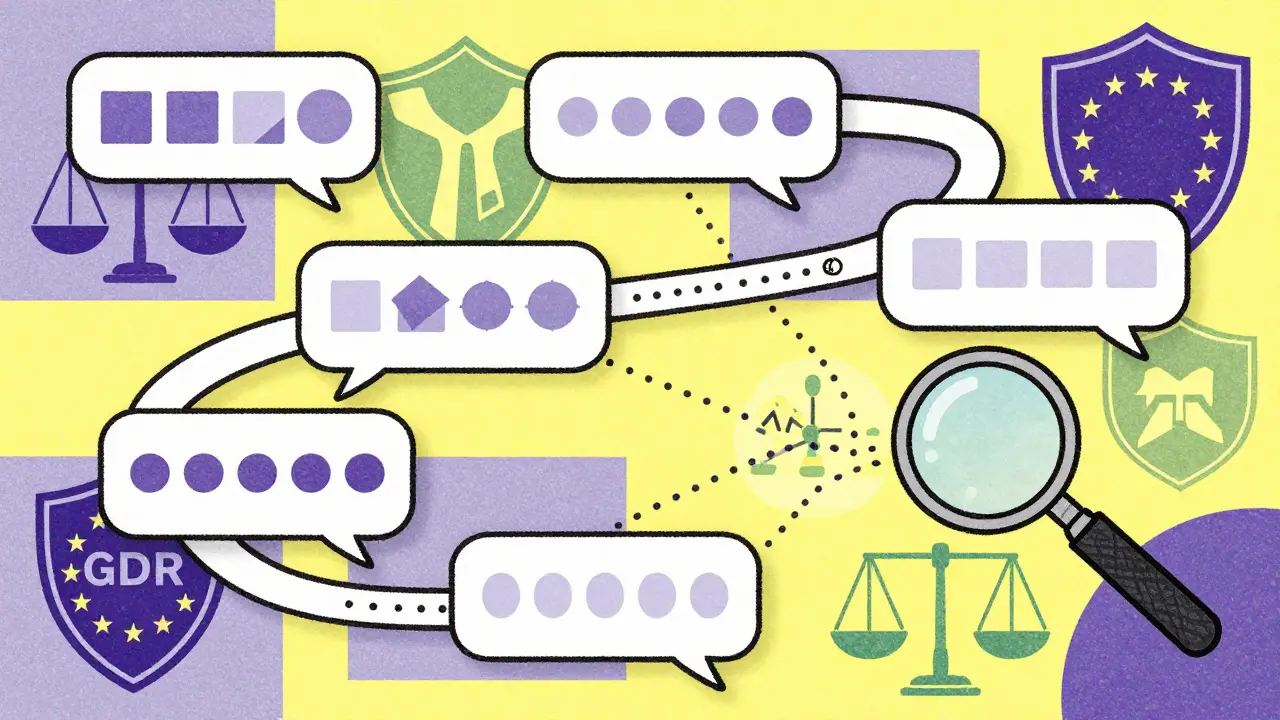
Imagine a customer service chatbot that remembers a patient's medical history from turn one and accidentally logs their full name in turn five. That’s not a hypothetical scenario; it’s a common failure mode in large language model (LLM) systems today. As organizations rush to deploy AI, they often overlook a critical vulnerability: the logs themselves. Token-level logging minimization addresses this by stripping sensitive personal information at the individual token level before data is stored or processed. This approach allows companies to keep useful operational records without creating a massive repository of Personally Identifiable Information (PII).
The stakes are high. Recent analyses indicate that nearly 80% of enterprise LLM implementations have inadequate logging controls. The European Data Protection Board (EDPB) has specifically flagged these risks, noting that multi-turn conversations can indirectly reveal private data provided earlier in the session. For businesses operating under GDPR or the new EU AI Act, fixing this isn't just good practice-it's a legal requirement. Here’s how you can implement effective token-level minimization without sacrificing your model’s performance.
Why Token-Level? The Limits of Traditional Methods
Most teams start with sample-level defenses, which filter entire inputs or outputs. While easy to set up, these methods miss the nuance of how data flows through a conversation. If a user mentions their email address in the first prompt, a sample-level filter might catch it then. But if the model references that email in the third response based on context, the log captures the raw identifier again. Sample-level filtering treats each message as an isolated event, ignoring the semantic thread connecting them.
Full encryption is another alternative, but it comes with a heavy price tag. Encrypting all data adds significant latency, often ranging from 45 to 60 milliseconds per request. In real-time applications like live chat or voice assistants, that delay is noticeable and frustrating for users. Token-level minimization targets only the specific elements that pose a risk-names, IDs, phone numbers-leaving the rest of the text plain and fast to process. This targeted approach reduces processing overhead by roughly 68% compared to full encryption while maintaining the speed users expect.
| Method | Latency Overhead | Privacy Precision | Best Use Case |
|---|---|---|---|
| Sample-Level Filtering | Low (~5ms) | Poor (misses context) | Simple single-turn tasks |
| Full Encryption | High (45-60ms) | Excellent | Offline batch processing |
| Token-Level Minimization | Moderate (12-18ms) | High (context-aware) | Real-time interactive apps |
The Core Technique: Deterministic Tokenization
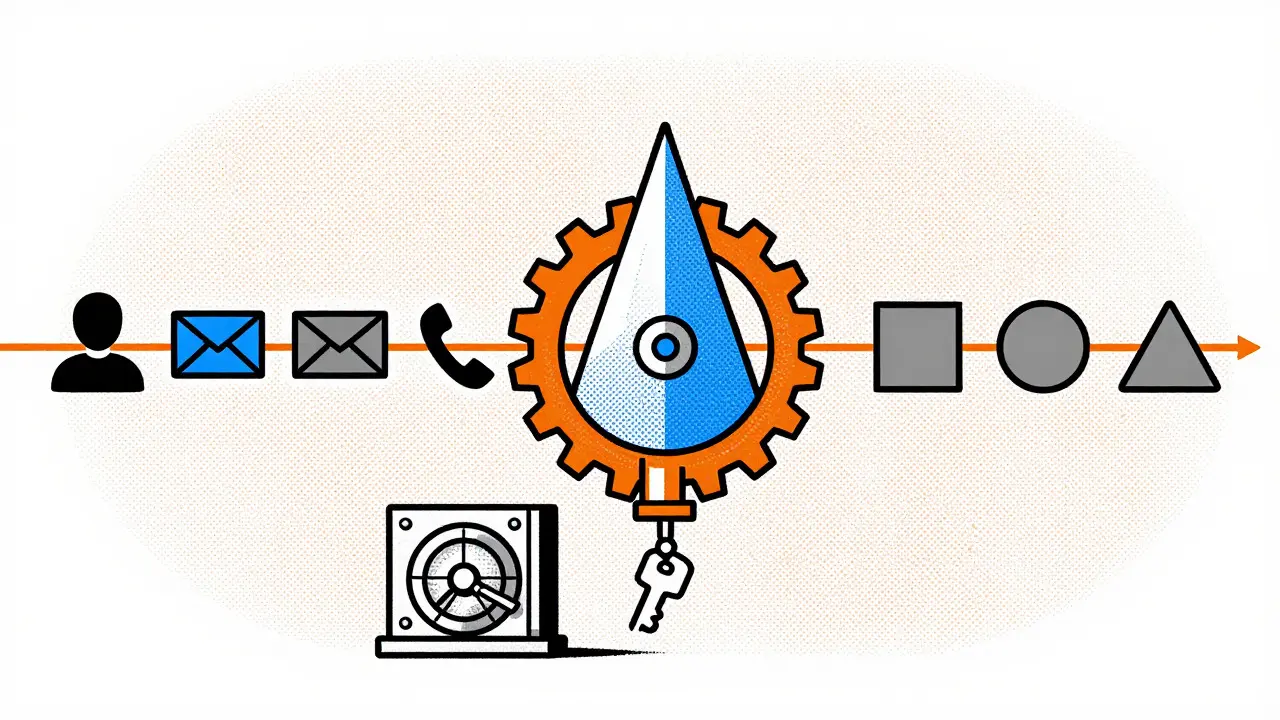
At the heart of effective logging minimization is deterministic tokenization. This method replaces sensitive fields with consistent, non-reversible tokens. Instead of storing "John Doe," the log shows "NAME_001." Crucially, the mapping between "John Doe" and "NAME_001" is stored in a secure vault separate from the logs. This means anyone reading the logs sees structure but no identity.
Deterministic tokenization is preferred over random substitution because it preserves consistency across turns. If John asks about his account in turn one and turn three, both instances appear as "NAME_001." This consistency helps the LLM maintain context without needing to see the actual name. However, you must be careful with quasi-identifiers. A combination of age, zip code, and gender can still identify someone even if their name is hidden. Your tokenization strategy needs to flag and mask these combinations too.
The implementation follows a strict sequence:
- Identify Fields: Map out direct identifiers (names, emails, SSNs) and quasi-identifiers relevant to your domain.
- Select Format: Choose a token format like
ID_<random>orEMAIL_####. Keep it simple but distinct. - Maintain Vault: Store the reverse-mapping in an encrypted database with strict access controls.
- Integrate Pipeline: Tokenize data *before* it hits the LLM. Reverse it only after the response is generated, if needed for display.
Handling Multi-Turn Conversations
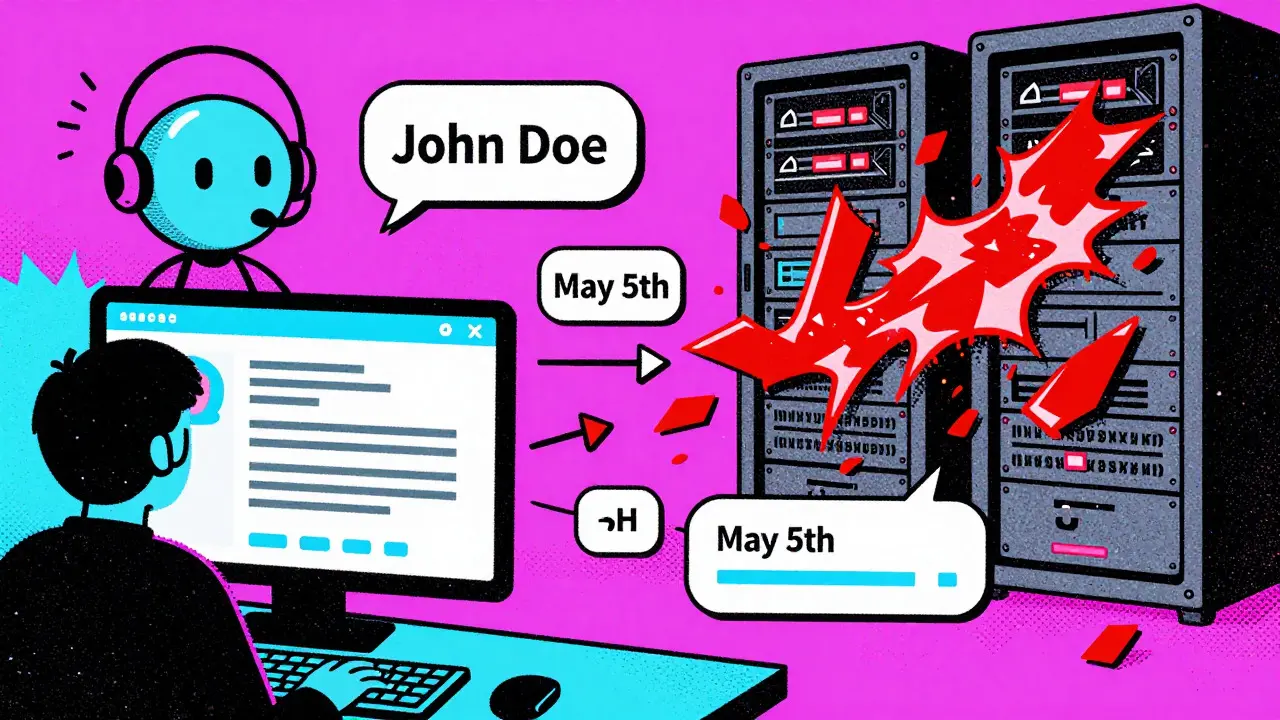
This is where most implementations fail. A single-turn filter is easy; a multi-turn memory scanner is hard. Consider a scenario where a user says, "My birthday is May 5th" in turn one. In turn four, they ask, "Remind me of my special day." A naive system might log the date in turn one but miss the reference in turn four. Or worse, it might log the full date in turn one and fail to link it securely later.
To solve this, you need semantic scanning. This involves analyzing the conversation history to detect when older messages influence newer ones. Tools like Protecto AI’s Multi-Turn Memory Scanning use advanced analysis to flag potential leaks. Recent versions of these scanners have reduced false positives by over 30%, making them practical for production environments. You should also implement session-level logging that traces the full interaction history. This allows you to monitor "drift"-where context shifts subtly over time-and intervene if a pattern suggests a leak.
Don’t forget Retrieval-Augmented Generation (RAG). If your LLM pulls documents from a knowledge base, those documents might contain PII. The retrieval step must be permission-aware. Filter out sensitive documents before they enter the context window. Otherwise, you’re just moving the privacy problem from the chat log to the vector store.
Performance and Compliance Realities
Will this slow down your app? Yes, slightly. Expect an added latency of 12 to 18 milliseconds per request. In the grand scheme of LLM inference times (which often range from 200ms to 2 seconds), this is a negligible cost. Enterprise customers consistently accept this trade-off because the alternative-fines from regulators-is far more expensive.
Compliance is the primary driver here. GDPR Article 32 requires appropriate technical measures to ensure security, including pseudonymization. The EU AI Act goes further, demanding "data minimization by design." By implementing token-level minimization, you create an audit trail that proves you minimized data exposure. Regulators want to see that you didn’t just encrypt data; you actively reduced what was exposed in the first place.
For financial services and healthcare, this is already standard. Over 87% of organizations in these highly regulated sectors have adopted token-level controls. Retail and manufacturing are catching up, driven by similar regulatory pressures and the desire to avoid reputational damage from data breaches.
Common Pitfalls and How to Avoid Them
Even with the right tools, implementation errors happen. Here are the top mistakes we see in the field:
- Ignoring Quasi-Identifiers: Hiding names but leaving zip codes and birth dates visible creates re-identification risks. Always mask combinations.
- Static Mapping Tables: If your token-to-name map never changes, a long-term attacker can eventually correlate tokens with identities. Rotate mappings periodically or use dynamic tokenization.
- Log Retention Issues: Keeping logs forever defeats the purpose. Set automatic deletion policies. If you don’t need the log for six months, delete it.
- Lack of Testing: Build reusable evaluation sets that test against known leakage patterns. Run these tests regularly. One study showed a 41% reduction in false negatives when organizations tested against OWASP Top 10 LLM Security Risks consistently.
Training your team is also crucial. Developers often underestimate the complexity of contextual privacy. Expect a learning curve of 35 to 45 hours for engineers to become proficient. Investing in certification programs or internal workshops pays off in fewer bugs and smoother deployments.
Future-Proofing Your Strategy
The landscape is evolving. New frameworks like TOSS-Pro are improving the precision of token-level risk identification, achieving over 91% accuracy in spotting unsafe tokens. Meanwhile, the industry is moving toward standardized APIs for privacy, which will make cross-platform implementation easier. Watch for integration with homomorphic encryption, which could allow computations on encrypted data without decryption-a game-changer for privacy-preserving AI.
But don’t wait for perfect technology. Start now. Implement basic deterministic tokenization for your most sensitive fields. Add semantic scanning for multi-turn contexts. Monitor your logs regularly. Privacy in LLMs isn’t a one-time fix; it’s an ongoing process. By treating token-level minimization as a core part of your architecture, you protect your users and future-proof your business against tightening regulations.
What is the difference between token-level and sample-level privacy?
Sample-level privacy filters entire inputs or outputs, treating each message as independent. Token-level privacy identifies and masks specific sensitive elements (like names or IDs) within the text, allowing the rest of the message to remain intact. Token-level is more precise and better suited for multi-turn conversations where context matters.
How much latency does token-level minimization add?
Typically, it adds 12 to 18 milliseconds per request. This represents less than 1.5% of total inference time in most production systems, making it a negligible impact on user experience compared to the privacy benefits.
Is deterministic tokenization safe against attackers?
It is safe if implemented correctly. The key is keeping the mapping table (the "vault") secure and separate from the logs. If an attacker gets the logs but not the vault, they cannot reverse the tokens. However, static mappings can be risky over very long periods, so periodic rotation or dynamic generation is recommended for high-security environments.
Do I need to tokenize RAG documents?
Yes. If your Retrieval-Augmented Generation (RAG) system retrieves documents containing PII, those documents enter the context window and may be logged. You should apply permission-aware filtering during retrieval to exclude sensitive documents, or tokenize them before they are injected into the prompt.
Which industries require token-level minimization?
While beneficial for all, it is effectively mandatory in highly regulated sectors like healthcare (HIPAA) and finance (GDPR/PCI-DSS). Over 87% of organizations in these fields have already implemented it. Retail and manufacturing are increasingly adopting it due to general data protection laws and consumer expectations.