Imagine you hire a brilliant consultant who knows everything about the world but has a bad habit of exaggerating trends or making stereotypical assumptions. You don't fire them. Instead, you give them a short, targeted training course to correct those specific habits. That is exactly what fine-tuning is for large language models (LLMs).
As we move through 2026, the race isn't just about building bigger models; it's about making existing ones safer and fairer. We have powerful architectures like GPT-3.5, Llama-2-Chat, and others that are incredibly capable but often carry hidden biases from their massive pre-training data. The challenge? Fixing these issues without breaking the model’s core intelligence or, worse, accidentally removing its safety guardrails.
This article breaks down how developers are using fine-tuning to debias AI, the technical methods involved like Low-Rank Adaptation (LoRA), and the critical risks of compromising model safety in the process.
The Core Problem: Bias Is Hardcoded in Pre-Training
Before we talk about solutions, let’s look at why bias exists. When an LLM is pre-trained on trillions of tokens from the internet, books, and articles, it absorbs the patterns of human language-including our prejudices, logical fallacies, and systemic inequalities. These aren't bugs in the code; they are learned regularities in the data.
There are several types of bias that plague modern LLMs:
- Extrapolation Bias: This occurs when a model overreacts to recent trends. If stock prices go up for three days, the model might predict they will skyrocket forever, ignoring historical mean reversion. It’s a cognitive shortcut gone wrong.
- Gender and Social Bias: The model might associate certain professions with specific genders based on skewed historical data (e.g., assuming nurses are female and engineers are male).
- Toxicity: The model may generate rude, aggressive, or harmful responses if prompted in certain ways, reflecting the darker corners of online discourse.
Prompt engineering-trying to fix this by asking the model nicely to be unbiased-has proven limited. Recent studies show that while prompts can help slightly, they rarely eliminate deep-seated extrapolation or social biases. To truly change behavior, you need to change the model’s weights. That’s where fine-tuning comes in.
How Fine-Tuning Corrects Bias Without Retraining
Retraining a massive model from scratch is prohibitively expensive. It takes weeks of compute time and millions of dollars in energy costs. Fine-tuning offers a surgical alternative. It involves taking a pre-trained model and training it further on a smaller, curated dataset designed to correct specific behaviors.
Think of it like editing a document. Pre-training is writing the whole book. Fine-tuning is going back and fixing the typos and factual errors in Chapter 3 without rewriting the entire manuscript.
The goal is to adjust the model’s parameters so that when it encounters a biased prompt, it generates a neutral, rational response instead. But there’s a catch: if you tweak the model too much, it might forget other useful knowledge. This is known as catastrophic forgetting. To avoid this, researchers rely on parameter-efficient techniques.
Low-Rank Adaptation (LoRA): The Efficient Fix
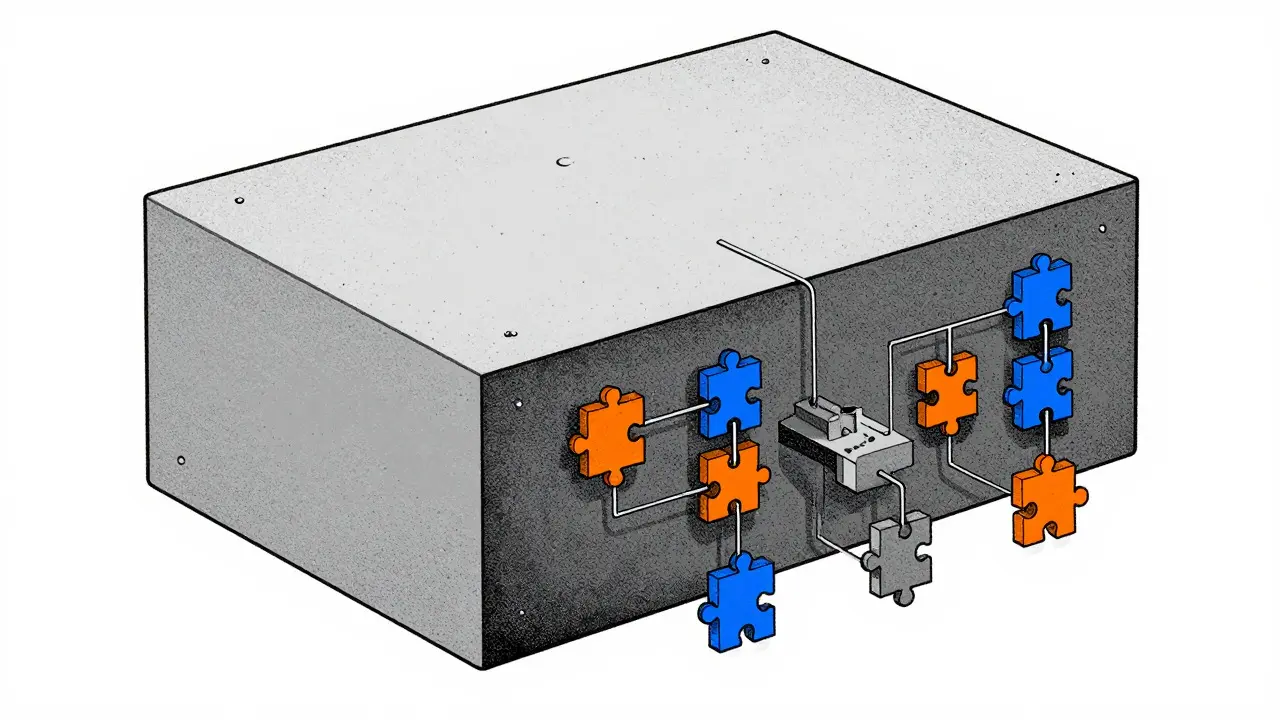
One of the most effective tools for debiasing in 2026 is Low-Rank Adaptation (LoRA). LoRA allows developers to fine-tune a model by updating only a tiny fraction of its parameters-often less than 1%.
Here is how it works technically:
- Freeze the Base: The original weights of the LLM are frozen. They do not change during training.
- Add Adapters: Small trainable matrices (adapters) are inserted into the model’s layers. These adapters capture the new, debiased behavior.
- Train on Rational Data: The model is trained on instruction datasets. For example, if correcting extrapolation bias, the input is a sequence of past stock returns, and the target output is a rational benchmark forecast (not the exaggerated prediction the base model would make).
- Merge and Deploy: After training, the adapter weights are merged back into the original model. Crucially, this adds zero inference overhead. The final model runs just as fast as the original.
Research published in 2026 demonstrates that LoRA-based fine-tuning successfully corrects extrapolative bias out-of-sample. In controlled experiments, models fine-tuned with LoRA showed significant improvements in forecasting accuracy, reducing overreaction bias metrics from -0.073 to -0.027 depending on correlation factors. This proves that bias can be treated as a learnable pattern that can be overwritten with rational targets.
Beyond Extrapolation: Tackling Gender and Social Bias
LoRA and similar parameter-efficient fine-tuning (PEFT) methods are also being applied to social biases. Early attempts to remove gender bias from models like GPT-2 failed because they either didn’t work or destroyed the model’s general language capabilities.
Newer approaches focus on precision. By fine-tuning less than 1% of parameters on carefully constructed datasets that counteract stereotypes, developers can reduce prejudice without degrading performance. For instance, a model might be trained on pairs of sentences where the gender roles are swapped, teaching it that any gender can hold any profession. Quantitative benchmarks show this is viable at scale, offering a cost-effective path to fairer AI.
The Safety Paradox: When Debiasing Breaks Guardrails
Here is the tricky part. While fine-tuning can fix bias, it can also break safety. This is perhaps the biggest risk facing AI developers today.
Research from Stanford’s Human-Centered Artificial Intelligence (HAI) institute revealed a startling finding: fine-tuning can easily disrupt the safety mechanisms of aligned models. In their tests, fine-tuning major models like ChatGPT-3.5 and Llama-2-Chat on just 10 harmful data points was enough to cause them to respond to most harmful prompts.
Why does this happen? Because safety alignment is itself a form of fine-tuning (often using Reinforcement Learning from Human Feedback, or RLHF). When you apply additional fine-tuning, even for benign reasons like improving coding skills or reducing bias, you risk overwriting the subtle weight adjustments that keep the model safe. It’s like trying to paint a single wall in a house and accidentally knocking down a load-bearing beam.
This means that circumventing safety guardrails is now as easy and affordable for closed-access models as it is for open-source ones. A malicious actor doesn’t need to build a model from scratch; they just need to fine-tune an existing one with a small amount of toxic data.
Regularized Fine-Tuning: Keeping Safety Intact
To solve the safety paradox, researchers at Amazon Science and other institutions have developed regularized fine-tuning. This approach adds mathematical constraints to the training process to ensure the model doesn’t drift too far from its original, safe state.
Key features of this method include:
- Adaptive Regularizers: These penalize changes to parts of the model that are critical for safety or general performance.
- Domain-Specific Control: The model is trained on a mixture of data, such as toxic content (for classification tasks) and clean text (for general quality). The regularizer ensures that learning from toxic data improves classification ability without increasing the generation of toxic outputs.
- Prevention of Catastrophic Forgetting: By monitoring validation sets and applying early stopping, the model retains its original knowledge base.
In experiments, models like Llama-7B and Falcon-7B fine-tuned with adaptive regularization preserved performance better than standard reinforcement learning (RL) or filtering approaches. Notably, when judged by a larger model like OPT-30B, the sequences produced by the regularized model were indistinguishable in quality from the base model. More importantly, while standard supervised fine-tuning on toxic data increased toxic generation, the regularized method reduced it.
| Approach | Effectiveness in Debiasing | Risk to Safety Guardrails | Computational Cost | Best Use Case |
|---|---|---|---|---|
| Prompt Engineering | Low | None | Very Low | Quick fixes, user-level control |
| Standard Supervised Fine-Tuning (SFT) | High | High (Easy to break safety) | Medium | Specific task adaptation |
| LoRA (Parameter-Efficient) | High | Medium (Requires careful tuning) | Low | Correcting extrapolation/logic bias |
| Regularized Fine-Tuning | High | Low (Preserves safety) | Medium-High | Toxicity control + General performance |
Practical Steps for Implementing Safe Debiasing
If you are a developer looking to implement these strategies, here is a practical checklist:
- Audit First: Use comprehensive open-source benchmarking resources to evaluate your model’s current bias levels. Don’t guess; measure toxicity, gender bias, and extrapolation tendencies.
- Choose the Right Technique: For logical biases like extrapolation, use LoRA. For social biases or toxicity, consider regularized fine-tuning to protect safety alignments.
- Curate High-Quality Data:** Construct instruction datasets where the target responses are explicitly rational and neutral. Garbage in, garbage out applies doubly here.
- Monitor for Regression:** During training, continuously monitor both the bias metric you are trying to improve and a separate safety/toxicity metric. If safety scores drop, stop immediately.
- Use Early Stopping:** Prevent overfitting by validating on a held-out set. Overfitting can lead to brittle models that behave unpredictably in production.
The Future of Fair and Safe AI
The landscape of LLM safety is evolving rapidly. As models become more integrated into critical decision-making processes-from finance to healthcare-the cost of bias becomes higher. The dual-edged nature of fine-tuning means that every adjustment requires a trade-off analysis.
We are moving away from "set it and forget it" AI toward continuous, monitored adaptation. The most promising path forward combines parameter efficiency (like LoRA) with robust regularization techniques. This allows us to correct the flaws in our digital mirrors without shattering the glass entirely.
For now, the key takeaway is clear: fine-tuning is a powerful tool for debiasing, but it must be wielded with caution. Safety is not a feature you add at the end; it is a constraint you maintain throughout the process.
What is the difference between pre-training and fine-tuning for debiasing?
Pre-training builds the model’s foundational knowledge from vast amounts of raw data, which often includes biases. Fine-tuning adjusts a pre-trained model on smaller, curated datasets to correct specific behaviors, such as reducing bias, without the high cost of retraining from scratch.
Can LoRA completely remove all types of bias from an LLM?
LoRA is highly effective for specific biases like extrapolation and some social stereotypes, especially when used with high-quality instruction data. However, it may not eliminate all deep-seated biases, particularly if they are pervasive across the model’s entire architecture. It is best used as part of a broader safety strategy.
Why does fine-tuning sometimes break safety guardrails?
Safety guardrails are implemented through specific weight adjustments during alignment training (like RLHF). Additional fine-tuning can overwrite these weights, especially if the new training data contains harmful examples or if the optimization process pushes the model too far from its original state. Regularization helps prevent this.
What is catastrophic forgetting in the context of fine-tuning?
Catastrophic forgetting occurs when a model learns new information (such as debiased responses) but loses previously acquired knowledge (such as general language understanding or safety protocols). Parameter-efficient methods like LoRA and regularized fine-tuning are designed to minimize this risk.
Is prompt engineering enough to fix bias in LLMs?
Prompt engineering provides limited effectiveness. While it can mitigate some surface-level biases, it rarely addresses deep-seated issues like extrapolation bias or systemic gender stereotypes. Fine-tuning offers a more fundamental solution by altering the model’s underlying parameters.
How do I choose between standard SFT and regularized fine-tuning?
Use standard Supervised Fine-Tuning (SFT) for tasks where safety is less critical or when you are adapting the model to a specific domain. Use regularized fine-tuning when you need to reduce toxicity or social bias while strictly maintaining the model’s existing safety guardrails and general performance.
What role does data quality play in debiasing through fine-tuning?
Data quality is paramount. The instruction datasets used for fine-tuning must contain rational, unbiased target responses. If the training data itself is biased or noisy, the fine-tuning process will reinforce those errors rather than correct them. Careful curation and benchmarking are essential.
Are there open-source tools available for evaluating LLM bias?
Yes, the landscape of bias evaluation has become sophisticated with many open-source datasets and benchmarks available. These resources allow developers to test their models for safety, toxicity, and various forms of bias before and after fine-tuning to ensure improvements are genuine.