You paste a customer email into ChatGPT or feed internal reports into an enterprise LLM. It feels harmless, right? But if you're in Europe, that simple act might just have sent personal data to a server in the United States without proper legal safeguards. This isn't hypothetical. In 2024 alone, regulators handed out massive fines for exactly this kind of oversight, including a record €1.2 billion penalty against Meta. The core issue is third-country data transfers involving generative artificial intelligence systems that process personal data outside the European Economic Area (EEA).
If you run a business using AI tools, you need to understand how GDPR regulates these movements. It’s not just about ticking boxes; it’s about avoiding penalties that can reach 4% of your global turnover. Let's break down what’s happening, why it matters now more than ever, and how to keep your AI projects compliant.
The Core Problem: Why AI Breaks Traditional Data Rules
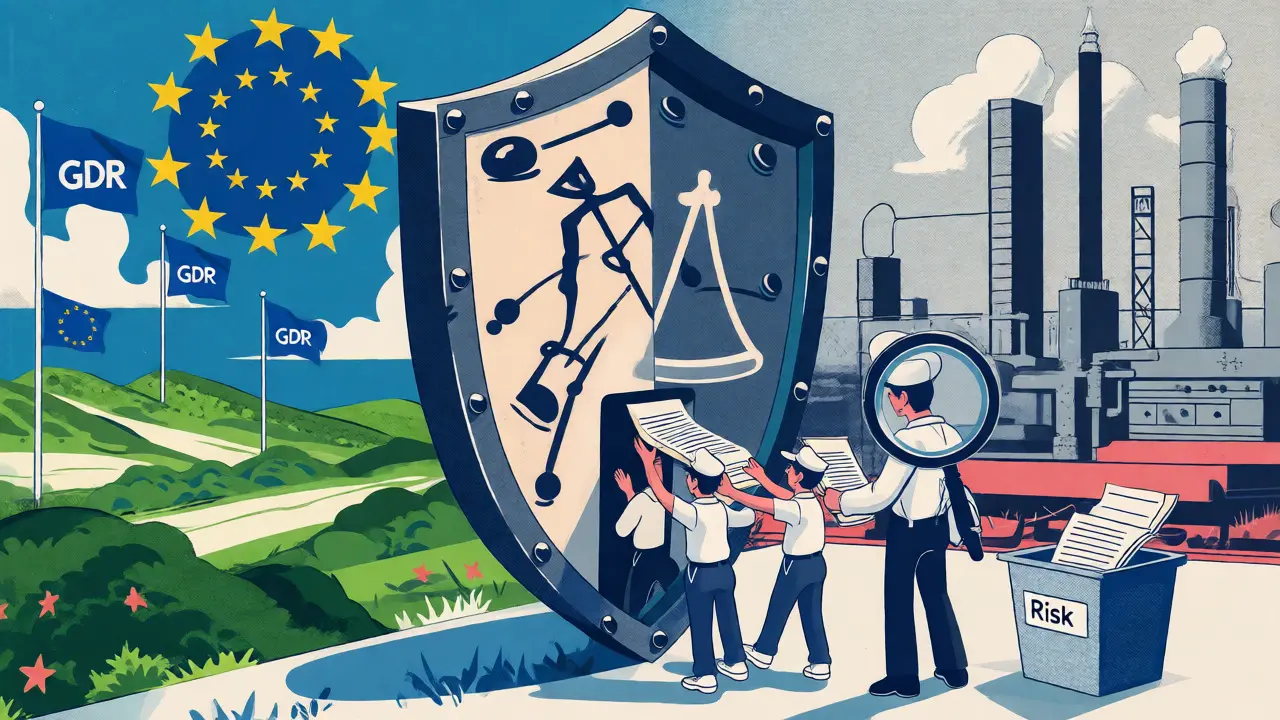
Generative AI doesn’t respect borders. When you use a cloud-based model, your data often travels through multiple jurisdictions before returning an answer. For companies based in the EU, this creates a direct conflict with Chapter V of the GDPR. This chapter restricts sending personal data to "third countries"-any nation outside the EEA-unless specific protections are in place.
Here’s the catch: most popular AI providers host their models in the US. While the EU and US have tried to fix this with frameworks like the EU-US Data Privacy Framework, challenges remain. The US CLOUD Act allows American authorities to access data stored by US companies, even if that data belongs to EU citizens. This creates a tension between EU privacy rights and US surveillance laws.
| Regulation/Law | Jurisdiction | Impact on AI Transfers |
|---|---|---|
| GDPR Chapter V | EU/EEA | Requires adequacy decisions or safeguards for data leaving the EEA. |
| CLOUD Act | USA | Allows US law enforcement to access data held by US providers globally. |
| Schrems II Ruling | EU Courts | Invalidated previous frameworks due to insufficient protection against government surveillance. |
How to Legally Move Data Out of the EU
So, how do you actually use AI without breaking the law? You generally have three paths. First, check for an adequacy decision. As of late 2025, only 16 countries have this status, including the UK, Japan, and Canada. If your AI provider processes data there, you’re largely safe.
If the destination country lacks adequacy status (like the US, unless covered by the new framework), you must implement alternative mechanisms. The most common tool is Standard Contractual Clauses (SCCs). These are pre-approved contract terms that bind the data importer to GDPR standards. However, SCCs aren't magic. After the Schrems II ruling, you also need to conduct a Transfer Impact Assessment (TIA) to ensure local laws don't undermine those clauses.
- Adequacy Decisions: The easiest path. No extra paperwork needed if the country is approved.
- SCCs + TIA: The standard fallback. Requires legal review of the destination country's laws.
- Derogations (Article 49): Rare exceptions for specific situations, like explicit consent or vital interests. Not suitable for large-scale AI training.
The Employee Blind Spot
Most breaches don't happen because of bad code; they happen because of human error. Employees often treat public AI tools like search engines. They paste sensitive client info into free-tier chatbots, unaware that the data is being stored and processed abroad. Microsoft’s 2024 guide highlights that public sector organizations struggle significantly with defining who is the "data controller" in these hybrid environments.
Consider the case of Replika, a US-based AI chatbot. Italy’s data authority fined them €5 million in 2024 for deploying in Europe without sufficient transparency. The lesson? If your employees use unapproved AI tools, you are liable for their data exports.
To fix this, you need an Acceptable Use Policy. Don't just ban AI; provide sanctioned tools. Train staff on what constitutes "personal data." Real-time monitoring helps too, catching risky prompts before they leave your network.

New Guidance from the EDPB
In June 2025, the European Data Protection Board (EDPB) finalized guidelines on Article 48 GDPR. This article deals with requests from third-country authorities for data disclosure. The EDPB clarified that a foreign court order alone isn't enough to justify transferring data. You still need a valid legal basis under GDPR.
This means if a US court demands data from your AI vendor, that vendor can't just hand it over if doing so violates GDPR. They must assess whether international agreements provide sufficient safeguards. This adds a layer of complexity for multinational corporations. You can no longer assume that compliance with local laws in the US automatically satisfies EU requirements.
Practical Steps for Compliance
Ready to secure your AI stack? Start here. First, map your data flows. Know exactly where every piece of personal data goes when you hit "submit." Update your Records of Processing Activities (ROPAs) to include AI vendors.
Second, demand transparency from your vendors. Ask for documentation on sub-processors. Many AI services use other cloud providers behind the scenes. If those sub-processors are in non-adequate countries, your liability increases. TechGDPR notes that opaque vendor documentation is a top complaint among developers.
Finally, consider technical safeguards. Encryption in transit and at rest is mandatory. Pseudonymization helps reduce risk. For high-stakes applications, look into privacy-enhancing technologies (PETs) like differential privacy, though be aware these can be costly for smaller firms.
Does using ChatGPT violate GDPR?
Not necessarily, but it depends on how you use it. If you input personal data into a version hosted in a country without an adequacy decision (like the US) without proper safeguards like Standard Contractual Clauses, you may be violating GDPR. Enterprise versions with specific data processing agreements are safer.
What is a Transfer Impact Assessment (TIA)?
A TIA is a document required after the Schrems II ruling. It analyzes whether the laws in the destination country (e.g., US surveillance laws) undermine the protections offered by Standard Contractual Clauses. If the assessment shows risks, you must implement additional technical measures like encryption.
Can I rely on employee consent for AI data transfers?
Relying solely on consent is risky. Consent must be freely given, specific, informed, and unambiguous. In employment contexts, power imbalances can make "freely given" hard to prove. It's better to rely on legitimate interest or contractual necessity, supported by robust safeguards.
What happens if my AI vendor uses sub-processors in China?
China does not have an EU adequacy decision. Transfers there require strict safeguards. Recent cases, like the DeepSeek app delisting request in Berlin, show regulators are scrutinizing transfers to China closely. You must ensure SCCs are in place and conduct a thorough TIA.
Is the EU-US Data Privacy Framework reliable now?
It provides a mechanism for transfers, but it faces legal challenges similar to its predecessors. Organizations should monitor ongoing litigation and continue to maintain backup transfer mechanisms like SCCs until the framework's stability is proven long-term.