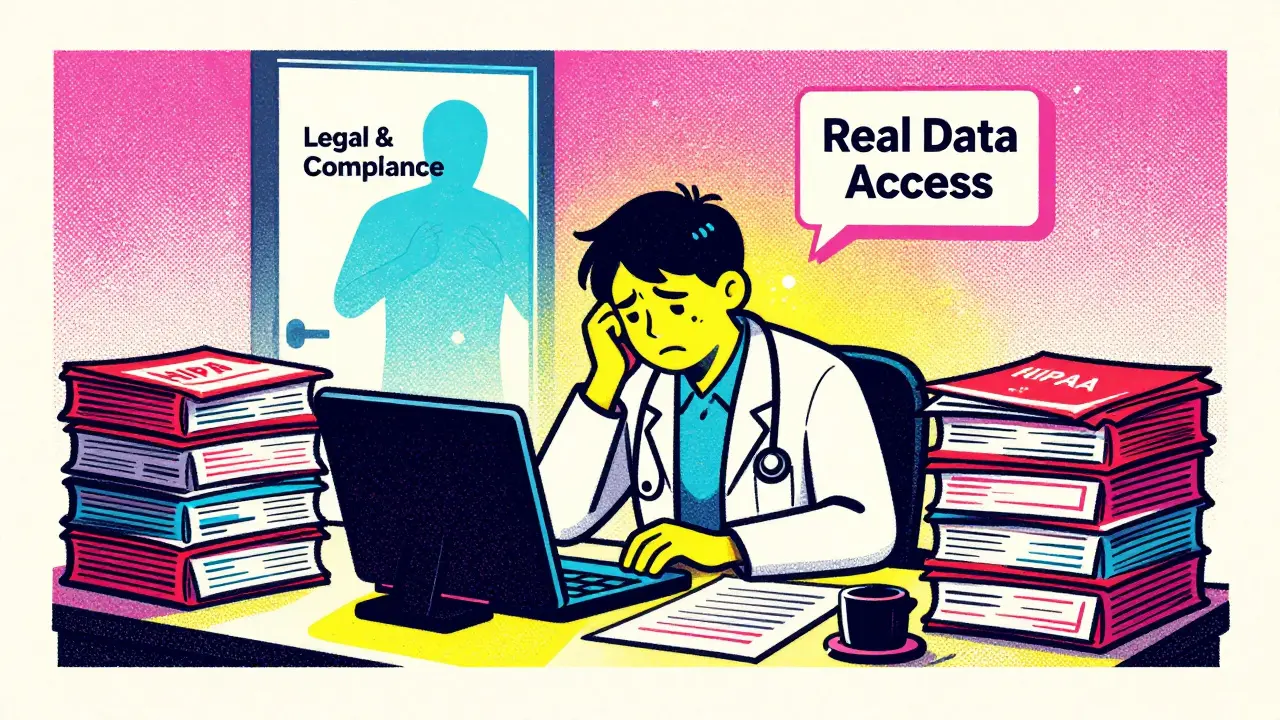
You have a brilliant idea for a clinical tool. Maybe it’s a way to track patient recovery patterns or a dashboard for triage efficiency. But before you write a single line of code, your legal team stops you cold. You can’t touch real patient data. Not yet. Getting access to Protected Health Information (PHI) takes weeks of approvals, security audits, and red tape. By the time you’re allowed to start building, the excitement is gone.
That bottleneck is disappearing. Enter vibe coding, an approach where artificial intelligence converts your natural language descriptions directly into functioning software modules. Coined by computer scientist Andrej Karpathy in early 2025, this method lets biomedical researchers describe desired functionality in plain English-like 'load a sequencing dataset and run differential expression analysis'-with the system generating working Python or R code within seconds. The game-changer? You do this entirely without using real PHI during the prototyping phase.
This isn't just about speed; it's about democratization. It allows clinicians and non-coders to become creative directors of their own tools while keeping patient data strictly off-limits until the final, secure production stage.
The Core Problem: Why Traditional Healthcare Dev Fails
Traditional healthcare software development is slow because safety comes first. And rightly so. But the process creates a massive friction point. In conventional development, you often need access to real Electronic Health Record (EHR) systems to test if your logic works. This means exposing PHI early in the cycle, which triggers multiple compliance review cycles under HIPAA regulations.
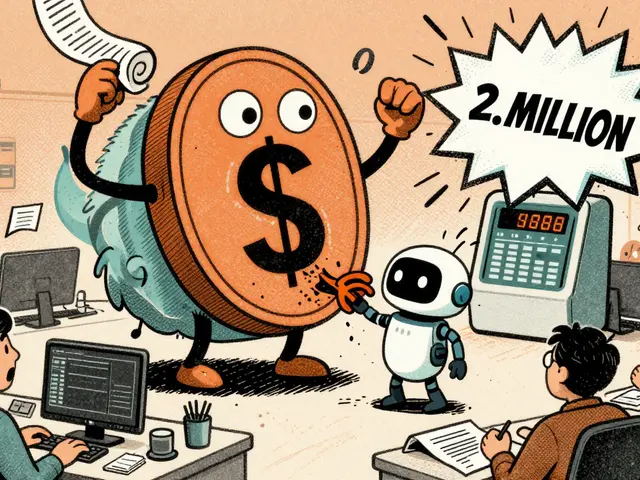
According to comparative analyses from Eularis in September 2025, traditional prototype development takes an average of 18.3 days and costs around $14,200 per prototype. That includes waiting for IT departments to grant sandbox access and legal teams to sign off on data handling protocols. Most ideas die in that waiting period. They are too expensive to validate and take too long to prove worth.
Vibe coding flips this model. Instead of asking for access to live databases, you ask the AI to generate code that runs against synthetic data. This data mimics real patient patterns-age distributions, diagnosis codes, lab values-but contains zero actual human identifiers. You build, test, and iterate on the logic itself, not the data.
How Healthcare Vibe Coding Works Safely
You might wonder how an AI can generate complex medical algorithms without accidentally leaking sensitive information. The answer lies in a specific technical architecture designed for PHI avoidance. Compliant healthcare vibe coding platforms use a three-tier structure:
- Natural Language Interface Layer: This is where you type your request. The system listens for intent, not just keywords.
- PHI Detection and Sanitization Layer: Before any code is generated, fine-tuned biomedical language models scan your prompt. If you accidentally paste a patient ID or name, the system flags and redacts it instantly. Modern implementations achieve 99.7% detection accuracy here, far surpassing generic tools.
- Code Generation Layer: This layer operates exclusively on de-identified or synthetic data structures. It generates syntactically valid code that reflects your intent but never touches real records.
Tools like OpenAI Windsurf, Meta's Code Llama, and Anysphere Cursor are leading this space. They don't just guess code; they act as agents. They interpret your prompt, check it against compliance boundaries, and produce scripts that are ready to run in a sandboxed environment. A study published in PMC (October 2024) showed these modern large language models hit 78.3% accuracy on biomedical coding tasks, compared to just 42.1% for older generation models.
Speed vs. Safety: The Real Trade-offs
Let’s be clear about what vibe coding delivers and what it doesn’t. It is incredibly fast. Benchmarks from Lemberg Solutions show that initial prototypes can be generated in 3 to 7 minutes. Compare that to the 2 to 3 weeks typical for traditional dev cycles. The cost drops by over 70%, from roughly $14,200 down to $3,800 per prototype.
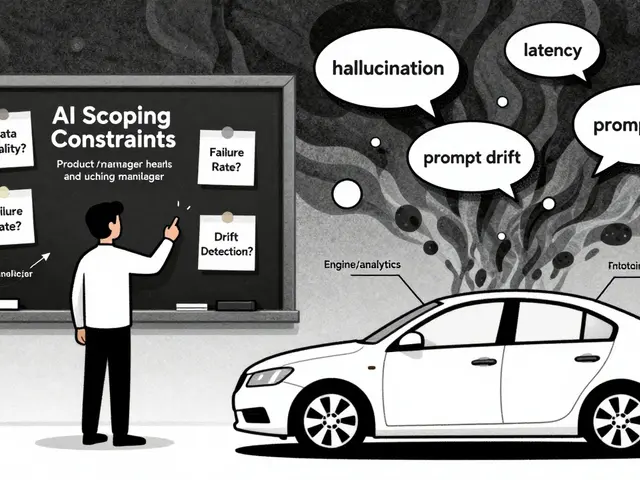
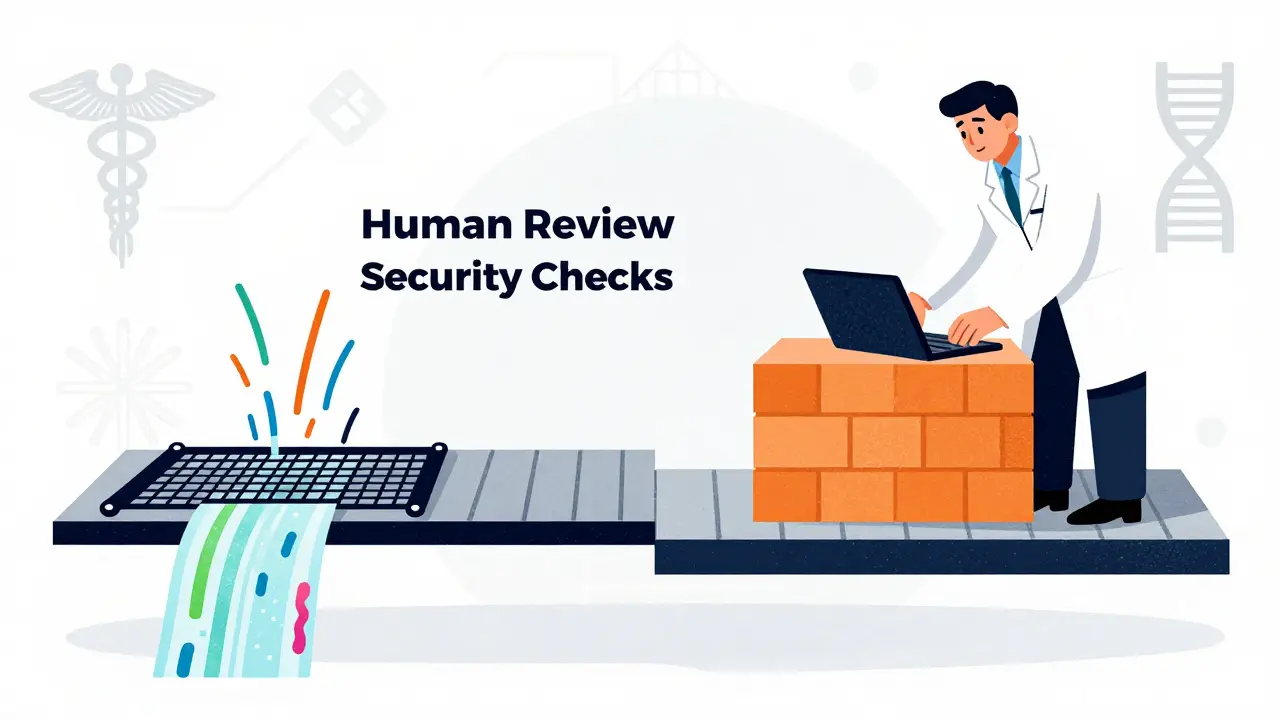
However, there is a catch known as the '80-90% rule.' As noted by J.P. Morgan’s Deepak Bhatti, vibe coding gets you most of the way there. The generated code is functional, but it is rarely production-ready out of the box. You still need expert engineering review-typically 15 to 20 hours-to ensure the code meets strict security standards and integrates correctly with legacy systems.
| Metric | Traditional Development | Healthcare Vibe Coding |
|---|---|---|
| Prototype Time | 18.3 days | 2.3 days (avg) |
| Initial Cost | $14,200 | $3,800 |
| PHI Exposure Risk | High (during testing) | None (uses synthetic data) |
| Code Error Rate | Low (human-written) | 22.4% (requires review) |
| Regulatory Logic Handling | Manual implementation | 63.7% accuracy (partial automation) |
The error rate in generated code is significant enough to demand caution. About one-fifth of the code will have bugs or logical flaws that only a human engineer can spot. Additionally, vibe coding struggles with complex regulatory workflows. While it can handle basic data processing, it often fails when trying to automatically enforce intricate HIPAA compliance rules embedded in business logic.
Who Should Use This Technology?
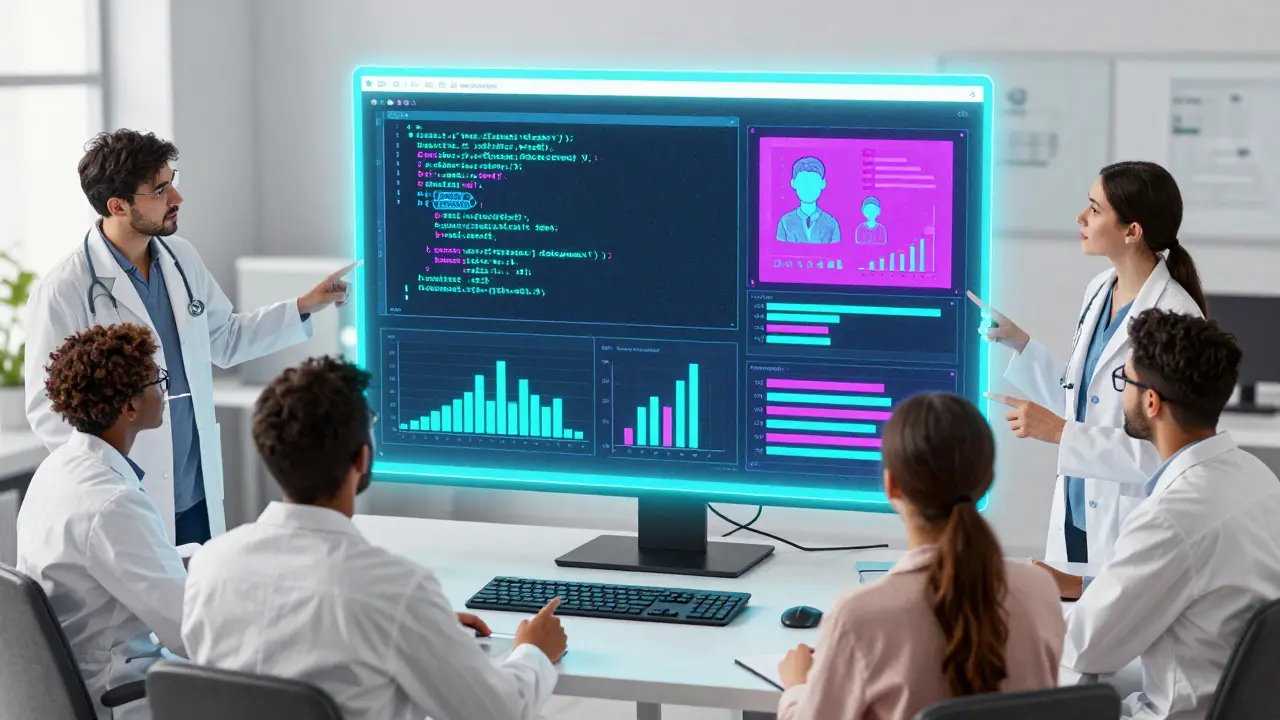
Vibe coding is not for everyone. It shines brightest for specific groups within healthcare organizations. According to user demographics, about 63.7% of current users are non-technical clinicians and researchers. These are people who understand the medical problem deeply but lack the coding skills to solve it themselves.
For example, Dr. Sarah Chen at Johns Hopkins University highlights that this approach democratizes development. A researcher can describe a need for a clinical trial management system that adapts to protocol changes. The AI builds the skeleton. The researcher tests it with synthetic patients. If it works, they hand it off to IT engineers to harden and deploy. This collaboration reduces the gap between clinical needs and technical delivery.
However, it is not suitable for building Clinical Decision Support Systems (CDSS) that require real-time analysis of live patient data. Nor is it ideal for applications handling sensitive genetic information where even synthetic data patterns might pose re-identification risks. In those high-stakes scenarios, traditional, heavily audited development remains the safer choice.
Getting Started: A Practical Guide
If you want to try vibe coding for your next project, you cannot just jump into a public AI chatbot. That is a compliance nightmare. The American Medical Informatics Association warns against using free public tools for healthcare apps, noting that nearly 93% lack adequate data governance.
Here is how to start safely:
- Set Up a Secure Environment: Use enterprise-grade platforms like Epic’s Cogito AI Developer Environment or specialized compliant versions of Replit. Ensure your workspace is sandboxed.
- Generate Synthetic Data: Use tools like Synthea to create datasets that match your target population’s demographics and conditions without containing real PHI. Configure this data to mirror the structure of your intended EHR integration (e.g., FHIR standards).
- Learn Prompt Engineering: Non-technical users typically need 8 to 12 hours of training to get proficient. Start with simple requests. Instead of 'build a diabetes tracker,' try 'create a Python script that calculates HbA1c trends from synthetic CSV data and flags values above 7.0.'
- Implement Automated Reviews: Set up pipelines that check generated code for both functionality and security vulnerabilities before you ever consider moving it closer to production.
Expect a learning curve. You will likely need to iterate on your prompts about 2.7 times per feature to get the right result. But once you master the language of instruction, the speed gains are undeniable.
The Regulatory Landscape in 2026
The FDA is watching closely. Their October 2025 draft guidance encourages innovative development approaches that protect patient data during early stages. However, they also emphasize documentation. One major hurdle for vibe coding is 'code provenance.' If an AI writes the code, who is responsible for it? The FDA requires clear audit trails. Many early implementations failed because they couldn’t prove how the code was derived or validated.
To stay compliant, maintain rigorous logs of every prompt, every iteration, and every manual edit made to the AI-generated code. Treat the AI as a junior developer who needs supervision, not an autonomous agent. This 'human-in-the-loop' oversight is essential for both quality control and regulatory approval.
Future Outlook: Where Is This Going?
The market for healthcare AI development tools is exploding, reaching $2.87 billion in late 2025. We are seeing rapid specialization. Meta plans to release Code Llama Healthcare Edition in Q1 2026 with built-in HIPAA checks. Google is rolling out AlphaCode Medical with integrated synthetic data generation. These updates signal a shift from general-purpose coding assistants to industry-specific, compliance-aware partners.
By 2027, analysts predict that 45% of healthcare software prototypes will use vibe coding techniques. Yet, only 12% of production systems will rely primarily on AI-generated code. This distinction is crucial. Vibe coding is a prototyping engine, not a replacement for senior software engineers. It accelerates the 'what if' phase, allowing teams to fail fast and cheaply with synthetic data, saving real resources for solutions that truly work.
Is vibe coding HIPAA compliant?
Vibe coding itself is not inherently compliant, but it can be used in a HIPAA-compliant manner. Compliance depends on the platform you use and how you handle data. You must use enterprise-grade tools with PHI detection layers and ensure all prototyping is done with synthetic or fully de-identified data. Never input real patient information into public AI coding tools.
What is the difference between vibe coding and low-code platforms?
Low-code platforms like Mendix provide visual drag-and-drop interfaces that still often require connection to real databases for testing, potentially exposing PHI. Vibe coding uses natural language prompts to generate code that runs against synthetic data in a sandbox. It focuses on rapid logic validation without touching live systems, whereas low-code often bridges directly to production environments earlier in the cycle.
Can I deploy vibe-coded applications directly to production?
No. You should never deploy AI-generated code directly to production in healthcare settings. The code typically has a 22.4% error rate and lacks the rigorous security hardening required for live patient interactions. Use vibe coding for prototyping and proof-of-concept. Always have experienced engineers review, refactor, and secure the code before deployment.
Which tools are best for healthcare vibe coding?
Look for enterprise-specific solutions rather than public consumer tools. Platforms like OpenAI Windsurf (fine-tuned for healthcare), Epic’s Cogito AI Developer Environment, and upcoming releases like Meta’s Code Llama Healthcare Edition are designed with compliance in mind. Avoid free public chatbots as they lack necessary data governance and PHI sanitization features.
How much does it cost to implement vibe coding?
The initial setup and training typically take 2-4 weeks. Per prototype, costs drop significantly compared to traditional methods, averaging around $3,800 versus $14,200. However, you must factor in the cost of enterprise licensing for compliant AI tools and the ongoing salary of engineers needed to review and finalize the code for production.