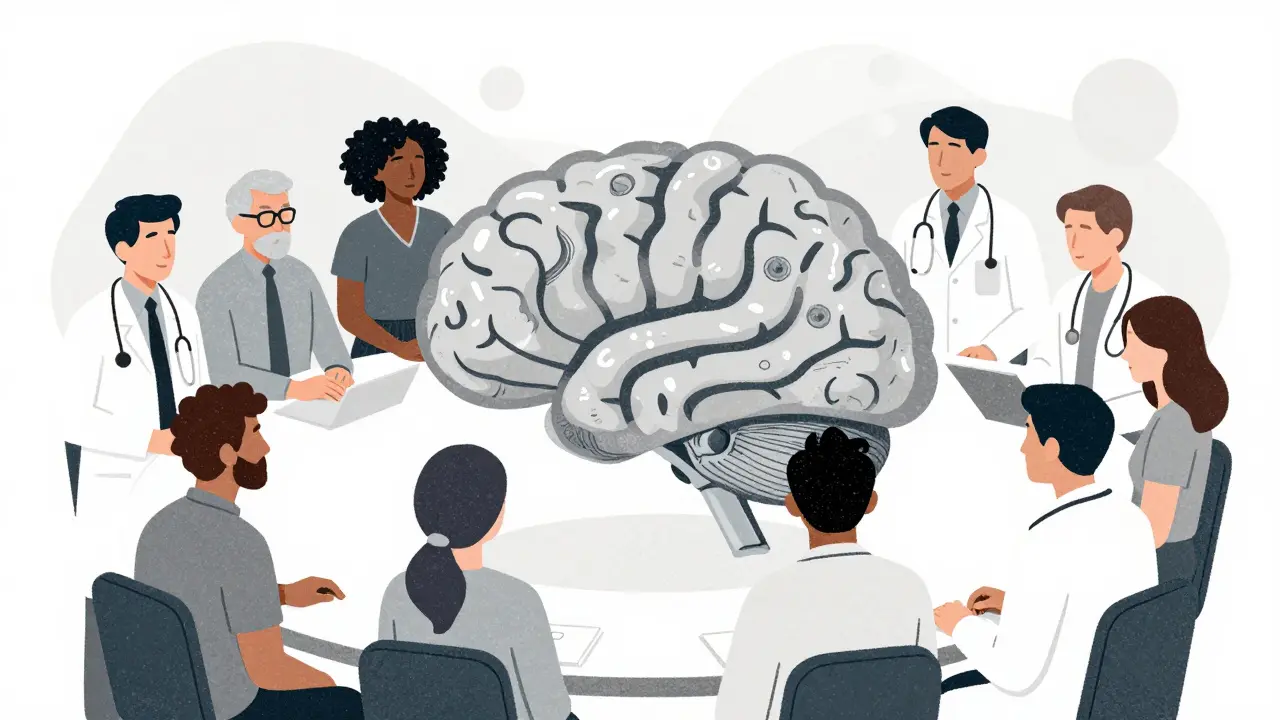
Imagine launching a customer service chatbot that sounds helpful but subtly denies loans to specific neighborhoods. Or a medical diagnostic tool that misses symptoms in elderly patients because its training data lacked diversity. These aren't just technical glitches; they are ethical failures that damage trust and invite heavy fines. As large language models (LLMs) move from experimental labs to critical business operations, the question is no longer *if* we should check them for harm, but *who* gets to decide what constitutes harm.
This is where stakeholder review processes come in. They are not just paperwork for compliance officers. They are structured frameworks that bring diverse voices-patients, customers, employees, regulators-together to evaluate an LLM before it goes live. By 2025, these processes have shifted from optional best practices to mandatory components of AI governance, driven largely by regulations like the EU AI Act. But doing them right requires more than ticking boxes. It demands a genuine shift in how organizations build and deploy artificial intelligence.
Why Stakeholder Reviews Are No Longer Optional
The rise of stakeholder reviews didn't happen overnight. Between 2020 and 2023, as LLMs became powerful enough to influence healthcare diagnoses and financial decisions, the ethical stakes skyrocketed. Early on, these processes emerged primarily in healthcare, where privacy and bias concerns were life-or-death matters. A systematic review published in PMC (2024) found that 87% of healthcare-focused LLM ethics studies explicitly included stakeholder perspectives. Why? Because doctors and patients know risks that engineers might miss.
Today, the pressure has broadened. The EU AI Act, which came into force on August 2, 2024, mandates rigorous oversight for high-risk AI systems. California’s AI Transparency Act (effective January 1, 2025) and Singapore’s updated Model AI Governance Framework (November 2024) follow similar paths. Organizations ignoring these shifts face real consequences. An arXiv review (2024) showed that companies with formal stakeholder review processes experienced 42% fewer ethical incidents than those without. That’s not just moral victory; it’s risk management.
How Stakeholder Review Frameworks Actually Work
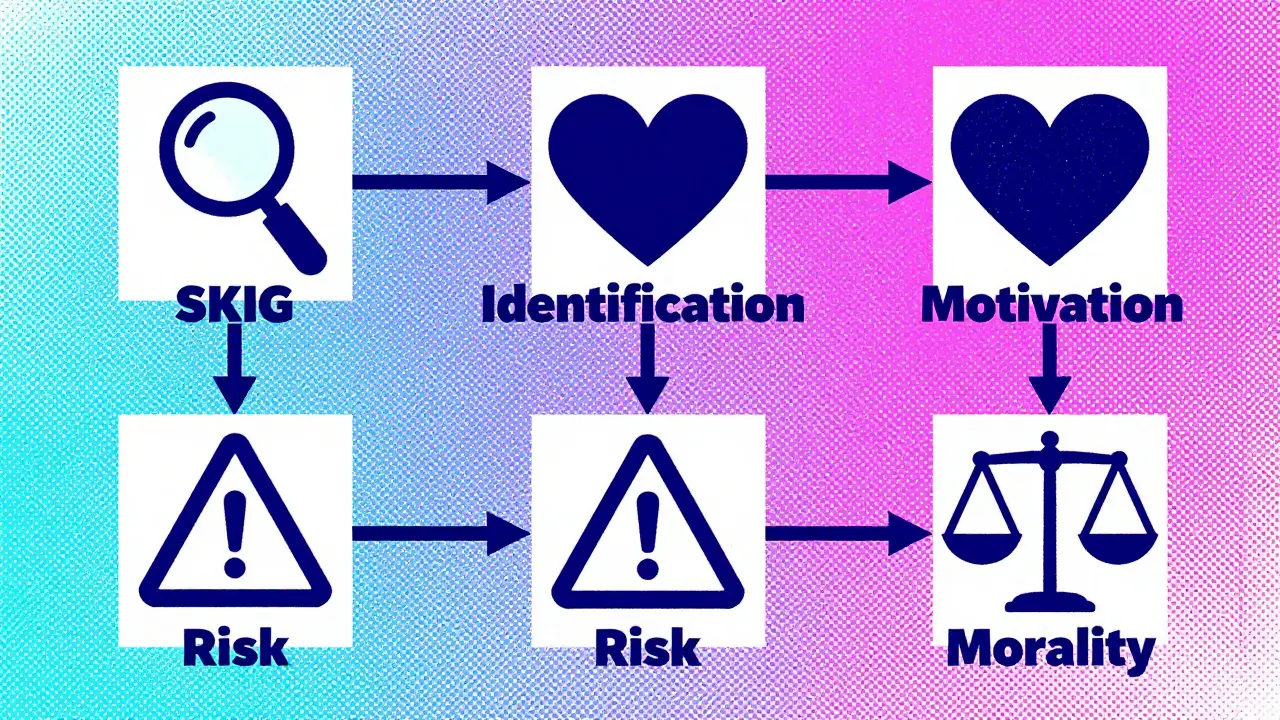
You might think "stakeholder review" means sending out a survey and hoping for the best. In practice, effective frameworks are much more rigorous. One prominent model is the SKIG framework, detailed in ACL Anthology research (2024). It breaks the process into four distinct phases:
- Stakeholder Identification: Systematically cataloging everyone affected. This isn’t just users; it includes marginalized groups who might be harmed indirectly. Some tools even simulate a "main character" perspective to test empathy.
- Motivation Analysis: Understanding what each group values. Do they care most about speed, accuracy, or privacy?
- Risk Assessment: Evaluating best-case and worst-case scenarios. What happens if the model hallucinates legal advice? What if it reinforces hiring biases?
- Morality Evaluation: Judging the ethical implications based on stakeholder impacts. Does the benefit outweigh the potential harm?
Another approach, highlighted in an arXiv review (2024), uses an eight-perspective evaluation covering transparency, robustness, alignment with human values, and environmental impact. For example, transparency is measured through explainability metrics, while robustness is quantified via adversarial testing success rates. These aren't vague concepts; they are measurable data points.
The results speak for themselves. A Journal of Applied Business and Economics study (2024) found that teams using stakeholder frameworks identified ethical conflicts in an average of 14.3 hours, compared to 32.7 hours without them. Faster detection means cheaper fixes. Moreover, the PMC systematic review reported a 37% decrease in discrimination cases when these processes were implemented.
Comparing Approaches: Healthcare vs. Business Models
Not all frameworks are created equal. Your industry dictates which approach works best. Here’s how the main types compare:
| Framework Type | Best For | Key Strength | Weakness |
|---|---|---|---|
| Healthcare-Specific (e.g., PMC) | Clinical applications, diagnostics | High clinician satisfaction (89%) | Low business applicability (42%) |
| Business-Oriented (e.g., JABE) | Finance, marketing, HR | Strong ROI (23% cost savings) | Weaker technical robustness (62/100 score) |
| General-Purpose (e.g., SKIG) | Multi-sector deployments | Enables smaller LLMs to match larger ones in moral reasoning (92.7% vs 93.1%) | Complex implementation (12-16 weeks) |
If you’re building a loan approval bot, a healthcare framework might feel too clinical and slow. If you’re developing a surgical assistant, a business-focused model might ignore critical safety nuances. The SKIG framework offers a middle ground, uniquely enabling lower-parameter LLMs (under 7 billion parameters) to achieve moral reasoning accuracy comparable to massive models. However, this flexibility comes at a cost: implementation complexity. ACM research indicates full integration takes 12-16 weeks and requires 3-5 full-time equivalent personnel for medium-sized enterprises.
The Human Element: Expert Perspectives and Real-World Friction
Data tells one story, but people tell another. Experts warn against treating stakeholder reviews as mere technical exercises. Dr. Elena Rodriguez, Director of AI Ethics at MIT (2024), argues that successful implementations involve genuine power-sharing. She notes that 73% of effective frameworks give stakeholders decision-making authority, not just advisory roles. Without that power, the process becomes performative.
Professor James Chen of Stanford University (2025) criticizes current approaches for neglecting historical context. He points out that 61% of frameworks fail to account for systemic biases embedded in society, focusing instead on isolated technical errors. Meanwhile, Dr. Aisha Patel of the AI Now Institute emphasizes adaptability. Since stakeholder dynamics evolve as models deploy, she recommends adaptive review cycles every 45-60 days rather than one-time assessments.
But let’s talk about the messy reality. On Reddit’s r/MachineLearning (March 2025), developer Alex Chen shared that implementing a healthcare framework reduced demographic bias in diagnosis recommendations by 58%. The catch? It required 14 additional clinician hours weekly for oversight. That’s a significant resource drain.
Conversely, a HackerNews comment (February 2025) described a stakeholder process that devolved into "bureaucratic theater." Eight committee meetings were held to approve minor prompt changes, delaying deployment by 11 weeks with minimal ethical improvement. This highlights a common pitfall: over-engineering the process. When reviews become bottlenecks, teams find ways to bypass them, defeating the purpose.
Implementing Your Own Process: A Step-by-Step Guide
If you’re ready to build a stakeholder review process, start small but think big. Here’s a practical path forward:
- Map Your Stakeholders: Identify at least five distinct groups. Don’t just list "users." Break it down: new users, power users, disabled users, internal staff, regulators. The EU AI Act requires this level of granularity for high-risk systems.
- Establish Communication Channels: 82% of successful implementations use dedicated collaboration platforms. Slack channels, shared dashboards, or specialized AI governance tools can help keep conversations transparent and documented.
- Define Metrics Early: Vague goals lead to vague results. Aim for 14 specific indicators per framework, such as bias incident rates, explanation clarity scores, or carbon emissions per inference. Make these metrics visible to all stakeholders.
- Integrate into Development Pipelines: Don’t wait until launch. Embed review checkpoints at data collection, model training, and pre-deployment stages. Microsoft pilots show that integrating with continuous deployment pipelines can reduce ethical incidents by 47%.
- Plan for Conflict: 67% of organizations report conflicting stakeholder priorities. A patient might want maximum data sharing for better care, while a privacy advocate wants strict limits. Have a clear escalation path for resolving these disputes.
Expect a learning curve. The ACM study shows 78% of organizations need external consultants for initial implementation. Budget accordingly. Small organizations may spend 18-22% of their AI budget on review processes, while enterprises typically allocate 8-12%. It’s an investment, not an expense.
Looking Ahead: Automation and Accountability
The future of stakeholder reviews lies in balancing human judgment with machine efficiency. Google Research is targeting 80% accuracy in automated stakeholder impact prediction by Q4 2025. Tools like Holistic AI and Luminance are gaining market share by offering platforms that streamline these complex interactions. Open-source frameworks remain popular, with 37% adoption among developers who value transparency and customization.
However, automation brings new risks. Trustpilot reviews for AI governance platforms note a growing concern about "over-reliance on automated stakeholder mapping tools missing nuanced community impacts." Algorithms can identify patterns, but they struggle with cultural subtleties. A loan denial explanation might be statistically fair but culturally insensitive to 17% of your customer base, as one financial services company discovered before a $2.3M compliance violation was narrowly avoided.
Regulators are watching closely. The EU AI Office released updated guidelines in September 2024 demanding "demonstrable evidence of meaningful stakeholder participation." Checkbox compliance won’t cut it anymore. Auditors will look for records of genuine dialogue, conflict resolution, and iterative improvements.
By 2027, Gartner predicts 92% of enterprise AI deployments will incorporate formal stakeholder review processes. The goal is shifting from mere compliance to value creation. Organizations that master this art won’t just avoid fines; they’ll build deeper trust with their users, turning ethical rigor into a competitive advantage.
What is a stakeholder review process for LLMs?
A stakeholder review process is a structured framework that involves multiple affected parties-such as users, regulators, and domain experts-in evaluating the ethical implications of a Large Language Model before and after deployment. It aims to identify biases, ensure transparency, and align the AI with human values.
Is stakeholder review required by law?
Yes, for high-risk AI systems. Regulations like the EU AI Act (effective August 2024) and California's AI Transparency Act (effective January 2025) mandate meaningful stakeholder engagement and documentation for certain AI applications, particularly in healthcare, finance, and employment.
How long does it take to implement a stakeholder review framework?
Full integration typically takes 12-16 weeks according to ACM research. Teams usually require 8-12 weeks to become proficient, and many organizations hire external consultants for the initial setup due to the complexity of defining metrics and establishing communication channels.
What are the costs associated with stakeholder reviews?
Costs vary by organization size. Small businesses may spend 18-22% of their AI budget on review processes, while large enterprises typically allocate 8-12%. However, these costs are often offset by risk mitigation; one financial firm avoided a $2.3M compliance violation through early stakeholder feedback.
Which stakeholder review framework is best for my business?
It depends on your industry. Healthcare-specific frameworks (like those in PMC studies) excel in clinical validation. Business-oriented models (like JABE) offer strong ROI metrics. General-purpose frameworks like SKIG provide flexibility across sectors but require more resources to implement effectively.
Can automated tools replace human stakeholders in reviews?
No. While tools can automate mapping and scenario simulation, experts warn against relying solely on them. Automated tools often miss nuanced cultural impacts and historical contexts. Effective reviews require genuine human dialogue and decision-making authority for stakeholders.