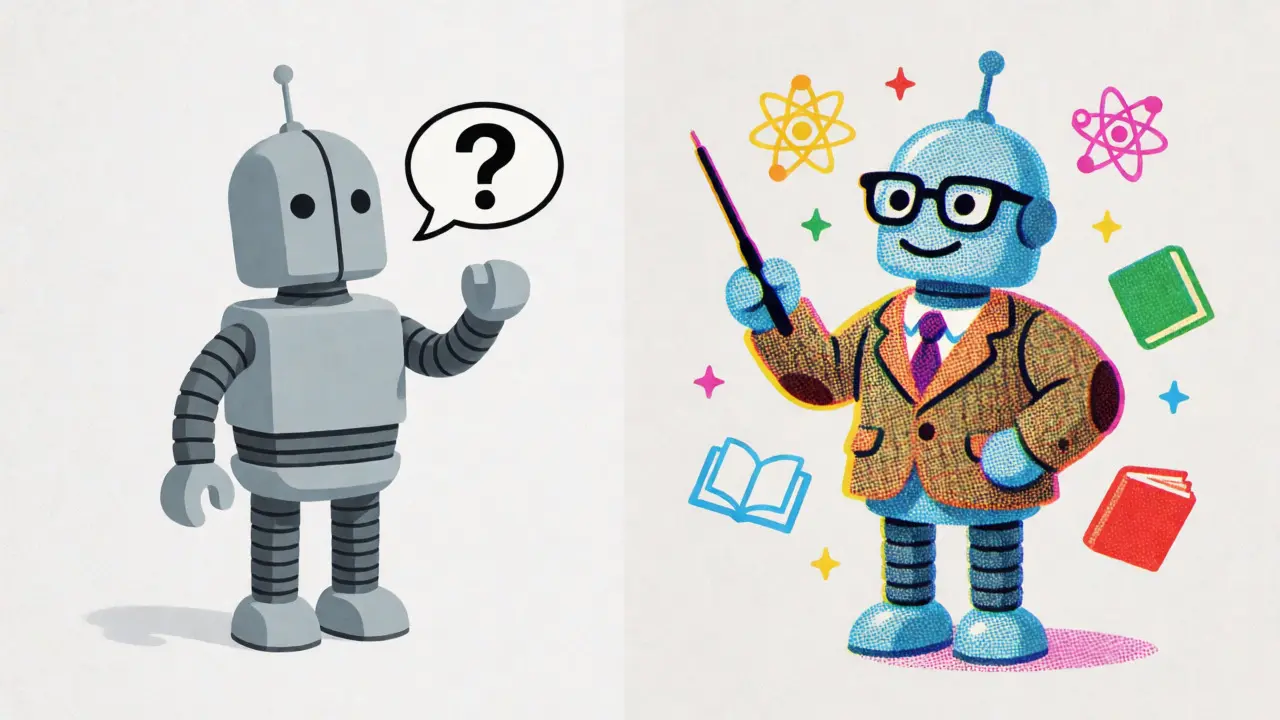
You’ve probably tried it. You ask an AI a question, and it gives you a generic, safe, boring answer. It’s like asking a stranger for directions instead of a local guide. The information is there, but the nuance, the shortcuts, the specific warnings? Missing.
Enter role-based prompting, also known as persona prompting. This isn't just about telling the AI to "be helpful." It’s about assigning it a specific professional identity-like a senior database administrator or a compassionate therapist-to unlock specialized vocabulary, reasoning patterns, and tone that match your exact needs. But does it actually work? Recent research says yes for creativity and style, but maybe not for hard facts. Let’s break down how to use this technique effectively without falling into common traps.
What Is Role-Based Prompting?
Role-based prompting is a prompt engineering technique where users instruct generative AI models to assume specific professional roles or personas to shape the tone, style, and substantive content of AI-generated responses. Think of it as casting an actor for a movie role. If you tell an actor to "act serious," you get one performance. If you tell them to "act like a weary detective who has seen too much crime," you get a completely different vibe, word choice, and depth of insight.
The core idea is simple: large language models (LLMs) are trained on vast amounts of text from the internet. This data includes books written by experts, forum posts by hobbyists, and academic papers by researchers. When you assign a role, you’re essentially nudging the model to access the clusters of training data associated with that expertise. You aren’t adding new knowledge; you’re filtering existing knowledge through a specific lens.
For example, if you ask, "Explain quantum entanglement," you might get a Wikipedia-style summary. But if you preface it with, "Act as a physics professor explaining concepts to curious high school students," the AI shifts gears. It uses analogies, avoids dense jargon, and focuses on conceptual understanding rather than mathematical rigor. The underlying facts remain the same, but the delivery changes dramatically.
The Science Behind the Persona
Why does this work? It comes down to how LLMs process context. Models like GPT-4, Claude 3.5, and Llama 70B+ have billions of parameters that capture statistical relationships between words and concepts. A role instruction acts as a strong contextual signal.
According to research detailed in the paper "ExpertPrompting: Instructing Large Language Models to be Distinguished Experts," this method operates in two steps. First, an instruction is passed to the LLM to generate an expert identity. Second, that generated identity and the original task are sent back to the model for processing. This approach emphasizes three critical characteristics:
- Distinguished: The persona description is customized to the specific instructions, ensuring specialization.
- Informative: The descriptions are detailed and comprehensive, covering all necessary background information.
- Automatic: The creation of expert agent descriptions is handled automatically by the model itself, leveraging its own understanding of what constitutes an "expert" in a given field.
This two-stage immersion helps anchor the model in the provided persona more robustly than simply tacking on "You are an expert" at the start of a prompt. It forces the model to self-generate the attributes of expertise before answering, which primes its internal weights for higher-quality output.
When Does It Work Best? (And When It Doesn’t)
Here is the uncomfortable truth: role-based prompting isn’t a magic bullet. Its effectiveness varies wildly depending on the task type and the size of the model you are using.
Research indicates that persona prompting shines in open-ended tasks. Creative writing, brainstorming, marketing copy, and educational explanations benefit significantly because these domains rely on tone, style, and subjective quality. If you need a poem that sounds like Edgar Allan Poe, a persona prompt is essential. If you need a code snippet optimized for speed, a "Senior Software Engineer" persona might help the AI consider edge cases and best practices it would otherwise skip.
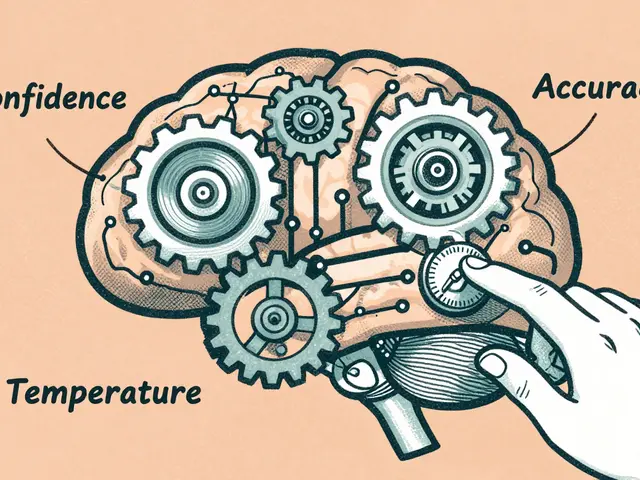
However, when it comes to factual accuracy, the picture gets murky. A recent paper titled "Playing Pretend: Expert Personas Don't Improve Factual Accuracy" found that across multiple benchmarks, persona prompts generally did not improve accuracy relative to a no-persona baseline. In fact, expert personas showed no significant improvement in factual correctness. This suggests that while a persona can make an answer sound more authoritative, it doesn’t necessarily make it more true. The model doesn’t suddenly gain access to a hidden database of facts just because you told it to be a doctor.
| Task Type | Expected Impact | Recommended Approach |
|---|---|---|
| Creative Writing | High | Use highly specific literary personas (e.g., "Noir Fiction Writer"). |
| Educational Explanation | Medium-High | Specify audience level (e.g., "Teacher explaining to 5th graders"). |
| Factual Q&A | Low/None | Rely on retrieval-augmented generation (RAG) instead of personas. |
| Code Generation | Medium | Specify tech stack and experience level (e.g., "Senior Python Dev"). |
| Data Classification | Low | Focus on clear constraints and examples, not personas. |
Another critical factor is model size. Smaller models often lack the diverse training data required to meaningfully differentiate between roles. Telling a small 7B parameter model to act like a "Specialized Neurosurgeon" might yield results barely distinguishable from a generic assistant. Larger models (GPT-4, Claude 3.5 Sonnet, Llama 3 70B+) have enough exposure to niche professional texts to simulate these roles convincingly.
How to Build Effective Expert Personas
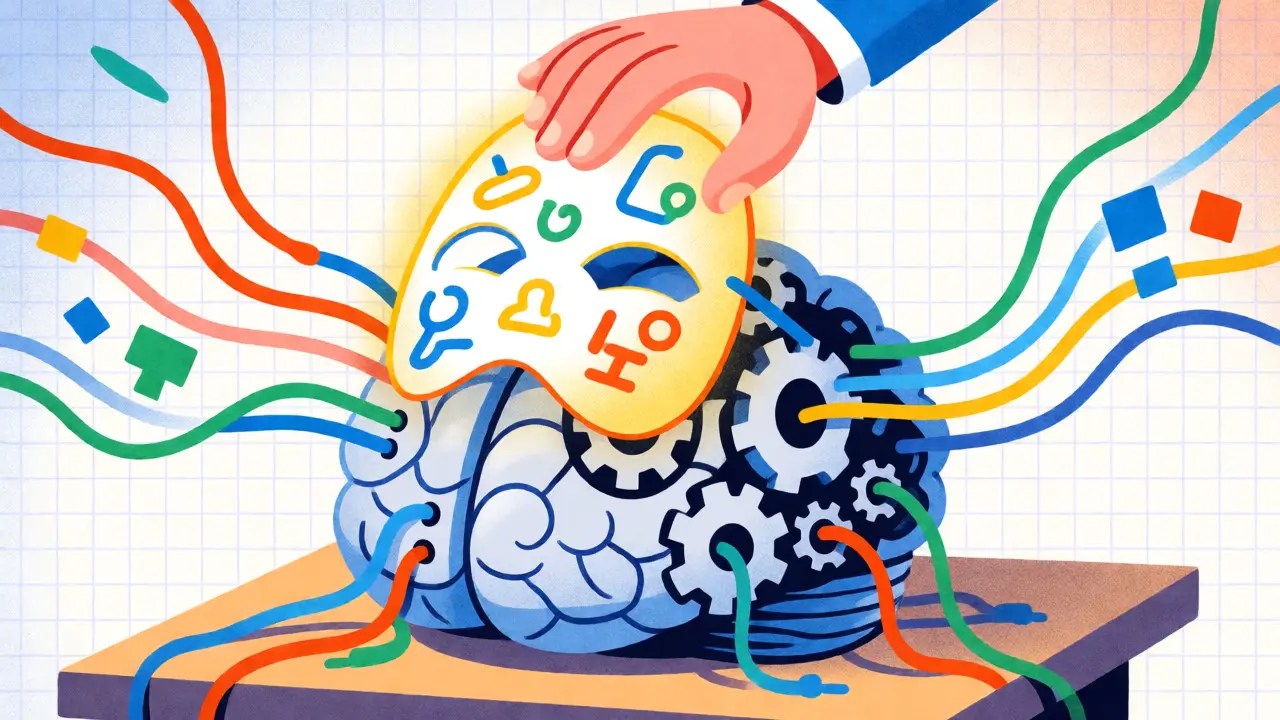
Not all personas are created equal. Generic roles like "Expert" or "Professional" produce weak results. Specificity is king. Instead of saying "Act as a programmer," try "Act as a Senior Backend Engineer specializing in PostgreSQL indexing for time-series data." See the difference? The second prompt activates specific technical knowledge and problem-solving approaches relevant to that narrow domain.
To implement this effectively, follow a structured methodology:
- Role Selection: Choose a role that fits the task’s complexity and domain. Be precise about the specialty.
- Role Introduction: Clearly instruct the AI to assume this identity. Use phrases like "You are..." or "Act as..."
- Context Provision: Provide background info. Who is the audience? What is the goal? What are the constraints?
- Task Definition: State the specific question or action required.
- Response Generation: Review the output and iterate if the tone or depth feels off.
A pro tip from practitioners: use the "Role-Feedback" loop. After setting the role, ask the model to confirm its understanding. For example: "Before we begin, summarize your role and how you plan to approach my next question." This step further anchors the model in the persona and reduces the chance of it drifting back to a generic default mode during long conversations.
Common Pitfalls and How to Avoid Them
Even with good intentions, role-based prompting can backfire. Here are the most common mistakes I see people make.
Overloading the Persona: Some users write paragraphs describing the persona’s backstory, childhood, and favorite color. Unless this impacts the answer, it’s noise. Keep the persona focused on professional competencies and communication style. Extra fluff consumes context window space and can confuse the model.
Ignoring Audience Alignment: A persona must match the user’s needs. If you are a beginner, don’t ask the AI to act like a PhD researcher. You’ll get answers full of jargon you can’t parse. Always specify the target audience level: beginner, intermediate, or advanced.
Assuming Factuality: As mentioned earlier, don’t trust a persona to fix hallucinations. If the AI claims a specific statistic while acting as a "Financial Analyst," verify it. The persona influences style, not truth.
Stereotyping: Be careful with cultural or gendered assumptions in personas. Asking the AI to "act like a stereotypical CEO" might yield outdated or biased responses. Focus on functional traits like "strategic thinker" or "data-driven decision maker" instead.

Advanced Techniques: ExpertPrompting Framework
If you want to move beyond manual persona creation, look into the ExpertPrompting framework. This automated approach lets the LLM generate its own expert persona based on the task. It works by first asking the model to create a detailed expert profile for the given problem, then using that profile to answer the question.
Why does this matter? Because humans are bad at guessing what makes an expert in a field they don’t know well. The model, having read millions of expert documents, can often construct a more nuanced and accurate persona than a user trying to guess the right keywords. This method leverages In-Context Learning to guide model performance more robustly than static persona additions.
For example, if you ask a complex legal question, ExpertPrompting might generate a persona like "A seasoned contract law attorney with 15 years of experience in SaaS agreements," complete with specific attention to liability clauses and jurisdictional nuances. You didn’t have to know to ask for those details; the model inferred them from the task.
Practical Examples: Before and After
Let’s look at how this plays out in real scenarios.
Scenario 1: Marketing Copy
Basic Prompt: "Write a tweet about our new coffee subscription."
Result: "Try our new coffee subscription! Great beans delivered monthly. #Coffee"
Role-Based Prompt: "Act as a witty social media manager for a boutique coffee brand targeting millennials. Write a tweet that highlights convenience and taste, using emojis and a casual tone."
Result: "Wake up & smell the ☕️ magic. Our fresh-roasted beans hit your door before you even hit snooze. No more sad office coffee. 🚀☕️ #MorningFuel #CoffeeLovers"
Scenario 2: Technical Debugging
Basic Prompt: "Fix this Python error."
Result: Generic advice about checking syntax.
Role-Based Prompt: "Act as a Senior Python Developer specializing in asynchronous programming. Explain why this asyncio code is hanging and provide a corrected version with comments on event loop management."
Result: Detailed explanation of blocking calls in async functions, specific suggestions for using `await`, and a refactored code block focusing on non-blocking execution.
Final Thoughts: Should You Use It?
Role-based prompting is a powerful tool in your prompt engineering toolkit, but it’s not a universal fix. Use it when you care about tone, style, structure, and domain-specific reasoning. Skip it-or rely less on it-when you need raw factual precision, especially with smaller models.
Start simple. Pick a task you do regularly. Assign a specific, detailed persona. Compare the output to a generic prompt. If the difference is negligible, drop the persona. If it saves you editing time or provides insights you wouldn’t have considered, keep it. The best prompt is the one that gets you the result you need with the least friction.
Does role-based prompting improve factual accuracy?
Recent research suggests that role-based prompting generally does not improve factual accuracy compared to a no-persona baseline. While it enhances style and relevance, it does not guarantee that the facts presented are correct. Verification remains essential.
Which AI models respond best to persona prompts?
Larger models such as GPT-4, Claude 3.5, and Llama 70B+ tend to respond better to role-based prompting because they have more diverse training data associated with specific professional roles. Smaller models may not show significant differences in output.
How specific should the persona be?
Specificity yields better results. Instead of generic roles like "Engineer," use detailed descriptions like "Senior Database Administrator specializing in PostgreSQL optimization." This helps the model access more relevant training patterns.
Can I combine role-based prompting with other techniques?
Yes, role-based prompting integrates well with chain-of-thought prompting, few-shot examples, and constraint-based instructions. Combining techniques often produces superior results by addressing both style and logical reasoning requirements.
Is there a downside to using personas?
Potential downsides include increased token usage due to longer prompts, potential bias if stereotypes are used, and the risk of over-relying on the persona for factual correctness when verification is still needed.