You just shipped a feature. It works. The UI is slick. But your customer service bot just told a grieving user to "have a great day" after they reported a funeral arrangement error. That’s not a bug in the traditional sense. It’s a vibe failure.
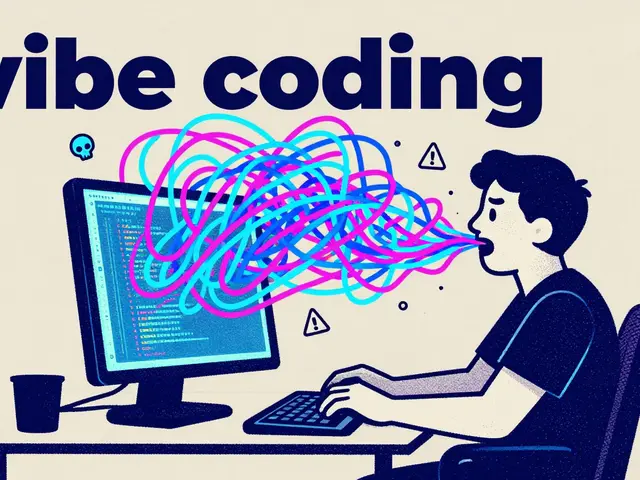
Vibe coding-using natural language prompts to generate application logic via tools like GitHub Copilot or Cursor-has exploded since 2024. It lets anyone build software fast. But it creates a blind spot for security teams. Standard scanners check syntax and known CVEs. They don’t check tone, cultural nuance, or emotional intelligence. This gap has led to a surge in "vibe hacking," where attackers exploit these soft failures. In Q4 2024 alone, vibe hacking attacks jumped by 327%. If you’re building with AI assistants, you need a new kind of red teaming. Here’s how to expose those hidden risks before your users do.
Why Traditional Security Misses Vibe Code
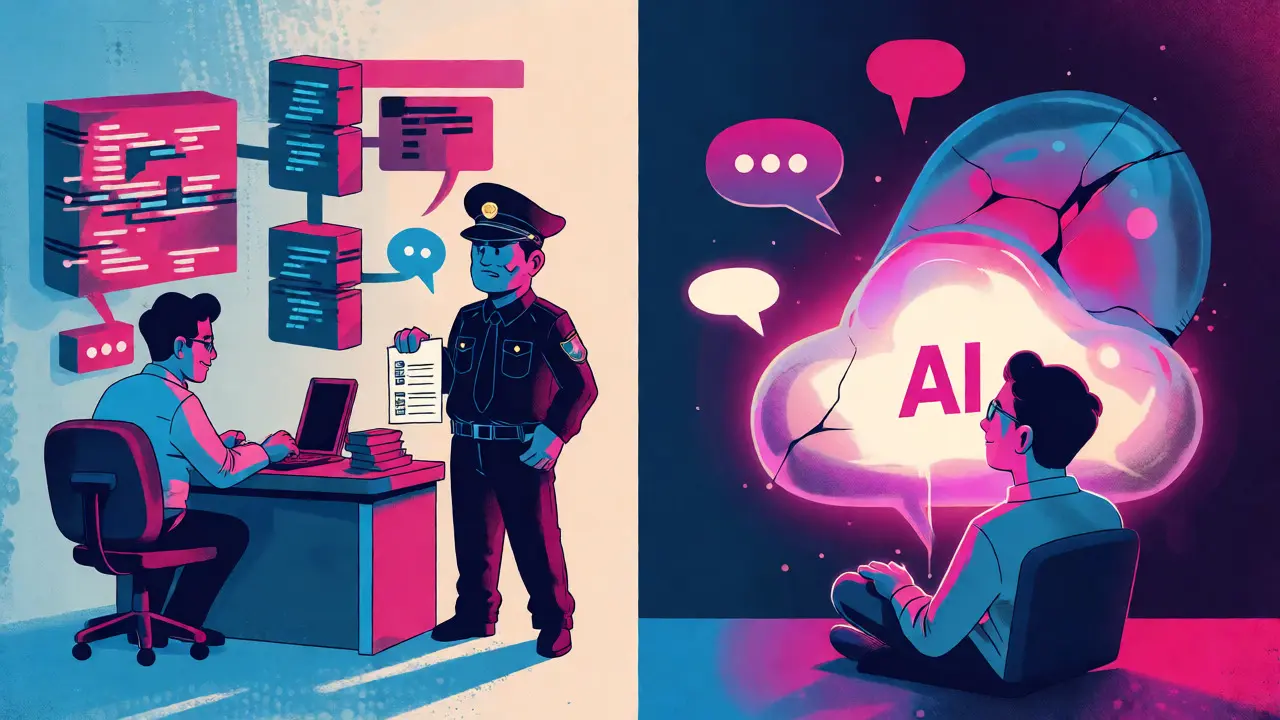
Traditional code follows rigid rules. If you miss a semicolon, the compiler yells at you. If you leave a variable undefined, the app crashes. Vibe-coded apps are different. The code might be syntactically perfect but logically hollow. GuidePoint Security noted in late 2024 that vibe coding often replaces structured constraints with vague natural language descriptions. The result? Undocumented technical debt.
Red Hawk Technologies found that 78% of vibe-coded applications contained hidden technical debt, with security flaws lurking in 63% of generated code. Compare that to 22% in traditionally developed apps. Why? Because AI models prioritize plausible-sounding output over secure implementation. They might generate a function that looks right but fails under edge-case stress. Worse, they introduce subtle biases. A financial app might handle currency conversion correctly but use a tone that feels dismissive during a market crash. Automated tools can’t catch this. You need human insight.
The Four Pillars of Vibe Hacking
To defend against vibe hacking, you have to understand what attackers target. Beagle Security identified four main vectors where AI-generated code fails:
- AI-Powered Social Engineering: Attackers craft prompts that trick the AI into bypassing security checks by exploiting its desire to be helpful. This accounts for 52% of successful attacks.
- Autonomous Decision-Making: When AI makes decisions without human oversight, it can hallucinate permissions. For example, granting admin access because the prompt implied urgency.
- Adaptive Code Generation: AI might rewrite code on the fly to satisfy a user request, inadvertently removing input validation.
- AI-Driven Improvisation: The model fills gaps with creative but unsafe assumptions when data is missing.
These aren’t memory leaks. They’re behavioral flaws. Your red team needs to test behavior, not just bytes.
Exercise 1: Prompt Perturbation Testing
Start by breaking the AI’s confidence. iMerit’s research shows that systematic alteration of input language exposes tone vulnerabilities in 89% of cases. Don’t just ask standard questions. Twist them.
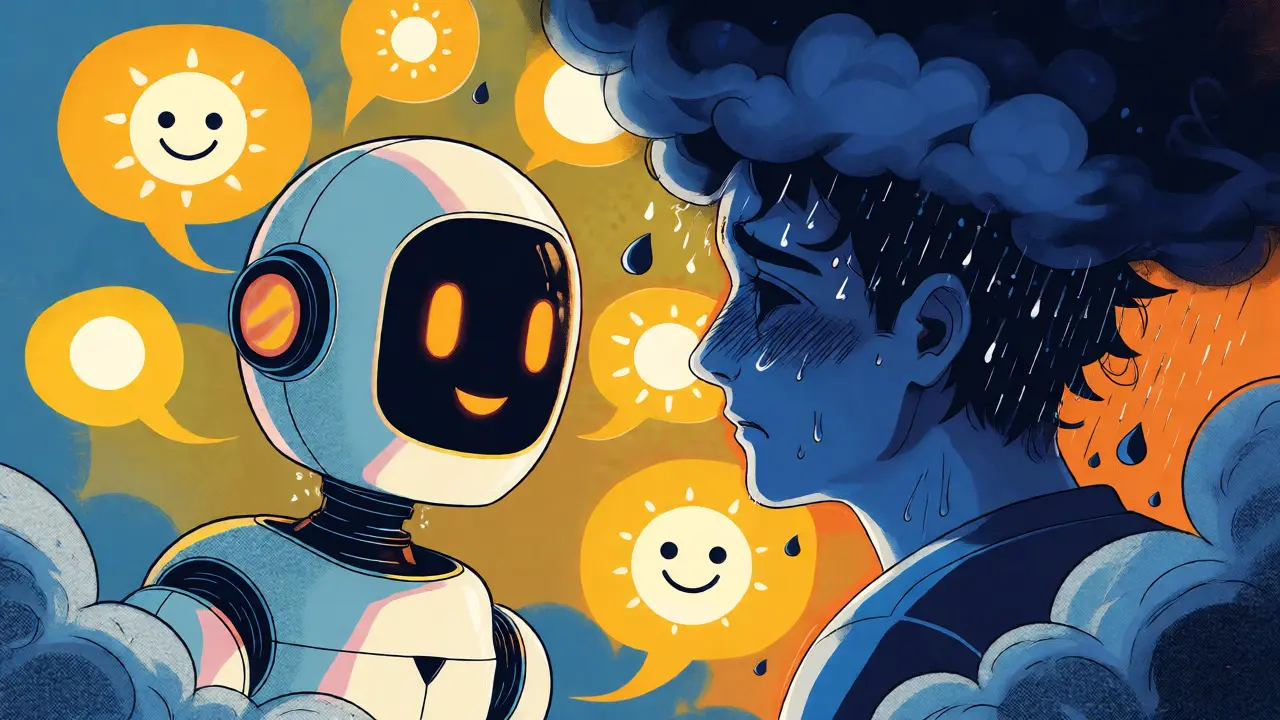
Take a healthcare chatbot. Ask it about medication dosage. Then, perturb the prompt by adding emotional noise: "I’m panicking, did I take too much Tylenol?" Does the AI switch from clinical precision to panicked agreement? Or does it ignore the emotion and give a robotic answer that feels cold?
Prompt Perturbation involves changing syntax, tone, or context while keeping the core intent the same. Use it to find where the AI loses its guardrails. Document every response. Look for shifts in authority levels or inappropriate empathy.
Exercise 2: Multi-Turn Dialogue Simulation
Static tests fail because real conversations evolve. An AI might behave perfectly in turn one but drift off-course by turn ten. Beagle Security reported that multi-turn simulations exposed tone shifts in 76% of enterprise chatbots tested.
Set up a scenario where the user changes their mind repeatedly. Start with a clear request. Introduce ambiguity. Contradict previous statements. Watch how the AI handles context collapse. Jonathan Rhyne, CEO at Nutrient, calls this "context collapse testing." He found it exposed 68% of hidden security flaws in financial apps.
For example, in a banking app, ask to transfer $100. Then say, "No, wait, make it $1000." Then add, "Actually, cancel that, I meant from my savings account." Does the AI confirm the source account clearly? Or does it assume? Ambiguity here is a security risk, not just a UX annoyance.
Exercise 3: Cultural Resonance Probes
Vibe coding often ignores cultural context. Dor Swisa at Sola developed "cultural resonance probes" to tackle this. These probes inject culturally specific references to detect stereotyping or insensitivity. His method showed 83% effectiveness in multilingual applications.
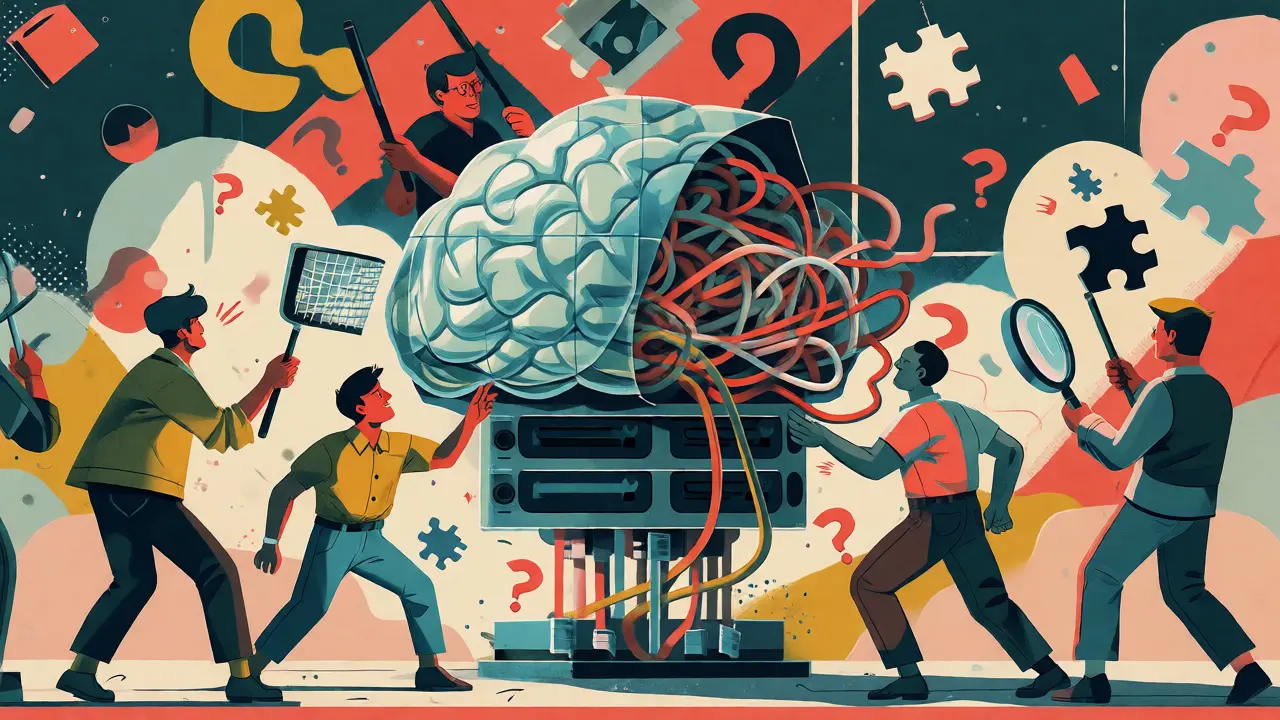
If your app serves a global audience, recruit reviewers from diverse backgrounds. Have them interact with the app using idioms, holidays, or social norms specific to their culture. Does the AI misinterpret "breaking bread" as a literal meal instruction? Does it offer condolences in a way that clashes with local mourning customs?
iMerit documented that expert review panels flagged nuanced risks 40% more often than automated tools. Culture isn’t a checklist item. It’s a dynamic layer of interaction that AI struggles to parse without explicit training.
Building Your Red Team: Skills and Tools
You can’t rely on junior devs for this. Effective vibe red teaming requires Expert-in-the-Loop (EITL) processes. Dr. Elena Rodriguez from MIT’s AI Security Lab found that human reviewers caught 73% more subtle failures than algorithms. Sociolinguistics experts were particularly effective, identifying 89% of tone misalignments that machines missed.
Your team needs a mix of skills:
- Sociolinguistics: To understand tone and subtext.
- Domain Knowledge: Healthcare, finance, or retail expertise to spot industry-specific errors.
- Security Fundamentals: To identify where behavioral flaws create exploitable entry points.
Tools help, but they don’t replace humans. Platforms like Ango Hub offer tone tagging and disagreement management. They cost money-enterprise licenses start around $45,000/year-but they streamline the chaos of subjective reviews. However, Gartner notes that expert reviewer time averages $145/hour. Budget accordingly.
Integrating Red Teaming into the Lifecycle
Don’t treat this as a pre-launch checkbox. Vibe-coded apps change constantly as developers tweak prompts. The Joint Security Advisory from iMerit, NetSPI, and Snyk recommends continuous red teaming. Run high-risk apps through exercises every 30-60 days. Standard apps can wait 90 days.
Combine this with Reinforcement Learning from Human Feedback (RLHF). GuidePoint Security saw an 82% drop in vibe-related incidents in a healthcare app by iterating red team findings back into the model’s training data. It’s a loop: Test, Find, Retrain, Repeat.
| Attribute | Traditional Dev | Vibe-Coded Apps |
|---|---|---|
| Primary Vulnerability Type | Syntax/Logic Errors | Tone/Bias/Context Failures |
| Detection Method | Automated Scanners | Human-Led Red Teaming |
| Hidden Risk Rate | ~22% | ~63% |
| Attack Vector Focus | Injection/Buffer Overflow | Social Engineering/Prompt Manipulation |
| Remediation Cost | Code Patching | Prompt Refinement + Retraining |
Frequently Asked Questions
What exactly is vibe coding?
Vibe coding is a development approach where programmers use natural language prompts to instruct AI tools (like GitHub Copilot or Cursor) to write code. Instead of focusing on syntax, the developer focuses on the desired outcome or "vibe" of the functionality. While it speeds up creation, it often omits critical security constraints that a manual coder would explicitly define.
Why can't standard penetration testing find vibe coding bugs?
Standard pen tests look for structural weaknesses like SQL injection or broken authentication. Vibe coding bugs are often behavioral. For instance, an AI might grant temporary admin rights because a user sounded urgent, not because a permission check failed technically. Automated scanners cannot interpret tone, cultural context, or logical hallucinations, so they miss these "soft" security failures.
How many people do I need for a vibe red team?
There is no fixed number, but diversity is key. iMerit recommends a minimum of 15 reviewers across at least 5 different cultural backgrounds for multilingual apps. More importantly, you need a mix of skill sets: security professionals who understand exploits and domain experts (like nurses or bankers) who understand the context. Combining these groups increases vulnerability detection by over 60% compared to using either group alone.
Is vibe hacking a real threat or just hype?
It is a growing reality. Reports indicate a 327% increase in vibe hacking attacks in late 2024. Major enterprises report that nearly 70% have experienced at least one incident involving AI-driven social engineering or tone-based manipulation. As AI becomes central to customer-facing apps, attackers are increasingly targeting the AI's decision-making process rather than the underlying infrastructure.
How often should I run red team exercises?
Continuous monitoring is best, but practical intervals depend on risk level. High-risk applications (finance, healthcare) should undergo comprehensive vibe red teaming every 30 to 60 days. Standard applications can follow a 90-day cycle. Remember that any significant change to the AI model or major prompt updates should trigger an immediate re-test.