The era of treating large language models as a novelty is over. In 2026, these systems have shifted from experimental playgrounds to the backbone of digital infrastructure for enterprises and governments worldwide. The race is no longer just about who can build the biggest model with the most parameters. It is about precision, efficiency, and the ability to act autonomously. We are witnessing a fundamental transformation where natural language processing (NLP) meets practical utility. This article breaks down the specific research trends driving this change, helping you understand what powers the next generation of AI.
From Chatbots to Autonomous Agents
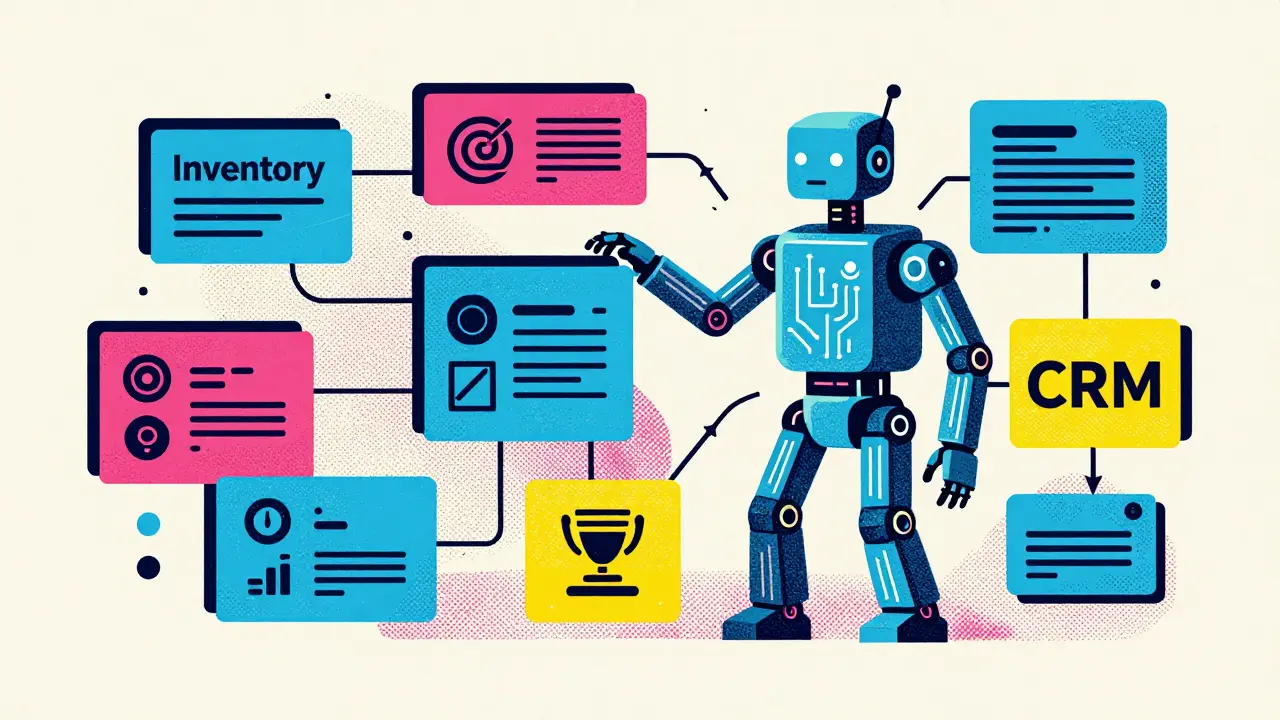
The most significant shift in 2026 is the move toward Agentic Artificial Intelligence. Unlike earlier models that waited for your prompt and gave a text response, agentic AI systems plan, execute, and make decisions within defined boundaries. They don't just answer questions; they complete workflows.
Imagine a customer service agent that doesn't just suggest an answer but checks inventory, processes a refund, and updates the CRM without human intervention. That is the promise of agentic AI. These systems leverage Large Language Models (LLMs) to handle complex tasks across software development, data analysis, and operational management. The trend reflects a broader industry realization: static models become obsolete quickly. Systems capable of self-optimization and continuous learning from user feedback are becoming the standard. This autonomy reduces the cognitive load on humans, allowing teams to focus on strategy rather than execution.
Multimodal Intelligence: Beyond Text
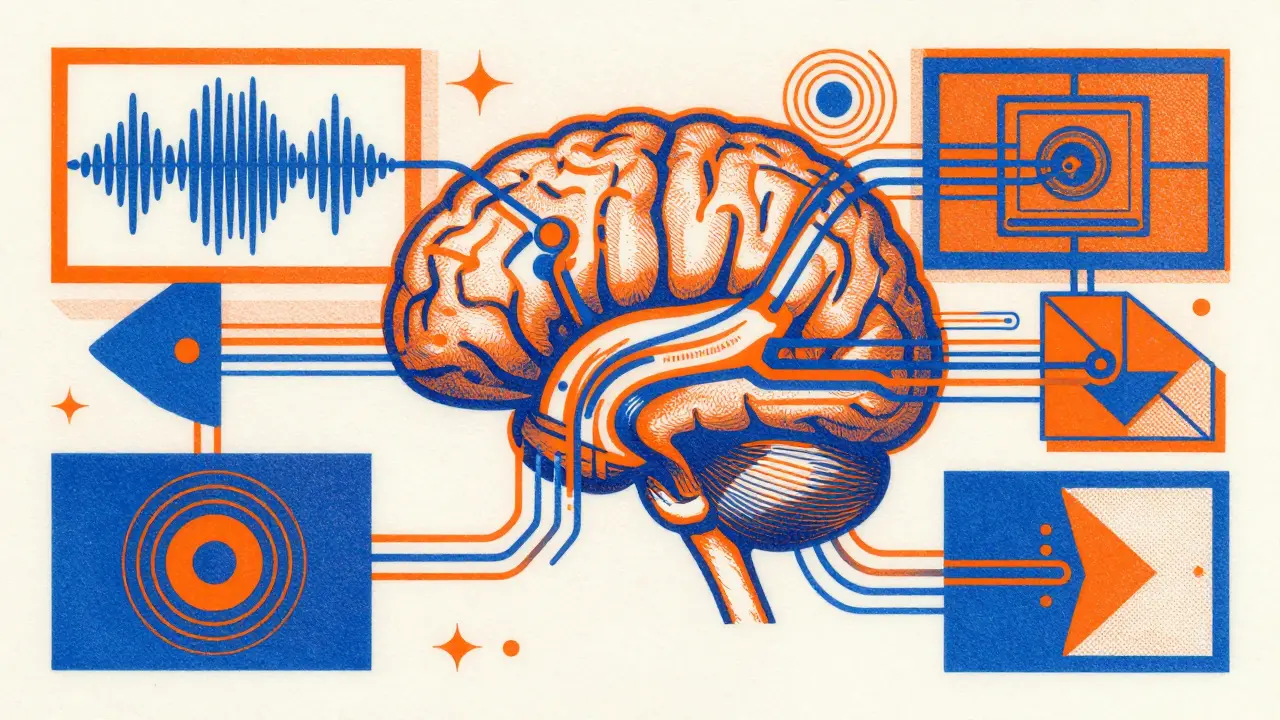
Text-only processing is increasingly seen as an artificial constraint. The defining architectural pivot for 2026 is Multimodal Intelligence, where models process images, audio, video, and sensor data in unified frameworks. This isn't just about adding image recognition to a chatbot. It is about creating Large Multimodal Models (LMMs) that understand context across different sensory inputs simultaneously.
For example, a student can upload a recorded lecture along with slide decks. An LMM can analyze the audio, cross-reference it with visual slides, and generate a comprehensive study guide autonomously. Industry analysis highlights reasoning models and multimodal capabilities as the two most critical developments reshaping the field. This evolution responds to the explosion of visual and audio content in digital ecosystems. If a model cannot understand a diagram or a tone of voice, its utility is limited. The integration of these modalities allows for richer, more accurate interactions that mirror how humans actually consume information.
Efficiency Through Mixture-of-Experts
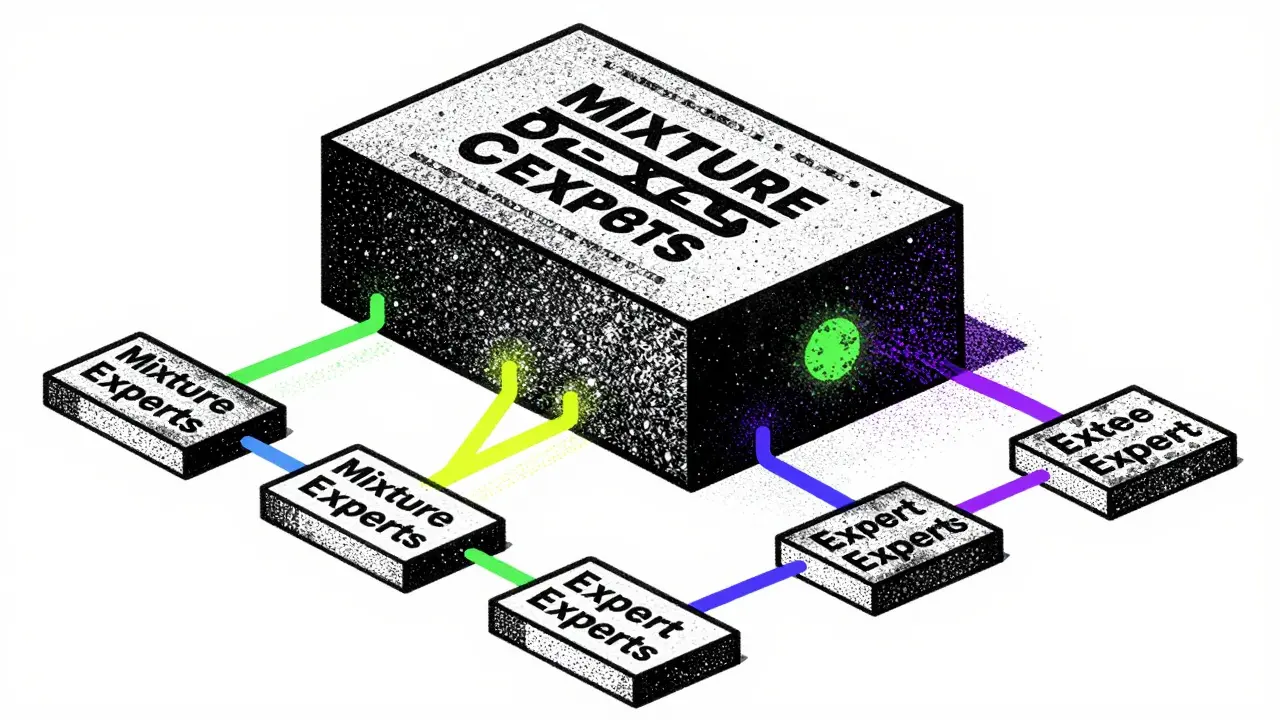
Scaling up model size used to be the only path to better performance. However, the computational cost was unsustainable. Enter Mixture-of-Experts (MoE) architectures. Instead of activating every parameter in a model for every query, MoE systems route specific queries through specialized "expert" networks. This approach delivers exceptional price-performance trade-offs.
Models like Mistral Large 2 exemplify this innovation. By using sparse activation, they provide efficient inference at competitive operational costs compared to dense transformer alternatives. This solves a persistent challenge in LLM deployment: balancing high performance with resource constraints. For businesses, this means faster response times and lower cloud bills without sacrificing quality. It democratizes access to powerful AI, allowing organizations with smaller budgets to deploy sophisticated solutions. The shift from dense to sparse models marks a maturation of the technology, prioritizing efficiency over raw scale.
Context Windows and Chain-of-Thought Reasoning
Historically, LLMs struggled with long documents because their memory-context window-was limited. In 2026, context windows are expanding dramatically. Next-generation architectures promise capacities extending to 200,000 tokens or beyond. This allows models to analyze entire code repositories or legal knowledge bases in a single pass. Researchers have documented models achieving 128,000 token limits, with newer versions pushing even further. This advancement removes a major bottleneck in document analysis and code review tasks.
Alongside larger contexts comes better reasoning. Chain-of-Thought Reasoning enables models to decompose complex problems into intermediate steps. Rather than jumping to a final answer, the model shows its work. This improves accuracy in mathematical problem-solving, logical inference, and complex analysis. OpenAI has highlighted this as a core component of GPT-5's design. Transparent reasoning not only boosts performance but also increases user trust. When you see the logic behind an answer, you are more likely to rely on it for critical decisions.
| Trend | Primary Benefit | Key Example/Model |
|---|---|---|
| Mixture-of-Experts (MoE) | Cost-effective inference | Mistral Large 2 |
| Multimodal Processing | Unified sensory understanding | Gemini 2.5/3 |
| Expanded Context Windows | Whole-document analysis | GPT-5 (200k+ tokens) |
| Chain-of-Thought | Improved logical accuracy | Claude 4 |
Trust, Safety, and Retrieval-Augmented Generation
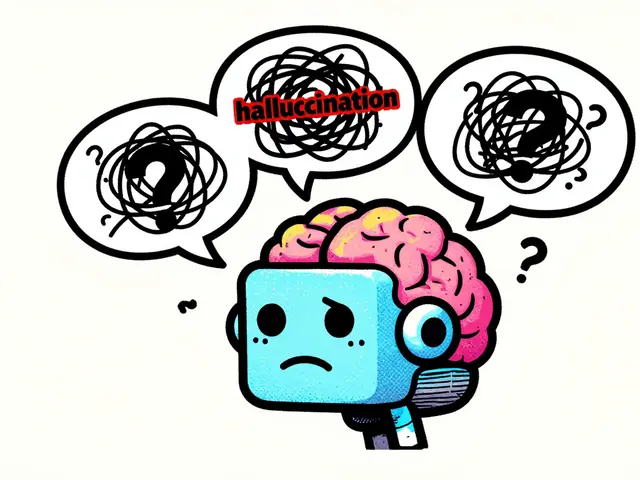
Hallucinations-factual errors made by AI-remain a risk. To combat this, organizations are heavily adopting Retrieval-Augmented Generation (RAG). RAG systems combine LLMs with external knowledge bases, databases, and web resources. Instead of relying solely on training data, the model retrieves verified information before generating a response. MIT researchers emphasize RAG's critical role in grounding outputs in verifiable sources.
This is crucial for industries like healthcare and finance, where accuracy is non-negotiable. Complementary techniques like LoRA (Low-Rank Adaptation) allow for domain-specific fine-tuning with minimal computational overhead. This means a hospital can customize a general model to understand medical terminology without retraining the entire system. The result is safer, more reliable AI that respects regulatory compliance and factual integrity.
The Open vs. Closed Weight Divide
A structural fault line in the 2026 ecosystem is the distinction between open-weight and closed-weight models. While commercial APIs are dominated by closed models from vendors like OpenAI and Google, open-weight alternatives now outnumber them. The performance gap has narrowed significantly-from one year in 2024 to six months in 2025. Analysts predict open-weight models will soon match or surpass closed ones in many metrics.
This shift empowers organizations concerned with data sovereignty. Open-weight models can be deployed on private infrastructure, ensuring sensitive data never leaves internal servers. This addresses growing regulatory pressures around privacy and compliance. For developers, it means greater flexibility and control over the AI tools they build. The democratization of high-performance models fosters innovation and reduces dependency on a few large tech providers.
Edge Deployment and Latency Reduction
Cloud-dependent AI has limitations regarding latency and privacy. Edge Deployment addresses these by running language models directly on devices. This eliminates data transmission to external servers and reduces inference latency to sub-second ranges. For real-time applications like autonomous vehicles or instant translation, speed is critical.
Moreover, edge deployment aligns with enterprise preferences for keeping proprietary data local. As regulations tighten globally, the ability to process data locally becomes a competitive advantage. It also reduces bandwidth costs and ensures availability even when internet connectivity is unstable. This trend complements the rise of smaller, more efficient models optimized for mobile and IoT devices.
Domain-Specific Specialization
The "one-size-fits-all" approach is fading. Domain-specific model specialization has accelerated as practitioners recognize that generalist architectures often underperform on niche tasks. Healthcare, legal, financial, and scientific domains now employ customized variants trained on specialized terminology and reasoning patterns. This diversification leads to higher accuracy and relevance in professional settings. A legal AI needs to understand case law nuances that a general chatbot might miss. By focusing on specific verticals, companies deliver tangible value rather than generic assistance.
What is Agentic AI?
Agentic AI refers to systems that use LLMs to autonomously plan, execute, and make decisions within defined boundaries. Unlike passive chatbots, agents can complete multi-step workflows, such as managing customer service tickets or writing code, without constant human input.
How do Mixture-of-Experts (MoE) models improve efficiency?
MoE architectures activate only a subset of specialized "expert" networks for each query, rather than using all parameters. This reduces computational load and cost while maintaining high performance, making advanced AI more accessible and scalable.
Why is Retrieval-Augmented Generation (RAG) important?
RAG reduces hallucinations by grounding model responses in verified external data sources. It combines generative AI with retrieval systems, ensuring outputs are factually accurate and up-to-date, which is critical for enterprise and regulated industries.
What is the difference between open-weight and closed-weight models?
Closed-weight models are proprietary and accessed via API, while open-weight models have publicly available parameters. Open-weight models allow for greater customization, privacy, and deployment on private infrastructure, narrowing the performance gap with closed models.
How does Edge Deployment benefit AI applications?
Edge Deployment runs AI models locally on devices, reducing latency, enhancing privacy by keeping data off-cloud servers, and ensuring reliability in low-connectivity environments. It is ideal for real-time applications and sensitive data processing.